
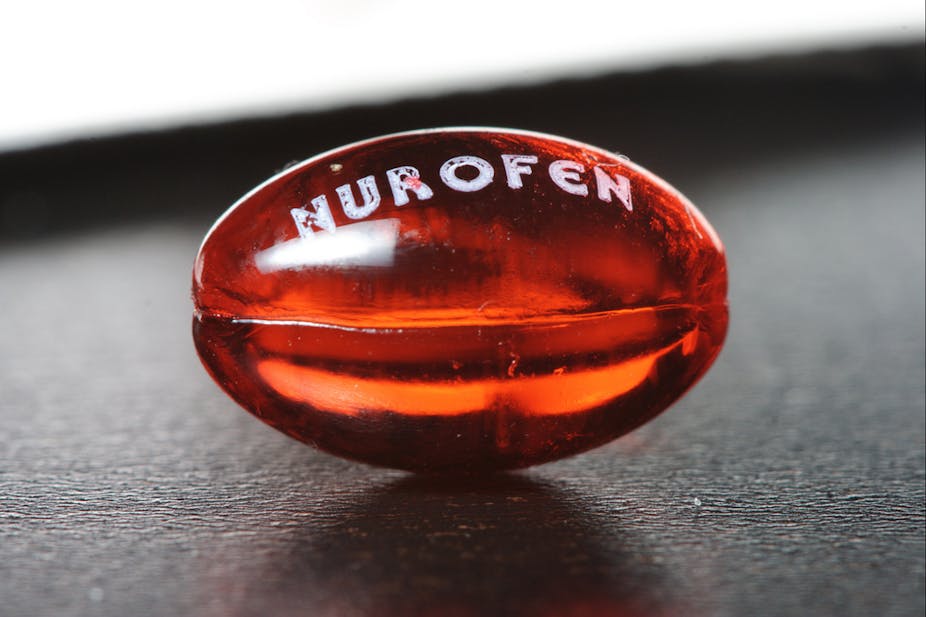
TGA failure gives Nurofen consumers a headache

In 2010, the promotion of the Nurofen range of products “targeting” migraine, back pain, tension headache and period pain was awarded a CHOICE shonky award. This was because all these products contained the same active ingredient (ibuprofen) and there’s no evidence that ibuprofen specifically “targets…

3zjg6wdj-1344494375
Nurofen was criticised for claiming its products “target” different sites of pain. samcatchsides.com/flickr

In 2010, the promotion of the Nurofen range of products “targeting” migraine, back pain, tension headache and period pain was awarded a CHOICE shonky award.

This was because all these products contained the same active ingredient (ibuprofen) and there’s no evidence that ibuprofen specifically “targets” the sites of pain.

CHOICE noted that filling up your medicine cabinet with different painkillers for every type of pain was unnecessary, not to mention wasteful, especially if they expired before you used them all.

CHOICE concluded, “the shonkiest aspect of this type of marketing is that the fast-acting painkillers labelled for specific pain types are more expensive – costing almost twice as much in some stores we surveyed – than their ‘all-pain’ fast-acting equivalent, Zavance caplets, which contains a comparable fast-acting form of ibuprofen.”

In August 2011, in response to a complaint submitted by Professor Paul Rolan about the promotion of Nurofen for headaches on television, the Complaint Resolution Panel (CRP) requested Reckitt Benckiser (Australia) Pty Ltd “withdraw any representations, in the context of headaches, that the advertised product goes straight to the source of pain or targets pain.”

In September 2011, Reckitt Benckiser said it did not agree with the CRP, “Nurofen advises that consumers will continue to see the familiar branding of the Nurofen target and messages of Nurofen working at the site of the pain. This branding includes TGA approved claims on packs that Nurofen provides targeted relief from pain.” Subsequently, the CRP referred this non-compliance to the delegate of the Secretary (the Therapeutic Goods Administration).

In August 2012, the TGA published the outcome of their review. The delegate of the secretary ordered Reckitt Benckiser (Australia) Pty Ltd to, “withdraw the ‘Live Well Headache’ television advertisement about the therapeutic good ‘Nurofen’ which was the subject of the complaint” and “to withdraw any representations, in the context of headaches, that the advertised therapeutic good ‘Nurofen’ goes ‘straight’ to the source of the pain”.

There’s no evidence that products claiming to target sites of pain actually do so. Back ache photo from Shutterstock

In response, regional director of Reckitt Benckiser, Lindsay Forrest, said he was, “delighted with the TGA Delegate’s ruling as it validates our decision to challenge the CRP findings, specifically in relation to our ability to communicate our long standing messages of targeted pain relief in relation to pain, including headaches”. The media statement continued, “Reckitt Benckiser’s current media plan will not be impacted by the TGA Delegate’s decision as it currently complies with all the TGA Delegate’s findings”.

It is my view that TGA delegate’s ruling has unnecessarily and incorrectly limited the Regulation 9 order to the specific words, “goes straight to the source of the pain” thereby failing to taking into account the CRP’s equal concern about the words, “targeted relief from pain”. In addition, by focusing only on the television ads for headaches and not taking into account the wider ongoing Nurofen campaign that uses look-alike branding the TGA delegate has failed to protect consumers.

In my opinion, the ongoing promotion of Nurofen products using claims such as “targeted relief”, “targets the source of pain”, “targeting the site of pain”, target imagery, both on the pack and in numerous advertisements, and television ads showing an animated target travelling through the body to end in the head, all breach the specific wording of the CRP determination and also the meaning that the average consumer would attribute to the delegate’s determination.

I note that a current “TGA medicine labelling and packaging review” has proposed, “Products cannot be marketed as'BRAND headache', ‘BRAND backache’, ‘BRAND joint pain’ if they include the same active ingredients in the same quantity.”

Accordingly, I have now submitted a complaint to the CRP, TGA and ACCC alleging that the current promotion of Nurofen by Reckitt Benckiser (Australia) Pty Ltd is in breach of the Competition and Consumer Act 2010 (misleading and deceptive conduct) and also a number of sections of the Therapeutic Goods Advertising Code (2007).

Finally, I believe this case shows up major defects in the current complaint handling system. Sponsors can disagree with the independent CRP determination and continue to promote while the problem is referred to the TGA. TGA regulation 9 determinations are slow (and in this case legalistic and missing the wood by focusing on a tree); meanwhile promotion continues. The sponsor can advise they have complied (using a strict legalistic interpretation of words) but in fact, questionable promotion continues.

It is my view that promotion should cease once a CRP determination has been made and until such time as any review has exonerated the claims made. The current system is heavily weighted in favour of the sponsor and provides consumers with little protection.

Join the conversation

13 Comments sorted by

  1. Ben Neill

    Mobile/Web Applications Developer

    maybe a requirement to air as many ads admitting their breach as they show after the determination would make them think twice.

    there needs to be far more corporate accountability - if all they risk is a slap on the wrist, of course they are going to try their luck with rubbish claims like this!

    report
  2. Kate Rowan-Robinson

    Kate Rowan-Robinson is a Friend of The Conversation.

    Registered Nurse/Sexology Student

    Completely agree. Consumers are constantly being mislead by claims being made on OTC products in pharmacies. I relate to a personal experience with a friend asking me why Panadol was not helping her young childs cold. I asked what it was she expected from the drug and she replied she thought it would have a decongestant effect.

    I probed a little further and asked why she expected paracetamol to have a decongestant effect and she told me that the box stated it could be used for colds in children…

    Read more
    1. Seamus Gardiner

      Citizen

      In reply to Kate Rowan-Robinson

      The mercenary approach by these companies is breathtaking. I was in a supermarket looking for some ibuprofen a couple of weeks ago and saw nurofen 'period pain' and 'back pain' on the shelf for 12 bucks a pack, I was curious and had a squizz to see what sort of co-analgesic (or strength) was in the formulary. I was pretty shocked to see that they were plain old 200 mg ibuprofen at 6 times the price of plain label ibuprofen.
      I immediately thought- how would the average punter know the difference and, what's more, how is it ethical to state a drug was intended for a specific condition when it's the same formulary as a generic analgesic ( leaving aside the B.S. of some spurious 'targeting' of the ibuprofen of period or back pain).
      Clearly a case of trying to swindle the punter by misleading and taking advantage of a privileged position. I wonder if this same formulary is available in retail pharmacies? I'd like to think not.

      report
    2. Seamus Gardiner

      Citizen

      In reply to Seamus Gardiner

      Addit: not the same formulary in retail pharmacies ( clearly it is) the same misleading packaging, I meant to write. Write in haste retract at leisure....

      report
  3. Luke Weston

    Physicist / electronic engineer

    Excellent stuff, Ken,

    Ultimately, they're all taking consumers for a ride and making a fortune, while we haven't implemented a reformed system that actually protects consumers.

    In this case, Reckitt Benckiser's behaviour is really no better than what we'd expect from charlatans like Homeopathy Plus.

    report
  4. Jonathan Karnon

    Professor of Health Economics at University of Adelaide

    I agree with Ken and the above comments, but, just to play devil's advocate, wouldn't this be an interesting area for a trial of the placebo effect?

    report
  5. CRG Essentials

    logged in via Twitter

    This would seem to be an ideal case for the issue of a substantiation notice by the ACCC. No doubt they would wish to steer clear of any enforcement "turf war" with TGA, but a substantation notice is a nice, cheap onus-reversing tool. The company's response would be fascinating.

    report
    1. Luke Weston

      Physicist / electronic engineer

      In reply to CRG Essentials

      And if it works for Reckitt Benckiser, maybe it'll work for all the other quacks and people using pseudoscientific marketing claims out there, too :)

      report
  6. Garry Claridge

    Systems Analyst

    Good on you Ken.

    I must confess that I am a user of their "migraine" product. I assumed that it contained an anti-imflamatory for the brain - maybe that is the placebo element working!

    report
    1. Michael Hay

      retired

      In reply to Garry Claridge

      Is there any truth in advertising? Surely advertisements are calculated to encourage persons of little knowledge of product differences to purchase one that "Sounds good". We need to see a label in large print, issued by an independent authority, on each package, pointing out what the medication is used for. Why should consumers be hoodwinked by immoral company executives, just so that the company makes greater profits at the expense of its customers.
      Ethics demand better; honesty should be mandatory.

      report
  7. Michael Vagg

    Clinical Senior Lecturer at Deakin University School of Medicine & Pain Specialist at Barwon Health

    Nobody seems to have figured out yet the likeliest reason for them doing this...market research. SImply by looking at the sales of their different-but-the-same products, Reckitt is getting detailed information about what ppl are buying them for, seasonal usage patterns, demographic information (women are more likely to buy migraine and period pain brands) and who knows what other modelling. I suggest buying other brands of ibuprofen so that you opt out of this giant market research project.

    report
  8. Michael Vagg

    Clinical Senior Lecturer at Deakin University School of Medicine & Pain Specialist at Barwon Health

    The main reason why the 'targeting pain' claim is spurious is that ibuprofen is a non-selective inhibitor of both known forms of cyclo-oxygenase (COX) namely COX-1 and COX-2. The pathway that generates inflammatory pain is the COX-2 form, and this form of the enzyme only appears in inflammation. There is an entire class of drugs (coxibs) which have a strong preference for COX-2 over COX-1, and they are equally as effective as the older non-selective drugs like ibuprofen. COX-1, which is reliably…

    Read more