
The great equity debate: a fair go for Australian schools

Following the refusal of the federal government to commit to the Gonski Review and the recent announcement in Victoria of further cuts to already disadvantaged schools and students, the issue of equity in education needs close attention. But equity is just one part of the much bigger picture of Australian…

Nyhc92xd-1338163397
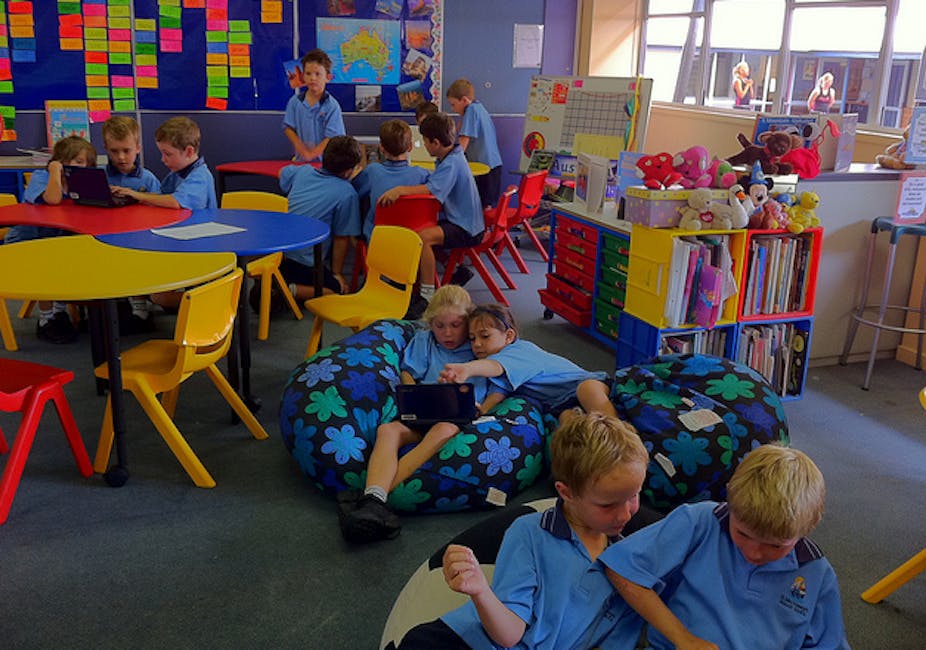
We need to take a harder look at Australian education and how we compare internationally. Flickr/marragem

Following the refusal of the federal government to commit to the Gonski Review and the recent announcement in Victoria of further cuts to already disadvantaged schools and students, the issue of equity in education needs close attention.

But equity is just one part of the much bigger picture of Australian education. When comparing our system to those in other countries, there are many characteristics that stand out. Some of these work to our benefit, but many aspects don’t compare favourably.

In order to deliver a better education system for students and teachers, we need to identify what’s working, and what is dragging us back.

Competition and equality

First and foremost, the issue of equity needs to be addressed.

Australia has the most competitive education system in the world – parents with a reasonably high level of disposable income can exercise wide choice. But Australia also has a significant equity issue as schools in communities with low socio-economic status (SES) are the most under-resourced both in facilities and in expert teaching staff. Their students often need targeted assistance and support for those with particular needs.

It has long been established that there is a significant relationship between the socio-economic background of students and their educational performance at school.

Disadvantage in education is a function of both the socio-economic characteristics of students, but also of the average socio-economic characteristics of their schools. Investment in these schools where there is a concentration of disadvantage is urgently needed to prevent a downward spiral.

It may sound self-evident, but disadvantaged students are more likely to be in disadvantaged schools. And this is more likely in Australia than in most other OECD high performing countries. We have a higher proportion of students in schools where the average student’s socio-economic background is below the national average.

This report on the Review of Funding for Schooling finds that the “most serious consequence of this is an intensifying stratification along SES lines that leads to a concentration of disadvantage in certain schools”.

A learning market

Education in Australia is divided into three distinct sectors, all of which have a significant market share (approximately 63% government, 21% Catholic and 16% independent). It is particularly unusual compared to other OECD countries to have such a large private or “independent” sector.

In fact, Australia probably has the largest non-government school sector in the world. OECD education leaders Finland, Korea, Hong Kong and Singapore have relatively few private schools which mainly cater for international students.

In this sector, there’s something else Australia is doing that is unique. We subsidise a fee-charging, autonomously-run independent school sector with public funds. This is not found anywhere else across the OECD countries.

In Australia, academic selectivity is also an issue. Although we do not “stream” students as some other systems do, schools that can attract high-performing students do so and thereby drain the social and cultural capital from other schools. Much like in sport where good players are poached from losing teams.

The more things change…

So this is Australia’s education system. But it has not always been this way. It has developed with ever increasing pace in the last 12 years with the adoption of various policies from the United Kingdom and United States.

But what has been constant over time has been the strong relationship between the socio-economic status of a school population and its educational results. In fact the correlation in Australia between SES and academic performance is more marked here than most other leading OECD education performers.

Research shows that the movement of these children from a low SES school to a higher SES school in Australia undermines the “quality” (cultural and social capital) of the remaining student body in the low SES school. Professor Richard Teese has termed these schools as “sinks of disadvantage”.

The argument for school choice has been that the subsidisation of places in higher socio-economic schools or the awarding of more scholarships would reduce this problem. This might be the case for the individual student, but system-wide it makes little or no difference.

A recent analysis of NAPLAN results indicate that these same disadvantaged students are already 3-5 years behind their wealthy private school peers. As Connell wrote in 1993 in Schools and Social Justice: “if a poor child wants to do well in education then they should have chosen richer parents”.

Australia’s education system needs to change. Flickr/hans s

In what has become an educational marketplace the majority of schools – independent, Catholic and a proportion of government schools – can select who they enrol.

In the race for excellence and choice (for some), the core issue of equity (for others) has been ignored by policy makers. This was meant to be addressed by the Gonski Review which instead ended up a missed opportunity.

Indeed the “sky is falling” statements by leaders of both Catholic and Independent school systems before the release of the Gonski Review was only overshadowed by their furious agreement afterwards that his recommendations were fair and reasonable.

Indeed their proposals for a voucher entitlement with added loadings, intended to address disadvantage of various kinds, for each child has been at the core of the Gonski recommendations.

Public first

Public schools, designed to create a stable, educated and prosperous economy and society have been essential to a well-functioning democracy. But can we remain so without a strong public education system, and with a system that does little to address inequality?

Instead we are reproducing existing social arrangements, adding to privilege where it already exists and denying it where it does not.

If a school wants to charge fees then that’s their choice; but then that school needs to be self-sufficient.

Since 1972 Australian education has gone down a slippery slope where we started funding private schools for the first time on the basis of “school choice”. This was based on an ideology where individuals have been expected to take on more and more responsibility for their families’ futures.

But it would be worth noting that at the same time Finland who went the other way is now arguably the leader in world education.

Cycle of disadvantage

Wealthy private schools with millions of dollars in their coffers, in both capital holdings and cash reserves, continue to receive excessive state and federal support. While our most disadvantaged schools struggle to provide a decent education are denied access to proper funding and support.

We know there is a positive correlation between higher levels of education and higher earnings for all ethnic groups, for both men and women. In addition to earning higher wages, tertiary graduates enjoy better health outcomes living longer as well. And the income gap between high school graduates and tertiary graduates has increased significantly over time.

And so we must now ask ourselves in Australian education, where has equity gone?

Join the conversation

29 Comments sorted by

  1. Michael Leonard Furtado

    Dr at University of Queensland

    David's passionate appeal to social justice, especially in terms of citing Teese and others, unfortunately joins a shrill chorus that will hardly budge the Government or, for that matter, the Opposition, simply because all plaintiffs from both sides of politics address partisan positional interests without additional reference to Gonski's other overall recommendations relating to school reform and desired improved performance on all fronts.

    Additionally, the claimed links between more funding…

    Read more
    1. Michael Leonard Furtado

      Dr at University of Queensland

      In reply to Dianna Arthur

      Using a supposedly simple 'yea' or 'nay', Dianna, in this highly polarised discourse results in the entrenched and highly repetitive partisan positions that this blog all too depressingly demonstrates. I therefore went to some pains to explain that equal funding should only attend cases where the private sector would share more of the burden of educating Gonski's disadvantaged categories with the public sector, which often (and justifiably) complains about educating the residualised. Gonski himself…

      Read more
    2. David Zyngier

      Senior Lecturer Faculty of Education at Monash University

      In reply to Michael Leonard Furtado

      Michael,

      I understand and appreciate your argument here. In Tuesday's Age there was an interesting story from India about the application of a 2009 Education Act that ensures that every private school including the elite high fee charging over $44 000 PA enrols GRATIS at least 25% of children from poor communities. Wouldn't we like to see that happening here?

      The Right of Children to Free and Compulsory Education (known as the RTE), enacted in 2009, is to ensure that all children aged 6-14, regardless of their background, be given an elementary education

      Read more: http://www.theage.com.au/victoria/the-class-experiment-20120528-1zf9f.html#ixzz1wOzbMKZN

      see http://www.theage.com.au/victoria/the-class-experiment-20120528-1zf9f.html for more details

      report
  2. Ken Swanson

    Geologist

    Its is just cheaper for the government to continue funding private schools.
    The cost to state and federal government to educate a child in the public system ranges between $8000 and $12000 per year depending on where you are.
    The combined private school subsidies of around $3000 per child per year therefore save the taxpayer around $5000 to $8000 per child per year. These are the cold hard facts. The balance of the private funding is paid for by parents.
    If by taking away private funding more children are forced into the public system the cost to tax payers will sky rocket and the current shortfall in resources will be even worse than it is now. Do public school advocates really think parents will continue to pay their own funds into the public sector schools when they do not have to?
    This balance must be carefully maintained. The ideologues must step aside and allow the economic realists manage this one or they will make it worse not better.

    report
    1. David Zyngier

      Senior Lecturer Faculty of Education at Monash University

      In reply to Ken Swanson

      Thank you Ken for your comments. However I believe you may have missed the point about "choice". It's not that I am arguing to abolish private schools but only for the end of public funding for private industry. Today we read in the news that Mowbray College of some 1000 students is under administration with $18million debt. Should the public step in to prop up this failing private enterprise?

      Private schools do not save the public money at all. It is merelu another form of middle class welfare…

      Read more
    2. Andrew Buckwell

      Web strategist

      In reply to Ken Swanson

      Comparing direct costs of private and public education per child is misleading. The state systems are obliged to educate every child presented to them (in their catchment), no matter how geographically isolated, economically disadvantaged, troubled or in need of special educational care. And they do this without question.
      Private schools have the luxury of being able to turn the 'difficult' children away, even if their parents chose to afford it and the the ability to operate in well-populated areas of reasonably affluent city suburbs.
      Demand the private schools operate under similar conditions, then compare costs of educating each child.

      report
    3. Ken Swanson

      Geologist

      In reply to David Zyngier

      Of course they save the tax payer money David.
      Who will pick up the tab for the difference in educating the child in the public sector as compared to the private sector. The tax payer!
      Mowbray College should not, and will not be propped up by the taxpayer. But this is the exception rather than the rule. I cannot remember the last time I heard of a private school going broke in this way. One thing is for sure though, the 1000 kids from this school will end up, probably in the next week or two…

      Read more
    4. David Zyngier

      Senior Lecturer Faculty of Education at Monash University

      In reply to Ken Swanson

      Ken thanks for your comments and sorry if I offend but how would you characterise the decision of parents to take their children out of the public school system?

      The state government has already offered $400K to keep Mowbray afloat! If all these students were sent to the local public schools both primary and secondary, it would be a wonderful bonus for these schools. And the parents would be saving so much money.

      Every time a middle class parent removes their children from the local public…

      Read more
    5. Ken Swanson

      Geologist

      In reply to David Zyngier

      I do agree with you on the BER. None of this money should ever have been given to private schools. I think what happened was that Gillard wanted the money spent quickly to stimulate the economy at the time, and private schools were the only ones with already developed building plans. It took state schools months of bureaucratic policy development before they could respond.

      A few points.

      Most kids who go to private schools are not academically gifted. In fact quite the opposite, so the classroom…

      Read more
    6. Jack Arnold

      Director

      In reply to Ken Swanson

      HI Ken ... I think you have little experience in secondary education.

      "Most kids who go to private schools are not academically gifted". Not true for Sydney Grammar School, one of the leading academic schools in Australia.

      Discipline in schools is both important but only secondary to parental expectation for their children. In Operation Headstart, a five year study in Chicago USA, if parents wanted their AfroAmerican kids to leave the ghetto, then that was the major driving factor for academic success, bar none.

      The government built classrooms to satisfy the post WWII baby boom when private schools were in terminal decline because they were truly 'independent'. These buildings still exist despite the worst efforts of successive governments to sell off the schoolyard.

      The tax distraction is fallacious.

      report
    7. Ken Swanson

      Geologist

      In reply to Jack Arnold

      Jack
      Thanks for your response.
      There may well be gifted kids at Sydney Grammar. My question would be whether they were like that before they went there or are getting good grades as a results of being there.
      Notwithstanding that, your view of private schools is very narrow if you refer to Sydney Grammar as a benchmark. It is one of those "elite" schools (along with Geelong Grammar; Scotch College Melbourne; Kings; Prince Alfred; MLC just to name a few) Mark Latham used to refer to, and which…

      Read more
  3. Gavin Moodie

    Principal Policy Adviser

    Australia should convert its grants to private schools into Hecs-like income contingent loans to parents to pay school fees. This would mean that no parent would be denied the choice of sending their child to a private school while targeting subsidies to parents who need them.

    report
    1. David Zyngier

      Senior Lecturer Faculty of Education at Monash University

      In reply to Gavin Moodie

      Gain, that is an interesting idea are you suggesting an alternative to the discredited voucher system in the USA? But why should the general public be supporting private enterprise whenntheremisma public alternative. By all means there've private schools, private hospitals, toll ways etc, but don't expect the general public to subsidise wealthy people's choice.

      report
    2. Jack Arnold

      Director

      In reply to Gavin Moodie

      Hi Gavin ... A suitable end to middle class charity.

      But then, Woolies does not subsidise Coles their major competitor, so why should private schools be subsidised at the expense of state schools.

      report
    3. Gavin Moodie

      Principal Policy Adviser

      In reply to Jack Arnold

      I agree that it is not good in principle for the public to subsidise private schools, but that principle has no realistic prospect of being adopted for at least 2 decades. A mix of subsidies and income contingent loans has a better chance of being adopted and so, I suggest, is worth promoting. As it gains acceptance governments may reduce private schools' reliance on subsidies and increase their reliance on income contingent loans, as they have done with universities.

      report
    4. Mark Sinclair

      Libertarian Candidate

      In reply to Gavin Moodie

      "the public subsidise private schools?" Don't you realise that private schools (are you talking private or catholic or both because there is a difference) parents pay fees and taxes and therefore, they technically subside public schools where parents pay nothing for a free education at about $15K to $20K per student per year? (just go check the ROGS data 2012).

      report
  4. Gavin Moodie

    Principal Policy Adviser

    I agree that Australia shouldn't subsidise the private schooling choices of wealthy people. However, it is unrealistic to expect governments to stop their subsidies, for various reasons that shouldn't divert this conversation. Recall the furious backlash against then opposition leader Mark Latham's proposal to cut subsidies for a few of the wealthiest schools.

    So a more realistic alternative is needed. Income contingent loans could be designed so that they were revenue neutral for the government and thus did not subsidise private schooling directly. But I'd be willing to concede subsidised income contingent loans for (private) school fees for the considerable increase in equity they would nevertheless achieve.

    report
    1. Ken Swanson

      Geologist

      In reply to Gavin Moodie

      The ALP idealogues have tried this one on many times.
      What they continually find is that the profile of a typical private school family is very much that of a swinging voter who is driven heavily by economic household issues. Certainly they are no the "Liberal Fat Cats" that David is trying to portray.
      These people do not like being lectured to by the "ALP smart set" who keep telling them they are rich and should be pulled down a peg. So they vote with their feet and have a serious impact on outer suburban seats across the country. Changing this funding model carries a huge political cost for the ALP/ Greens Coalition.

      report
  5. Jack Arnold

    Director

    Thank you David for identifying the middle class charity hand outs to the private school system. It is refreshing to find an objective comment after 50 years of government charity to private schools to bring them up to equality with the better academic performing state schools without the private schools having any requirement for financial accountability for government funding.

    But I disagree on the educational point of gifted students.

    The comprehensive school system was inherited from the…

    Read more
  6. Mark Sinclair

    Libertarian Candidate

    User wants = user pays. If you want a private education (catholic or otherwise) you have to pay for it. However, if you want a public education, you also have to pay for it. For far too long, private school paying parents (who pay fees AND taxes) have subsidised public school parents so they can have a free education.

    It is time people realised if they want a government service (health, transport, amenities, whatever) they are going to have to pay for it. There are some exceptions where "assistance" may need to be provided but it is time for public parents to pay.

    report
    1. Jack Arnold

      Director

      In reply to Mark Sinclair

      Hi Mark ... so political parties, that are not mentioned in the Australian Constitution, should only dole out subsidies to foreign corporations who export profits overseas from the efforts of 456 visa foreign guest workers in Australia.

      Then just how will the Liberal Party remove all corporate charity from foreign corporations that disadvantages Australian competitors in their own national market?

      Surely 'government' goes beyond political ideology & rhetoric to actually doing something for the "governed classes". Or, has the Liberal Party torn up the social contract in the present big dummy spit by the Opposition Leader without a majority in his own caucus?

      report
  7. David Arthur

    n/a

    Q. How does a society shoot itself in the foot?
    A. By not educating its people.

    The Victorian Government has already opened fire.

    report
  8. Gil Hardwick

    Anthropologist

    What is forever missing from these various debates about how Australian taxpayers' money is to be invested in education, or too often sadly the case merely spent, is motivation and the culture of education in many families that is missing in others.

    Regardless of what money is spent by government offering education, for any given person to receive that education they have to work very hard at it in a very competitive environment. It doesn't come for free. All the government does and can ever do…

    Read more
    1. David Zyngier

      Senior Lecturer Faculty of Education at Monash University

      In reply to Gil Hardwick

      Gil,

      I am really concerned about your characterisation and generalisations of whole populations as if they have within them no diversity (The Chinese, the working class).

      You write:
      "Regardless of what money is spent by government offering education, for any given person to receive that education they have to work very hard at it in a very competitive environment. .... Each student must do it themselves, too often alone and in a family environment lacking peer support or interest."

      Education research over many years across many nations shows that this is NOT the case. See for example the work of Bourdieu (in France) Bernstein (England) Apple and Giroux (USA), Teese (Australia).

      SES (Postcode) is still the greatest determinant of a child's academic success.

      report
  9. Mark Sinclair

    Libertarian Candidate

    I've already comment enough but my last point is anyone who wants to be engaged and/or educated in this area must read about the Gouldburn strikes of 1962 and Government funding of catholic schools. If Catholic schools shut their doors down and handed over all of their students back to the State as they did in '62 - the Government would go broke!

    report
  10. Ivo UQ

    logged in via Facebook

    The question of equity in schooling absolutely has to take into account the SES of parents and the community, as David points out. This means we need to consider education policies as part of a wider social program of reducing social disadvantage.

    And this is precisely where the current (neo-liberal) ideas of 'choice' fall down.

    'Choice' as it currently stands is simply the ability to cross a financial threshold and it excludes the vast majority of parents from making a 'choice' of any kind…

    Read more