

The hour’s final hour – it’s time for the decimal day

Australia gave up years ago on the prehistoric systems of gallons, miles and pounds. But like the rest of the world, we cling like apes to hours, minutes and seconds. What fundamental law of the universe says we must divide our days into 24 equal parts? And then why must we divide these parts by 60…

2qt6mnq3-1352264666
The way we measure time is out of date. Hani Amir

Australia gave up years ago on the prehistoric systems of gallons, miles and pounds. But like the rest of the world, we cling like apes to hours, minutes and seconds.

What fundamental law of the universe says we must divide our days into 24 equal parts? And then why must we divide these parts by 60 and then 60 again?

I hereby declare our anachronistic “diurnal” time system broken and in need of urgent repair. Life in the 21st century is complex enough without requiring awkward mental divisions for what should be simple calculations of everyday relevance.

At this stage I should probably point out that, as a senior lecturer in Environmental Engineering, I’m no expert in time, although it does dictate much of my life. And no, in case you’re wondering, I don’t own shares in an experimental watch factory.

So, with that cleared up, who can tell me, without the aid of a supercomputer, how much I will earn if I work for three hours and 50 minutes at an hourly rate of $10?

When you’re done with that, let me know how much water I will waste in a day if my toilet leaks 2ml per minute. And how far will a rocket travel in one day if it’s travelling at a speed of 16km/s?
CityGypsy11

To simplify these questions, I propose we update to a decimal time system.

In a decimal system, we could divide each day into ten “decidays”. A deciday would comprise 10 “centidays” or 100 “millidays” – each milliday would be 1,000 “microdays”, and so on.

A decimal day would reduce the mental gymnastics to simply sliding a decimal point. Future primary school graduates could answer the questions above in around 10 microdays flat.

They would tell you that 3.8 decidays work at $10 per deciday earns you $38. They would know almost intuitively that a toilet leaking 2ml a milliday is going to lose two litres every day.

At 16km per microday, they will patiently explain, the rocket is going to travel 16,000,000km in one day.

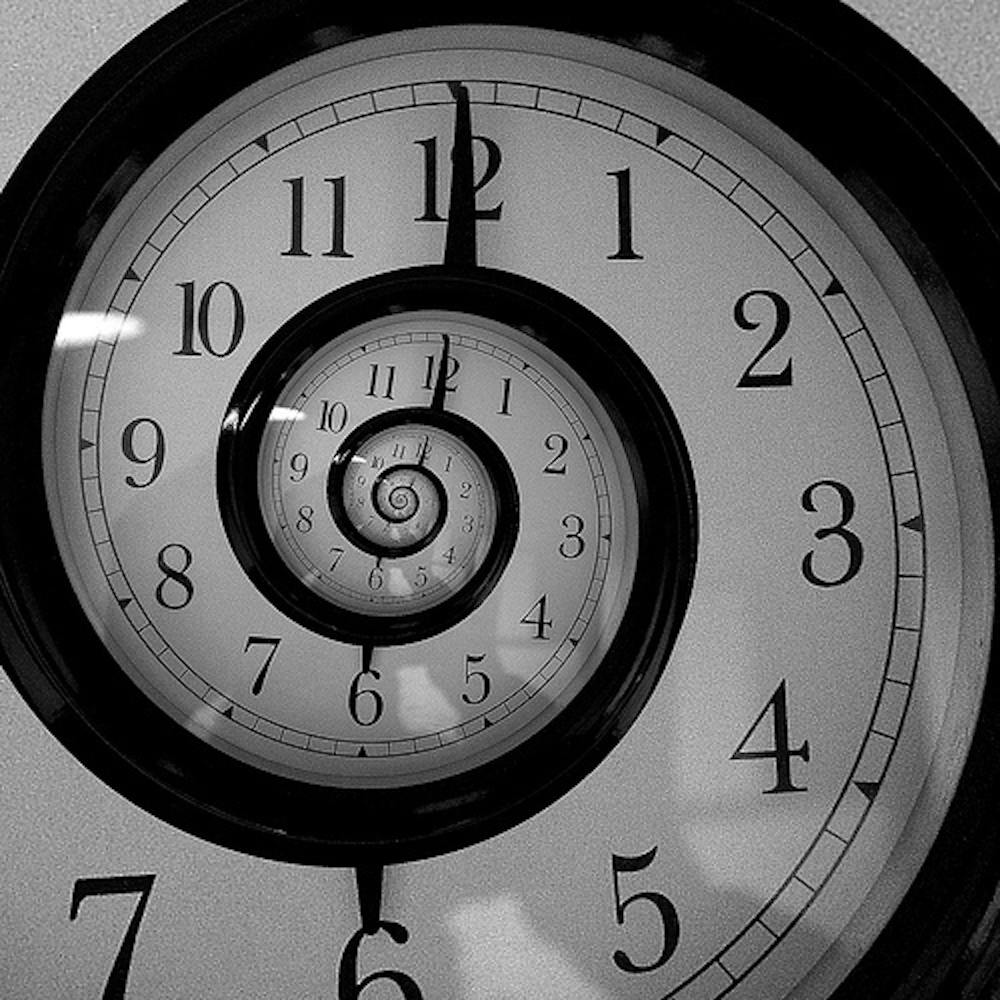
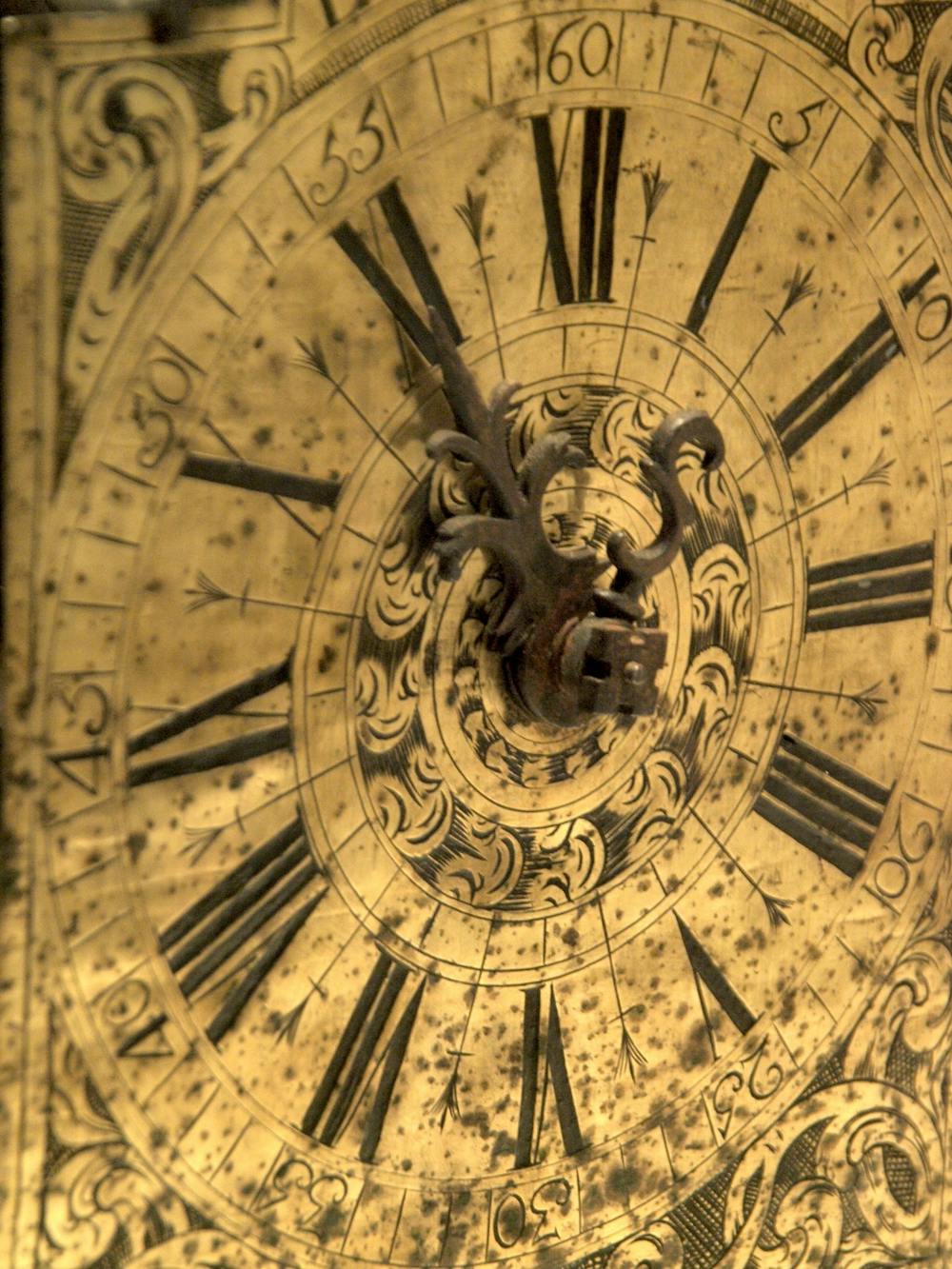
Digital watches would be reprogrammed to provide decimal times such as 8.7.2 – that is, eight decidays, seven centidays and two millidays (about 8:56pm in the old system). Mechanical clocks would run at half the current speed with the digits 0 to 9 evenly spaced around the clock face.

With few Australians conforming strictly to the traditional 9-5 working day, now is the time to recalibrate to a new system.
Swamibu

The working day could become three decidays with a centiday break for morning tea and four centidays for lunch. It would take about a milliday to boil the jug for coffee. The definition of a late train could be re-jigged without anyone noticing.

While we’re at it, we should take the opportunity to abolish international time zones and simply accept the fact that people in different places work, sleep and play during different decidays according to their longitude.

Decimal time is not a recent concept. In fact it was briefly adopted during the French Revolution. Decimal clocks and watches were manufactured, but the French deciday was sadly revoked after less than two years of service.

As with previous conversions to decimal systems, the deciday will again have its detractors. I expect that older generations will continue to work with the old system and the middle generation will just learn to convert.

But younger generations will appreciate our efforts and wonder how we managed to live with the cumbersome old system for so long.

The final hour of the hour must surely be nigh. We could look to a future where a “minute” is but a record of meeting and a “second” is an electoral result with no prize (sorry Mr Romney!).

The natural enemies of high school physics students and home accountants could be a thing of the past. In my view, we should fix time before we let another nanoday slip by.

Sign in to Favourite

Want to follow The Conversation?

Sign up to our free newsletter to get the day's top stories in your inbox each morning, with a special wrap on Saturday.

Spinner
Become a friend of The Conversation and donate

Join the conversation

54 Comments sorted by

  1. terry lockwood

    maths teacher

    Nice idea Stuart but I think it might be better expressed in Esperanto. Then I could think about while cooking something in my vertical grill and then eating it with some splades. Might then need a sleep in my water bed.
    Ya gotta love a revolutionary idea.

    report
    1. Wil B

      B.Sc, GDipAppSci, MEnvSc, Environmental Planner

      In reply to Mat Hardy

      yes surprised you'd not mentioned beat time. You can buy a watch even.

      While we're at it, although it's hard to get around 365 days 5 hours 48 minutes 46 seconds for each lap around the sun, we could be more sensible in dividing the year up. 10 months of 36 days, plus five holidays? Or 5x36, 5x37? Of which ten rest days a month? Dunno that one a bit harder.

      report
    2. David Boxall

      logged in via Facebook

      In reply to Mat Hardy

      Wil B: "... it's hard to get around 365 days 5 hours 48 minutes 46 seconds for each lap around the sun ...". We could always slow the rotation of the planet, to give us 100 days per year - or speed it up, for 1,000. But we'd still have the rest of the universe to contend with.

      report
    3. Alan John Emmerson

      Former chief engineer , Civil Aviation Authority

      In reply to Mat Hardy

      Will B,

      To be pedantic,
      The Earth makes one lap around the Sun every 366!/4 rotations of the Earth on its axis.

      For an observer on Earth the lap itself looks like a single rotation about the axis in the opposite direction .So there appear to be 365!/4 rotations (days ) in a year ,

      report
  2. John Nicol

    logged in via email @bigpond.com

    While the idea is interesting, it should be noted that time, though a more abstract concept than distance, mass and money, affects us all in many different ways. For instance,the older (admittedly) idea of a human being having eight hours of work, eight hours of sleep and eight hours of recreation makes good sense in a social and productive organisation of time. To reflect this, a day of 1,000 what-evers, would be made up of 3 times 333.33333. what-evers for each of these fairly natural periods of human action. There are many other reasons why any time scheme needs to be able to accommodate divisions by a range of factors - mostly powers of 2 and three - which would probably end up far messier than what we have now.

    I guess the message is that one should learn to "tell the time" at a young age and also learn to do simple arithmatic (sums) in one's head, a characteristic not encouraged in the young these days, many of whom need a calculator to divide four by two.

    report
    1. Matt de Neef

      Editor at The Conversation

      In reply to John Nicol

      John, maybe a switch to decimal time would provide a good opportunity to reevaluate the way we split our time. Rather than 8 hours each of work, rest and play, we could go 3 decidays of work (~7.5 hours), 4 decidays of recreation (~9 hours) and 3 decidays of sleep (~7.5 hours)?

      report
  3. Luc Brien

    logged in via Facebook

    A good idea, one that's been bugging me for a while. But why stop at time? Why not decimalise the whole calendar, as they began to in Post-Revolutionary France?

    While we're at it, can we make it easier to calculate angles? Why does a circle have 360 degrees? Could we not just make it a clear 500, or even 1000? Would that get rid of that troublesome pi?

    report
    1. Dan Smith

      Network Engineer

      In reply to Luc Brien

      I believe they're related -- blame the Babylonians and their sexagesimal (base 60) counting system, circa some 4-5 thousand years ago. Amazing to think that our geometrical and temporal calculations are done with an ancient system designed to track stars. Carl Sagan would have put it more poetically I'm sure.

      Perhaps we should just adopt the computer time system known as "epoch time", which is arbitrarily defined as the number of seconds since midnight on Jan 1, 1970. Initially it may feel unintuititve…

      Read more
  4. Matthew Davies

    Research Analyst

    Im going off at a slight tangent here but why on earth do airline pilots still do everything in imperial - now that must be incredibly hard for the majority of the worlds population in an industry whose prime objective is safety

    report
    1. Mike Jubow

      forestry nurseryman

      In reply to Matthew Davies

      Navigation is governed by degrees, minutes and seconds of latitude and longitude. A nautical mile is, going by my impaired memory, the equivalent of a minute of longitude. Therefore we have knots which are nautical miles per hour. This helps in easily fixing your position on the earths surface.

      report
  5. Michael Duff

    Public Servant

    Six and seven year olds struggling to learn time would vote for this in a heartbeat.

    While we are at it can we also get rid of the useless "u" in "our" words (eg. colour)?

    report
  6. David Boxall

    logged in via Facebook

    "What fundamental law of the universe says we must divide our days into 24 equal parts? And then why must we divide these parts by 60 and then 60 again?"

    (http://scienceray.com/astronomy/the-ancient-method-of-time-measurement/) "Man also told time by the movement of the stars. If you watched the sky every night for a month, you would notice that, as the night passes, different stars become visible. The ancient Egyptians used the rising of different stars to turn the sky into a gigantic clock…

    Read more
  7. Dennis Alexander

    logged in via LinkedIn

    Electronics Australia April (1st) issue 1973. EA started with the second and built it up to a year.
    Your approach falls down at two points. First, when you try and reconcile it with latitude and longitude (especially longitude) and the cost of adapting international navigation might well exceed any benefits, most particularly in light of the precession of the Earth's orbit. Second, many physical units, including, for example, gravity and the speed of light, are defined in terms that are dependent on the durational measure of a second and decimal portions thereof - recalibrating cesium clocks might be fun.
    If one was going to go decimal, why not choose the year as the maxi-unit and divide that?

    report
    1. Emma Anderson

      Artist and Science Junkie

      In reply to Dennis Alexander

      Nice

      Why not stop using space and time as discrete contiuums considering physics seems to think they're actually spacetime?
      i.e. combine the year with the maximum (earth centric) spatial measurements as the maxi-unit for space time

      Current System
      365+n days in a year...Time divided by day units
      Really roughly, earth is spherical (360long 360lat)
      Landscapes have altitudes, this and latitude seems to be related to perception of time etc but let's not get too finicky
      Earth on axis of (correct…

      Read more
  8. Rick Fleckner

    Student

    Why complicate it with new labels? We should still have pounds and pence, like the Poms. The value of the divisions is important, not the label. Like tons and tonnes, what's wrong with metric ton and imperial ton? It seems to me that there must be a secret government department whose sole function is to keep the punters in a permanent state of stumbling confusion.

    report
  9. Chris Borthwick

    logged in via Facebook

    If there's one thing I can't stand, it's weak sisters who stop almost as soon as they start out on the path to reform. The only remotely logical and consistent number system is binary, and we should standardise on that immediately, starting tomorrow, abolishing both decimals and base sixty measurements wherever they occur. Time, for example, would go
    1 round (old 24 hrs) = 2 days (12 hr) =4 halfdays (6 hr) = 8 quarterdays (3 hr) = 16 eighthdays (1.5 hrs) = 32 owers (.75 hrs) = 64 halfowers (0.375 hrs: 22.5 minutes) = 128 quarterowers = 256 eighthowers = 512 steenthowers = 1024 minnutes (approx. 1.4 minutes)

    Going up, there's no way to keep the year in synch, so we'll abandon it. Let the rest of the world find out what it's like having xmas in summer.

    report
  10. Anthony Muscio

    logged in via Facebook

    Perhaps decimal time has some merit but since you ask "What fundamental law of the universe says we must divide our days into 24 equal parts? And then why must we divide these parts by 60 and then 60 again?" There is an answer.

    Create a little program to generate a list of the compound numbers (the opposite to primes). Rate those with the most possible divisors more highly and you will see everyone of the so called "Non decimal" numbers fall out. Even 360 and a Gross 144 all fall out.

    Why…

    Read more
    1. David Boxall

      logged in via Facebook

      In reply to Anthony Muscio

      It seems to me that we lose something when we simplify. There were difficulties with currency in pounds, shillings and pence; as there were with imperial measures. Dealing with those complexities exercised minds.

      Without the complexities, our minds get less exercise. People these days seem less capable with even moderately complex mathematics. Consequential?

      Maybe I'm just getting old.

      report
  11. Craig Somerton

    IT Professional

    I'll vote for it, as long as I get more days off.

    report
  12. Jess Robertson

    Postdoctoral Fellow at CSIRO

    This is silly - if your argument is that one system of units should be preferred physically then you'd be better using Plank units, where one unit of time is about 5 x 10^(-44) seconds (see http://en.wikipedia.org/wiki/Planck_units).

    This doesn't really address your usability problem though, unless you're a cosmologist. :)

    report
  13. Chris Borthwick

    logged in via Facebook

    If we want to take the easy way out we could just move from the decimal system to base 12 - 1 2 3 4 5 6 7 8 9 # ('ink') % ('plonk') 10 - and time would fall nicely into place.

    report
  14. Stuart Khan

    Senior Lecturer in Environmental Engineering. Water Quality Researcher at University of New South Wales

    Thanks to all those who commented on this article (both here and elsewhere where it was reposted). I enjoyed the discussion very much and learnt a few things about where our existing system of counting hours, minutes and seconds comes from (thanks particularly for the link from David Boxall). Thanks also to Luc Brien for pointing out similar problems with the way we define angles and circles by 360 degrees.

    I appreciated the discussion regarding whether a base-10 decimal system is really the…

    Read more
    1. Alan John Emmerson

      Former chief engineer , Civil Aviation Authority

      In reply to Stuart Khan

      Stuart,

      In proposing to substitute a day of ten newhours for a day of two sets of 12 hours, have you considered the method of measuring and displaying of time of day - the clock or watch. Looking around retailers I could not find a single watch using a digital display. This tells me that the customers want analogue diplays and prefer a two pointer read out for its resolution or precision.
      So with ten hours in a day how are you going to layout the dial to give a reolution of 1/86400 day or…

      Read more
  15. Tim Scanlon

    Debunker

    I think we have to wait for the older generation, who still insist on using imperial measurements, to die off first. It was only a generation ago that the metric measures system was introduced, and those people still infest our society every day with their nonsense. This is only made worse by the Americans and their holding out on metric - even when it costs them a few billion in crashes due to conversion errors.

    report
    1. John Nicol

      logged in via email @bigpond.com

      In reply to Tim Scanlon

      Tim Scanlon,

      I don't think it is a very polite way to address older people by saying 1. We must wait for them to die and 2. "those people still "infest the planet". I think the word infest would be better reserved for use in talking about people who have no genuine manners.

      report
    2. Mark Amey

      logged in via Facebook

      In reply to Tim Scanlon

      Judging by the number of young people who can only relate to a baby's weight in pounds and ounces, I'd say the time of the imperial measures generation dying off is gigadays away!

      report
    3. David Boxall

      logged in via Facebook

      In reply to Tim Scanlon

      Tim Scanlon: "... we have to wait for the older generation, who still insist on using imperial measurements, to die off ...". Young people these days; no respect for their elders. Harrumph!

      In my experience, it's feeble minds that demand simplification. Flexibility benefits better minds; roll on the rise of dozenal to replace decimal.
      http://www.dozenal.org/
      http://www.dozenalsociety.org.uk/
      http://sourceforge.net/apps/mediawiki/dozenal/index.php?title=Main_Page

      report
    4. Alan John Emmerson

      Former chief engineer , Civil Aviation Authority

      In reply to Tim Scanlon

      Would that be the olde rgeneration that knows:

      the distinction between a positional notation system and a set of measurement standards or units of measurement and the prefered multiple and submultiples

      that in SI the unit of elapsed time is the second, and its preferred ternary decimal multiples and sub multiples;

      that the second as a unit is shared by SI and the previous systems of units FPS MKS and CGS
      ;that hour day and year are acceptablle bot not preferred units of time in SI…

      Read more
  16. Chris Harper

    Engineer

    @David Boxall

    It comes as a shock to find myself agreeing with you.

    Yes, this advocacy of metric time doesn't go far enough. It shows a paucity of both foresight and courage.

    Dozenal (I know it as dodecimal) is far more usable.

    Thirds and sixths being exact and not infinitely repeating fractions at the very least.

    Decimal? Just because we have ten fingers? How archaic. If we truly want a rational system of measurements base twelve is the way to go.

    To show how irrelevant the number of fingers is in choosing a measurement base, using binary I can count to 1023 on my fingers, but who in their right mind wants to use binary for every day tasks? Likewise, stuff the decimal system.

    report
  17. Alan John Emmerson

    Former chief engineer , Civil Aviation Authority

    Stuart, you have created a problem where none exists.

    The unit for measuring time interval in Australia is the second. The minute hour day and year are acceptable.

    There is nothing stopping you using the hour or day as a unit of measurement . and expressing the measurement as say 17Mday or 45mhr just as you would with seconds.

    What you must not do is mix units. Just as you may not write that the length was is 1 metre and 17 millimetres , so you may not validly write "the time for which…

    Read more
  18. John Harland

    bicycle technician

    The last time decimal time was implemented it was accompanied by mass executions. What is the plan this time?

    More recently we had the Metric Convesion Board enforcing the Metric System. Many engineering companies changed over at the time only to find that Metric-sized input stock was not available.

    The steel rod sold as 6 mm is actually 1/4" and the "25 mm" tube is actually 1". When you are working to micron clearances, those quarter millimetres make a lot of difference. That metal stock…

    Read more
  19. Michael Glass

    Teacher

    I think a decimal day is a good idea. However, there are other reforms that we should also consider. First, I would like to see the end of advertising in imperial, like land areas in acres and screen sizes in diagonal inches. This last one is a particular bugbear, because it understates the size (and hence the energy consumption) of screens. For example, a 12 inch screen doesn't sound all that much bigger than a 10 inch screen. However, the 12 inch screen will take close to 50% more power (actually…

    Read more
    1. David Boxall

      logged in via Facebook

      In reply to Michael Glass

      Michael Glass: "... let's just drop the u from color, flavor and the rest." It has been said that problems generally result from previous solutions; you've pointed out one of them.

      In this case, America's solution creates problems for every other Anglophone community.

      report
  20. Peter Hindrup

    consultant

    There were problems with the imperial system? Mmm, like what? I still use imperial, points and pica's, though not so much these days, alongside metric. Still convert things in my head when a problem isn't clear.

    I seem to remember that we were told that the move to decimal was necessary so that computers would be able to cope!

    Now we have those who would drop 'the useless u' as someone put it' Why not spell all words that sound the same, the one way? Bear and bare, pail and pale, seam and seem, there and their, and so on. This would (wood) certainly simplify t learning of ???? well it certainly wouldn't be English! It certainly would destroy the language.

    Seriously, couldn't we attempt to 'fix' some of the real problems that plague the world?,

    report
    1. Michael Glass

      Teacher

      In reply to Peter Hindrup

      Peter, I can assure you that our irregular spelling is a real problem. It means that it takes children twice as long to learn to read and write. That's an enormous waste of time and effort. English spelt phonetically would still be English.

      report
    2. David Boxall

      logged in via Facebook

      In reply to Peter Hindrup

      Michael Glass: "English spelt phonetically would still be English." Until pronunciation changed, as it has and continues to do. Come to think of it, which of the many accents would you choose, on which to base your phonetic spelling?

      The complexity of English reflects its history. Attempts at simplification are like a dog chasing its tail. Every simplification is just another complication waiting to bite us.

      report
    3. Chris Harper

      Engineer

      In reply to Peter Hindrup

      Peter,

      Why is our spelling so irrational in the first place? Loadsa reasons, but change in pronunciation since the spelling was frozen is one of them.

      Why is knight spelled with the 'k'? Because we used to pronounce the 'k', that's why.

      If you change the spelling to some standard (Received Pronunciation maybe), who is going to both define and enforce this? English is still lucky enough to be about the only significant language not to have one of those ridiculous language institutes or academy…

      Read more
    4. Peter Hindrup

      consultant

      In reply to Peter Hindrup

      Michael Glass: David Box all, Chris Harper, and John Harland touched upon issues that I saw, and raised a few extra. Thank you gentlemen.

      I cannot resist: Oh, what a night! And: Oh, what a Knight! Obviously have very different meanings.

      Then isn’t education all about learning how to learn, especially at the time that kids are learning to read? It is rather like why teach tables and mental arithmetic when most everybody has a calculator or two integrated in something that they are carrying. It is surely just a waste of time, except that I would be lost without it.

      Stripping the origin of words from language would, in my view, strip the language of nuance, reduce the shades of meaning, the subtly of expression which English provides. Poor pronunciation, carelessness and a poor education can have the effect of having different words sounding the same, while the joy of a good speaker is to hear the subtle inflections of the language properly pronounced.

      report
    5. Emma Anderson

      Artist and Science Junkie

      In reply to Peter Hindrup

      A real problem that plagues the world - actually, ask a tradie. Measurements to build stuff = metric. Manufacturing companies for drill bits etc = American = imperial. Close enough? Depends on the situation, given appropriate circumstance the inaccurate shorthand conversion of 2.5cm = 1 inch could kill and probably has.

      Uhm....language though.Not used to this new commenting system...ok well someone was saying about how spelling and annunciation need not be the same thing. True. But a finer…

      Read more
  21. John Harland

    bicycle technician

    On what measurements is this "twice as long" based?

    report
  22. Michael Glass

    Teacher

    There is a problem with inefficiency. One reformer noted:

    Rudimentary literacy acquisition in English takes the average child roughly three years, while in Finnish it can be accomplished in just six months. The simplicity and regularity of Finnish spelling also creates much less need for literacy remediation and reduces literacy failure... Improvements to English spelling would make a similar difference to learning to read and write English and enable more pupils to derive benefit from their schooling…

    Read more
    1. David Boxall

      logged in via Facebook

      In reply to Michael Glass

      Michael Glass: "When it comes to reform, people commonly overstate the difficulty." When it comes to language, I think you're understating it. Short of black helicopters and commandos with sub machine-guns to enforce approved pronunciations, how would you deal with variations? Ate, pronounced 'et', and dance, pronounced 'darnce', come to mind.

      Would each regional dialect have its own phonetic spelling? Think of Julia Gillards accent, which I gather is a regional dialect restricted to Elizabeth South Australia.

      Language is more difficult to standardise than measurement. In comparison, replacing decimal with dozenal would be a doddle.

      report
  23. Michael Glass

    Teacher

    David Boxall, there are differences in pronunciation: et and ate, dance and daance, territry and territory and so on. When there are variations, there is a simple and quite elegant solution: give one vote to each pronunciation and the deciding vote to the traditional spelling. Then you have way of dealing with most of those difficulties.

    Certainly we would have to preserve the 'wh' spelling for the minority of speakers who still say (or think they say) hwhich, hwhat, and so on. We would also…

    Read more
    1. Chris Harper

      Engineer

      In reply to Michael Glass

      I would also point out that even if a single standardised accent were selected, spelling reform using the latin alphabet wouldn't work anyway. There are simply too many variant morphemes and phonemes for 26 letters to adequately cover them all.

      It's not gunna work anyway.

      report
  24. John Harland

    bicycle technician

    In science I love the Metric System. In everyday life it is not always the best unit for specific purposes.

    Why should we be browbeaten into using only the measurements approved by government bureaucracies and self-righteous pedants? So that every aspect of our lives can be neatly filed away in a database in computer-friendly units?

    Should the transition to the new Perfectly Rational System be handled by another autocratic and heavy-handed Metric Conversion Board, or another Robespierre ready to execute those who don't comply with the new sensible way of doing things?

    If astronomers want to use Metric time, let them go ahead but keep it out of our lives.

    And if you want language reform, George Orwell had quite a neat system drafted out in his novel 1984.

    report
    1. Alan John Emmerson

      Former chief engineer , Civil Aviation Authority

      In reply to John Harland

      John,
      Why do you say that the Metric Conversion Board was autocratic and heavy handed?
      At the time, I did not agree that the conversion to SI units was necessary or desirable, except that it provided an opportunty to rationalize the size ranges of manufactued items. (That didn't happen.) .and to get rid of specally named decimalmultiples and submultipes of base units , such as tex and kaiser and parsec and so on (that didn't happen either)
      The way we went about Metric conversion was driven…

      Read more
  25. John Harland

    bicycle technician

    Alan, The Metric Conversion Board issued heavy fines for such things as a chemist whose coin-operated scale was still calibrated in stones and pounds - to the delight of many of his customers.

    At the same time, they neglected key issues of availability of tools and engineering stock.

    Heavy-handed in the superficial observance and negligent in the substantive changes needed.

    We even had the absurdity of needing to buy a new spanner to bleed only the replacement slave cylinder of an obsolescent English-designed car (or substitute the bleed screw from the discarded cylinder). There was no sound reason to change the screw-head size but it was legally necessary at the time.

    report
    1. Alan John Emmerson

      Former chief engineer , Civil Aviation Authority

      In reply to John Harland

      John,

      As I recall, the Metric Conversion Board had no power to fine people. That was up to the State weights and measuers authority.

      I broadly agree with your other remarks. I was on the MCB aeronatical industry sector committee and was not very pleased with the way it ran.

      didn't think there wa any legal requirement to manufacture replacement parts to other than the original standard. Those bleed screws were sized so that a ring spanner could be slipped back over the bleed tube. They were a special. Perhaps they ran out of stock.

      report