
The perception paradox: understanding risk is key to selling the carbon tax

Science is strengthening its view that business-as-usual emissions of greenhouse gases will result in serious risks while the Australian public’s perception of climate change as a risk erodes. A recent Lowy Institute Poll shows the proportion of the public who say “until we are sure global warming is…

Aapone-20101027000263825925-eco_tourism_lady_elliot_is-original
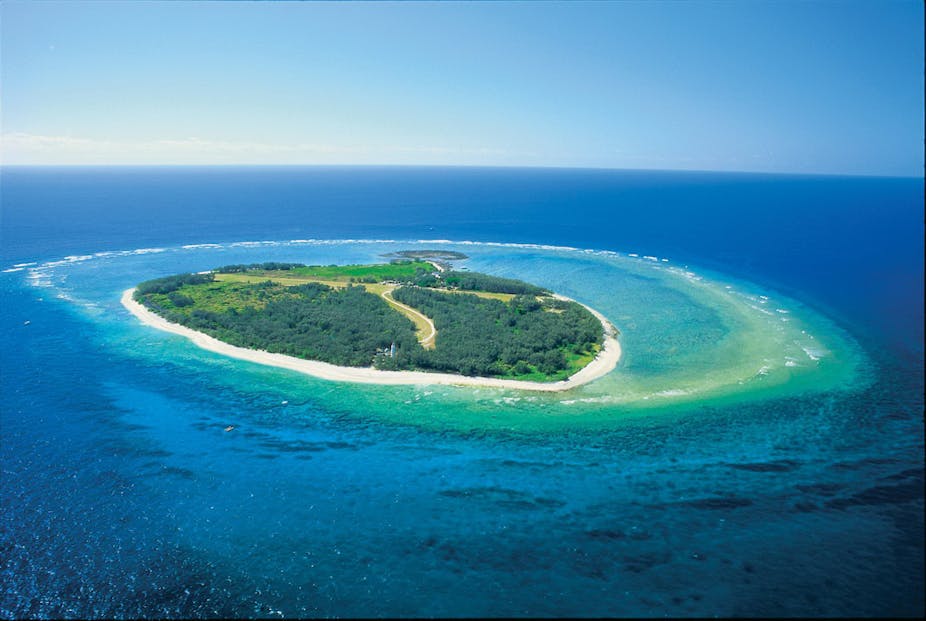
Julia Gillard can sell the tax better if she puts it in terms of the natural wonders we are buying back. AAP

Science is strengthening its view that business-as-usual emissions of greenhouse gases will result in serious risks while the Australian public’s perception of climate change as a risk erodes.

A recent Lowy Institute Poll shows the proportion of the public who say “until we are sure global warming is really a problem, we should not take any steps that would have economic effects” has risen from 7 to 19% between 2006 and 2011.

81% believe climate change to be a problem, but support for a serious/gradual response has shifted from 68%/24% to 41%/40%.

75% think the federal government has done a somewhat to very poor job of addressing climate change. And in current political polling, a majority of Australians are opposed to a “carbon tax”.

This shows an increasing gap between the calculated and perceived risks of climate change, although a majority remained concerned.

It also shows a gap between the perceived risks of climate policy and benefits of implementing that policy.

Understanding how emotionally-driven processes affect decision making has become a critical task. Cultural theory positions how analytical and emotional thought processes influence personal assessments of risk.

For example, egalitarians seek what they regard as fair and equitable solutions whereas individualists seek alternatives that maximise personal freedom. One American survey found the majority considered climate change a moderate risk. But the majority were also opposed to potential tax measures to manage that risk. These results are consistent with Australian attitudes summarised above.

The study found that support for tax depended strongly on the following factors:

Egalitarianism was the single most powerful predictor of support. The second-most powerful predictor was political ideology, followed by holistic negative affect. Naysayers, individualism, hierarchism, education, and whites remained significant, though weaker predictors in the full model. Thus, values and affect were stronger predictors of support for tax policies than the socio-demographic variables, with the exception of political ideology.

The politicisation of climate change science has accentuated the divide in attitudes to climate change in the US and Australia. Opinions on carbon pricing fall strongly along political lines.

A clue to how the carbon price is currently being received can be seen in the Lowy Poll. Between 2009 and 2011 those not prepared to pay anything on their electricity bills rose from 21% to 39%. Those willing to pay $21 or more per month rose from 19% to 22%.

In that time, the price of utilities has roughly doubled, showing a strong associational affect on willingness to pay. The issue is magnified by uncertainty about the national and global economy, despite Australia’s strong position, which strongly depends on fossil fuels.

The risk perception paradox occurs when the majority of people identify climate change as a risk but also oppose measures that directly affect them as individuals.

Climate change is seen as remote whereas the perceived effect of a tax on income or job security is immediate. People are unsure of the benefits of a price on carbon, how it affects them, their jobs and the economy.

Personal support for a carbon price is more likely if people know how they will be affected; they are in control of the transaction and can see a direct benefit from it.

Let’s boil it down to a straightforward purchase. We have a package (a carbon price) that we buy from a shop-keeper (Julia Gillard) in return for a long-term benefit (reduced risks from climate change).

A recent report in the Sydney Morning Herald suggested that people had lost trust in the shopkeeper.

If the “seller” has credibility issues, then the product is suspect, particularly if the benefit from the purchase is not immediate.

This is how the benefits are being sold in the Clean Energy Plan:

Taking action on climate change is in our national interest. Australia faces acute risks from climate change. Faced with the serious negative consequences for our natural systems (including national icons like the Great Barrier Reef and Kakadu), our economy and our way of life, it would be irresponsible not to play our part in international action on climate change. Taking action sooner rather than later means that the transition to a clean energy future can be more gradual, manageable and affordable. Treasury modelling shows that, for economies like Australia, deferring action will only lead to higher long-term costs.

This is too abstract. Research is needed to clearly articulate the returns of a carbon price in terms of avoided damages. These returns need to directly address people’s framing of value.

For example, one year’s emissions of CO₂by Australia leads to about 5,000 to 10,000 hectares of the Great Barrier Reef being critically bleached by 2030.

These are sunk costs.

A 5% reduction in those emissions returns 250 to 500 hectares as a functioning reef ecosystem. And that’s just a potential measure of Australia’s efforts. Add reduced heat stress (lives saved, higher productivity), ecosystem health, water extremes, storm intensity and so on. Even the language of selling the package compared to buying its benefits invites a different psychological response.

By quantifying the benefits of Australian and associated international action, research can give the ordinary person a better idea of what’s in the package.

And that could make them more willing to take it off the shelf.

Join the conversation

17 Comments sorted by

  1. Marc Hendrickx

    Geologist

    People have lost trust in the "shop keeper" because they have seen through the spin of the shops' marketing arm: the IPCC. The only way people will start buying the product is if the products starts looking like the advertising pitch.
    With global temps flat lining while CO2 increases, the government's little shop of horrors is on the fast track for closure.

    report
    1. Alex Jay

      Forester

      In reply to Marc Hendrickx

      The goods themselves are faulty, regardless of who is selling. After I 've bought 250 hectares of avoided reef degradation, I'm going to see if I can use it a a down-payment on a nice bridge I saw in Sydney.

      report
    2. Alex Jay

      Forester

      In reply to Alex Jay

      To labour the analogy, if the goods were subject to the Trade Practices Act, the shopkeeper would likely be prosecuted We the public are being asked to pay for something for which we cannot have title or quiet possession (China will consume all our yearly emission savings within days), which is not fit for purpose (will not reduce national emissions since 2/3 of the "reduction" will come from international offsets with credibility problems yet to be discovered), and will not be supplied in accordance with sample (not all carbon storages will have value).

      In short, considering the price, the goods are not of merchantable quality ; they may be defective or break (ie get rorted), and it is literally impossible to determine whether they can do what they are advertised to do (ie avoid 250-500ha of GBR loss, avoid increasing droughts in MDB etc etc). If (when) any of those failures-to-perform appear, can I get a refund from the shopkeeper or the manufacturer?

      report
  2. Marc Hendrickx

    Geologist

    More evidence of low climate sensitivity in a new peer reviewed paper by Spencer and Braswell. Seems the shop next door selling "luke-warming" is doing quite well at present. For a PDF copy follow the links from Roy Spencer's website... http://www.drroyspencer.com/

    here's the abstract:
    The sensitivity of the climate system to an imposed radiative imbalance remains the largest source of uncertainty in projections of future anthropogenic climate change. Here we present further evidence that this uncertainty…

    Read more
    1. Michael J. I. Brown

      ARC Future Fellow and Senior Lecturer at Monash University

      In reply to Marc Hendrickx

      There are many thousands of scientific papers published every year, so it is no surprise that there are a good number of papers challenging the established paradigms of science. Indeed, it generally is a good thing.

      However, it is a mistake to instantly believe the results of these paradigm challenging papers. These papers only become serious challenges when their results are confirmed by multiple independent researchers. For most paradigm challenging papers (even good ones) this does not happen and the papers fade from view.

      report
    2. Douglas Cotton

      B.Sc.(Physics), B.A.(Econ), Dip.Bus.Admin

      In reply to Michael J. I. Brown

      Michael J I Brown: How about debating real Physics rather than your regular generalities. I could make generalities in my specialty in Natural Medicine too, I guess, but the Life Extension Foundation does a better job of showing up the medical profession for its inexplicable delays in accepting new proven discoveries at a cost of millions of lives - penicilin - the link between cholesterol and heart disease - the link between homocysteine and heart disease, birth defects and more - the link between…

      Read more
  3. Toby James

    retired physicist

    The IPCC and even Tim Flannery think the product on sale is: The IPCC has asserted that if Australia were to cease human carbon dioxide emissions totally, starting now, then by 2050 the temperature would be reduced by 0.015˚C.

    Given the IPCC's record of inflating the risk, the temperature reduction would be nearer to 0.0015˚C.

    This shop has snake oil for sale. How much would a rational person pay for that?

    report
    1. Michael J. I. Brown

      ARC Future Fellow and Senior Lecturer at Monash University

      In reply to Toby James

      If the "we are too small to matter" argument had real merit, it would be advanced both by people who did and did not believe in anthropogenic climate change. This is clearly not the case.

      The "we are too small to matter" argument also naturally applies to any global endeavour that Australia is or has been involved in. Medical research and conflicts of the past century spring to mind. Should there be a debate about our involvement? Absolutely. However, should we automatically step back and let the rest of the world solve the problem? Absolutely not.

      Finally (and unsurprisingly), I think you will struggle to find an assertion in the IPCC reports that "if Australia were to cease human carbon dioxide emissions totally, starting now, then by 2050 the temperature would be reduced by 0.015˚C." However, it is easy to find references to this on the blogsphere.

      report
    2. Alex Jay

      Forester

      In reply to Michael J. I. Brown

      How about too small to go on out ahead of the pack?

      If people who believed in CAGW were serious, they wouldn't be supporting a tax designed primarily for wealth redistribution, they would do a serious engineering-grade due diligence study (rather than trust a corrupted pal-review process), they would put all options on the table for emissions reduction, (including new clean coal refits and [choke] nuclear), they would call for a ban on all coal exports, and they would be brave enough to say just how much avoided-temperature-increase they belive we could achieve, and they would be ready to castigate the media every time the debate drifts into ad-homs and straw-man arguments.

      Australia having a Carbon tax is like 1.5% of ticket holders buying insurance that will only pay up if one of them wins the lottery. The insurance company wins, every time. The other ticket holders watch and laugh.

      report
    3. Michael J. I. Brown

      ARC Future Fellow and Senior Lecturer at Monash University

      In reply to Alex Jay

      We won't be the first to put a price on carbon nor will we be the last. For examples of carbon taxes that have been implemented, have not been implemented and are proposed see http://en.wikipedia.org/wiki/Carbon_tax.

      While many people believe a price should be put on carbon, the views on how that should be done and what other measures should be taken vary extremely broadly. I suspect many would prefer different implementations of a carbon emissions price, but support a price rather than no price at all.

      report
    4. Alex Jay

      Forester

      In reply to Michael J. I. Brown

      That's a rather pedantic point Michael, not to mention being a strawman argument http://en.wikipedia.org/wiki/List_of_fallacies . Also, whether its a tax or cap-and-trade isn't really relevant in this context.

      Your wiki source states a global meanCarbon price of $12/t CO2e, and we're intending to start at double that rate. The indexation mechanism will have the price at $100/t (todays equivalent) within a few decades, according to the government's own figures, and bracket creep over just a few…

      Read more
    5. Michael J. I. Brown

      ARC Future Fellow and Senior Lecturer at Monash University

      In reply to Alex Jay

      Clearly one can define where Australia is in "the pack" using a variety of definitions. I had assumed implementation date while Alex Jay has suggested price per ton. One can also define the pack using the big emitters, all nations or OECD nations.

      I can suggest one more definition, per capita emissions, with our high emissions placing us very clearly at the wrong end of the pack. I'm sure others can suggest additional definitions which may suit their particular arguments.

      report
  4. Troy Barry

    Postgraduate student

    To use the shop keeper analogy, I think the problem is people see the shop keeper saying "This buyer can have the product for free, this buyer can have the product for free plus a bit of a cash giveaway, but that buyer has to pay full price for the same product." Hyping the risks isn't going to change people's perceptions of the unfairness of the solution. We would like to see some options which do emphasize individual responsibility rather than egalitarianism.

    report
  5. Ian Rainbow

    Analytical Chemist

    "Climate change is seen as remote whereas the perceived effect of a tax on income or job security is immediate. People are unsure of the benefits of a price on carbon, how it affects them, their jobs and the economy." & "By quantifying the benefits of Australian and associated international action, research can give the ordinary person a better idea of what’s in the package"
    A worthy article that to me seems to miss its own point. Most people may have some emotional attachment to the GBR but few…

    Read more
    1. Roger Jones

      Professorial Research Fellow at Victoria University

      In reply to Ian Rainbow

      Ian,

      I take your point. I used the GBR example because 1. I have an estimate of what the benefit can be and 2. People will place some value in its health. But yes, you are right - information delivered at the personal level: "What does it mean for me?" is much more pertinent than general statements of risk. But a number of such factors are listed in the following para, suggesting I didn't miss the point, but lacked space and information; there really is a lack of research framed in this way.

      I reckon it's research worth doing.

      report
  6. Douglas Cotton

    B.Sc.(Physics), B.A.(Econ), Dip.Bus.Admin

    "Science is strengthening its view " Is It, when NASA sea surface figures prove there has been absolutely no accumulation of heat since 2003, even though CO2 levels continue to rise. Is it when Physics proves that the atmosphere cannot act as a Greenhouse because the pressure varies dramaticaly - in calm conditions warm air does not fall in the atmosphere any more than a river flows up a mountain! Is it when the old theory blundered in assuming that extra photons into the crust (which warm it…

    Read more