
Why automating the PBS safety net will be good for everyone

A growing number of people globally live with chronic illness. By the time they reach 65, most Australians have at least one chronic condition and 80% have three or more. Pharmaceutical treatment is often essential for managing these conditions and keeping people out of hospital, but costs can be substantial…

Hzq6229r-1343881757
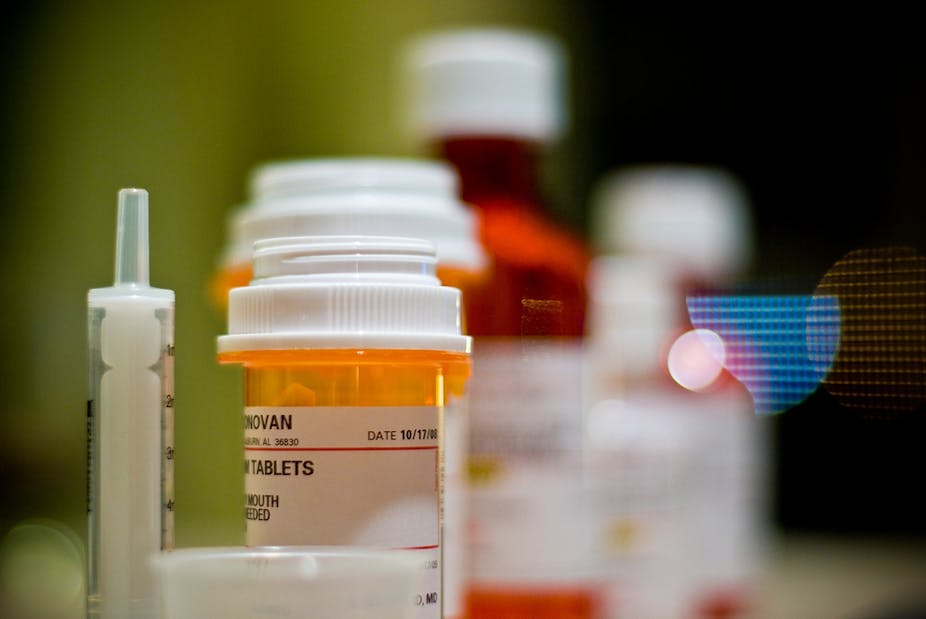
Recent surveys show many Australians have not filled a prescription because of cost. Robert S. Donovan

A growing number of people globally live with chronic illness. By the time they reach 65, most Australians have at least one chronic condition and 80% have three or more.

Pharmaceutical treatment is often essential for managing these conditions and keeping people out of hospital, but costs can be substantial. Even with the assistance of the Pharmaceutical Benefits Scheme (PBS) the on-going expense of treating a chronic illness, or multiple illnesses, can cause financial hardship.

Consider an individual with three commonly co-occurring conditions: asthma, osteoarthritis, and acute coronary syndrome (a type of heart disease). Management of these conditions typically require eight different prescription medicines.

For a pensioner or other low-income earner with concessional benefits, the monthly cost of these PBS medicines is $45. A general beneficiary under the PBS would pay over $200 a month.

The problem with high monthly medicine costs isn’t just that it places stress on household budgets and potentially diverts spending from essentials, such as food and electricity. It’s that many patients stop taking their prescribed medicines.

A creeping problem

Recent surveys have shown that between 12% and 20% of Australians have skipped doses of medicine or not filled a prescription because of cost. Those most likely to report forgoing their medicines were the chronically ill, low-income earners, and people with high medicines costs.

Patients cutting back on medicines for financial reasons are more likely to experience a worsening of disease and require hospitalisation compared to those taking medicines as prescribed. This is socially and financially costly for individuals, families, and the community.

We know that increases in PBS medicine charges have adverse impacts on medicine use for some patients. In 2005, co-payments for PBS medicines increased by 21% for concessional and general beneficiaries. A comparison of PBS records before and after this 21% increase in co-payments showed significant falls in the number of prescriptions filled in 12 of the 17 medicine classes studied.

Prescription dispensings fell by between 3% and 11% and included many medicines essential for keeping people well and out of the hospital system (such as cholesterol lowers, anti-platelets, and medicines for asthma and osteoporosis). Concessional beneficiaries (who tend to be older, sicker and on lower incomes than the rest of the community) were most affected by the 21% co-payment increase.

We do not yet know how much the falls in medicine use have cost the community in terms of lost productivity and greater need for GP and hospital services.

Patients cutting back on medicines are more likely to experience a worsening of disease and require hospitalisation. CarbonNYC/Flickr

But given what we know about the relationship between medicine costs and patients’ ability to access them, it’s important that PBS medicines are kept as affordable as possible. Affordable PBS medicines are especially important for the chronically ill, as they are the group most vulnerable to cost increases and most likely to experience health deterioration if medicines are not used.

Safety net solution

One of the key ways our health system supports the chronically ill is the PBS safety net. Separate to the Medicare safety net, the PBS safety net provides critical protection against on-going, high prescription medicines costs.

Once individuals or households have reached the safety net threshold – currently $348 for concessional beneficiaries and $1,363 for general beneficiaries – co-payments drop to $5.80 for general and to nothing for concessional beneficiaries. In this way, the PBS safety net greatly reduces or removes the cost burden of prescription medicines for the chronically ill for a period of time each year.

Unfortunately, many patients are missing out on the PBS safety net because they either don’t know about it, or are not able to keep the necessary documentation throughout the year to receive its benefits.

Unlike the Medicare safety net, which automatically comes into effect when patients have spent the threshold amount on medical services, patients have to keep track of their spending on PBS medicines using a safety net recording card. Patients need to present this card at the pharmacy each time they have a prescription filled and keep track of their spending until the safety net threshold is reached.

This requires a great deal of organisation and planning for individuals and families who may collect medicines at different times and multiple pharmacies.

Automation of PBS spending (this already happens for Medicare) would ensure that all eligible patients receive their entitlements. Without it, an unknown proportion of patients are currently missing out on their full PBS entitlements.

Automating the safety net will directly benefit individuals and families with chronic illness. But the benefits of appropriate medicines use extends to the entire community by allowing people to live healthier and more productive lives, and reduce pressure on hospitals and other health services.

Sign in to Favourite

Want to follow The Conversation?

Sign up to our free newsletter to get the day's top stories in your inbox each morning, with a special wrap on Saturday.

Spinner
Donate and become a friend of The Conversation

Join the conversation

12 Comments sorted by

  1. Rollo Manning

    Pharmacist & Adjunct Lecturer

    An excellent commentary on a huge hidden problem.
    Well done Anna.
    The notion of automated monitoring of dispensing towards a Safety Net target is most achievable and must happen to move the responsibility away from the dispensing pharmacy where it obviously is not working.
    Pharmacists get paid $1.09 for the cost of recording the dispensing of scripts that have to be recorded at any rate. So what is the "fee" for? It is a so called "voluntary" fee that the client should be advised of so they are…

    Read more
  2. Richard Hockey

    logged in via Facebook

    Not really sure how this can work. MBS is a rebate system while PBS is based on a co-payment and is very different in how its administered. Currently if a drug is dispensed at a cost lower than the co-payment the pharmacist doesn't make a claim and this transaction is not recorded by the PBS. For this scheme to work would require a radical change to how the administration of the PBS operates ie all drugs dispensed would need to be recorded by the PBS system which would be an additional cost to the scheme. I can't see that happening anytime soon.
    R

    report
    1. Anna Kemp

      Assistant Professor at University of Western Australia

      In reply to Richard Hockey

      Thanks Richard. You are right that automation could not work without below co-payment medicines being captured. Fortunately, the PBS system changed in April this year and all PBS-listed scripts are now captured, even if they are below the co-payment.

      report
  3. Rajan Venkataraman

    Citizen

    Dear Prof Kemp
    Great article and a very practical suggestion. My (admittedly uninformed) view is that the technology required in pharmacies (and centrally) for this kind of automated record-keeping should be trivial to roll out. Perhaps the current machine-readable medicare card could do double-duty for recording PBS-listed iems. Or - as another reader has suggested - a smart-phone app could probably do the trick.

    report
    1. Michael Glass

      Teacher

      In reply to Michael Macdonald

      In that case, the reform suggested should be easy to implement. Are there any impediments for this simple and life-saving reform?

      This reform is so necessary One of my aunts died prematurely because she skipped taking all her medications because of the cost.

      report
    2. Michael Macdonald

      Chemist

      In reply to Michael Glass

      My guess would be Medicare itself (i.e. the federal government), it'd cost them to implement (increased workload/costs). Presumably this is why pharmacists are paid to keep safety net records (a cost saving compared to Medicare doing the processing).

      report
    3. Rajan Venkataraman

      Citizen

      In reply to Michael Macdonald

      Thanks Michael. That is incredibly helpful. Like Michael Glass, I'm amazed that this change cannot be made immediately given the data is already being collected. Seems to me that you and Anna need to get into the ears of the right people.

      report
  4. Brian Lennon

    logged in via Facebook

    Our biggest threat to the PBS and affordability is the US-Australia Free Trade agreements, now the TPPA. The US Pharmas are lobbying hard to get "affordability" off the permitted criteria for drugs, to undermine things like the Australian PBS, and radically increase their prices. The big problem with the FT (TPPA) negotiations is that they are not made public, are not allowed to be debated in parliament and so we could get lumbered with another wealth siphon to the US at the expense of those needing medicines in Australia. Given the performance on climate change and coal, do you think we should be concerned about being sold out to big business interests?
    http://blogs.crikey.com.au/croakey/2011/09/01/new-trade-agreement-threatens-australias-laws-on-medicines-and-tobacco/

    report
  5. Chris Weir

    Analyst

    Am I missing something?
    As a 'high maintenance' user of medicines and on a pension the two pharmacy's I have used (two because of location change) have always had a record of scripts dispensed and thus advised me and have done whatever was needed to claim the safety net for the balance of each year when I qualified.
    I suppose they did that as a service and not as an obligation.
    It becomes more complex I guess when scripts are filled from a plethora of pharmacy's and maybe the hospitals to boot.
    I note that details of the what, where and when are appearing on my ehealth record as well so maybe there is something afoot on the data front.

    report
    1. Anna Kemp

      Assistant Professor at University of Western Australia

      In reply to Chris Weir

      Many pharmacists will help keep with record keeping, and I'm glad yours does. Unfortunately lots of people fall through the cracks with this approach; especially those who don't always get to the same pharmacy or where multiple family members need prescriptions.

      report