Why we can’t live forever: understanding the mechanisms of ageing

Ageing is the sum of many processes acting in concert to produce the signs and symptoms we know as “getting old”. Of course, there’s no way to stop the ageing process, but a better understanding of the different mechanisms of ageing can help us slow it and enjoy better health as the years advance. Perhaps…

Mpdvbhch-1338775351
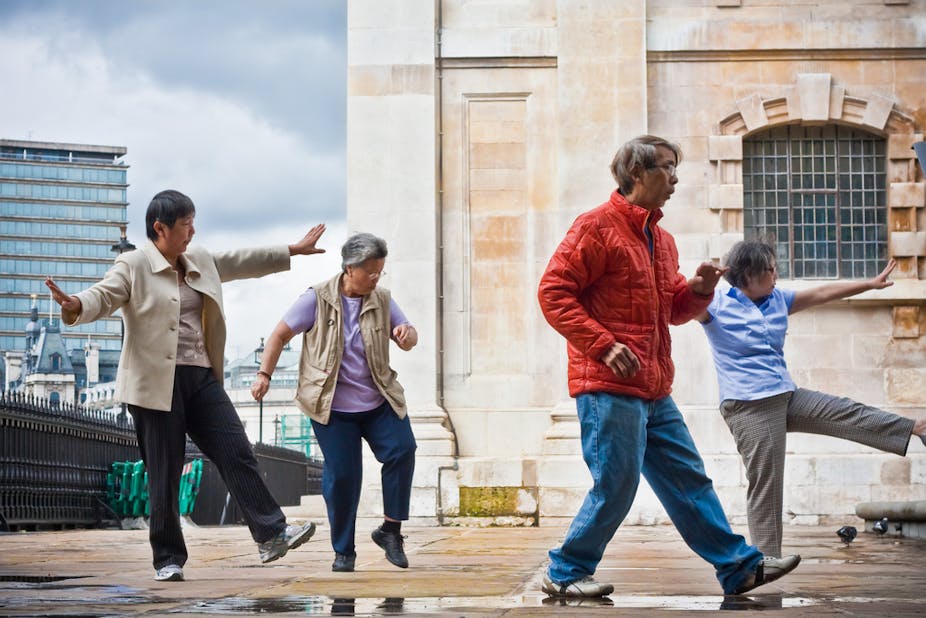
Those who continue to be physically and mentally active throughout their life seem to age more slowly. Garry Knight

Ageing is the sum of many processes acting in concert to produce the signs and symptoms we know as “getting old”. Of course, there’s no way to stop the ageing process, but a better understanding of the different mechanisms of ageing can help us slow it and enjoy better health as the years advance.

Perhaps one of the most easily recognisable features of ageing is that of loss – whether loss of memory or a full head of hair. When we look in the mirror, many of the features we identify as “old” are simply a threshold. Although the time it takes to reach any arbitrary threshold can be considered “ageing”, many other factors can shorten or extend this time.

Greying hair

Ageing hair greys when the cells that pigment the hair become damaged. By the age of 50, half of all hair follicles in half of all men have lost their pigment.

Practical Owl

But ageing is not the only factor involved; smoking, sunlight exposure, inflammation, stress and other factors all act on the hair to shorten the time it takes for the grey to take over. This is how we can appear to get older faster, because it takes less ageing time to reach a point when all the dark hairs have gone.

More importantly, by preventing or reducing these modifiable lifestyle factors, we can appear to age more slowly, even if we never change our ageing speed. Consequently, slowing ageing does not mean stopping time, but stepping away from the edge so that time is no longer the enemy.

Injury and mileage

With ageing comes an accrual of injury. As Indiana Jones once quipped about his lack of stamina, “It’s not the years, honey, it’s the mileage.” The human body accumulates a lot of “natural shocks” over a lifetime, which ultimately threatens its integrity and underlies many of the phenomena we recognise as ageing.

A good example is damage to the genetic code, which is known as “mutations”. These errors become more common and more significant the more times a sequence has been copied and recopied, and eventually they can change the way cells function.

But while overuse may be an important factor, atrophy from lack of use is another contributor to ageing. All cells require stimulation for healthy growth and activity. Hearing or visual loss, for instance, seems to speed up when people are deprived of stimulation.

By contrast, those who continue to be active physically, mentally, socially and spiritually not only retain the greatest quality of life, but find the impacts of ageing seem to slow.

Repairing the body

Some parts of the body may be more susceptible to ageing because they have limited abilities for repair. Other parts defend stoutly, at least initially. But as we age, these repair mechanisms can become less effective, so that any stress potentially becomes more injurious.

As we get older there are a number of ways to compensate, to keep things ticking over normally. The appearance of ageing can be the physical manifestation of these compensations, like a walking stick or hearing aid. These compensations may also be evident in the ageing body.

The ageing heart, for instance, adapts – getting bigger and contracting longer to maintain function despite the extra demands of stiff vessels. The atria also work harder and faster to fill the heart. This augmented atrial contraction can sometimes be heard as a fourth heart sound (called a “gallop” rhythm) if you listen with a stethoscope in an elderly patient.

Can we live forever?

Our design is incompatible with indefinite survival. As is the case with a toaster, lifespan is limited. Given reliability of components, some toasters will survive longer than others, although they do roughly the same job. But eventually, one morning your toast will not pop.

Similarly in humans, some parts simply can’t be replaced. We have a complement of specialised (post-mitotic) cells that have very limited or no capacity to divide. These include the neurons of the brain, the beating muscle of the heart and the insulin-producing cells of the pancreas. They cannot be replaced, which is why the effects of ageing may be more important and more obvious in these cells and the functions that they serve.

You can slow the signs of ageing by being physically and mentally active, but you can’t stop them altogether. funadium

Is ageing a disease?

In most people’s minds, ageing is synonymous with having more disease. But it’s not the same thing.

Take, for example, our bones. From about 20 years of age, our bones get progressively thinner. At some point, bone loss becomes so significant that its integrity is compromised, leading to an increased risk of fractures. This point (or disease) is called osteoporosis.

While bone loss is not separate from ageing, it is not the same thing. A number of other factors (such as smoking and inactivity) can also contribute to bone loss and therefore osteoporosis (disease). Ageing just moves you closer to the edge in a way that makes it easier for other factors to push you over and initiate disease. Equally, preventing disease can slow the impacts of ageing.

Ageing is the sum of life

Ultimately, ageing is not one factor but the sum of many: some damaging, some protective. In youth, these forces are kept in balance. But with the passage of time there is an accrual of injury and the memories of its effects.

Although our design is incompatible with indefinite survival, it does not mean that we can’t shift the odds in our favour with smarter choices in our diet and lifestyle. Plan to take the long way home.

This is an edited version of an article that appears in the latest issue of Perspectives, an opinion-led journal published by Baker IDI Heart and Diabetes Institute.

Join the conversation

10 Comments sorted by

  1. Bruce Tabor

    Research Scientist at CSIRO

    "By the age of 50, half of all hair follicles in half of all men have lost their pigment."

    Shame that the half that have lost their pigment are the only ones still producing hair!

    report
  2. Colin MacGillivray

    Retired architect

    Obviously hair is important to blokes.
    It's always interesting to watch the progress of white hair on a President of the United States. Obama is doing quite well so far.
    Good article.
    Shouldn't the cryogenic industry, freezing bodies and heads read it?

    report
  3. Arthur James Egleton Robey

    Industrial Electrician

    The self-referential Left brain confuses the map with reality. It confuses the re-presentation with the present.
    Only empirical evidence is valid. No statement, no matter how sincerely held is valid, without the empirical evidence.
    Hence the statement that "Of cause we cannot live forever" is valid only on the present evidence.
    If it is elevated to a self-evident truth then it becomes dogma.
    It is berift of the humility that science demands.
    Here is a video outlining the problem with our experience of reality.
    http://www.youtube.com/watch?feature=player_detailpage&v=dFs9WO2B8uI

    report
  4. Paul Regis

    Business Analyst

    A thought provoking article.
    Our mortality also serves to give us relevance. I wouldn't like to live on earth forever because then it reduces the biological value of children and allows one to procrastinate indefinitely.
    I know I am dying. This bestows a sense of urgency, which helps me keep up the pressure to strive forward and be the change I need to see, before it is too late.
    Also, if we did not age but we did still die after a set period, then that system just wouldn't work either. After all, one has to feel the changes taking place - as a constant reminder to embrace the fact that you are mortal and hence get on with it.
    Nonetheless, there are a few things like dementia and cancer that I wish we could see the back of.

    report
  5. Laurie Willberg

    Journalist

    Osteoporosis is largely an invention of of the medical industry that has scare-mongered women into gobbling inappropriate amounts of calcium supplements that has lead to an increased incidence of hardening of the arteries.
    No mention of telomere shortening in this article which is a key aspect of ageing.
    No mention of actual steps that can be taken in the prevention department, other than the lip service to "diet and exercise".
    Want some real info.? Check out some Orthomolecular Medicine websites.

    report
    1. Sue Ieraci

      Public hospital clinician

      In reply to Laurie Willberg

      Laurie Willberg - where is the evidence that use of "orthomolecular medicine" does anything to influence the ageing process?

      Do you have shares in a multi-national orthomolecular manufacturer?

      report
    2. Laurie Willberg

      Journalist

      In reply to Sue Ieraci

      Sue Ieraci, how is it you're so poorly informed?
      Do your own homework on telomere shortening and the role that a holistic diet and supplementation can play in prevention. Stop the pseudo-skeptic nonsense of pompously demanding that someone supply you with information you can easily find on your own, and while you're at it, look up the definition of "orthomolecular medicine", which is a term applied to nutritional medicine coined by Linus Pauling, the Nobel Prize winning scientist. No, I don't own shares in organic vegetable or herb farms and doubt I could if I wanted to.

      report
  6. Father Æthelwine

    Priest and researcher.

    My science master at school taught us that we should do everything we could to keep out of the hands of medics if we wanted to live a long and happy life. He recommended researching the state of food, because even then at the end of the 2nd World War the land was leaching minerals, and plants were not containing what they were supposed to contain. Nutrition, he said, was the secret, with a 'but'.The 'but' was that it was harmful to consume more than we actually needed for our particular way of life, and that if we put on weight that we did not need it would knock years off our lives. I've done it, and it has worked so far. I'll keep you posted! I still 'do' science, and yes, virtually everybody in the UK is short of Selenium, and most don't know it. I hope there's plenty in Oz - we have to find it somewhere.

    report
  7. Andrew Pengilley

    Doctor

    I think of aging as an inescapable fact of information loss. Our genetic material contains the information necessary to turn a cell into an adult body, but thats not the same information necessary to turn a damaged adult body into a healthy one. So we get scar tissue not regeneration. I think this is particularly the case for the 'macroscopic' features that we are so sensitive to. There is no way for a skin cell in a 50 year old to know whether it is living in a crease or on the surface of a taut…

    Read more
  8. Florin Clapa

    logged in via Facebook

    If we don't develop the medical technology to comprehensively repair aging damage, we can't live forever, but if we do, there's little reason to doubt that we can live forever. Fortunately, this damage repair technology is being developed today. Simple, lab-grown tissues such windpipes and viens have been successfully implanted into patients. Various complex organs have been grown in the lab such as beating rat hearts, inflating rat lungs, and functional rat livers. Some of these organs have been…

    Read more