Will Siri ever dream of electric sheep?

The idea of a personal robot assistant, able to effortlessly understand spoken (and unspoken) human intents and efficiently act on them while delivering a breezy quip, has been a staple of science fiction. The 1940s had Zolo to scare away officious mailmen and refresh bouquets, while the Jetsons had…

Zvwm4fkn-1339982440
Should we learn to expect more from our personal robot assistants? Warner Bros.

The idea of a personal robot assistant, able to effortlessly understand spoken (and unspoken) human intents and efficiently act on them while delivering a breezy quip, has been a staple of science fiction.

The 1940s had Zolo to scare away officious mailmen and refresh bouquets, while the Jetsons had Rosie to deal with prickly bosses. HAL 9000, the most evil red light in filmdom, may not have been keen to “open the pod bay doors” but it could still belt out a mean rendition of Daisy Bell.

Last week at its Worldwide Developers Conference (WWDC), Apple announced a raft of new features for its software-based intelligent personal assistant, Siri – a real-life approximation of this once-imagined future.
Hal 9000 – great singer, terrible attitude. razorsmile

Apple lauded Siri as the standout feature of its iPhone 4S last October, showcasing several uses, including setting reminders and appointments, searching the web and answering the age-old question: “Should I carry an umbrella today?”

The app stole a march over the stilted spoken command interfaces of all mobile platforms including that of Apple’s iOS until then, with the seemingly effortless manner in which it understood natural spoken language.

A year before its star turn, Siri had actually debuted on the iOS platform as a standalone app that integrated with various web services and made it possible to locate restaurants and book tables with spoken language commands.

Siri’s functionality can be roughly broken down into three parts:

  1. speech recognition
  2. reasoning
  3. delegation

Speech recognition involves making sense of voice patterns and converting them into spoken phrases. This means separating the user’s voice from background noise and accurately translating it into words from a language.
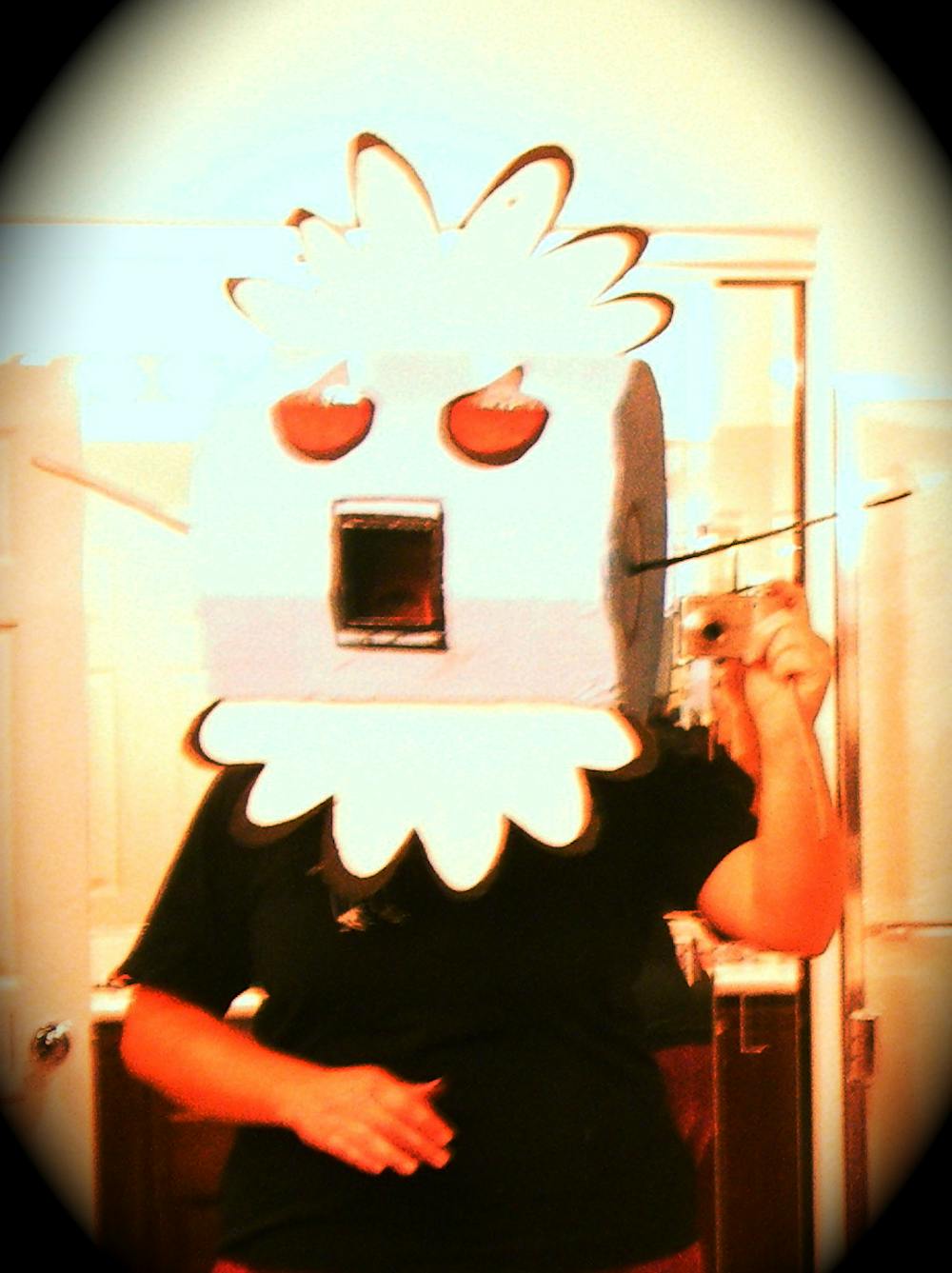
Rosie, of The Jetsons' fame – Siri’s grandma? Pocheco

Reasoning not only requires recognising the intent of the words but also the context in which they were spoken. A simple command such as “Give Mum a ring” requires the assistant to understand that the action required is to make a phone call to a contact called “Mum” and not to present an actual ring.

Delegation requires firing a specific handler – in this case, the app that actually makes the phone call – with the task of executing the action.

If things go wrong – for example, there is no contact called “Mum” – the assistant should be able to inform its human with a simple response and try to get more data to fulfil the request.

Speech recognition and reasoning require matching voice patterns against databases and running extensive statistical analysis – tasks that require computing power and memory in excess of that provided by the processor in iPhone 4S.

Therefore, Siri requires an active wireless internet connection over which it transmits data to Apple’s servers where most of the processing is performed. Naturally, data usage is higher on a Siri-enabled iPhone.

Siri is able to carry a conversation with its users and provide the semblance of a human personality. It’s also seemingly able to engage in witty repartee to answer questions about the meaning of life (“42”), suggest places to hide a body and report its owner to the Intelligent Agents' Union for harassment.

Your wish is Siri’s command. topgold

Siri has been anthromorphised, by Apple as well as others, as a female and is repeatedly referred to as “she”. On the flip side, Siri has been sometimes dismissed as a gimmick, and has been the subject of lawsuits that accuse Apple of overselling the capabilities of a feature that is still officially beta.

At its introduction, Siri was able to interact with the iPhone’s native apps as well as external apps such as the “answer engine” Wolfram Alpha for executing web searches. At this year’s WWDC event, Apple announced the additional features it was bringing to Siri as part of its iOS version 6 upgrade.

These include actions such as opening any app on the phone, updating Facebook statuses and sending tweets, making reservations for restaurants in the US, and providing information about sports scores in the US. But there is still no method for non-Apple developers to use Siri in their apps.

Apple’s competitors have not been resting either. Samsung recently introduced S-Voice, a Siri-like feature, as part of its new Galaxy SIII smartphone while other apps such as Evi aim to provide competing services on the iPhone.

Will Siri’s achievements disappear in time, like tears in rain?

Siri’s features are built on decades-long research in computer science in areas such as natural language processing, machine learning, distributed computing and artificial intelligence.

These are still active areas of investigation and recent advances should enable future software assistants to improve their knowledge of context in spoken language and be able to engage in effortless conversation without resorting to canned responses. Apple itself uses the data gathered from Siri users to continually improve its capabilities.

Intelligent assistants are important to help users navigate and work in a world that’s drowning in information pouring in, like tears in rain, from a vast array of sources. Their role will become more prominent as their capabilities improve.

The science fiction vision of sentient, knowledgeable robot helpers is not impossible to realise. When that happens, we may have to speak about their dreams as well.

Join the conversation

13 Comments sorted by

  1. Black Knight

    writer

    On the theme "Do Androids dream of electric sheep?" the answer appears to be "Only when accessing their inner RAM." ;)

    report
  2. Stephen Pritchard

    Researcher, cognitive science

    Siri - and near future versions of this kind of software - are only good for automating straightforward yet time-consuming tasks that require multiple button presses/scrolling, such as setting up a calandar appointment, or looking up a list of contacts to call the specific person you want to call.

    Siri - and other so-called intelligent assistants - are no good for "help[ing] users navigate and work in a world that’s drowning in information pouring in", because the general intelligence and reasoning…

    Read more
    1. Srikumar Venugopal

      PhD; Lecturer in Computer Science and Engineering at University of New South Wales

      In reply to Stephen Pritchard

      Siri and similar assistants are severely limited, I agree and I have acknowledged that in the article. But, it is one of the many milestones towards achieving AI that is capable enough to take care of tasks required of a personal assistant.

      The success of Roomba in the US shows that such capability is reachable but to make it work for any general task, would require more work in the research areas I have mentioned. A lot of this work is happening at the moment in universities here and elsewhere. You might want to look up the Loebner Prize competitions for up-to-date research on conversational agents.

      I wouldn't be surprised if we have had a fully functional robotic helper by 2030. Humans are inherently limited in the amount of data we can process in a short period of time and agents would be much more suitable as helpers. Even Google Search can be activated by voice, so that becomes a voice-controlled assistant as well.

      report
    2. Stephen Pritchard

      Researcher, cognitive science

      In reply to Srikumar Venugopal

      Comparing Roomba - a robotic vacuum cleaner - to the kind of personal assistant that Siri is trying to be is a bit of a stretch isn't it? Roomba is performing a single task in an extremely constrained domain. It is something of a king-kong size understatement to suggest that "..to make it work for any general task, would require more work in the research areas I have mentioned."

      There is a story on the Loebner Prize in the SMH today:
      http://www.smh.com.au/technology/technology-news/how-close-are-we-to-thinking-machines-20120618-20j7q.html
      It suggests - as expected - that conversation agents, while technically impressive if you are an enthusiast, are still absolutely rudimentary compared to our ability to converse.

      report
    3. Grendelus Malleolus

      Senior Nerd

      In reply to Stephen Pritchard

      Stephen, you provide a list of things that you do not need Siri to do. What Apple have started to roll out is an early model virtual assistant that is quite clearly not targeted at you. Their market is not the advanced user who understands machine intelligence and its limitations.

      The success of their products suggests that whether or not Siri is as advanced as some people believe it to be it has nevertheless struck a chord with the marketplace.

      report
    4. Darragh Murray

      Self employed

      In reply to Grendelus Malleolus

      But is it really striking a chord? Are people buying iphone 4S' because of Siri? I think Stephen makes a valid point - even the rudimentary tasks that Siri is suppose to do (as per Apple's advertising campaign) don't work smoothly. It's more of a hindrance rather than something useful. I think that's the point Stephen is ultimately making.

      Siri is simply a toy. It's the added hat on a new Malibu Stacy doll.

      report
    5. Grendelus Malleolus

      Senior Nerd

      In reply to Darragh Murray

      "Are people buying iphone 4S' because of Siri?"

      I don't know, most survey data (published at least) do not tend to reveal to what extent the Siri feature influences intent to purchase. What is apparent however is that it is not a deterrent. At best for some users it will become an unused feature but to dismiss it because it does not meet your current needs or has substantial deficits in its beta form ignores the pattern of evolution of technological features apparent over the last few decades…

      Read more
  3. Darragh Murray

    Self employed

    Siri is a complete waste of time. Not only is it significantly faster to manually do these operations manually, it's clumsy to sit around talking to your phone. Furthermore, you require to make a button press to engage with siri, meaning you cannot 'talk' from a distance.

    It' would be like having to poke a friend before them being able to understand anything you say. As Stephen Pritchard says above - Siri offers little or no practical use.

    report
  4. Black Knight

    writer

    Us old-fashioned members of the Gutenberg era will remain tied to the written and printed word. The coming generations will use sound and images (I reckon).

    report
  5. Roger Clark

    Technology consultant

    There is no also mention of the significant privacy concerns with Siri.

    Specifically, the "reasoning" processing, which is mostly conducted by Apple's servers.

    Do you want Apple or any other organisation to know every command you give your phone.

    report
  6. Seán McNally

    Market and Social Researcher

    How will we know if a Siri is dreaming? Would running file mainteniance or defragging count? Maybe running what we call simulations for testing potential responses to observations made when it working. Interesting article. Like the question of life and consciouseness I suspect answering the 'dream' question will also motivate us to better understand what is a dream.

    report