

The world didn’t end after all.
From the Mayan end of times prophecy beloved of New Agers and conspiratorially minded types, which signally failed to materialise, to Tony Abbott’s more parochial but equally apocalyptic claims about the effect that the carbon tax would have on all aspects of Australian life, 2012 was meant to be the year that would see the end of life as we know it.
Certainly Julia Gillard was widely expected to have had her political life, at least as the occupier of The Lodge, ended this year. But after comfortably surviving the long-awaited leadership challenge from Kevin Rudd, Gillard slowly but surely regained political momentum as the public realised that the carbon tax had not had the impact on their finances and employment they feared.
And in the defining moment of the Australian political year, Gillard rose in the chamber in a debate over allegations about text messages sent by former Speaker Peter Slipper and proceeded to eviscerate Tony Abbott over his attitudes towards women.

Gillard’s “misogyny speech” quickly went viral and sparked a global debate, in which nearly every person with access to an newspaper opinion column or more simply, a social media account, felt compelled to offer their own opinion on the matter.
But as Deakin University’s Patrick Stokes pointed out in his article No, you’re not entitled to your opinion, read by more than 300,000 people worldwide and re-tweeted by luminaries such as Richard Dawkins and Ricky Gervais, we live in an era when many feel that having access to the means to express an opinion gives that view veracity by dint of its own existence. Which is usually not the case.

But there are of course experts in given fields who we should listen to when they speak out on an issue. Many of these could be found on The Conversation this year, on issues as diverse as the Australia in the Asian Century White Paper, the rise of the Massive Open Online Course and the ongoing, seemingly never-ending debate over how Australia should deal with people arriving by boat to claim asylum.
The leader of our expert panel on asylum seekers, Monash University’s Sharon Pickering, was recognised for her timely and considered input in the debate with the 2012 Human Rights Award in Print and Online Media.
Internationally, President Obama was re-elected comfortably against his Republican challenger Mitt Romney. The Conversation’s dedicated US elections page featured contributors from both Australia and the US, with a group blog and weekly podcast offering analysis and engagement with the campaign beyond the traditional print media approach.

Our coverage of the London Olympics employed similar innovations, working with SBS to develop a series of video explainers alongside analysis and opinion of the greatest sporting show on Earth.
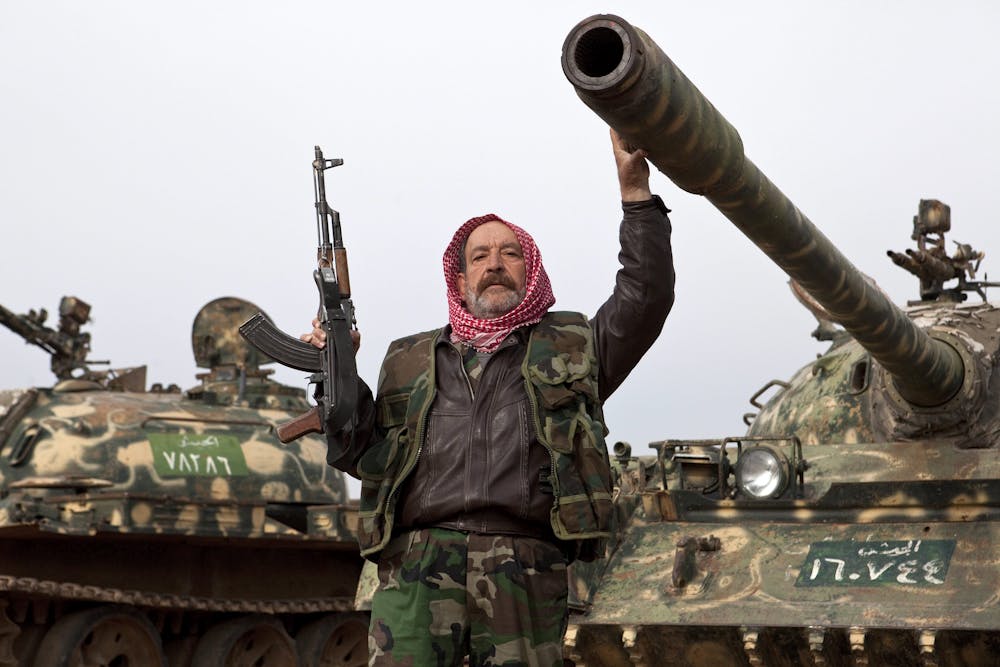
The Conversation’s commitment to providing informed expert analysis saw a series of articles on the Syrian bloodbath from authors with direct experience of the increasingly complex conflict, one that has been characterised by what many see as agenda driven reporting from the mainstream media.
The year also saw the establishment of The Conversation’s dedicated columnists. Bronwyn Lea’s regular take on the world of literature quickly gained a dedicated following while Mat Hardy peels away the layers of spin and propaganda that so often surround reporting on the Middle East. Lauren Rosewarne’s adroit interpretations of popular culture artefacts entertain and provoke in equal measure while John Keane charts the ebb and flow and evolution of democracy around the globe. Meanwhile, Sarah Joseph gave her take on all things human rights, sparking much debate with her columns on freedom of speech.
For the politics and society desk, the year to come will pivot on the Australian federal election. Julia Gillard will enter 2013 hoping that instead of presiding over a Queensland-style wipeout she will at least be able to make Tony Abbott fight for every seat. Tony Abbott will be crossing his fingers and hoping the latest polls are an indication of things to come.

Inevitably, there will be stories that dominate the discourse that appear to have sprung from nowhere. Will there be a Kony2013? And while members of the all-female Russian punk group Pussy Riot languish in Siberian labour camps, somewhere, similarly courageous but as yet unknown individuals are working to expose human rights injustices in the most unpredictable of fashions.
We also look forward to hearing from our readers as the year unwinds. Your comments and feedback inform our coverage every bit as much as the events we cover. It is after all, The Conversation.