


The last few years have begun with predictions of the Apocalypse hanging over us.
The Rapture was supposed to come in 2011, with US preacher Harold Camping first saying it would come in May then readjusting his sights to October. Last year, of course, brought us predictions of the Mayan Apocalypse, which passed with lots of parties but no lasting fireworks.
With solar activity expected to reach a cyclical peak in 2013, this year was shaping up as another big year for apocalyptic fears, however NASA have recently downgraded their predictions for solar storms. So does this mean that we can have a year off apocalyptic frenzies?
Probably not.
A look at Hollywood’s release list for this year tells us that 2013 will be anything but apocalypse free.
Diabolo Cody’s remake of the Sam Rami classic The Evil Dead continues the zombie explosion of recent years, while Brad Pitt also gets to run from a zombie apocalypse and go all out to protect his family in World War Z.
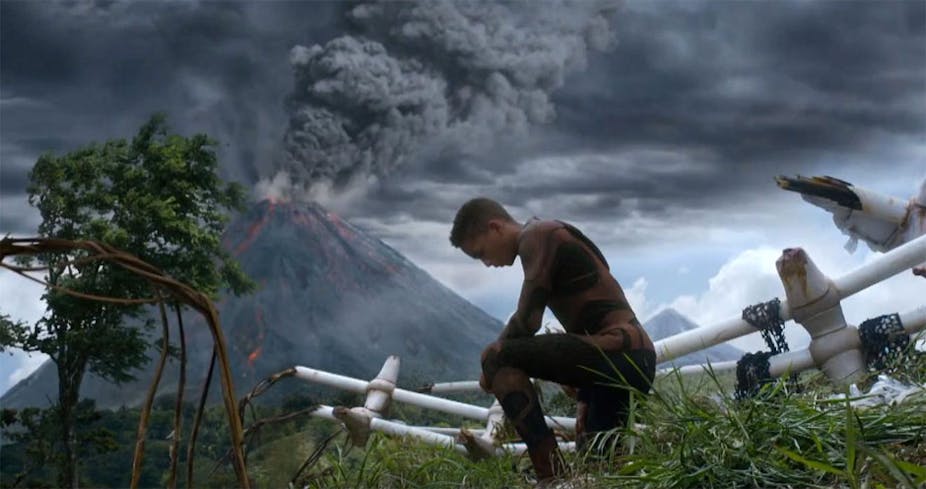
Matt Damon, Jodie Foster, Tom Cruise, Will and Jaden Smith and Guillermo del Toro all have post-apocalyptic blockbusters scheduled and this year we even get apocalyptic comedy. The Shaun of the Dead team are back with The World’s End where five mates unite for a pub crawl that could literally end all pub crawls.
The National Geographic Channel’s new season of Doomsday Preppers begins this week. Their episode guide promises stories of a tornado-fearing farmer building an underground Noah’s Ark for his animals and a family man preparing for a nuclear-powered terrorist attack. The series brings us weekly stories from the survivalist movement who are going all out to prepare for the worst.
When Doomsday Prepper’s first season launched last year, it fitted the 2012 zeitgeist but the new season has a more eerie resonance with the widely reported news that Sandy Hook school shooter Adam Lanza’s mother Nancy was a prepper.
As J. M Berger [pointed out](http://www.foreignpolicy.com/articles/2012/12/17/newtown_and_the_doomsday_preppers](http://www.foreignpolicy.com/articles/2012/12/17/newtown_and_the_doomsday_preppers) in Foreign Policy, it is far too easy to blame Nancy’s enthusiasm for guns or her survivalist beliefs for the horrific events in Newtown. However, survivalist doomsday beliefs have been associated with a number of other terrorist and shooting deaths.
Berger points out that there is very little research about the mental state of preppers. But he believes “anecdotal observations” point to a higher incidence of mental illness among hardcore preppers than in the general population. He adds:
The nature of their beliefs and social networks may create obstacles to diagnosis and treatment. There can be fine lines between reasonable fear, intense fear, and irrational fear, and some preppers subscribe to conspiracy theories that are completely nuts, focused on supposed threats from sinister “chemtrails” to the Illuminati (or both and then some).
World ending, conspiratorial beliefs are easy to dismiss as symptoms of possible mental illness but sociologists, psychologists, theologians and literary scholars who have studied apocalyptic narratives and beliefs are more inclined to speak of them as a form of sense making.
Apocalypse is the Greek name of the last book of the Christian Bible and colloquially it has come to mean a world-ending catastrophe because of the fiery visions of plaques, famines, earthquakes, wars and global slaughter described. But the word is Greek for “revelation” or “unveiling”. The proliferation of apocalyptic myths are in fact trying to reveal something. And their message is just as much about a possible golden future as it is about a gloomy end.
The apocalyptic myth is uniquely associated with the utopian: they are two sides of the one coin. The Bible’s Book of Revelation is filled with horrible world-ending visions, but it ends with the promise of 1000 years of peace.
Even Hollywood’s slate of apocalyptic disaster films aren’t as black and white as they seem. Western Australian academic Mick Broderick has suggested that rather than analyse these films, which undoubtedly celebrate a dazzling array of cataclysmic moments, under the rubric of the “aesthetics of disaster,” as Sontag famously did, they ought more rightly be seen as being primarily about survival.
The apocalyptic myth, which seems to exist in one form or another in all cultures, is doing what all classic myth does. It is trying to hold in tension two opposite possibilities and visualise what might emerge.
It is a fragile posture of hope, that stands firmly in the swirl of apocalyptic omens predicting bad endings and dreams of the future.