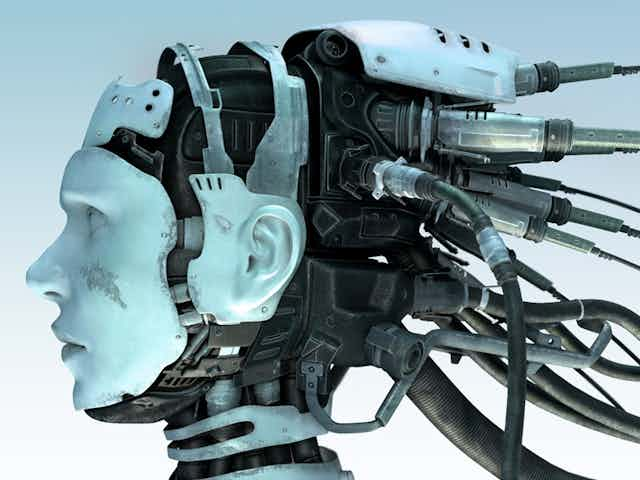
Augmentation technologies are here but are people listening?

“And, for an instant, she stared directly into those soft blue eyes and knew, with an instinctive mammalian certainty, that the exceedingly rich were no longer even remotely human.” William Gibson, Count Zero. In May, a group of Japanese researchers announced that they had successfully synthesised the…

Brwsqh27-1342159025
Augmentation technologies will challenge what it means to be human. WebWizard

“And, for an instant, she stared directly into those soft blue eyes and knew, with an instinctive mammalian certainty, that the exceedingly rich were no longer even remotely human.” William Gibson, Count Zero.

In May, a group of Japanese researchers announced that they had successfully synthesised the first artificial synapse – a development that could revolutionise machine intelligence and potentially help treat degenerative neurological conditions such as Alzheimer’s. But could the implications be even greater for humanity?

Synapses are integral to brain function – neurological switches that facilitate the transmission of electrical or chemical data between neurons, or between neurons and other cells; incredibly complex neurological structures comprised of the dynamic interactions of hundreds of proteins and other chemicals.

These interactions, due to plasticity of synaptic function can strengthen or weaken with time – facilitating, among other things, whether or not information is submitted to short or long-term memory – have a profound impact upon our capacity to learn and reason.

Unlike prior efforts, the synthetic synapse created by Japanese scientists operates in a fashion that mimics the behaviours of organic synapses, being similarly responsive to air pressure and temperature changes, opening up the possibility of an artificial brain that, like ours, can perceive the environment.

thepeachpeddler

As mentioned, a development of this sort has certain very exciting potential applications. Among these may be the capacity to replicate neurological structures could revolutionise research into artificial neural networks.

With further research, it is clear that this technology could be used to replace failing biological synaptic systems. Should the potential inherent in these technologies be realised, within decades, diseases and disorders that cripple the minds of millions of people could be abolished with nanomedical treatments that are universally effective, non-invasive and (ideally) inexpensive.

Moreover, those treatments would likely prove to be minimally ethically contentious; despite effectively turning recipients into cyborgs, the therapeutic benefits are likely to painlessly override any of our deeply-held intuitions about the dehumanising effects of technology.

The threat of the post-human

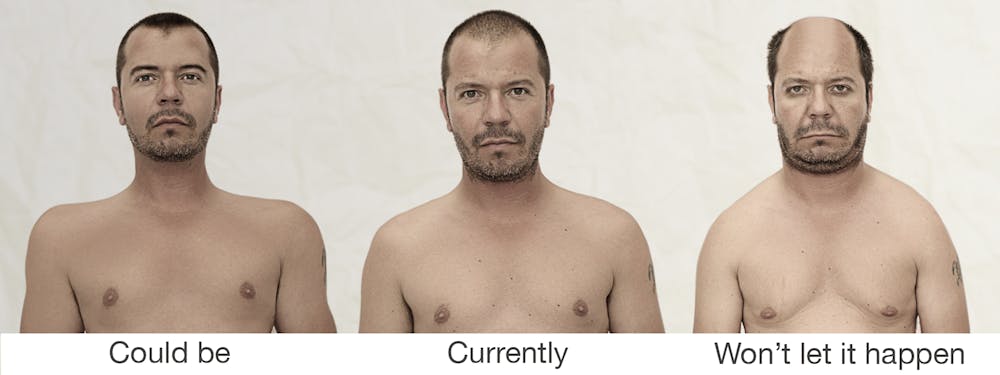
But what if one were to freely volunteer to undergo such a procedure, despite not suffering from an evident neurological disorder? If the promise inherent in this technology can be kept, it will likely prove possible to consciously and actively augment our cognitive abilities in a material way.
Mick & Wout

Such an application is not terribly therapeutic – at least not by any intuitive conception of therapy – but it does have some kind of positive utility. Does the mere fact of observing this utility override our intuitions? Should our hypothetical volunteer be allowed to receive the surgery?

Unfortunately, there appears to be a broad assumption – in public debate, policy and popular journalism – that human augmentation technologies are, on the whole, considered to be within the purview of science fiction: radical life extension, intelligent robot helpers, gene therapy, mind uploading, molecular assemblers.

Tiziano Caviglia

There’s an implicit judgement at play: being the traditional purview of philosophy and genre fiction, the sociological and ontological ramifications of these technologies are not considered worthy objects of public attention. As a result, public figures in Australia remain deafeningly silent, even despite several half-hearted attempts to invigorate the issue.

The relevance of these concerns

This approach would be appropriate were these concepts merely an exercise in philosophical navel-gazing. But many of those technologies listed above are either in active development, or are already (in a primitive sense) part of our medical or technological repertoire.

Techniques such as those isolated by the Japanese researchers could serve to actively facilitate the enhancement of human cognitive abilities in addition to being a meaningful step towards capacity-boosting neurological implants.

The following points are also worth noting:

The potential effects of these technologies cannot be understated: in addition to the social and economic problems posed by augmentation technologies, they may well serve to challenge our collectively held intuitions about what it means to be human (whatever they may be).

Fish Gravy

Already, technological development outpaces legislative and legal responses, and will only continue to accelerate. Given law is primarily reactive discipline, lawmakers are inevitably playing catch-up; as the ongoing imbroglio regarding IP law and the internet demonstrates, the legal system can take years, if not decades, to account for new technologies.

Given what’s potentially at stake, it’s not enough to rely on the glacial reactions of politicians and judges.

Even if no conclusions are drawn, it behooves us to begin this conversation now.

Articles also by This Author

Sign in to Favourite

Want to follow The Conversation?

Sign up to our free newsletter to get the day's top stories in your inbox each morning, with a special wrap on Saturday.

Help us have better conversations — donate

Join the conversation

14 Comments sorted by

  1. Chris van den Bergen

    OHS Consultant

    I think the technology is not at a point where alterations can be made to push people outside the natural variation of human cognition. If (when) this technology comes about, then I think the debate will heat up. Peoples' reaction to stem cell and use of steroids might give an insight into the direction the debate will head.

    Personally, I think humans may do well with a bit of augmentation. Perhaps it could reduce some of our cognitive biases.

    report
    1. Sean Lamb

      Science Denier

      In reply to Ryan Wittingslow

      Is the Cochlear implant a form of augmentation? Is an ear trumpet? Are contact lenses? Is a wooden peg leg? Is an artificial limb? Is an artificial limb that responds to some nerves signals? A pig's heart valve?

      Every form of new technology brings its ethical challenges. We developed nuclear energy and couldn't wait to drop it on our first city. Then we suddenly decided that maybe dropping nukes on cities was not exactly sporting - even though we had been happily area bombing cities for…

      Read more
  2. Stephen Pritchard

    Researcher, cognitive science

    This article covers a lot of content, and as a result juxtaposes some pretty speculative stuff (mind augmentation, mind uploading) with more realistic stuff (what ASIMO can do, drugs to improve cognitive ability). I think the juxtaposition is being used to critique judges and politicians in an unfair way. I think there is strong discussion and interest amongst legislators and the general public for the technologies of today (e.g. stem cell research, mind and body enhancing drugs), and the more speculative things you mention are so far off and the impliciations as yet so unknown that there is arguably no point in politicians and judges considering them.

    Creating an artificial synapse is a loooooong way off augmenting someone's mind. Similarly, learning how to make a brick doesn't imply any great ability to improve architecture. We won't be seeing "capacity boosting neurological implants" any time soon, maybe not ever.

    report
    1. Ryan Wittingslow

      PhD student in Film and Philosophy at University of Sydney

      In reply to Stephen Pritchard

      I think you're perhaps being a touch charitable to legislators, as well as being slightly pessimistic with regards to how long this technology will take to filter to a general public.

      On the specific point re capacity-boosting neurological implants, proofs-of-concept are being actively developed and tested. Although cognitive enhancement may be some years away, primitive forms of perceptual enhancement certainly are not.

      http://www.ssim.eng.wayne.edu/implants/neurological_implants.asp
      http://www.wired.com/gadgets/mods/news/2006/06/71087?currentPage=all
      http://io9.com/5924424/surgical-implant-will-allow-cyborg-artist-to-see-colors-through-sound

      report
    2. Stephen Pritchard

      Researcher, cognitive science

      In reply to Ryan Wittingslow

      Given the long history in fields like artificial intelligence of over promising and under-delivering (e.g. Siri is a noteworthy recent example), I think pessimism is a good default attitude to this kind of material.

      First link: Can't see anything beyond the typical technological fare to attract investors/funding, ie full of promise, no pay-attention-to-this-now results. A good example of my point: you are juxtaposing a grand idea (augmenting mental capabilties e.g. to make someone smarter, in…

      Read more
    3. Ryan Wittingslow

      PhD student in Film and Philosophy at University of Sydney

      In reply to Stephen Pritchard

      Re AI, your pessimism is understandable if slightly disappointing. Also, on the second point, the relevant detail is not that an implantee can pick up magnets without grasping them, but that they can detect magnetic fields as the magnet oscillates against their nerve fibres. Primitive, yes, but effective.

      If the crudity of the above examples is not to your satisfaction:

      http://www.kevinwarwick.com/Cyborg2.htm
      http://www.ted.com/talks/todd_kuiken_a_prosthetic_arm_that_feels.html
      http://vis.caltech.edu/Research/Research.html
      http://arstechnica.com/uncategorized/2003/03/476-2/

      report
    4. Stephen Pritchard

      Researcher, cognitive science

      In reply to Ryan Wittingslow

      Your argument is that these technologies are "here" and politicians and judges need to be paying attention.

      Which of these technologies do you think merits the immediate attention of a politician or a judge, given their current stage of development?

      report
    5. Ryan Wittingslow

      PhD student in Film and Philosophy at University of Sydney

      In reply to Stephen Pritchard

      I would argue that potentially all of them deserve at least the benefit of some kind of analysis assessing their potential likelihood and impact upon the public sphere within the short to medium term. My concern is that, to my knowledge, no such concrete analysis has taken place.

      I fail to see how initiating a proactive assessment of harm is a bad thing; I can certainly see how initiating a proactive assessment could be a good thing.

      report
  3. Peter de Lissa

    logged in via Twitter

    I can appreciate the need to imagine how technological advances can be used in destructive ways, but there are some fundamental dimensions which need to be addressed.
    Governments don't exist to play the role of concerned parents. I am often shocked at the casual way people assume that laws should exist to encapsulate all human activity appropriately. Laws should exist only to inhibit human activity which is agreed to be detrimental to society, and there should be very clearly debated reasons for such intervention. This is why so much of our law comes from the courts, where principles are evaluated in their application. But exploration has characterised our species, and there should be very few laws that rules some areas off limits (regulated, sure, but not verboten).
    But we still haven't come to a discussion about why augmentation is to be feared. What problems do you envisage?

    report
  4. George Faulkner

    Retired HR consultant

    I think this is an important topic and commend Ryan for bringing it up. While certainly one can think of all sorts of aids, like glasses or contact lenses as augmentation, direct connection between natural and artificial neuronal devices would be a real order-of-magnitude change that could enhance memory, reaction speed, etc. and preserve cognitive functions that otherwise decline with age.

    Ray Kuzweil and the many others (e.g., Google execs) funding the Singularity University are serious about advancing this and related technologies. In general this is good - humans will inevitably continue to evolve. But as Ryan points out, most people have no clue or think this is still just sci-fi. The wealthy, such as a Richard Branson, will adopt this technology first of course. Then the problems will arise from who else gets access, could it be used to gain advantages for militaries or terrorists. Who regulates it at that point? Governments, international agencies, no one?

    report
    1. William Ferguson

      Software Developer

      In reply to George Faulkner

      I'm not sure that order of access is such a huge concern. Early adopters always pay an inflated price for access and as manufacturing concerns are dealt with the items become mass market and the prices slides towards the point of being inconsequential.

      At the same time, the time frames for the mass market adoption will continue to shorten so any advantage from those able to access the tech early will be more and more short lived.

      While I think we should all start considering the impacts these…

      Read more
  5. Scott Arthurson

    logged in via Facebook

    Thanks for the article Ryan, a pertinent and under discussed issue. I think one of the greatest issues if enhancements become possible – whether cybernetic, genetic or otherwise – is the exacerbation of inequality they may lead to. Ontological questions aside (essential though they are), enhancement technologies applied to our present economic order seem destined to further entrench privilege.

    On the positive side of things, I think more and more people are now discussing these issues and taking them seriously. Cyborg issues were brought up in some of my undergraduate politics classes, and I know a number of people who engage with these matters. That said, most people do still seem to think it's all in the realm of sci-fi. Technology is outpacing credibility it would seem.

    report