


Even Australia’s most iconic, charismatic species are in danger of extinction. Species such as the cassowary, Tasmanian devil and koala all enjoy significant community support and relatively generous funding and yet find themselves at risk.
And if our most popular species are in danger of extinction, what will become of our unpopular species?
For species that are feared, disliked or even hated, conservation presents further challenges. Negative community attitudes show up as opposition to conservation efforts and to legislated protection. Unpopular species may even be deliberately harassed, harmed or killed, or have their habitat destroyed.
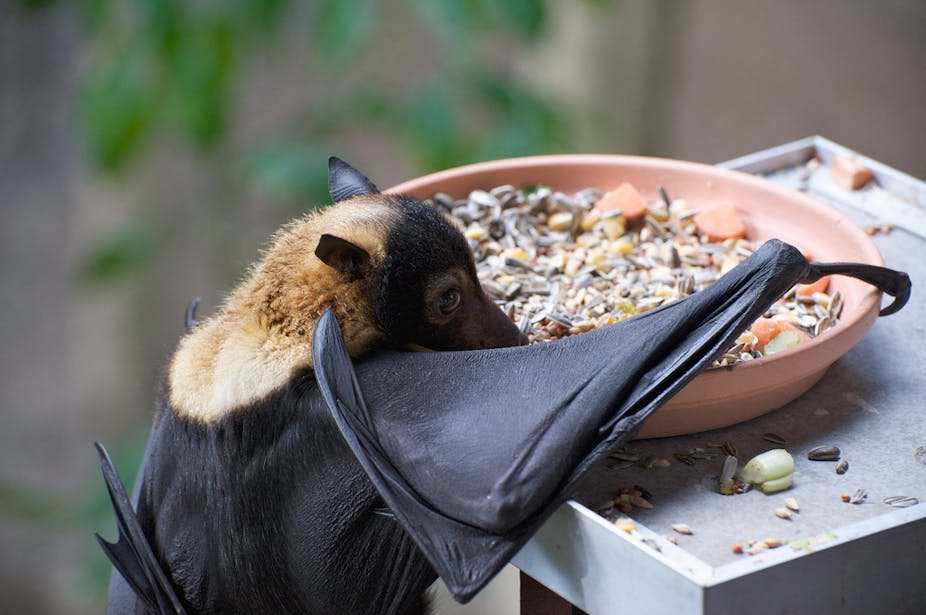
This is the case for flying foxes, particularly in rural NSW and Queensland, where tolerance for the animals has been traditionally low.
Flying foxes are disliked because they occasionally feed on fruit crops when native food supplies are short. They can also be noisy neighbours when roosting near residential areas.
They are feared because they can harbour lyssavirus and Hendra virus, even though the risk to humans is extremely low.
Communities’ fear and hatred has been fanned in past decades by the media and conservative politicians, both in and out of parliament.
When referring to flying foxes, politicians and media commentators have used inflammatory language such as “killer bats”, “horrible stinking vermin”, and “disease-ridden pests”.
Commentators claim that flying fox populations are “exploding” or “in plague proportions”. Residents living next to bat colonies have been said to live in “bat hell”; to be “terrorised”, “under siege” or in a state of “war”.
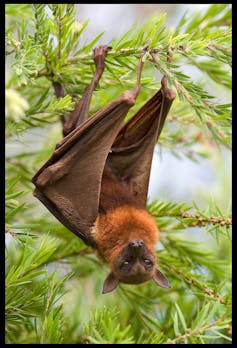
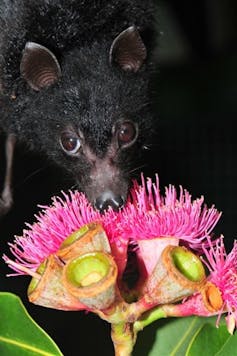
Rarely do commentators focus on, or even mention, the crucial ecological role (pollination and seed dispersal) played by these animals, their uniqueness as flying mammals, their intriguing adaptation to hanging upside down, their complex social interactions, their intelligence and their pretty faces.
The recent outbreaks of Hendra virus in Queensland and NSW have deepened the human-animal conflict even further. The outbreaks have encouraged more vilification of the animals and more calls for them to be culled.
Governments have been slow – and in the case of Queensland, still unwilling – to list flying foxes as threatened species. This is despite evidence that two species declined by approximately 30% in ten years and that they suffer from habitat destruction and other threats from humans.
This reluctance may be due to the political implications of protecting deeply unpopular species in electorates with a lot of rural constituents.
A species’ conservation status (common, vulnerable or endangered) affects funding for data collection and conservation strategies. It also sets the level of penalties applicable for illegally harming or killing the species.
As such, it is essential that such status be accurate and based on scientific evidence, not on a species’ popularity or on political considerations.
Even after being listed as threatened species, the spectacled and grey headed flying foxes could still be legally shot by orchardists. Their camps can still be harassed and relocated.
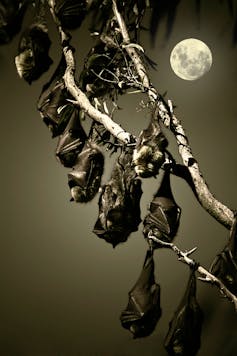
Shooting threatened species and deliberate destruction of their habitat is a rather unusual way to deal with threatened species. It would be unthinkable if it was any other species.
Laws for the protection of flying foxes have often been weakly enforced, or not at all. As a result, large amounts of illegal electrocution, shooting and harassment of camps have been allowed to go on unpunished.
Permit and license conditions have been weakly monitored, and when breached, governments have rarely been willing to prosecute. The few legal cases that have attempted to enforce the law for the protection of flying foxes have mostly been initiated by private citizens, not government conservation agencies.
So what can be done to protect unpopular species such as flying foxes? The answer lies with a multi-prong approach.
There must be zero tolerance for the illegal killing or harassing of flying foxes. Turning a blind eye simply fosters further illegal activities.
Strategic and proactive education programs should start telling positive stories about much-maligned species such as bats. People are more likely to protect animals they know and like.
In my experience as a wildlife carer, most people who claim to hate bats have never seen one close and know little about them.
Governments must base decisions about threatened species management on scientific evidence, not political imperatives.
The most difficult goal to achieve is fostering an understanding that humans and wildlife share the same planet, whether we like it or not.
Human-wildlife conflicts occur all over the world, from tigers killing people in remote villages, elephants trampling crops, wolves killing lambs, pigeons defecating over monuments and seals feeding on aquacultured fish. Culling animals in these circumstances cannot be a sustainable solution.
Unless these four elements are in place, it is likely that flying foxes will come under increasingly heavy attack each time a Hendra outbreak occurs. This could turn into uncontrollable killings with grave welfare and conservation outcomes.
There is hope though. If crocodiles can be viewed as an iconic, marketable species and a tourist attraction in northern Australia, despite the clear danger they pose, the same should surely be possible for flying foxes.