


The more we look, the more we realise just how important intact ecosystems are for our own well-being - and it really doesn’t matter at which scale we are looking.
When Alan Cooper, Director of the Australian Centre for Ancient DNA, asked me (Corey) for a bit of help with a cool paper he and some of his colleagues were working on, I was initially sceptical. Why would an ecologist be even remotely interested in dentistry? I mean seriously - oral hygiene? Then he went into detail, and I couldn’t refuse.
Before we get into that detail, we have to tell a story about a colleague of ours (name withheld, but true story) who recently went to the dentist to have some routine cleaning done. There was nothing particularly special about his visit - no local anaesthetic, no extractions, no caps, and certainly no surgery. Two weeks later he was in the hospital getting his chest cracked open for open-heart surgery.
What happened was a microscopic bit of his dental plaque had dislodged during the cleaning and entered his bloodstream through a small wound in his mouth. The tiny bacterial plaque fragment raced around his circulatory system until it became unfortunately lodged in a tiny eddy that had developed behind one of his (slightly faulty - but he didn’t know it at the time) ventricular valves. The fragment started to grow and threaten the working of his entire heart, such that had he not had the surgery to repair the valve, he would have been dead in weeks to months. Who knew that going to the bleeding dentist (pun intended) was so dangerous? We certainly didn’t.
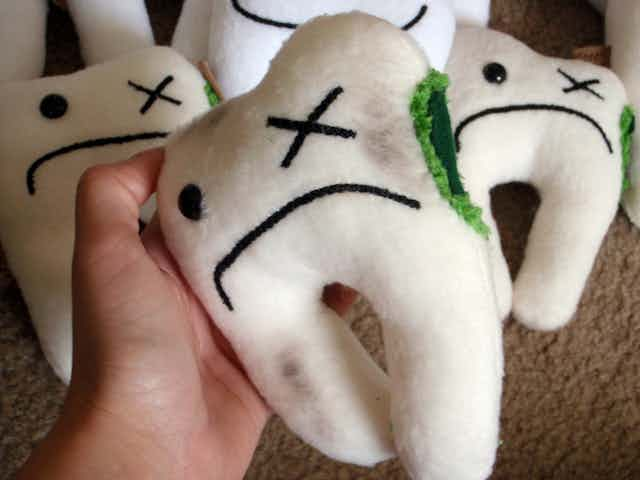
As it turns out, our mouths are really disgusting places. I mean really, really disgusting, pathogen-ridden cesspits of filth. You might think you have a clean mouth, but ironically, all that modern oral hygiene combined with our spectacularly unhealthy diets dominated by refined foods mean that we have rapidly destroyed the once-healthy bacterial ecosystem of our mouths. And most of that ecosystem degradation has come about in the last 150 years.
Our paper just published online in Nature Genetics is a weird and eclectic mix of ancient-DNA genetics, dentistry, ecology and nutrition. Christina Adler (lead author), Alan and others hooked up with an archaeologist, Keith Dobney, to identify what was in the hard dental plaque found on the teeth of ancient human skulls. Of course, ancient DNA techniques were really the only tools at their disposal for determining the composition of those bacteria, but it wasn’t until 2007 that the methods had become refined enough and the facilities isolated enough to amplify the very delicate strands of degraded bacterial DNA.
After isolating samples from Mesolithic (7550-5450 years before present), Neolithic (7400-4000 years BP), Bronze Age (4200-3000 years BP), Medieval (1100-400 years BP) and modern (today) human remains (well, the modern samples were taken from live humans - we didn’t kill them - and many of them were from Alan’s lab), we found a marked decline in bacterial diversity over time.
The first change we noted was a decrease in diversity and an increase in prevalence of specific bacterial pathogens after farming became widespread in the Neolithic. A second but much more acute drop in diversity occurred again after the Industrial Revolution about 150 years ago when refined sugars and flour became widely available.
Diet and hygiene issues aside, what is the ecology behind these changes? Our interpretation was that a change to a simplified diet first dominated by basic carbohydrates, and subsequently purified sugars, has essentially led to widespread ecosystem degradation in the mouth’s bacterial community.
We know at least that in a macro-ecological context (what we traditionally define as “ecosystems”), higher species diversity (more species) generally means greater ecosystem resilience to disturbance and greater productivity. We’ve observed this pattern in forests, grasslands and coral reefs - the more species there are, greater is the long-term stability (resilience) of the ecosystem, and the productivity of the species of which they are comprised.
In other words, the amount of sugar and carbohydrate in our modern diet strongly favours bacteria that can use it effectively, and has resulted in the loss of much of the mouth’s natural microbiome, leaving the path open for invasion and dominance by disease-causing bacteria. We have systematically simplified our natural mouth ecosystem to the point where the pathogens are winning - and they’re killing us in response.
Indeed, dental caries is now a major endemic disease that affects 60–90% of school-aged children in industrialised countries, and periodontal disease occurs in 5–20% of the adult population worldwide. But it’s not just rotten mouth diseases - nasty oral bacteria are also associated with arthritis, cardiovascular disease and diabetes and other systemic diseases. The permanent state of inflammation permitted by our weakened bacterial ecosystems stimulates a constant immune response, as well as allowing bacteria to leak into the blood stream and do all sorts of damage to our bodies.
Convincing people that biodiversity is important for human well-being is a fairly difficult ask because most people do not understand the complexities of ecosystem services such as carbon sequestration, pollination of our crops, flood control and fresh water provision. But this particular “ecosystem service” - your health - is vastly more digestible; more species are better, even in your mouth.
This article is based on a post from Corey’s blog, ConservationBytes.