
Gonski but not forgotten: schools don’t just need funding

The last time school funding occupied so much public and political attention was during the Whitlam years. Policy makers with long memories will recall that the gestation period for the Karmel report was well over a century – from turning off the tap of state aid to denominational schools to redirecting…

Kjs9cs5x-1340667338
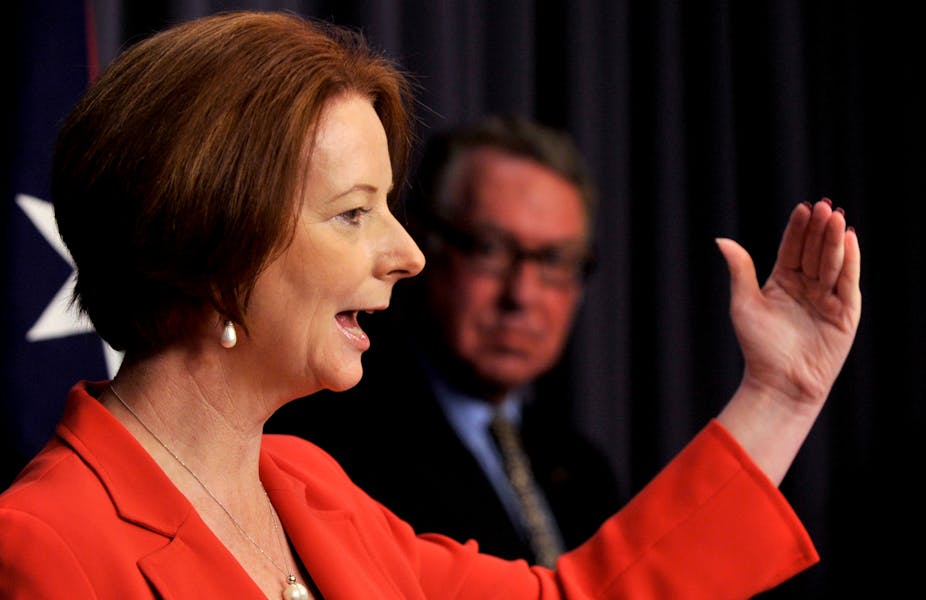
David Gonski’s review is starting to fade into the background, but there are a growing number of calls to implement the review’s recommendations. AAP Image/Alan Porritt

The last time school funding occupied so much public and political attention was during the Whitlam years.

Policy makers with long memories will recall that the gestation period for the Karmel report was well over a century – from turning off the tap of state aid to denominational schools to redirecting it towards a uniform, free, secular and compulsory state school system.

But now the Gonski review has re-ignited the debate, and many are asking what the government means to do with the review’s recommendations – especially the issue of funding.

Former federal minister and Gonski review panel member Carmen Lawrence has criticised the government’s slow movement, saying they have turned their backs on public education.

She joins a growing coalition of government and non-government school interests has expressed impatience at the reluctance to commit to the annual extra $5 billion in school funding that Gonski recommends. The Australian Education Union has launched a campaign this month too, focusing on the funding issue.

But curiously, the largest non-government provider, the National Catholic Education Commission, has remained aloof. Moreover Professor Peter Tannock, who represented the Catholic sector on the Gonski Review panel, has maintained an astute silence on the issue.

Nevertheless, the pressure on the Minister to cave into the clamour for an unconditional commitment of an extra $5 billion funding per year is intense. But funding is not the only issue here. Structural reforms and an expectation of improved educational outcomes, especially for the disadvantaged are needed just as much.

After all, a budget blow-out was not all that Gonski intended to achieve. When hard times reassert themselves, it is the other reforms that will be important.

Deep-rooted dilemma

In the 1960s, the battle was underway for state aid. The Catholics had for nearly a century reluctantly chosen to “go it alone”, operating their schools for a pittance with the unpaid labour of many religious orders and congregations.

The solution was to invoke Sections 96 and 51 of the Constitution enabling the Commonwealth to grant money to any state, “on such terms and conditions as the Parliament thinks fit”.

In effect, the Commonwealth could make grants subject to states implementing particular policies in their fields of legislative responsibility.

The Commonwealth has subsequently withstood a High Court challenge relating to its influence over state policy matters on hospitals and schools.

The history of resolving the state-aid issue in Australia has, therefore, arguably created as many problems as it has solved, mainly relating to the increasingly different social demographics that attend public and private schools.

This accounts for Australia having the largest (and growing) publicly-funded private school system in the world, simply because all non-government schools must charge fees to break even.

Solving one problem, causing another

In resolving the state-aid issue, the 1973 settlement perversely created a new problem about inequity in school education. In acknowledging supplementary research on these issues, the Gonski Review has wisely focused on school reform with additional implications for funding and equity policy.

In the current tight fiscal climate, there is considerable pressure to reduce Gonski to its annual extra $5 billion funding investment recommendation. While temporarily solving the capital investment issue, this would reopen the war on who should get the money.

The AEU and others are fighting to get Gonski back on the agenda.
AEU/Youtube

Fortunately David Gonski has provided a strategy to address this problem through his other recommendations.

First, he has called for school reform initiatives to reflect much closer Commonwealth-state ties.

Second, he has called for a much closer systemic integration within and between various school providers so that public funding more efficiently reflects national education reform agenda.

Third, he has identified what those targets should be, which, apart from allocating a fixed entitlement per student across all systems and providers, assigns additional funding in respect of disadvantaged groups, including indigenous students, rural and remote schools and students with disabilities.

What next?

An opportunity now arises for the Government to respond by outlining additional terms and conditions linking funding increases with a commitment to enrolling disadvantaged students.

While some independent providers may reject this as undue interference, others will welcome the challenge to show that their success is a direct consequence of better teaching and not a commitment to excluding those low-socioeconomic status (SES) learners who fall into the too-hard basket.

Rejecting such new conditions would then justifiably result in increased costs being passed onto parents through fee increases.

A further condition for such enrolment should be that low-SES and disadvantaged enrolments would have any additional fees met from the public purse.

The biggest opportunity here will be for low-fee schools, especially the Catholic diocesan systems, who teach that their schools are “first and foremost” for the poor, but who, because of the need to bridge the shortfall between costs and funding, currently fill a cheap private school niche in the school market.

The benefit to state schools lies in the opportunity to win back the unconscionably large numbers of aspirational middle-class students they have lost to the burgeoning private secondary sector, while having to unjustifiably cope with the responsibility of educating a disproportionately large number of low-SES and disadvantaged enrolments.

I do not foresee a successful constitutional challenge to such policy tweaking, since state governments already fund some aspects of private school provision.

Moreover, the Australian Education Union, which opposes funding for non-government schools, would have its most damning criticism of private schools – that they are exclusive – met and rectified.

Finally, the fallacy that differentiated teacher salaries trigger improved school results would make way for a more substantial discussion about more equitable and diverse school provision, resulting in improved outcomes, reflecting factors such as community values, teacher attitude, school climate and parent choice, instead of regarding better outcomes as the dubious and short-term consequence of more unconditional and potentially wasteful public spending.

Articles also by This Author

Sign in to Favourite

Want to follow The Conversation?

Sign up to our free newsletter to get the day's top stories in your inbox each morning, with a special wrap on Saturday.

Spinner
Donate and become a friend of The Conversation

Join the conversation

11 Comments sorted by

  1. naomi vallins

    teacher

    It would be misleading to imply that money only would solve the problems of inequity in Australian education as I first assumed from the headline. I am glad you go on to detail some of the changes necessary. I think that's where we should all put our thinking caps on in order to overhaul the system and ensure all kids achieve their potential regardless of family economic circumstance.
    What needs to be remembered, however, is that funding is a necessary but not sufficient condition for change and improvement

    report
    1. Anthony Ervin

      Mathematics Teacher at New South Wales DEC

      In reply to naomi vallins

      I dont know your "economic circumstance" but kids at the school I teach at are forced to work at Maccas, KFC, etc for $7.50 an hour to help support their families who regularly get ripped of by the factory owners owners etc withholding pay etc. One student told me how a Woolworths salad maker factory made his father work for weeks and did not pay him for whatever reason. He had to go work at hungry jacks in the city for peanuts to help support his family. This boy was not joking, he sat with me on the bus straight after school on his way to work. How is he supposed to concentrate on his senior studies like this? Sorry but the private school kids have no idea what it is like for the less fortunate. I live in an area where the private school girls drive around in their $20000 + small cars P plates on with no such concerns. Tell me how economics does not factor in to this picture?

      report
  2. naomi vallins

    teacher

    Red Budgie,
    Your heart's in the right place
    but

    please reread what I write - I AM EMPHASIZING economics play a role!

    report
    1. Anthony Ervin

      Mathematics Teacher at New South Wales DEC

      In reply to naomi vallins

      Well actually you seem to be downplaying the role it plays. It is necessary reads peripheral as if all else does not hinge on it. It is everything when you consider what it translates to ie student / teacher ratio. Resource access, less skimping on essentials the goes on and on. What does that get back to? ...funding.

      report
    2. Michael Leonard Furtado

      Dr at University of Queensland

      In reply to naomi vallins

      Might I offer an opinion here, Red and Naomi? People often mean different things when they discourse on social justice. Some link it with economic redistribution (a good name there, 'Red'; and why not? What point's there in talking justice without making it real!) For raising this aspect of the discourse in Australian Catholic schools my job was shut down. There were some who commented that I ought to have stuck with a spiritual discourse on justice, emphasising 'other-worldly' benefits of being…

      Read more
    3. Anthony Ervin

      Mathematics Teacher at New South Wales DEC

      In reply to Michael Leonard Furtado

      Thanks Michael,

      Reminds of Uni now studying education policy. Was one of my favorite subjects at Macquarie. Always remember Paulo Friere? Living Among the society to better understand the subjects. Now though it seems a little like slumming it. Sorry if I caused any offense by the way to anybody, I just get heartbroken talking to some of these kids and you can see just how behind they are.

      report
  3. David Zyngier

    Senior Lecturer Faculty of Education at Monash University

    Michael has raised many important issues that have for too long been neglected or put in the "too hard basket" by politicians. Of course its not just about money - but then some schools do have a lot more money than others and can with that money buy the best teachers, best resources and of course carefully select who they will "invite" (and remove) to be students at their school!

    Geelong Grammar this year has a greater surplus (profit) than its neighbour Ford Australia! This information is available on their public website.

    The status quo is totally unacceptable - Australia has the most privatised education system in the OECD. Its time that this is changed and funding goes to those that need it most.

    report
    1. David Zyngier

      Senior Lecturer Faculty of Education at Monash University

      In reply to naomi vallins

      Naomi,

      the research paper you mention comes from a group of economists and statisticians at ANU who have no idea about education!

      Read the research and see what you think. This is what I wrote in The Age last week about it:

      PARENTS impact less on pupils reports on research from the Australian National University that suggests parental income and education levels have less influence on whether students finish year 12 than factors such as poor school experiences, risky activities and aspirations…

      Read more
    2. naomi vallins

      teacher

      In reply to David Zyngier

      David,
      I was surprised that parental income and education did not play as big a role as I would have thought. However, I have taught kids who indeed constantly reported poor school experiences and indulged in risky behaviour - a lot of drinking, teenage pregancy, brushes with the law, dangerous driving, etc - and I dont pass judgement. This report, therefore, rang bell.
      It also struck me, as I read, that the segregative strategies many 'independent' schools practice are not surprising - they keep…

      Read more
    3. Michael Leonard Furtado

      Dr at University of Queensland

      In reply to naomi vallins

      Naomi, I think you and David are discussing different things. Granted that all non-government schools impose aspects of social exclusion by virtue of charging fees (or dispensing with them through appeals to charity),we won't make much progress on this by casting 'nasturtiums' only on to the non-government scchool side. I have several examples from my research of selective state schools that steer students regarded as a liability towards other state schools and sometimes even Catholic schools as…

      Read more