Food security has typically been framed as an issue of global concern, concentrated within developing countries. The UN Food and Agriculture Organisation defines food security in terms of the availability of food sufficient to meet the needs of all people at all times, and while this conception acknowledges that people must have the wherewithal to meet their own needs, it can lead to a preoccupation with the gross volume of food produced, at the expense of questions of distribution and adequacy.
Alternative notions of food sovereignty address some of these conceptual shortcomings and importantly also reveal more clearly the problems of food accessibility and adequacy we face in Australia. And as more than 90% of us now live in cities we recognise that food security is as much an urban problem as it is one of rural food production.
This shift from relatively simple to more nuanced conceptions of food security helps to explain why in a recent survey conducted by the ANU a small but significant number of Australians said they were worried their food would run out in the coming week and a smaller group said that occasionally their food ran out and when it did, they had no money to buy any more. This survey also revealed that just over 3% of those surveyed had been forced to rely on some form of emergency food assistance in the last year and that just over 30% grow food at home in order to save money.
Food security is affected by various factors, including peak oil; the availability of fertilisers; population growth; and climate change. Rising fuel prices associated with peak oil are increasing the costs of large-scale agricultural production; also rising are the costs of transporting food within and between countries and the price of fertilisers essential to modern industrial agriculture. As the global population rises so too does demand for food and as the people of many countries become wealthier they typically develop a taste for different types of food, many of which require increasing amounts of energy to produce, process, and transport to their point of consumption – which is increasingly in cities. These cost pressures are likely to be exacerbated by climate change, as the food-growing capacity of some regions fluctuates in the face of global warming, increasing drought, and more periods of intense rainfall. For example, rice production in the Riverina plummeted in 2009 while the whole of the Australian grain belt has suffered from the severe drought of the last decade. The localised impacts of extreme weather and climate change have had dramatic impacts on the food security of some cities, with the empty supermarket shelves of Brisbane and steep price rises for many fruits and vegetables following the floods of early 2011.

What can we do to make our cities more food secure and to ensure that those most exposed to food insecurity in cities are better able to cope in the future? A significant opportunity exists to support the re-localisation of food production, processing, and consumption. While cities historically grew as places where local food surpluses were traded, urban food supply lines have become increasingly long, complex, and vulnerable to disruption by a number of factors, including climate change but also by natural disasters and by wars and other conflicts. By growing more of our food within our cities and in their immediate peri-urban hinterlands we can become less dependent on these vulnerable supply lines.
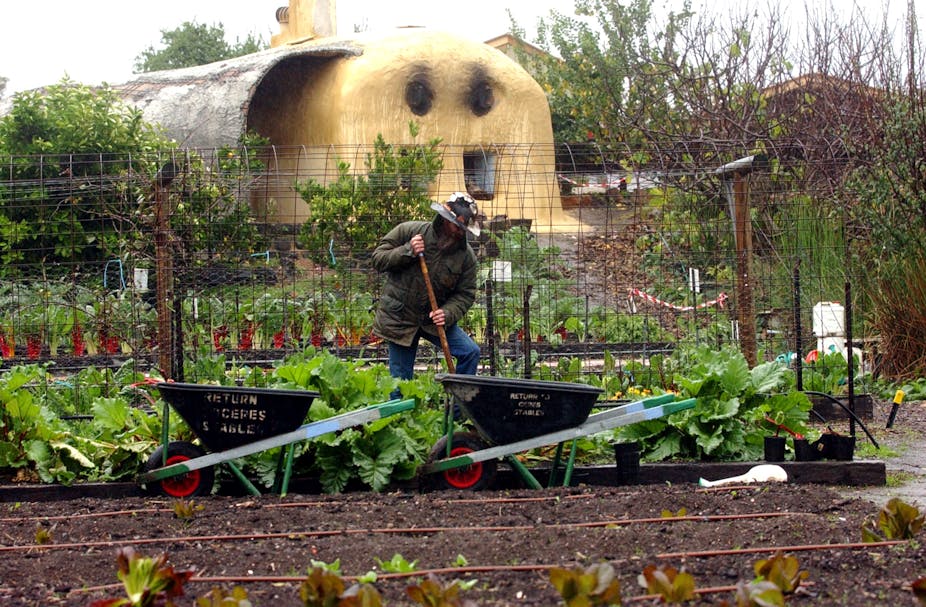
Urban agriculture takes many forms, from growing herbs on our balconies and veggies in our backyards through to small-scale but high-yielding commercial production on the urban fringe. It includes keeping animals such as chooks, goats, or bees as well as small-scale food processing and the recycling of food waste. Finally urban agriculture can involve new ways of and places for selling food, from farmers and producers-markets to food-swap meetings. It’s unlikely that we will see a major shift in the way that we buy most of our food, but these new local alternatives are becoming increasingly popular with an ever wider group of people, helping to build alternative supply lines and strengthening urban resilience.
There are of course obstacles to the expansion of urban agriculture. An ever-growing web of regulations can form serious barriers to entry and make even the apparently straightforward task of selling surplus eggs or jam a complex and costly exercise. While community gardens are proving increasingly popular, our research found cases where proposals were met with concerted opposition and sometimes with serious abuse from neighbours concerned that a community garden might reduce their property values (when if anything the opposite is likely to be the case).
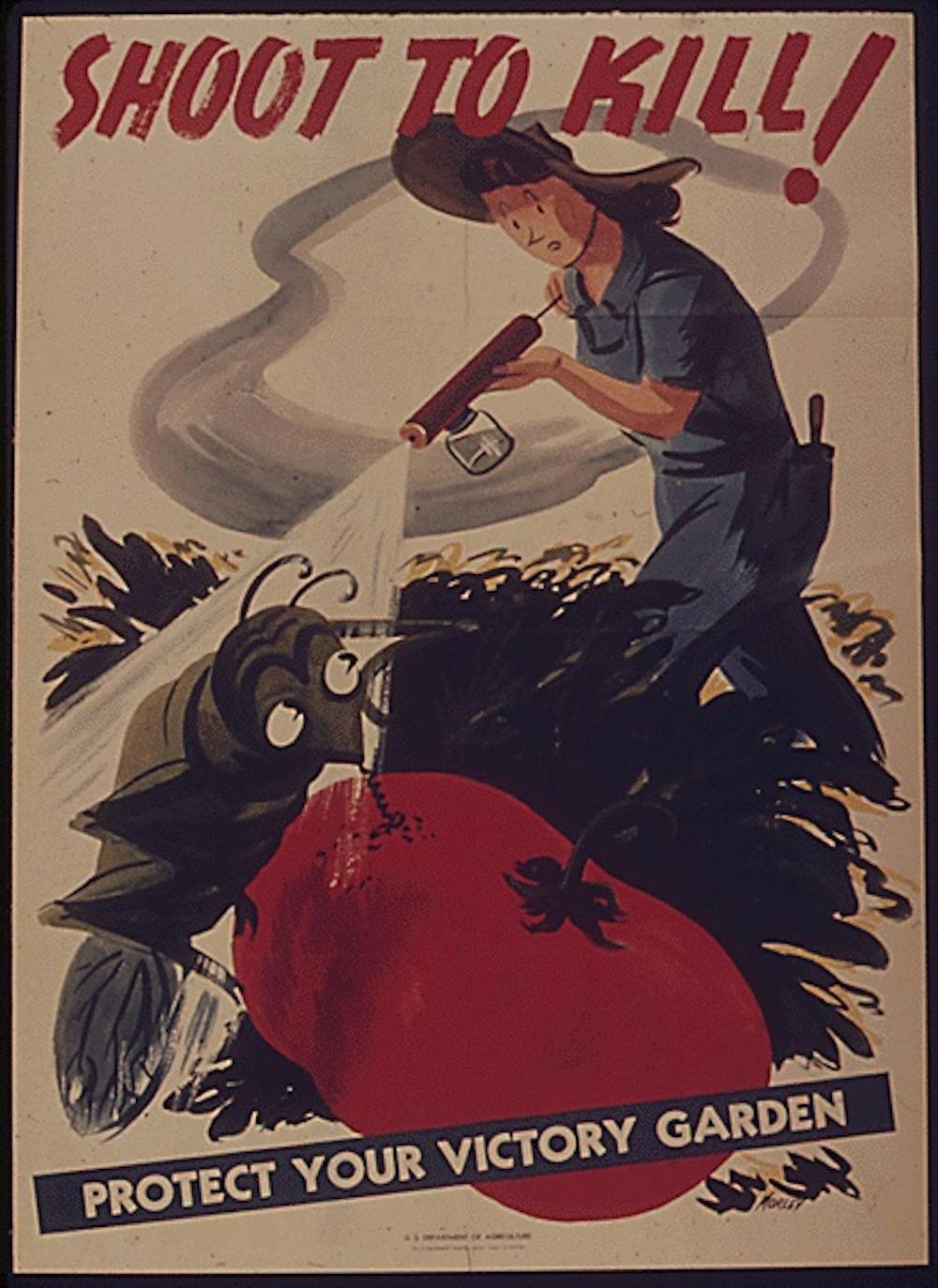
But the most significant impediment lies in the competition for urban land, both within and on the fringes of our cities where pressure to build more houses is intense. The suburban backyard that once allowed Australian families to provide a significant proportion of their own fresh fruit and vegetables is shrinking rapidly and as we live at higher densities within cities the space to grow food is diminishing.
So, as part of the broader project of making our cities more resilient in the face of climate change we need to take up the challenge of improving urban food security. Urban agriculture in all its forms can play an important role in this, but it will require new thinking and changes in how we choose to feed ourselves. But we have been here before and faced with a new set of threats, necessity may once again become the mother of invention.
Comments welcome below.

Melissa Barnett
Urban Farmer
A very interesting article. I began my own domestic food garden as a hobby, however, it didn't take long for me to discover the stories behind the food we choose to eat. Even my very modest efforts so far have delivered healthy food to our table, turned our waste into compost and fertiliser and given me a modest amount of exercise!
Perhaps it is also worth mentioning that an excellent example of urban farming exists in Cuba. When the collapse of the Soviet Union cut them off from imported…
Read moreIan Donald Lowe
Seeker of Truth
Hi Mellisa.
Good on you for getting in and having a go, more power to your arm.
Well done on knowing about the Cuban organoponicos as well, I'm impressed. Really I just wanted to say good luck and if you need any advice, I have heaps of experience and training in organics, horticulture and permaculture so email me if you have any problems need solving or questions answered. I did a blog for a while too but mine is more of an information/inspiration blog rather than my current activities. I wrote a piece a year ago about organoponicos, I hope you will read it sometime. Keep up the great work.
Ian Donald Lowe
Seeker of Truth
I forgot to put in a link :P
http://ianlowe.blogspot.com.au/2011/02/coping-with-food-crisis-cuban-style.html
Ian Donald Lowe
Seeker of Truth
Thanks for the article Paul. I am very much in favour of urban agriculture and if you would like a good example of what can be achieved, here is a link to a blog piece I wrote a bit over a year ago on the Cuban organiponicos:
http://ianlowe.blogspot.com.au/2011/02/coping-with-food-crisis-cuban-style.html
But when I read articles such as this one:
http://www.brisbanetimes.com.au/business/supersize-me-queenslands-mcmansion-appetite-grows-20091130-jzec.html
I despair because I really think Australians have lost the plot on housing and land use in so many ways. We really need to build smaller houses on urban land, return to collecting rainwater and stop being so bloody materialistic. There is still available space in urban areas but it will require a willingness on the part of governments, similar to that of the Cuban government, to allow and facilitate the process.
Michael Croft
logged in via LinkedIn
Ian, thanks for posting the links. Whilst Cuba is a great example of what can be done when a food crisis develops, the bleak alternative example is often forgotten. The other country that faced an energy and food crisis following the collapse of the Soviet Union was North Korea. Faced with the same issues, Korea allowed some 500,000 people to die of starvation.
The Spanish have a great saying to illustrate the essential nature of food; "The distance between civilisation and anarchy is seven meals."
Most Australians are oblivious to the fact that in every city and major town there is only two days worth of staples and 5 days worth of all food on the shelves. We are entirely dependent on centralised long chain distribution systems.
Bruce Waddell
logged in via LinkedIn
Have you observed communal behaviour when milk supply is disturbed? I doubt many homes would last the 5 days you note without chaos erupting. A $10 lettuce would seem cheap in such circumstances. Gardening is not only confidence building it is therapeutic.
I like Monty Don's observation of Cuban gardeninghttp://www.youtube.com/watch?v=jRz34Dee7XY
Bruce Waddell
logged in via LinkedIn
For link above I forgot to press space bar. See http://www.youtube.com/watch?v=jRz34Dee7XY
Michael Croft
logged in via LinkedIn
Not seen the communal behaviour around milk supply disruption, but I have observed the bare shelves of supermarkets within hours of the announcement that a cyclone is coming.
James Jenkin
EFL Teacher Trainer
Hi Paul, I didn't realise the notion of food security was critical until recently. What are the threats to food supplies, worldwide and in Australia? Have they occurred, or are they hypothetical?
For on the one hand you could argue that mechanisation, agricultural specialisation and international trade have fed more people and provided more varied diets than ever before.
Ian Donald Lowe
Seeker of Truth
Hi James.
Read moreThere are a number of issues coming together in the near future that will impact upon current agricultural systems and this is the largest threat (not really the right word) to food supplies. These include decreasing global oil reserves, which will impact the costs of food production and distribution through higher fuel costs, increased costs for agricultural fertilizers and sprays.
Also, moving to a low carbon economy means decreasing the reliance on fossil fuels overall and if this…
Bruce Moon
Bystander!
James
Ian Lowe has dealt with the physical attributes relating to food scarcity.
There is a growing and more pervasive problem emerging.
The issue is not scarcity as such, but the impact of market funds seeking a slice of the returns.
In Europe especially, food commodity prices are set by the market. Over recent years, hedge funds are now heavily 'investing' in food commodities to take a portion of the overall profits.
The net effect is that farmers fail to get the return being delivered…
Read morePeter Ormonde
Peter Ormonde is a Friend of The Conversation.
Farmer
Bruce,
Global food production turns classical economics on its head... turns it inside out actually. The subsidies doled out by US governments at all levels, and the EU's butter piles, the lakes of olive oil, the sugar mountains.... And that's before we get anywhere near the kitchen or the supermarkets.
If you really want to see what happens with global food production, see if you can get your hands on some aerial photos of palm plantations in Indonesia or Malaysia. Mile after mile after mile…
Read moreBruce Moon
Bystander!
Paul
If my experience of growing my own vege's is anything to go by, the economics just don't add up.
I worked out that it costs me more than A$10 to grow a lettuce.
But, I simply love doing it!!! The results in the kitchen are a useful by-product.
While it may be pleasing to grow a few vege's & herbs (at a high cost) on the balcony, this goes nowhere to feed the family should there really be a shortage.
Perhaps the biggest hurdle to the urban food supply 'issue' is the propensity…
Read moreMelissa Barnett
Urban Farmer
You make a few really great points Bruce.
I too had some very pricey first specimens! And total no-grow disasters. It makes you appreciate that food growing is an actual skill and that some plants aren't worth the price. Happily, there are substitutions!
I have been wondering lately if we should require a "Licence to Lawn". When you see how much effort, water, pesticides and herbicides are devoted to our suburban love of lawn, an awful waste of resources and source of pollution for something that tastes so terrible!
Mark Amey
logged in via Facebook
We're the same with chickens, we've got three senescent old girls who lay about once a week, plus three young'ns, who are off the lay, at the moment. I reckon the eggs cost about seven dollars each, if you average across the year. Having said that, I've just purchased four dwarf apples, to replace some high maintenance roses. We'll see!
Bruce Moon
Bystander!
Melissa
My sister is married to a Greek person and says that each spring, the Greeks visit the hills to pick fresh Dandelion leaves (for a dish called Horta). Maybe we could let our green areas become Dandelion infested and reap rewards.
On another note, the Gold Coast City Council refuses to allow anyone to grow anything other than grass on the verge (nature strip).
Lorna Jarrett
PhD candidate, science education; Physics teacher
Don't know what you're doing wrong, Bruce. Maybe it's planting lettuces in the first place.
I got a reasonable crop of pumpkins and sweet potato last month. The pumpkin seeds cost $3. The sweet potatoes came from cuttings and were free. Time spent planting and weeding: maybe 2 hours. That time could be considered work OR exercise - which lots of people pay good money to get. Split the difference and call it $20 an hour input. Watering and feeding - nothing at all (no water supply onsite). Net result, about 35Kg pumpkins and 20Kg sweet potatoes.
So for $43 I got 55Kg of produce. Not too shabby.
The bananas and lemons trumped that though. I can't recall doing anything much at all in return for the 20Kg of bananas and 10Kg of lemons. Unless you count pulling sweet-potato vines off the lemon tree.
Mark Tirpak
PhD candidate
Hi Paul
I am very interested in your comment above about an 'ever-growing web of regulation' hampering food-related family business / entrepreneurship in Australia (eg. selling surplus eggs or jam)?
Could you please provide more details? I have just started to explore street food vending and urban planning / management practices in Australia as part of my research (and as a relative newcomer to Australia) . . . and would love to know more about what you have encountered.
I welcome observations / leads / examples etc. from others in this regard (Australian street food vending you remember from your childhood, etc). You can email me at:
mark.a.tirpak@student.uts.edu.au
Thank you!
Mark
mark feltrin
Renewable Energy and Resources
"But the most significant impediment lies in the competition for urban land, both within and on the fringes of our cities where pressure to build more houses is intense."
Totally agree.
The driver of this skilled immigration - from the words of the building industry not mine
Modelling needs take place to show the worth of these outer areas particularly to market gardening/other intensive horticulture to derive productivity and jobs - more this takes place and more conversation generated, less developers can corrupt governments (or is it the other way around?) to old paradimes of thinking.
More economic modeling of intensive food production around towns and cities. - this could also be a leveraged to get farming off intensive irrigation areas to be setup near urbanised areas.
Critical topic - kick on Mr Burton!
Dale Bloom
Analyst
I have seen the shelves in a rural supermarket almost emptied a few days after the roads had been cut from the capital city.
It appears the supermarket had kept very little food in stock, and probably operated a “just in time system”, whereby food was transported daily from the capital city.
In terms of food security, it would be worth investigating how much food supermarkets keep in stock, and whether they should be required to keep a certain number of days or weeks of non-perishable food in stock within the town they operate in.
The major supermarket companies appear to be making enough profits to be able to afford to increase their food storage areas.
Tim Scanlon
Author and Scientist
There are a couple of concerns with this style of agriculture.
Weeds are mostly introduced from household gardens. Encouraging further gardening will only increase this weed introduction problem.
Chemical use is very poorly understood. Some people have funny ideas as to what constitutes a chemical and what is toxic. Many chemical users (and yes, organic farming does use chemicals) just don't know what the safe rates are, how to apply them safely, how to make sure that there isn't spray drift…
Read moreIan Donald Lowe
Seeker of Truth
Yes Tim, these are valid points that you have raised. There will be a need to train people and yes, organic pesticides are powerful chemicals from a natural source but powerful chemicals none the less. (They need to be, otherwise they wouldn't be effective.) A modified version of the Certificate level III or IV in horticulture would be one way to go, another would be to follow the Cuban example and set up shop-front one-stop information, training and supply resource centres for people to access…
Read moreIan Donald Lowe
Seeker of Truth
You and I both forgot to mention the issue of water. To avoid placing further pressure on urban water supplies we will need to develop systems to harvest rainwater, such as the storm-water capture system in place in Salisbury, S.A. and get rainwater tanks back on houses as well. We will also need to look at recycling waste water for urban food production, either on a house by house basis or on a city-wide basis via sewage treatment plants (another valuable source of nutrients for organic production…
Read moreTim Scanlon
Author and Scientist
Yes, very true. Nothing worse that having people taking their advice from a TV show or the like, rather than undergo a reputable training program.
I also think that the idea of your own water will be needed, very good point. We were self sufficient on our farm and I think households would need to have their garden water in this form for it to work.
On the recycled waste fertiliser: this would work in the cities if they can remove the heavy metals and create a dry product. The trials that have been done in WA of Biosolids still can't give consistent nutrition (not a big deal in small plots as you over-fertilize in general anyway) and they don't remove heavy metals. The other issue was smell and fly breeding. A lot of work still to be done.
Ian, how about the over-fertilising issue and P runoff? Did the Cubans lay down base materials to stop nutrient runoff, or did they mediate breakdown so that more binding occurred with organic matter?
Ian Donald Lowe
Seeker of Truth
The irrigation system in the larger organoponicos was a drip line system, so run-off would only be an issue in heavy rain events. Solid organic fertilisers tend to be fairly slow release and nutrient contents are far lower by volume than chemical fertilisers, so it would require some heavy-duty effort to over-fertilise. Of course, concentrated soluble organic fertilizers and liquid organic fertilisers can create this problem but once again, it's a matter of training and experience. Some plants actually…
Read morePeter Ormonde
Peter Ormonde is a Friend of The Conversation.
Farmer
Tim there's actually some rather spiffy things you can do with sewerage at a reasonable scale - biogas being by far the most useful. I've seen dairy farms and feedlots running biogas plants - also piggeries, fishfarms and even schools. Villages work a treat.
After the fermentation process you end up with a rather useful set of fertiliser compounds but they must be composted before use. Probably limuited value in cities because of the diet/heavy metal/virus issues. Too much prozac in the wee.
Even our problems and waste can become an asset if we are thoughtful about it.
Tim Scanlon
Author and Scientist
I figured there might be overfertilisation going on. On our sandy soils this is a much bigger issue, especially for P losses into water ways. Substrate would be needed then. So training is a definite must.
On the Neutrog, no I hadn't heard of it. It looks to be along the lines I've what I'd like to see Biosolids move toward here in WA. http://www.watercorporation.com.au/B/biosolids_faq.cfm The big killer with these is transport, as they are light on actually nutrients per unit of weight (3-4…
Read moreTim Scanlon
Author and Scientist
I agree. I was in the US at a dairy farm that ran most of its power from biogas. Very good system. Because of the way they were producing gas they produced compost and fertiliser, no problems with heavy metals. The only problem they had as that due to concentration of product, they had a hard time moving it all cost effectively as fertiliser to surrounding farms.
Our own effluent should be able to be highly processed into granular fertiliser. It can be done, but Biosolids here in WA wanted a shortcut (didn't like the report so they rewrote it with some figures they tried to abstractly glean from me).
Ian Donald Lowe
Seeker of Truth
Tim, the raised beds can incorporate base materials such as cardboard and newspaper on sandy soils and this is just plain good sense to get the most bang for your buck as well as stopping the problem you speak of. Looking at the Cuban soils, they look pretty heavy in most of the shots so perhaps not but the no-dig raised bed method always did have a base layer because the concept was to turn any flat area, including a lawn or verge, into a weed free organic garden bed without turning a shovelfull…
Read moreTim Scanlon
Author and Scientist
Plus what would leach through would also be contingent movement, so P run-off should be minimised (be worth testing though, especially on acid sandy soils).
Wouldn't stop mobile elements like sulphur though, but the organic build up might help there.
Peter Wright
Policy advisor
This article prompts two questions: what is the problem we are solving, and how should we solve it?
The ANU survey found 16% of those surveyed were worried that their food would run out before they got money to buy more. This is a similar proportion to those reported as living in poverty in Australia in various studies (e.g. 15% of all households experience "multiple deprivation" according to the 2012 ACOSS Paper 187 "Who is missing out? Material deprivation and income support payments…
Read moreIan Donald Lowe
Seeker of Truth
Peter, at some point in the future, oil prices and increasing costs of production and transport will have a significant impact upon our food supplies. Also, if you are going to have a low carbon economy and really mean it, urban agriculture will probably be a part of the solution to achieving that.
If we take the Cuban example, the government there made some public spaces available in parks, car-parks, and gardens around public buildings. The work was/is done by volunteer members of co-operatives…
Read moreGerard Dean
Managing Director
Ian
Is that the same Cuba that the rest of the world knows?
I know the Cuba where the economy is a basket case.
A Cuba where there is no free press and criticising the government lands you in jail.
A Cuba where you cannot access the internet to read The Conversation.
A Cuba where individual initative is squashed by petty government officials and efficiency in any form is frowned apon.
A Cuba where most of the population dream of escaping to bete noire, America.
A Cuba where it's citizens cannot own their own land.
Your comment, "..can be a big employer and lift their people out of poverty" says it all. Cuban people live in poverty caused by their own government's corruption, ineptitude and poor governance.
Why not quote something that works, like England's allotments and spare us Cuba or North Korea or Russia fairy tales.
Thanks
Gerard Dean
Glen Iris
Peter Ormonde
Peter Ormonde is a Friend of The Conversation.
Farmer
Spent a bit of time there Gerard? Or is this just what "everybody knows"? Know a bit of the history of the place? Why it's like it is?
No no no we have nothing to learn from China - they have nothing for us at all...Not Red China! .... nothing to learn from Chernobyl, or what even not to do.
Sometimes I wonder who really pulled down the Iron Curtain. Some seem to still have one.
Let us not learn from the USof A - where they still have death by jury... where they are about to make illegal…
Read moreGerard Dean
Managing Director
Mr Ormonde
Back to the old "Cold War" argument instead of arguing with facts. Can you tell the other contributors what I got wrong when describing Cuba. Has Cuba suddenly become a democracy or introduced a free press or disbanded the secret police or introduced fair laws to protect people's property and we didn't know it?
It doesn't matter how Cuba ended up being a hopeless basket case that treats its citizens like crap. Castro overthrew a corrupt, inept, anti-democratic dictator and ended…
Read morePeter Ormonde
Peter Ormonde is a Friend of The Conversation.
Farmer
That's right Gerry ...how could anyone suffering under a undemocratic, inept, incompmetent etc etc etc tyrant possibly teach us anything about gardening?
Same witnh China innit ... Red China anyway ... all those poor oppressed downtrodden folks - what could they teach us about anything - what have we got to learn fromthem?
Some people Gerald live their entire lives as a rather confused jumble of prejudice and ignorance. Others try and see what's on offer.
Now as for your knowledge of global…
Read moreGerard Dean
Managing Director
Mr Ormonde
My name is not Gerry and I don't think that using "innit" to imply my education level is a suitable approach on the Conversation.
Now, back to the facts. And, strangley, we have a lot in common, both being farm boys way back when.
Firstly, I did not include China in my list of countries, because I admire the Chinese people clawing themselves out centuries of inept, corrupt government, be they the unelected emporers or the brutal, murderous and incompetent Mao. The economic miracle…
Read morePeter Ormonde
Peter Ormonde is a Friend of The Conversation.
Farmer
Gerard,
Firstly, I agree with you 150% about Mugabe. I have had a long association with that country and have several old mates who were conscientious objectors and pacifists during Smith's period.
I seriously suspect Mugabe has some sort of brain disorder. It appears he is grinding Zimbabwe back into some sort of pre-European, pre-colonial past ... a slow version of Pol Pot's year Zero. Quite mad and deeply deeply corrupt.
But what I'd be looking at in Zimbabwe is how the people…
Read moreGerard Dean
Managing Director
Peter
And try telling that to the young'uns today, I say!!!!
Thanks for the response. I actually agree with a lot you say, especially your view of what would happen in Glen Iris if the power and fuel stopped flowing today. I can imagine the whinging now when mum tells the kids they have to WALK to private school because the 4WD BMW has run out of fuel. And what about the pool turning green and why can't we go on our annual sking holiday to Aspen, Colorado.
I also agree that the Cuban and…
Read moreEwen Peel
Farmer
Hi Paul
A good article, on an area of agriculture that does not get a lot of attention.
Read moreIt is great to see urban dwellers growing their own food and having control over what they eat. Has a lot of benefits maybe not so economically but certainly from a health point of view they have to be better off.
Personally I don’t think the risk of running out of food in Australia is very high but of much greater concern is whether the average Aussie will be able to afford it, especially pensioners and…
David Low
Project Manager - The Weed's Network
A much simpler way forward than requiring urban gardeners to train in chemical safety would be to ban the sale of urban plant poisons. We could then avoid the associated pollution of people and waterways. Has anyone else had the experience of being sprayed with herbicides by council workers or home gardeners as they walk down the street? There are plenty of much better ways to deal with unwanted plants in an urban context -- pull them out, mulch them down, steam them, put vinegar or boiling water on them -- better, learn to get along with them and plant other plants around them that will keep them contained --- better still, eat them, they are often nutritious too (ever tried a dandelion salad?).
Ian Donald Lowe
Seeker of Truth
Agreed David. Organics is the better option. Some training will still be required to get the maximum returns from the system and ensure the safety and quality of produce to be on-sold. Certification for urban farmers who are selling to the public can provide a way to ensure that everyone knows what they are doing and everyone is doing the right thing.
Tim Scanlon
Author and Scientist
David, that wouldn't work.
Disease and pests would flourish under those conditions. Fruit fly is a classic example of infestation in urban landscapes. Weeds are being introduced daily by urban backyards, this is where the majority of agricultural weed species have come from.
Also you are talking about mechanical and chemical control. Farmers do this already. You still need chemicals, even if you want to call acids vinegar, EDTA bug control, etc, etc, then you need to understand that people need training in how to use these correctly. Applying oils and acids to plants isn't the best idea unless you know what they do to the plant and not just the pest. At least farm chemicals have this on the label and can be understood for safety limits.
David Low
Project Manager - The Weed's Network
I disagree with the argument that it is safer to use synthetic poisons to grow urban food. Toxic safety limits are created and defined by a very small group of people with vested interest and influence. I think the the laws and social customs that make it ok to spay toxic chemicals on food need to be changed. There are many environmental and human health related consequences that are not presently being taken into account.
Tim Scanlon
Author and Scientist
This isn't really a matter of opinion. Safe limits are measured and tested for chemicals. At least conventional agricultural chemicals are tested, the "unintended consequences" you speak of are just as prevalent in your "natural chemicals".
For example, most of the pesticides used in organic agriculture are not tested for. Copper pesticides build up in soils over time if applied too heavily and cause liver kidney and blood disease. Before they get to that level they cause issues with the soil biota. http://www.regional.org.au/au/asssi/supersoil2004/s3/oral/1573_vanzwieten.htm
Barry Brannan
logged in via Facebook
Planners seem to be currently obsessed with so-called 'urban densification' which aims for high density housing which severely limits options for growing produce near cities. Population growth and high density housing seems to be lore for many but acts against the issues raised in this article.
If planners allow for it, we can ensure there are market gardens and housing blocks big enough to allow those who want to grow their own produce to do so.
Ian Donald Lowe
Seeker of Truth
Barry, high density housing, or at least higher density housing is a part of the solution really, not a barrier. This doesn't mean that housing needs to be apartment towers with no open ground except the streets, far from it. Preferably, somewhat smaller house sizes than the current trends, along with clever landscaping incorporating shared gardens and even rooftop gardens, can all become productive zones. Even existing neighbourhoods with some space in each yard could maximise the land use value by agreeing to remove inner boundary fences and incorporating all the back gardens into one large cooperative space. Another idea would be for councils to plant nut trees as street trees, such as almonds or walnuts, instead of purely ornamental species. It's about utilising the maximum possible space, not just horizontally but vertically as well. This requires a bit of application of permaculture principals but it's all do-able.
Barry Brannan
Computer programmer
I have an above-average size block and I'm managing to pack a fair bit of growing in the space available. But there are so many residences with just tiny courtyards or hardly any outdoor space. You can pack them densely and people do some amazing stuff in small spaces but a small courtyard can never make a big impact on your food requirements.
The real point here is that "the solution" - if the problem is "population growth" - appears to be to pack more people in. It's completely pointless and benefits no-one when we should be focusing on policies to do something about population growth in the first place, thus avoiding the pressures on development. And yes, there are solutions.
Ian Donald Lowe
Seeker of Truth
Barry, I think the real message here is land is the real value in the house and land package and I am sorry for those who have invested so heavilly in the McMansions with tiny courtyards but they really bought a pup.
The only real use I can imagine for those big, energy hungry boxes filled with energy hungry appliances and incorporating many tonnes of embedded energy and two spaces out the front for the energy hungry and inefficient transport system, is an example of what we should never get suckered into doing again, after we get through this next bit.
I guess that you could set them up as catchment, they have massive roof areas. A couple of pots in the back yard? Not much else even looks feasible. At least an intergrated urban food system takes pressure off the entire city food supply in some ways, even if it's not happening in your backyard.
Garry Baker
resarcher
Hello Professor, an interesting editorial, however it misses the Elephant in the room. That is, much like Australia's mineral wealth, of which, more than 85% is now in foreign hands, so goes our land to grow food and raise livestock, etc. It has been government policy for some years to allow foreign entities, be they Sovereign States, or supposed corporations acting on behalf of those entities, to buy whatever rural land or agri businesses they choose, and their choice so far has been nothing but…
Read moreIan Donald Lowe
Seeker of Truth
Yes Garry, this is absolutely true but nonetheless, this is still positive action that will enhance our lives (if it is done right) and improve our environmental footprint. The issues you raise are very real but I'm not sure if this article is the place. Incompetent or complicit governments of any political persuasion need to be dealt with and the whole issue of foreign corporations or governments edging us off of our own land for their profit at our expense is and always has been a problem in this country. Don't worry, I am as active as I can be in raising awareness of these issues but I still don't think this is the place.
Gerard Dean
Managing Director
Professor Burton
You are stretching even my powers of belief, Professor.
Melbourne’s 4 million people require over 5 million tonnes of food annually which is about 685 semi-trailer loads every day.
I would hazard that those wonderful people (I mean it) who grow their own vegies would be lucky to contribute more than 1% of this total
So where does the bulk of our food come from? It comes from industrialised agriculture and animal husbandry that uses massive amounts of energy, non-renewable…
Read moreTim Scanlon
Author and Scientist
Gerard, a large proportion of our food is imported from areas of the world with low standards of production and political security for guaranteed supply. These imports tend to be vegetables that could be grown locally. In fact they probably were grown in the spots where houses are now.
In terms of what it will contribute, having the pressure taken off the supply chain for the imported vegetables would help greatly. The real question is about the cost. A farmer would be able to produce the same food at a fraction of the cost and inputs because they are pros at it. So economically it may not make sense, but not everything is about economics.
Gerard Dean
Managing Director
Hello Tim
Agreed. You make good points, as you always do.
I actually don't like the "realistic" food production scenario I described. It was my way of highlighting how the bulk of our food is produced and the energy and resources it consumes.
It is frustrating to see imported food pushed off our shelves, especially the US oranges that have been picked by low cost, illegal labour.
Growing our own food in the back yard, is a win all the way (excluding heavy chemical use). It cuts out the…
Read moreTim Scanlon
Author and Scientist
Yes, agreed. Plus a hobby labour is roughly the same price of slave labour from other countries. ;)
Michael Croft
logged in via LinkedIn
A significant issue is the public's lack of awareness of food security and issues. The Australian Food Sovereignty Alliance's recent national survey on food security revealed some interesting and surprising statistics. A summary and link to the full report can be found here http://australian.foodsovereigntyalliance.org/blog/2012/07/02/australia-needs-a-food-literacy-campaign/
Of interest to urban planners will be the figures on urban food production eg 53% of Australians are growing and /or raising some of their own food, with 19% having started in the last 12 months.
Peter Ormonde
Peter Ormonde is a Friend of The Conversation.
Farmer
Top article .... a few points...
(1) Re the $10 lettuce ... yep I am most dubious about the ability of urban farmers to bet the global food production system when it comes to costs. I can buy jet-lagged kiwi-fruit from Italy for 45 cents each. Or Zambian beans for $1.99 a kilo. But mine taste much much better.
(2) It's about the satisfaction of growing and eating one's own stuff ... it's a small act of rebellion from this typecasting as a perpetual consumer.
(3) It takes a few years to…
Read moreBruce Waddell
logged in via LinkedIn
Peter,
I like your response to this excellent article. In Victorian schools vegetable gardening is promoted by the Stephanie Alexander's Kitchen Garden Foundation http://www.kitchengardenfoundation.org.au/about-the-program
This is not a new idea as schools have had gardening promotions from time to time however it is an important thing to do for the reasons you enumerate.
It just illustrates that each generation has to be introduced to the obvious in novel ways.
Zoe Bowman
logged in via LinkedIn
Bruce, the Kitchen Garden Foundation (my employer) operates in over 250 schools in all Australian states and territories.
Bruce Waddell
logged in via LinkedIn
Thank you I'm glad for the kids. Years ago rural kids got similar training with the Young Farmers program. It is not new but it is valuable. It does illustrate that each generation has to be reintroduced to the goodness of growing your own. (I'm sure you must enjoy your work!)
Zoe Bowman
logged in via LinkedIn
I do! I agree that vegetable gardening in schools is not new - the differences that I personally see in this program are the focus on productivity in the garden, particularly through the use of permaculture techniques, and the skills developed through regular cooking with the produce.
Ian Donald Lowe
Seeker of Truth
Peter, give me a pack of lettuce seeds (forget it I will buy my own), give me some land and give me some organic "waste" and I will grow you a hundred lettuces for $10. That is just the first crop, let me save the seed (sorry, no F1 hybrids or GM crops allowed) and I will grow you lettuces for as long as I am capable of doing the physical work required, with minimal further input costs. You are going to have to trust me on this, once the required skill-set is learned the costs of production will drop dramatically.
Lettuces aren't a great return anyway. Two fruit trees in a backyard could produce a couple of tonne of food every year once they reach maturity. Are we starting to see the potential now?
Peter Ormonde
Peter Ormonde is a Friend of The Conversation.
Farmer
I'm locked in a war of wills with a herd of miscreant snails. I'm most loathe to use those awful baits and am relying on wandering about like a loon with a torch crushing hundreds a night. But I'd be reckoning my broccoli would be a totally absurb financial investment - especially if I clipped an hourly wage rate onto it.
But that's not what it is about is it? It's about struggling against adversity and through sheer grit, determination and rat cunning overcoming the slimy shelled foe. I shall have my broccoli and it will be all the sweeter for the struggle.
I often think that with 100 skillful Vietnamese or Thai farmers we could transform the way Sydney eats and buys its vegetables in a few short years. But instead the old established market gardens are being buried under freeways and housing sprawl and we fly our carrots in from the Congo.
Silly isn't it?
Bruce Waddell
logged in via LinkedIn
Sit down and have a cup of coffee, Peter. Visit your local coffee store with a bucket first for a coffee. Then, ask politely and collect the grounds that normally go to landfill. When you get home spread the grounds around the broccoli. Not as much fun as "crunching the little beggars" but if you have enough coffee you can stay up all night and watch what happens.
Ian Donald Lowe
Seeker of Truth
Peter, snails like beer so you could try setting some beer traps in your garden. You just need an empty jar and a small amount of beer (75 -100 ml or so) and you bury the trap at a slight angle from horizontal with the lip just above the ground surface. Snails will be drawn to the smell of the beer and will enter the trap, drink some beer but be unable to climb out again. Another strategy is to sprinkle some sawdust or wood ash around the edges of the garden as snails dont like crossing loose surfaces…
Read moreIan Donald Lowe
Seeker of Truth
Bruce is this just an adaptation of the strategy I described above or is the caffeine in the grounds acting as a poison?
Peter Ormonde
Peter Ormonde is a Friend of The Conversation.
Farmer
All excellent ideas - several of which I've tried ... they didn't like XXXX for some reason - but I'll try them on some Cooper's Pale Ale and we'll see how we go - actually I think the burying the jar might help a lot.
I've put sawdust paths in around my beds and this has greatly reduced the slimy swarm's predations. But I have just started unleashing the chooks into the vegetable garden and I reckon the Ladies Auxiliary will have these fellas on the back foot. We shall see.
Argh ... started raining - gotta get some wood ... many thanks for the tips. Last resort will be eating them - but I feel I should seeing as I'm feeding the blighters.
Bruce Waddell
logged in via LinkedIn
Ian,
As you say this is an adaptation of the idea you have suggested but I don't profess to know the science. If this topic is expanded like some others a boffin will add a scientific response next week and six others will dispute it in week 3. Over to the scientists in the room.
Ian Donald Lowe
Seeker of Truth
I forgot to mention it's the yeast smell that they are attracted to so yeasty beers are more efficacious.
Ian Donald Lowe
Seeker of Truth
Also, you just reminded me that ducks love snails and they don't dig the ground like chooks. Chooks are great in an intergrated system and if you build a chook tractor and put two or three chooks in it, they can work over a patch of ground, removing all the pests and weeds whilst fertilising the soil. Minimum energy input, maximum potential output. If you are wondering what a chook tractor is, I wrote an illustrated blog about them a while ago:
http://ianlowe.blogspot.com.au/2011/02/chook-tractors.html
Thank's Peter and I hope some of these suggestions help you with your snail problem.
Ian Donald Lowe
Seeker of Truth
No, you are probably right, it just sounded like something new perhaps, I am always open to learn more.
Lorna Jarrett
PhD candidate, science education; Physics teacher
Peter - brilliant as usual.
Lorna Jarrett
PhD candidate, science education; Physics teacher
Parts of my garden have a thick crust of coffee grounds due to my husband's policy re: emptying the cafetiere. If the self-seeded lettuces are strong enough to break through this crust, nothing much seems to bother them.
Rosemary Stanton
Nutritionist & Visiting Fellow at University of New South Wales
One of then most important aspects of home/cimmunity/school gardens is that children are more likely to eat vegetables when they have had a hand in their production.
A few years ago, some research I did found that the major reason why so many families no longer shared an evening meal at the family table was that parents didn't like the arguments that occurred. Many were over kids' refusal to eat vegies or their demands for junk food meals.
When kids eat vegetables, many dinner table arguments…
Read moreMark Amey
logged in via Facebook
I believe that this has been the experience of many families involved in the landshare programme, that I mentioned below. Some are adding small volumes of livestock, such as chooks, and kids are learning that eggs, broccoli and carrots don't just come from the supermarket!
Ian Donald Lowe
Seeker of Truth
Thanks for making that point Rosemary.
Read moreIt's the investment that they have made in the growing of the foods that entices them to sample the rewards and their pride from growing real food that gets them over the hurdle I think. Also if you allow your children to try things like raw peas right at the point of harvest, they will be hooked for life. The same goes for fresh young carrots, after a rinse under the tap of course. It can get a little tricky when animal protein is intergrated into the system…
Mark Amey
logged in via Facebook
This is what they are doing in Great Britain: http://www.landshare.net/
Evidently home gardens provided 70% of britain's veges in WWII.
How will we feed ourselves in WWIII (if we survive)?
Lorna Jarrett
PhD candidate, science education; Physics teacher
Yes - exciting things are happening with small-scale food production in Britain Mark.
Just think what we could achieve with OUR climate!
Lorna Jarrett
PhD candidate, science education; Physics teacher
After all - they have a 6 month growing season.
James Sanders
logged in via email @gmail.com
This is one book describing what is possible for urban farming (in a US context), but greater LA and Melbourne do have a lot in common in terms of sprawl and a possible antidote:
"On Good Land: the autobiography of an urban farm" by Michael Ableman
It describes community efforts to produce a lot of food. It's valuable because I'm not sure if people will revert to backyard gardening here like days past - ridiculous mortgages and rents mean many people now are too busy as individuals and couples to invest time independently to make a dent into their food needs, but if mini farms could be organised to share the burden somehow...
Peter Ormonde
Peter Ormonde is a Friend of The Conversation.
Farmer
Gregor,
For some crops and produce there are certain synergies from co-operative effort at a larger scale... so for example one finds those lovely Millet landscapes of mobs of peasants harvesting wheat... or why everyone turns up to plant rice in your paddies with you. More land, different techniques, more work at times. But only at times.
But Millet also showed his peasant's market garden where he grew the household tucker ... him and the missus.
Cereal and bulk things need a lot of work…
Read moreDavid Simpson
Writer
http://www.guardian.co.uk/environment/2012/jul/10/curry-ingredients-sustainability?CMP=EMCNEWEML1355
A simplistic subeditor but a holistic view of a possible future
PS as a sometime food grower I agree - grow what's hard to buy locally and fresh, avoid trying to replicate economies of scale
Ian Donald Lowe
Seeker of Truth
I just want to sum up a few things. This discussion has been very good and it has really only scratched the surface of the potentiallity and has brought to light many of the issues that need to be adressed and Tim Scanlon is quite right, to convince the wider population and the three levels of government that this is not just a hobby block bit of an idea and can really work is to do the research test the chemical compositions from organic pest control methods and quantify maximum safe dosage and…
Read moreJustin Sharman-Selvidge
logged in via Facebook
Creative design and the recovery of resource can yield surprising results.
Small scale intensive gardens,using organic inputs and biological methods can offer yields per square meter well in advance of broad-scale farms.
The eco system services provided by urban agriculture are far greater than broad-scale and serve low carbon economies far better.No single option provides a silver bullet,however well integrated local food systems are quite capable of offering large amounts of foods when all stakeholders are supported.Cities the size of Melbourne are already attempting transitioning to localized food systems,with some success.