
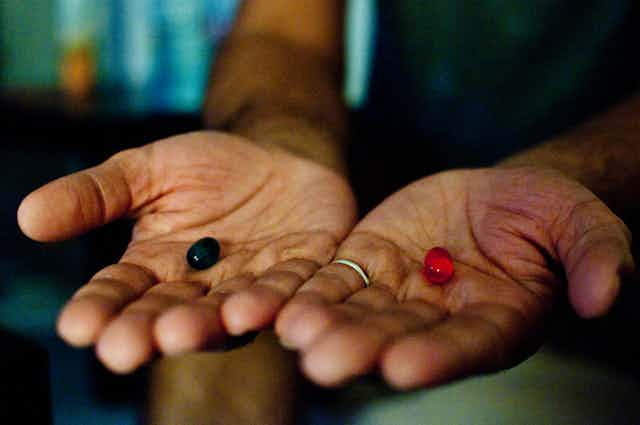

Should governments make it easier to perform human research to discover medical uses of illicit drugs such as cannabis, ecstasy (MDMA) and LSD?
Professor David Nutt of Imperial College London argued recently that the UK, like many other jurisdictions, makes human research on illicit drugs nearly impossible to perform.
Nutt made the point that risks need to be balanced against the potential benefits for new knowledge about how consciousness works and potential medical treatments. There is some truth in this. Research on potential medicinal uses for illicit drugs has remained largely unfunded by UK, US, Australian and other governments despite solid evidence that there are some medical benefits to taking drugs such as cannabis.
There are severe but not insurmountable restrictions on access to such drugs in many countries. But research on any drug in humans is necessarily limited by important ethical considerations aside from any political and security issues.
Knowing the limits
As pointed out by Professor Nutt, research on the potential medical benefits of MDMA and hallucinogenic drugs such as LSD and psylocibin in the 1960s suggested potential therapeutic benefits for some psychiatric disorders.
The illegal status of these drugs limited further progress, and it continues to do so. But it must also be recognised that the regulatory framework for drug testing in humans has changed dramatically in the post-thalidomide era (after the 1960s), when the drug was found to be linked to thousands of mothers giving birth to disabled babies.
It is no longer ethical to test any drugs in humans without a great deal of very expensive safety testing in a variety of specific biological test systems and animals within a strict regulatory framework. Such testing helps to protect against catastrophic errors as seen in the case of thalidomide.
Any planned experiments in humans must also undergo a very careful risk-benefit analysis and be accepted by strictly regulated human ethics committees before a human trial can begin, regardless of any other restrictions. Someone – the public or government research funding agencies – will support some clinical trials of novel medications when the significance or medical need is high.
By and large, pharmaceutical companies undertake this very expensive work only when there is a clear likelihood of profit.
Unless the safety and risk-benefit criteria are met there is little incentive to perform human research, particularly in the face of negative political pressures associated with illegal status.
Cannabis
On the risk-benefit side, drugs which have been used widely for millennia, such as cannabis, are considered safe enough to test. There is solid scientific evidence to pursue this and government commissioned expert reports in the UK, USA and Australia have consistently recommended such research be undertaken.
At the basic, cutting-edge of science there has been an explosion of research on cannabis since the discovery in the early 1990s of the target molecules in the body that cannabis works on and the endogenous messengers, endocannabinoids, which cannabis mimics.

Most of this work has been performed in animal models, isolated tissues and nerve cells and is not restricted much by legal status. From this work there has been a steady growth in knowledge of the systems in the brain that cannabis works on, providing a solid scientific basis for potential medical uses of the drug.
These include stimulation of appetite, relief of spasticity in multiple sclerosis and management of chronic pain. There are hints that cannabis-related drugs may also be useful for other disorders such as Tourette’s syndrome.
But funding for research in humans has lagged behind this basic understanding. Rather than governments, clinical trials in humans have recently been championed and financially supported almost exclusively by companies. GW Pharmaceuticals based in the UK have developed a cannabis extract that can be administered under the tongue, initially to treat spasticity in multiple sclerosis and more recently for management of untreatable chronic pain produced by nerve injury. The drug is now registered for use in several countries.
The growth in knowledge of the molecular mechanisms of action of cannabis has produced other risks. So far about 20 experimental drugs that act in a similar manner to the main psychoactive drug in the plant have been invented, as well as drugs with the opposite actions that block cannabis and the body’s own cannabis-like messenger molecules.
Endocannabinoid-blocking drugs have been developed by several pharmaceutical companies as appetite suppressants and there are other possible uses.
One unintended consequence of such drug development research has been the clandestine synthesis of synthetic cannabis mimics that have until very recently not been classified and are marketed as legal herbs or “spice” that produce a “legal” high similar to cannabis.

Being chemically different from the active drugs in cannabis, these synthetic mimics cannot be detected by routine drug tests. Clandestine manufacturers of these drugs attempt only to avoid the illegal status of the parent psychoactive drug and have no concern whatsoever for the health or well-being of their clients.
Effectively, individuals taking any of these drugs are human guinea pigs testing the toxicity of potentially poisonous drugs. These cannabis mimics might not be as bad as thalidomide but recent case reports of sudden heart attacks in teenagers following use of “spice” or “K2” highlight the severity of risks.
MDMA
If the case for cannabis research in humans is fraught with complexities, the situation is more problematic for other potentially dangerous drugs, such as MDMA.
The risk of life-threatening adverse events from MDMA is extremely low but other adverse effects, including the high incidence of induction post-MDMA depression – the “Tuesday blues” – could preclude therapeutic use in vulnerable psychiatric populations.
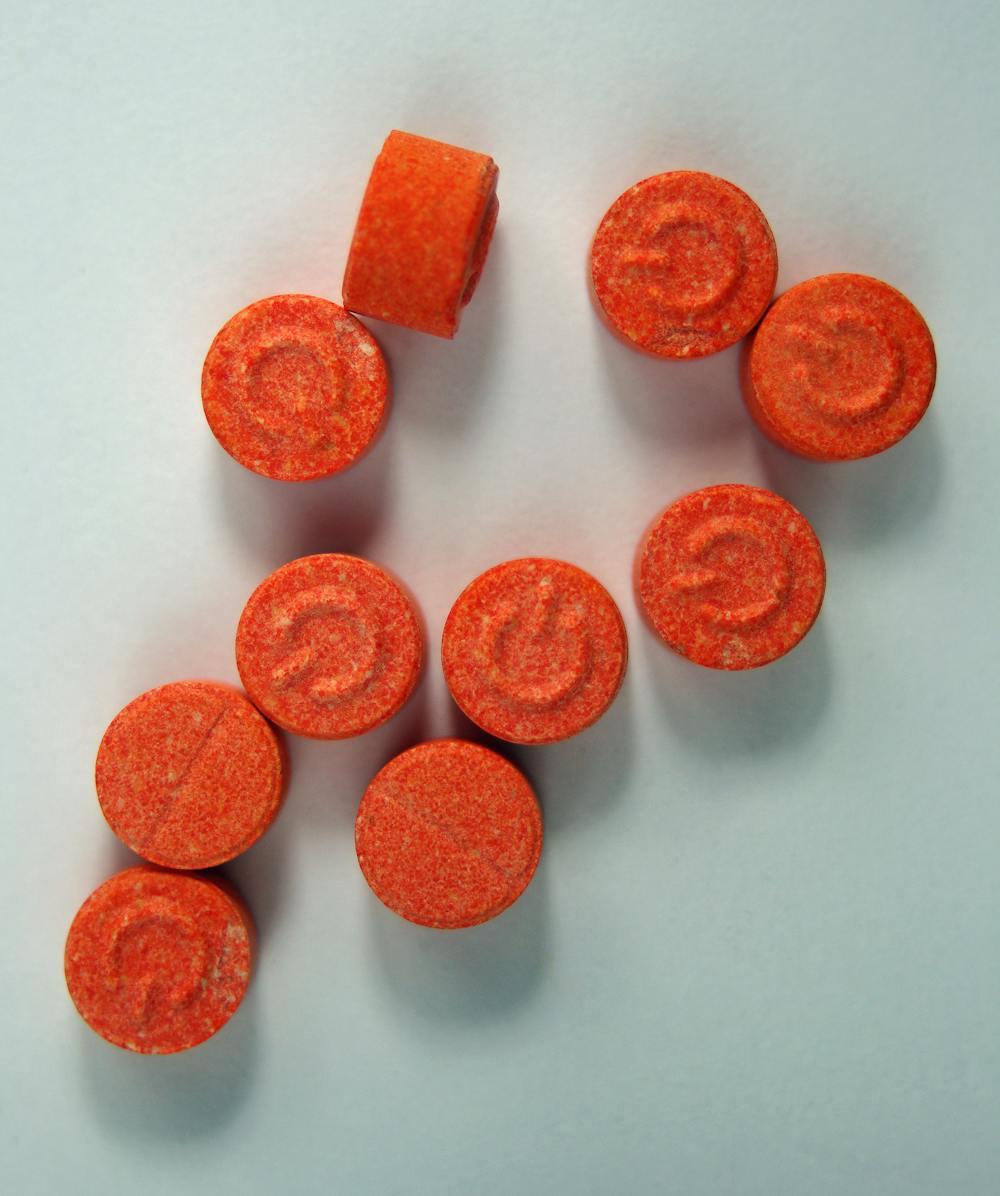
But we might be able to produce better therapeutics from the wealth of basic research on MDMA. Recent research points to MDMA’s enhancement of a natural “empathic” neuro-hormone, oxytocin, in the brain, which has been tested in the context of facilitating therapy for patients suffering post-traumatic stress disorders.
Treatment with this hormone itself may prove to be a safer, more effective therapeutic aid for such anxiety disorders than MDMA itself and is a field of intense human research in Australia and elsewhere. Again, the clandestine market has generated many MDMA lookalikes that are sold as ecstasy, some of which, including PMA, are highly toxic.
A political pill
Testing of illicit drugs on humans is clouded by political concerns. Many illicit psychoactive drugs have potential medical uses but also cause serious problems with misuse. It is a reasonable fear that attributing medical uses to illicit drugs normalises them in the eyes of potential users, along the lines of: “it’s used as a medicine so it must be OK”.
Of course, this is as silly as the misconception that drugs such as psilocybin and cannabis are natural so they must be harmless.
Morphine is a glaring example of a legal drug from a plant with immense medical benefits in serious pain management but also serious risks, including addiction and overdose death with misuse.
Valid medical uses of cannabis or any other drug should not override concerns about misuse.
This is the second of two articles about the human testing of illicit drugs. You can read the first article here.