Innovative strategies needed to address Indigenous obesity

OBESE NATION: It’s time to admit it – Australia is becoming an obese nation. This series looks at how this has happened and more importantly, what we can do to stop the obesity epidemic. Today Julie Brimblecombe discusses the incidence of obesity in Indigenous communities. After tobacco, overweight…

H5dm5dp5-1341202489
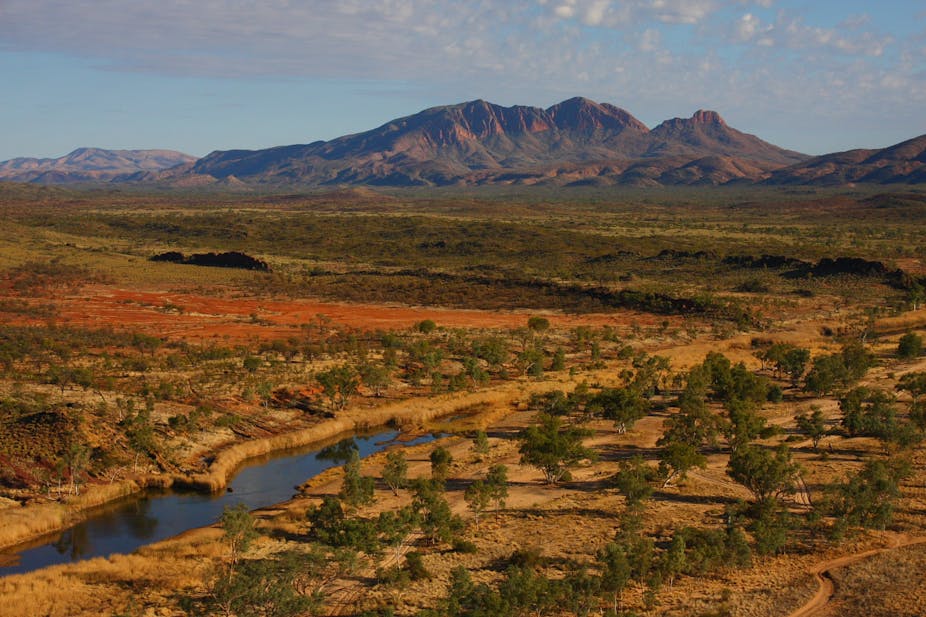
Just beyond the built community lies a health-promoting environment providing cultural, spiritual and physical nourishment. misha.penkov/Flickr

OBESE NATION: It’s time to admit it – Australia is becoming an obese nation. This series looks at how this has happened and more importantly, what we can do to stop the obesity epidemic.

Today Julie Brimblecombe discusses the incidence of obesity in Indigenous communities.


After tobacco, overweight and obesity contributes most heavily to the disease burden affecting Aboriginal and Torres Strait Islander Australians. It accounts for 16% of the health gap between Indigenous and non-Indigenous Australians, and is linked with physical inactivity, which accounts for a further 12% of the gap.

Type 2 diabetes, cardiovascular disease and kidney failure – each driven by obesity – are all rife among this population. Promising inroads have been made into tobacco cessation through political commitment, legislation, and community support. But obesity prevention in remote Indigenous Australia has not received equal attention.

For the individual most often affected by diseases associated with overweight and obesity during what should be the most productive years of his or her life, the social, health and economic costs of obesity are enormous. And this effect ripples through society.

Paradoxically, the poor are most affected, and many remote Indigenous households are now dealing with the double burden of obesity in adult members and under-nutrition in children.

Traditionally, Indigenous Australians were physically lean and did not gain weight with age. Thirty years ago, a small family group of Aboriginal people living “a traditionally oriented lifestyle” in north-east Arnhem Land were extremely slim (BMI of 16.7). And showed no risk of type 2 diabetes or heart disease.

Fast forward 20 years and this picture had completely changed. Half of the population in a north-east Arnhem Land community aged 15 years and over (47.3%) were still considered lean (BMI of less than 22), and this was particularly the case for young people (15 to 24 years), all of whom showed no sign of type 2 diabetes. In those of middle-age (35 to 64 years), however, 38% of the study population were overweight or obese.

Many factors contribute to people becoming overweight or obese in remote Indigenous communities. Most such communities are obesogenic environments because food prices (in the NT) are 45% more than urban centres; few healthy fast food options exist; there are limited recreational facilities and safe walking paths; and there’s inadequate housing. What’s more, there are often poor cooking and storage facilities and limited opportunities to access meaningful information on healthy food.

It’s now recognised that these factors are largely driven or controlled by elements that are external to the individual. At a national level, strategies are increasingly focusing less on the individual and ideas of a lack of self-control, and more on better understanding and modifying the obesity-promoting environment.

The environment is complex, and like strategies for tobacco cessation, lowering obesity levels requires a coherent, multi-level, multi-sector integrated approach – supported by political will and resources. But the environment of remote Indigenous communities is also unique in a number of ways – and this may make it more conducive to effective action.

When Indigenous Australians lived a traditional lifestyle, their diets were rich in lean animal foods that provided abundant protein, and sources of slowly digested carbohydrate. Marguerite Carstairs

First, remote communities have the benefit of a food system that can be more clearly demarcated and defined than the urban setting. Second, in general, community leaders are highly committed to health improvement and support an integrated and holistic approach that resonates with an Aboriginal view of health. This can promote excellent coherence within a community, encouraging different sectors to work together.

In many settings, just beyond the built community lies a health-promoting environment that provides cultural, spiritual and physical nourishment for many community residents. The remote community Gunbalanya in Arnhem Land, for instance, overlooks a wetlands billabong teeming with long-necked turtle, file snack and fresh water fish.

Just down the track from the Nyirripi community in Central Australia, bush tomatoes and sultanas line the unsealed road and honey-ants are plentiful. Community elders are desperate to maintain these environments and their spiritual, cultural and physical connection to the land. They are also eager to educate and connect the younger generations to this environment.

When Indigenous Australians lived a traditional hunter-gatherer lifestyle, their diets were rich in lean animal foods that provided abundant protein, and sources of slowly digested carbohydrate. Energy dense foods were highly-prized and limited by season and their procurement burned calories.

Now, food stores in remote communities stock mainly energy-dense, nutrient-poor processed foods that are high in fat, sugar and salt. These processed foods provide excessive calories at a relatively low price, compared with the high expense of fresh nutrient-rich foods (fruit, vegetables, lean meats, fish, dairy and whole-grain cereals). So cheap refined carbohydrates and processed foods now make up the bulk of the diet available to most people living in remote Indigenous communities.

There’s no question that the price of food influences consumption patterns. So economic levers are a logical approach to help move the dietary balance closer to the traditional diet and improve health outcomes – and many Aboriginal people in communities support this.

Tax policies, although getting traction in the United States, United Kingdom and Denmark, need closer consideration in Australia, as remote Indigenous families may be the hardest hit. They already spend a greater part of their budget on food. Subsidies are likely to be more effective.

Rigorous testing of solutions is needed to inform fiscal policy to curb overweight and obesity in remote Indigenous Australia.

Aboriginal people living in remote communities are among Australia’s poorest. Yet they pay much more for food, and have limited availability to a healthy diet. Innovative economic strategies are needed to help alter this imbalance.

This is part ten of our series Obese Nation. To read the other instalments, follow the links below:

Part one: Mapping Australia’s collective weight gain

Part two: Explainer: overweight, obese, BMI – what does it all mean?

Part three: Explainer: how does excess weight cause disease?

Part four: Recipe for disaster: creating a food supply to suit the appetite

Part five: What’s economic growth got to do with expanding waistlines?

Part six: Preventing weight gain: the dilemma of effective regulation

Part seven: Filling the regulatory gap in chronic disease prevention

Part eight: Why a fat tax is not enough to tackle the obesity problem

Part nine: Education, wealth and the place you live can affect your weight

Part eleven: Two books, one big issue: Why Calories Count and Weighing In

Part twelve: Putting health at the heart of sustainability policy

Part thirteen: Want to stop the obesity epidemic? Let’s get moving

Part fourteen: Fat of the land: how urban design can help curb obesity

Part fifteen: Industry-sponsored self-regulation: it’s just not cricket

Part sixteen: Regulation and legislation as tools in the battle against obesity

Sign in to Favourite

Want to follow The Conversation?

Sign up to our free newsletter to get the day's top stories in your inbox each morning, with a special wrap on Saturday.

Help us have better conversations — donate

Join the conversation

9 Comments sorted by

  1. Mark Carter

    logged in via Facebook

    "limited recreational facilities and safe walking paths;" -are you serious? These communities are usually in the middle of the most heartbreakingly beautiful country, walking paradise. And how many 'safe walking paths' do you think there were 40 years back?
    Its ironic that the photo on this article is of Mt.Sonder and the Finke River- a national park surrounded by indigenous communities which is very rarely actually visited by aboriginal folk unless shepherded there by a public employee as part of some program or other.
    My experience of aboriginal people in the NT at least is that many see physical exercise as a chore to be avoided whenever possible- not particularly different from the rest of Australia really...

    report
  2. rory robertson

    rory robertson is a Friend of The Conversation.

    former fattie

    Thanks for your piece Julie, and congratulations on the work of the Menzies School in this critical area. Actually, I'm just back Sydney after most of a week in Cape York, driving back to Cairns via one of the Cape's many remote Aboriginal communities. Notably, thumb-tacked onto the noticeboard outside the (one) community grocery store was a report from the Menzies School noting that sugary products - particularly softdrinks (95% of them full-strength not diet) - are a huge part of dollars spent…

    Read more
  3. Gil Hardwick

    Anthropologist

    Julie, and Rory and Mark, you all know that we all know there is nothing new here. We were trying to get lolly water out of the stores 40 years ago to no avail. There is simply too much profit in them.

    Rather I suggest that we focus on what is common here, not on what is different among Aboriginal people as is usually and I suggest always inappropriately the case. As you say, Mark, "not particularly different from the rest of Australia really . . ."

    ALL people routinely impoverished, discouraged…

    Read more
    1. Gil Hardwick

      Anthropologist

      In reply to Gil Hardwick

      Just to add here, Julie, the single most successful strategy developed by the people themselves is what we call 'two roads'. Children are sent away to one of the top boarding schools during term, equivalent to what used to be known as single men's camps (or their female equivalent), then during bush holiday time going back out to visit country.

      It's called two roads because in it the young up-and-comers, as I have also written before, become bilingual and bicultural, later multilingual and multicultural…

      Read more
    2. Steve Brown

      logged in via email @yahoo.com.au

      In reply to Gil Hardwick

      "I add this here to point out that the problem being addressed is a human problem, not an Aboriginal problem per se."

      The problem with that reasoning is that not all humans have experienced the same things.

      Aboriginals were catapulted from a hunter-gatherer way of life into a modern industrial life over an extremely short time period. Most humans simply weren't introduced to such a radical disruption/transformation. The ancestors of non-indigenous Australian's had at least 10,000 years worth…

      Read more
    3. Matt Stevens

      Senior Research Fellow/Statistician/PhD

      In reply to Gil Hardwick

      YES YES YES. I too wish Australia would stop Aboriginalising the problems that occur within too much of the Aboriginal population in Australia. It simply adds to the separation and difference, rather than the commonalities. Things will change very slowly I think Gil. Living up here in the NT, you can see the public health messages slowly filtering through the Aboriginal community. For example, I remember growing up in the early 70's when it was still cool to spit. This is still common among Aboriginal communities up here, but is starting to become less common. Smoking is another one, where the rates are starting to fall, but 20-40 years after the non-indigenous population. I think there is often resistance within the Aboriginal population simply to be "different" from the white folk.

      report
  4. Steve Brown

    logged in via email @yahoo.com.au

    Professor Kerin O'Dea took a group of Aborigines suffering from a variety of health problems out to the bush where they consumed a traditional hunter-gatherer diet:

    "We lived off the land for seven weeks and in that time, all of the metabolic abnormalities of diabetes and all of the risk factors for heart disease that I could measure just plummeted. People changed, those Aboriginal people changed completely when they went back to the bush. They were in charge of their lives. And they had this sense that we talk about now of mastery and control over their lives and we know that when people have a sense of mastery and control, they're healthier. "

    http://sixtyminutes.ninemsn.com.au/stories/lizhayes/797223/backyard-revolution

    report
    1. rory robertson

      rory robertson is a Friend of The Conversation.

      former fattie

      In reply to Steve Brown

      Steve, my reading of the evidence is that local population after local population across the globe tended towards obesity and diabetes - "diabesity" - soon after they started eating big amounts of refined sugar/fructose. Going the other way, your neat "60 Minutes" example demonstrates again what thousands of us have found in recent years - stop eating the sugary junk and those trends are reversed. Happily, it is that simple, because appetite control shows up within weeks of sugary junk exiting stage…

      Read more
    2. Matt Stevens

      Senior Research Fellow/Statistician/PhD

      In reply to Steve Brown

      If anyone (overweight/obese, Aboriginal or non-Aboriginal included) walked around the bush hunting and gathering food for 7 weeks, i reckon they would lose weight. There is nothing groundbreaking about this research, only the fact that it made the bleeding hearts feel better about themselves.

      People can empower themselves through many ways. For an Aboriginal person, it may be caring for country or it may be holding down a job and doing it well. I know which one is going to benefit the person and their family more in the long run! Do you Steve?

      report