
It’s obviously feel-good, family-friendly marketing, but the brutal reality is those “Sugar Glider Road”, “Wallaby Close” and “Fairy Wren Circuit” street signs are almost certainly memorials for absent friends rather than indicators of cherished co-residents.
As was so disturbingly articulated by wildlife veterinarian Dr Jon Hanger on Four Corners August 20, when we clear bushland the wildlife doesn’t just move on. In almost all cases most of the lizards, mammals, small birds and koalas will die, either immediately during the destruction of their habitat, or eventually due to exposure to predators, lack of food or the sheer stress associated with losing their environment. And this kind of wildlife death is specific to Australia: in other countries, suburban sprawl moves over already-transformed rural landscapes. Here, it often envelopes the surrounding forest.
Although fairly tentative and inconclusive, the Four Corners program did highlight the complexity and inevitability of the impact urbanisation has on biodiversity, with the spotlight understandably focused on the tragically cute koala. The recent Federal Government listing of the species as “threatened” in Queensland, New South Wales and the ACT will apparently mean far greater scrutiny of activities that harm koalas or their habitat. The operationalisation of such a process is far from clear, but the cry of “yet more green tape” can already be heard from developers and certain state government ministers.

Koalas and people share the same tastes in location, though not lifestyle. In coastal eucalypt woodlands and forest throughout the eastern seaboard, people are scrambling for spanking-new house blocks in vast new estates carved directly from the “vacant” bushland.
In the new suburbs surrounding Port Macquarie, Coffs Harbour, the Gold Coast and the Redlands of south-east Queensland, this is having a predictably catastrophic effect on the local, relatively abundant koala populations. Specialised koala hospitals and centres now operating in these locations all reported large numbers of koalas admitted because of injuries from vehicles, attacks by dogs and a variety of debilitating diseases. In some of these areas, the rate of these admissions has started to wane, principally because the numbers of local koalas have declined significantly.
The best data on koala population trends comes from the “Koala Coast” area of southern Queensland. Here, sizeable tracts of eucalypt forest were set aside for koala conservation in the 1980s (following vehement opposition to plans for new motorways through the areas). As part of the Queensland Government’s ongoing monitoring of these koala populations, we now have a depressingly clear picture of a species declining to extirpation. And it’s the expected urban pressures: loss of habitat, cars, dogs and disease.
Each of these factors is being addressed, though in certain places, to a limited extent, and with mixed results. Domestic dog management is being talked about, seemingly seriously, though no one actually expects any real changes there. (Bear in mind that an appallingly high proportion of the koalas translocated from Coomera on the Gold Coast have been killed by apparently “feral” dogs.)
Koalas appear to carry a remarkable cocktail of diseases and pathogens, often without showing any symptoms. Urban koalas, however, may be more susceptible to these ailments when subjected to the chronic stress of living in human-dominated landscapes. Wildlife disease experts are investigating diseases throughout the distribution of the species. There is hopeful work toward a vaccine for the most prevalent of all koala afflictions, chlamydia. As any of these researchers are quick to admit, however, we shouldn’t expect quick answers to this exceptionally complex picture.

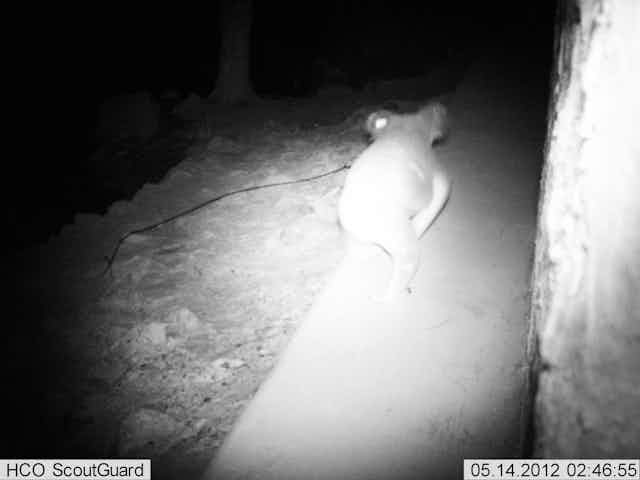
Perhaps unexpectedly, one area showing surprisingly positive signs is reducing road causalities among roaming koalas. Unlike many species of wildlife – which shun roads and retreat further into the bush far from traffic disturbance – koalas are notorious for attempting to cross even major roads in search of favoured feed trees or a potential liaison.
To reduce the risk of koala road-kill, major local authorities and state agencies have been busy constructing specially designed exclusion fences to stop animals reaching the road. However, for koalas now living in an increasingly fragmented landscape of bushland patches often separated by roads, it is critically important that they are able to move from patch to patch safely.
To help koalas safely cross busy roads, Queensland Transport and Main Roads have been working with ecologists to install structures under bridges and in large culverts. But like many animals, koalas are highly reluctant to walk through water. To provide a dry alternative route under the road, a number of box culverts have been retrofitted: broad ledges are attached to the wall of the culvert with platforms leading from the land on either side of the road. Despite significant skepticism and jokes about whether “eucalyptus addicts” are capable of learning to do something no koala has ever needed to do before, the first animals were using the ledges within weeks and have continued to do so.
The enduring issue for urban koalas is, of course, whether people and koalas can actually coexist in the same environment. Depending on your perspective, it can be either a marvelous discovery or a “bloody nuisance” to have a koala visit the tree in your suburban backyard.
Kat
logged in via Twitter
It's good to see this problem finally being recognised. However, the AKF has been doing koala surveys & monitoring, & has called for the koala to be listed as threatened, for years now; only to have their painstaking & accurate work ignored by the scientific community & by the politicians. Now the damage to koala numbers & to their habitat is so severe, they might not be able to recover. If AKF had been listened to initially, this might not have happened.
The political sway of developers…
Read moreAnthony Nolan
Ruminant
It's not just urban development that presents the threat to koalas. Logging in old growth forest continues and often enough the forest is significant koala habitat. I'm hoping that the recent listing of the koala will provide some leverage to halt local logging because I've sighted two koalas in forestry land, in the same area, in the last 12 months. This suggests a colony ... but it is a colony that won't exist if it is only seen by forestry personnel; strangely, koalas only pop into being when they are seen by members of the public. This characteristic of the koala, it's ability to dematerialise in the presence of people who smell money and its ability to rematerialise as a public citizen of the forest in the presence of...citizens, makes it even more important to preserve the species.
Kat
logged in via Twitter
This strange characteristic of threatened wildlife appearing in the presence of ordinary citizens, but magically dematerialising when someone wants to make money out of the land, occurs in various environmental surveys by consultants hired by developers, too. Funny that...
Anthony Nolan
Ruminant
Yes, I've heard such wondrous tales of the koala's ability to disappear right in front of the eyes of consultants too. The consultants who've had this mystical koala experience are highly sought after too!
Jon Hunt
Medical Practitioner
We see a lot of koalas here at Belair in Adelaide. I also often hear them at night with their grunting. There's many parks around full of remnant bush which no doubt helps. Often see them trying to cross roads either very slowly or quickly. I'm amazed I do not see more killed. Of course, if you get rid of the bush you are going to kill them. There's no where else to go. How anyone can think differently is beyond me.
Mike Swinbourne
logged in via Facebook
Jon,
The problem with koalas in the Adelaide hills is that they are not native animals - they are pests! And if you want to see what damage an animal like a koala can cause then look no further than Kangaroo Island.
Koalas may be native to Australia, but when you introduce them to areas outside their natural range then they cause problems for the vegetation and for the animals that really are native to that range. The problems in the Adelaide hills may not be all that severe, but as the remnant bushland shrinks because of housing development, then the pressures on what remains will increase. Having an introduced animal like the koala competing with the native animals is bad news for both - and in such circumstances it is the native animals which should come first.
Anthony Nolan
Ruminant
I've rated your comment as unconstructive because it is eco-one-upmanship. Here is a discussion about conserving habitat to preserve the species and you've popped up with the view that in particular circumstances they are a pest. You are undoubtedly correct. However, you've just extended the mental vocabulary of every developer in Australia to include that kolas can be pests.
Scientists can be pests too. The concept of right speech incorporates the enjoinder to ask yourself "Is it useful to say this?"
Mike Swinbourne
logged in via Facebook
Sorry Jon. You can rate my comment as unconstructive as much as you like, but that won't stop me being correct and you being in error.
You do not conserve habitat for introduced species - you conserve it for the native species. And there are a number of endangered species of trees in remnant bushland throughout the hills that are threatened by koala grazing.
Koalas can be, and are, pests in a number of locations - and it does not serve the interests of biodiversity and conservation to introduce…
Read moreMike Swinbourne
logged in via Facebook
And that should have been directed to Anthony, not Jon. Apologies.
Mike Swinbourne
logged in via Facebook
And that should have been directed to Anthony, not Jon. Apologies.
Anthony Nolan
Ruminant
Mike,
You assert that you are right. However, when you say:
"The problem with koalas in the Adelaide hills is that they are not native animals..."
...then it seems reasonable to request a reference to some sort of evidence for that.
Peter Ormonde
Peter Ormonde is a Friend of The Conversation.
Farmer
Is there much evidence that there were no koalas present in the area? Seems strange to me.
Not THESE koalas obviously - they are introduced from somewhere else. Now that raises different issues and - given the fragmentation and isolation of what is in fact quite a mobile and well spread species - there are good reasons to introduce a bit of new genetic talent into the local X factor contest.
Just because you've never seen koalas locally doesn't mean they weren't there. Ever.
It took…
Read moreJodie Lia
Ecologist
Perhaps the translocation experiments that the likes of Jon Callaghan from Gold Coast City Council are doing in QLD could be better experimented on in areas where Koalas are introduced and upsetting the ecological balance.
I'm not at all advocating for translocations but it seems that it would be better to research the effects of translocating Koalas out of places they're not indigenous to rather than moving on ones who have always been there.
Mike Swinbourne
logged in via Facebook
Anthony.
Alternatively, you could spend five minutes researching the issue. Apologies that this is to wikipedia, but the source is the IUCN:
http://en.wikipedia.org/wiki/File:Koala_Range.jpg
Note that the Adelaide Hills region is shown in pink, which on the parent page indicates that they are introduced to that region.
And this is not just about me being correct about the koala's range - this is also about proper conservation strategies and not introducing threatening processes to endangered habitat - which the introduction of koala's into the Adelaide hills has done. We may have good intentions to protect and conserve koala populations - but those intentions are not served by creating problems elsewhere.
Apology accepted.
Peter Ormonde
Peter Ormonde is a Friend of The Conversation.
Farmer
Yes I think I'd be looking more to historical records than maps of where there remain today Mike. I'll have a look and see what I can turn up from the dark past.
But you are dead on the money when you point the finger at habitat loss THE threatening process. Not just for koalas but for pretty much everything on our Endangered and Threatened Species Lists. We know this and we do not -cannot - will not - stop it.
Be it encroachment from suburban sprawl or clearing for farmland - even removal…
Read moreAnthony Nolan
Ruminant
Your acceptance of an unproffered apology is too hasty by half. According to the National Koala Conservation and Management Strategy (linked) the natural history of the koala includes that:
" Koalas formerly occurred throughout the broad band of eucalypt forest and woodland communities extending from north-eastern Queensland to the south-eastern corner of South Australia"
which I suggest includes the Adelaide Hills.
Moreover s5.3 of the document includes that Australia's koala population…
Read moreAnthony Nolan
Ruminant
Talkin' to myself here Mike Swinbourne, five days on.
All of the above post, by me, goes to show that what passes as good 'ecological knowledge' can be nothing more than folk ecology, ie, not based on anything other than misreading ecological history.
So, I guess that you must have to drive where the koalas are 'pests' then? Have you considered that there are costs associated with living in the habitat of another species? Or that you are living in the wrong place just like every other person who wants the semblance of living in the bush without any of the inconvenience.
STABLE POPULATION PARTY
Written & authorised by William Bourke, Sydney
A stable population will, amongst may other positive outcomes:
1. Minimise overdevelopment and urban sprawl
2. Protect the environment, including Australia’s native bushland
and animal habitat
We just need to join the dots...
Mark Gregory
Senior Lecturer in Electrical and Computer Engineering at RMIT University
Seems that this is the only way forward that will protect the flora and fauna that we have not already made extinct. Good Luck on your endeavours.
STABLE POPULATION PARTY
Written & authorised by William Bourke, Sydney
Thank you. Now that we are federally registered, we are just waiting for the federal election...
Anthony Nolan
Ruminant
Look, this sort of comment is called pushing a barrow. I'm sure that you could relate koala population decline to human population growth but it is tortuous logic when in between the issues lies a myriad other steps - like the nature of urban design and planning, the political economy of the production and distribution of food and so on. At each point decisions are made that affect the outcome concerned, which is koala habitat decline. However, to simply draw a straight line between human population and koala decline is unsophisticated at least and extremely crude at best.
STABLE POPULATION PARTY
Written & authorised by William Bourke, Sydney
You are correct in saying growth in human population (and subsequent urban sprawl/overdevelopment) is not the only thing killing koalas. It is not the only factor so should have said:
"A stable population will, amongst may other positive outcomes HELP:"
Good to have a housing development industry rep chip in though. No barrows being pushed there of course...
Anthony Nolan
Ruminant
Talk about someone quick to throw mud William Bourke. Someone disagrees, so lets try and slander them with guilt by (imaginary) association with the housing industry. Strewth.
Jodie Lia
Ecologist
The greatest shame was the denial of Commonwealth protection for Koalas in Victoria. The argument that some forests of Victoria (mostly on offshore islands) are overpopulated and overbrowsed may be true, but the listing of specific and genetically unique Koala populations on the mainland (such as the Strzelecki population) as opposed to the whole states population, would ensure that the most vulnerable are protected.
Murray Webster
Forestry-Ecology Consultant/Contractor
I would be interested to see if any of the Koala biologists out there have assessed stand structure as a variable in defining Koala habitat. I have read/heard that Pine Creek south of Coffs Harbour, and the Pilliga cypress pine forests near Baradine, are hot spots for Koalas. i.e have/had large populations. This is interesting because they have both been heavily logged in the past. Pine Creek was essentially clear-felled last century I think from 1930’s to 60’s. This leads me to hypothesis about…
Read moreAnthony Nolan
Ruminant
You are correct that koalas have preferred habitat high amongst the criteria of which is the presence of other koalas. The presence of A koala always indicates the presence of others. So, in so far as koalas and old growth are concerned, the koalas I saw locally are in previously logged old growth. However, the forestry land abuts a national park along about 30k's so it may be that the presence of that unlogged country allows for corridor movement that protects their ecology.
In any event the idea of 'log it and see', which I think is what you are proposing by citing the koalas living in areas logged 30 years ago, sounds unscientific and haphazard to me.
What we do know now is one koala equals more so wherever they are found their habitat requires protecting.
Kat
logged in via Twitter
You're talking about selective logging of koala habitat. They are highly prone to stress, & would likely succumb to Chlamydia infection set off by the stress of having logging in their home range. They all are individual & have preferred trees in their home territories - not all the same. You would potentially be taking their preferred feed trees, & leaving them highly stressed as a result. Removing trees in their habitat also makes them have to spend more time on the ground to try to get reach…
Read morePeter Ormonde
Peter Ormonde is a Friend of The Conversation.
Farmer
Murray,
I have a vague recollection of some studies on koalas and different sorts of wildfires and firestorms. The latter is devastating while - if they have places to retreat to and the fires are of low intensity - singed but not burned - koalas seem to take up a very rapid rebound on emerging epicormic regrowth.
I'll try and track the references down if you're interested. I remember it being discussed about the place. 12 years back or so. But I think I know where to look.
Actually…
Read moreMurray Webster
Forestry-Ecology Consultant/Contractor
Peter, Kat, Anthony, Yes I can see where you are coming from. However, I am still interested in seeing if there are any papers dealing with stand structure as a habitat variable. Since leaving Govt./research I don't have free access to journals any more, though I may be able to chase up if I know where to look. This type of question is fundamental for me, in framing our forest management policy into the future. Obviously driving the Koala to extinction is totally unacceptable.
Anthony Nolan
Ruminant
I'm looking at files as I go so if anything stands out then I'll link it. Cheers.
Jay Wilson
x credit manager and born again hippie ;)
The tongue-in-cheek comments above regarding koalas only "materializing" when members of the public are present is spot on.
If you want a real life example of "not finding any evidence because you're not looking for it" check out these references to the behavior of ForstsNSW in the Royal Camp SF in Northern NSW.
http://www.echonews.com.au/story/2012/08/23/digging-the-dirt-on-koalas-forests-nsw-under-scrut/
Read morehttp://www.cec.org.au/local/MoreLoggedKoalaHabitat.Audit%20Report.%20Royal%20Camp…