


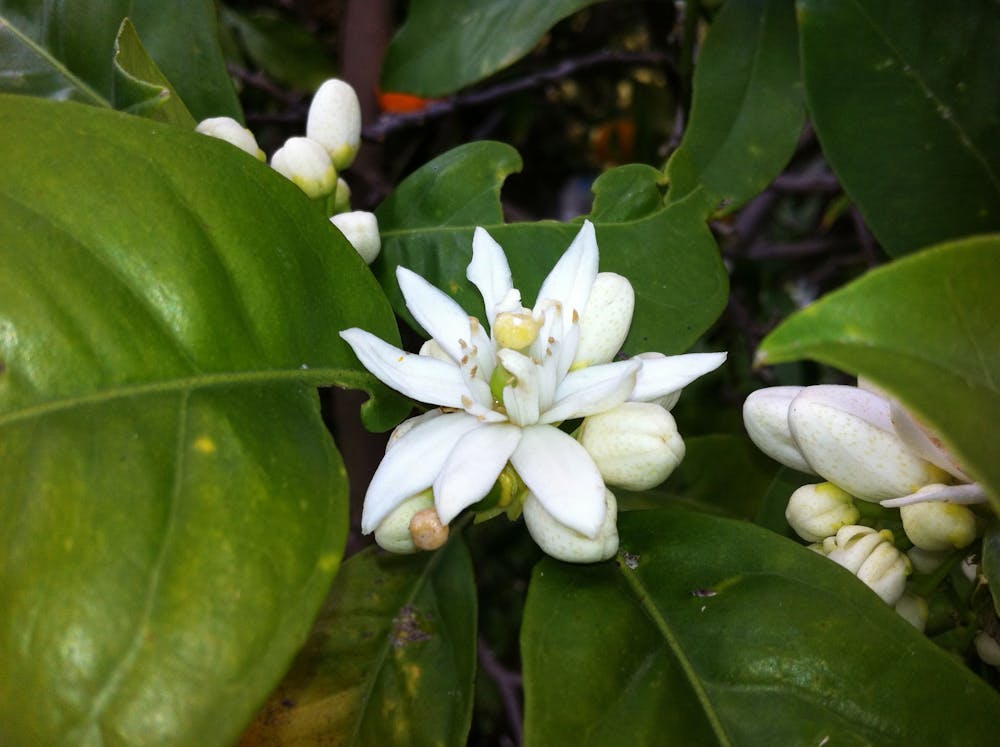
The fields of Majorca (Spain) are in full blooming at the height of spring, and bees are very busy pollinating this unplanned garden.
I am happy to welcome them to the citrus orchard in my backyard, as their busy work on their flowers offer a promise of oranges, tangerines and lemons to be enjoyed toward the end of the year. It is spring in Majorca, and is not a silent one!
Bees and silent springs were discussed on my previous blog. But perhaps we should this time reflect on the role of bees and the soft, mutually benefiting interaction between plants and their pollinators as one of the corner stones for the emerging paradigm of cooperation as a powerful force.
Pollination has long been acknowledged to be a key motor of evolution and the emergence of huge species diversity in terrestrial ecosystems. The co-evolution between plants and their insect pollinators is believed to explain the vast diversity of angiosperms (about 300,000 species) and insects (about 1,000,000 species) comprising much of the named species in the planet.
Yet, mutualistic interactions between species, where both interacting species obtain benefits (food in the case of bees and pollination in the case of plants in our example), have been considered to represent “soft” interactions, with a far smaller role than hard ones, such as competitive interactions or predator-prey interactions in ecosystems and evolution.

Other examples of such mutualistic interactions involve those between animals feeding on fruits and their host plants, which benefit from the dispersal resulting from the mobility of the animals that eat their fruits and seeds. These animals include humans, as our dependence on a few crop plants (< 1 in every 1,000 plant species), have lead to their global propagation, with a few of them (wheat, rice, potatoes, etc.) having multiplied their biomass, and consequently fitness, by many orders of magnitude relative to those before these interactions emerged, about 10,000 years ago.
However, recent assessments, based on the application of complex network theory to mutualistic networks in ecosystems - particularly plant-pollinator interactions at the ecosystem level - have revealed that mutualistic interactions often involve hundreds of species that form complex networks of interdependences, where most species have a few interactions, but a few species are much more connected, i.e. either pollinate many plant species or are pollinated by many insect species, than expected by chance. The structure, more formally topology, of these mutualistic networks has been found to have important implications for the stability of species and can be regarded as the foundation of the architecture of biodiversity (Bascompte and Jordano 2007). For instance, mutualistic networks are highly nested, with the more specialist species interacting only with proper subsets of the species that interact with the more generalist ones.
The way subsets of interacting species are nested within mutualistic networks reduces competition and enhances the number of coexisting species, thereby increasing diversity (Bastolla et al. 2009). Because of the tight interactions and inter-dependence of species within these networks, species extinctions within mutualistic networks often lead to a cascade of extinctions, propagating across the network of species they interact with. This research has lead to the understanding that species are not driven to extinction in isolation but as sets of closely-connected species within ecological networks.
The topology of mutualistic networks determines, to a large extent, their robustness against species extinctions. Cascades of extinctions are more likely if the most linked pollinators in mutualistic networks are lost (Memmott et al. 2009), so that the same species that have a greater contribution to the persistence of the network are also the most vulnerable to extinctions (Saavedra et al. 2011). This role typically include bumble–bees and some solitary bees in pollination systems.
Understanding the web of mutualistic interactions is, therefore, crucial to understand evolution, the maintenance of biodiversity and the consequences of species extinction and can be thus be used a a tool in conservation biology. The possible impacts of synthetic chemicals and other stressors on bees is not, therefore, a problem of conservation of bees alone, but a problem affecting the whole network of species they interact with. Mutualistic networks are powerful drivers of biodiversity but, at the same time, link species in a way that makes them prone to domino effects triggered by extinctions of the most-connected species.
Demonstration of the power of cooperative processes between species involved in mutualistic interactions inspired the exploration of a similar role for soft interactions between firms and businesses in societies. This research has revealed that, as in ecological networks, networks of mutualistic interactions between companies play a central role in diversifying economic networks. In particular, this research has revealed striking similarities between pollinator-plant networks and the networks of manufacturer–contractor interactions (Saavedra et al. 2008).
As in biodiversity research, economic theory had focussed on competitive interactions between firms in markets and had neglected, to a large extent, the key, and obvious, importance of interactions between firms and businesses that yield mutual benefits.
The accumulation of molecular and genomic data is also shifting our views on evolutionary processes. As we learn more about evolution we start to better understand the importance of cooperative over competitive processes, as mutualistic interactions, symbiotic interactions and lateral gene transfer have produced major evolutionary changes, compared to the small step-changes derived from competitive interactions.
Indeed cooperative processes are emerging as powerful mechanism to drive change, innovation and maintain diversity and stability in a broad array of systems. In addition to ecology and evolution, the emergence of cooperative processes as a powerful paradigm has occurred in other fields of biology (molecular cooperative processes in gene expression regulation and metabolic regulation), computation (crowd computing), economics (crowd-funding, cooperation between mutualistic companies) social sciences (opinion shifts and cooperation in societies), cognitive sciences (crowd intelligence), and learning (crowd learning).
The architecture of nature - as well as that of society - is not as depicted in the David Attenborough documentaries; which I often thought of as ecological metaphores for social darwinism, where the key drivers were the survival of the fittest and the predation of the week by the powerful. The architecture and evolution of life - and society - is intimately linked to cooperative processes as a powerful creative force.
Social darwinism and competitive interactions prevail also in many domains of Australian life, including universities, among as well as within them.
We have much to learn from realizing that the competitive processes that take such a pre-eminent role in our lives lead to minor advantages and that the real power for innovation and major leaps forward rests with cooperative processes. We have, in conclusion, much to learn from observing bees and flowers, an activity I quite happily embrace.
References
Bascompte, J., and P. Jordano. 2007. Plant-Animal Mutualistic Networks: The Architecture of Biodiversity. Annual Review of Ecology, Evolution, and Systematics 38: 567-593.
Bastolla, U., M. A. Fortuna, A. Pascual-García, A. Ferrera, B. Luque, and J. Bascompte. 2009. The architecture of mutualistic networks minimizes competition and increases biodiversity. Nature 458: 1018-1020
Memmott, J., N. M. Waser, and M. V. Price. 2004. Tolerance of pollination networks to species extinctions. Proc. R. Soc. Lond. B 271: 1557 2605-2611.
Saavedra, S., F. Reed-Tsochas, and B. Uzz. 2009. A simple model of bipartite cooperation for ecological and organizational networks. Nature 457, 463-466
Saavedra, S., D.B. Stouffer, B. Uzzi and J. Bascompte. 2011. Strong contributors to network persistence are the most vulnerable to extinction. Nature 478: 233–235.