


Welcome to The Conversation’s series on megatrends, exploring the compelling economic, social, environmental, political and technological issues facing Australia, as part of the CSIRO’s new report, Our Future World 2012.
In part two, Stefan Hajkowicz discusses whether we have opted to allow biodiversity to dwindle, or whether collective efforts may still alter this trajectory.
The first version of the CSIRO’s megatrends report published in 2010 didn’t have a strong focus on the biodiversity angle. It did cover scarcity - relative to demand - in food, mineral, water and energy resources. But it was focused on the commodifiable resources - those which have market value and prices. Based on the feedback we received - and our own in house research – the team felt this was an oversight. So we added another megatrend to the venn diagram; “Going, going, … gone?”.
This megatrend captures biodiversity assets – including species, habitats and ecosystems – which although not traded, and therefore not priced, are of enormous cultural and spiritual value to humans. The alternative name we explored was “A window of opportunity”. This was perhaps a more positive framing to indicate the coming decades are when humans have the greatest chance to make a difference. However, we opted for “Going, going, … gone?” because we felt it more accurately captured the situation. The question mark is purposefully inserted because we do not yet know the answer.
The megatrend is founded upon the observation by two Stanford University ecologists - Paul R. Ehrlich and Robert Pringle (2008) - that “the fate of biological diversity for the next 10 million years will almost certainly be determined during the next 50–100 years by the activities of a single species”.

The reason that the near-term matters so much is the pressures are greater than ever before and the threat of extinction is greater than ever before. As the developing world continues down the path of rapid industrialisation and the human population increases, the many species, habitats and ecosystems on the brink of extinction are imperilled. Extinction is forever and the coming decades are critical.
The rate of biodiversity loss is showing no sign of slowing despite an international commitment made during the 2002 Convention on Biological Diversity.
To assess progress, 31 indicators covering species population trends, extinction risk, habitat extent, habitat condition and community composition were compiled. In 2010, an assessment of these indicators over the past four decades showed most had continued to decline. Furthermore, there have been no significant reductions in the rate of decline for most indicators.
In comparison indicators of pressures - such as resource consumption, invasive alien species, nitrogen pollution, over-exploitation and climate change impacts - have increased.
The Great Barrier Reef is one particularly important and valuable ecological asset that’s under pressure. The Australian Institute of Marine Science has observed a severe 14% decline in coral growth since 1990. This rate of decline has not occurred over the past 400 years.
But there’s a good news story. While the pressure is higher than ever before and the state of biodiversity is more threatened than ever before, the response is also greater than ever before.
The number and extent of protected areas has increased, environmental impact assessment is more widely applied and 170 countries now have biodiversity strategies and action plans. Since 2002 more than 210,000 square kilometres have been added to the protected areas network worldwide. The network now covers 21 million square kilometres.
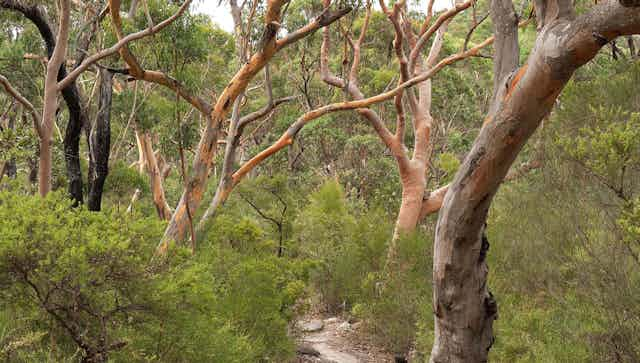
The outcome isn’t yet known for the Great Barrier Reef nor for the grey gum wet sclerophyll forests of the New South Wales coast nor for the cassowary, Tasmanian devil or sugar glider. There’s still so much that can be done.
Hopefully we’ll revise this megatrend in a future update to say “Going, staying …, and staying put”.
More in the megatrends series:
What the future megatrends all Australians need to know about?