Organised crime, illegal timber and Australia’s role in deforestation

Illegal logging is booming, as criminal organisations tighten their grip on this profitable global industry. Hence, it comes just in the nick of time that Australia, after years of debate, is on the verge of passing an anti-logging bill. Illegal logging is an international scourge, and increasingly…

Jpws3g6f-1349839522
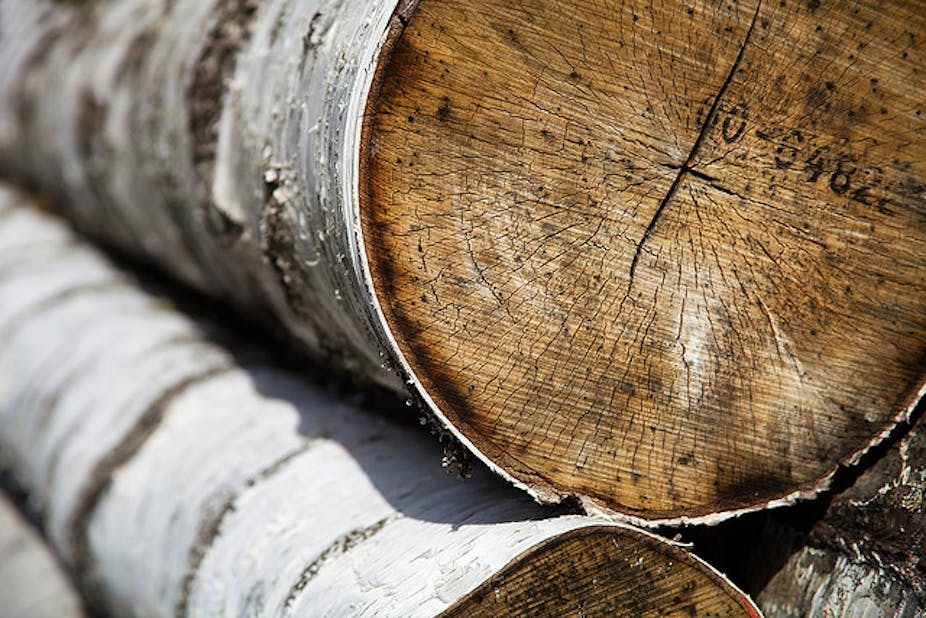
Through fraudulent permits and similar tactics, organized crime profits significantly from illegal logging. jcoterhals

Illegal logging is booming, as criminal organisations tighten their grip on this profitable global industry. Hence, it comes just in the nick of time that Australia, after years of debate, is on the verge of passing an anti-logging bill.

Illegal logging is an international scourge, and increasingly an organised criminal activity. It robs developing nations of vital revenues while promoting corruption and murder. It takes a terrible toll on the environment, promoting deforestation, loss of biodiversity and harmful carbon emissions at alarming rates.

Moreover, the flood of illegal timber makes it much harder for legitimate timber producers. The vast majority of those in Australia and New Zealand have difficulty competing in domestic and international markets. That’s one reason that many major Aussie retail chains and brands, such as Bunnings, Ikea-Australia, Timber Queensland, and Kimberly-Clark, are supporting the anti-illegal logging bill.

Illegal logging denies governments of developing nations revenue worldwide. Bill Laurance

Illegal logging thrives because it’s lucrative. A new report by Interpol and the United Nations Environment Programme, “Green Carbon, Black Trade”, estimates the economic value of illegal logging and wood processing to range from $30 billion to $100 billion annually. That’s a whopping figure — constituting some 10-30% of the global trade in wood products.

Illegal logging plagues some of the world’s poorest peoples, many of whom live in tropical timber-producing countries. According to a 2011 study by the World Bank, two-thirds of the world’s top tropical timber-producing nations are losing at least half of their timber to illegal loggers. In some developing countries the figure approaches 90%.

Many nations export large quantities of timber or wood products into Australia. These include Indonesia, Papua New Guinea and the Solomon Islands, all of which are suffering heavily from illegal logging. Many Chinese-made wood and paper imports also come from illegal timber. Indonesian President Susilo Bambang Yudhoyono has been pleading with timber-importing nations like Australia to help it combat illegal logging, which costs the nation billions of dollars annually in lost revenues.

The new Interpol report shows just how devious illegal loggers are becoming. It details more than 30 different ways in which organised criminal gangs stiff governments of revenues and launder their ill-gotten gains.

Australia’s much debated anti-illegal logging bill looks set to overcome longstanding hurdles soon. Bill Laurance

The variety of tactics used is dizzying. These tactics include falsifying logging permits and using bribery to obtain illegal logging permits, logging outside of timber concessions, hacking government websites to forge transportation permits, and laundering illegal timber by mixing it in with legal timber supplies.

The good news however, is that improving enforcement is slowly making things tougher for illegal loggers.

Accustomed to dealing with criminal enterprises that transcend international borders, Interpol is bringing a new level of sophistication to the war on illegal logging. This is timely because most current efforts to fight illegal logging – such as the European Union’s Forest Law and various timber eco-certification schemes – just aren’t designed to combat organised crime, corruption and money laundering.

The Interpol report urges a multi-pronged approach to fight illegal loggers. A key element of this is anti-logging legislation that makes it harder for timber-consuming nations and their companies to import ill-gotten timber and wood products.

The EU and USA both have active anti-illegal logging measures in place. And Australia looks set to join them with its Illegal Logging Prohibition Bill.

After years of rancorous debate, the Australian bill finally appears poised to be passed into law, despite a last-ditch effort by the conservative Liberal-National Party Coalition to scuttle it.

This ill-conceived attempt was led by the Coalition’s deputy leader, Julie Bishop. What was striking about Bishop’s efforts was that she merely parroted the well-worn “free-trade-at-any-cost” arguments of former Australian trade ambassador Alan Oxley. Oxley is now a well-heeled lobbyist who defends the interests of the some of the world’s largest forest-destroying corporations. His efforts to sink the illegal logging bill are especially dubious because he steadfastly refuses to reveal who pays him.

Despite the efforts of Oxley and the conservative Coalition, Australia will soon join a growing league of timber-consuming nations that is taking direct action against the illegal logging syndicates.

It’s about time. With the help of Interpol and Australia’s forthcoming anti-logging bill, the world is slowly becoming a smaller place for timber criminals.

Join the conversation

11 Comments sorted by

  1. Murray Webster

    Forestry-Ecology Consultant/Contractor

    A very disturbing story. Has our withdrawal from legal/regulated native forest logging here in Australia, increased our importation of illegally logged timber from the tropics?

    report
    1. James Haughton

      Social Policy Researcher

      In reply to Murray Webster

      That would be a sadly perverse outcome.
      My anecdotal knowledge of the topic is that in SE Asia at least the timber most prized by illegal loggers is various prestigious/expensive tropical hardwoods, which wouldn't fill the same market niche as our more softwood/woodchip oriented industry. But as I said this is anecdotal.

      report
    2. Murray Webster

      Forestry-Ecology Consultant/Contractor

      In reply to James Haughton

      Well I did read an article in Timber News that stated New Zealand had started importing rainforest timber from Peru for use as Railway sleepers, because durable hardwoods were no longer available from Australia. There has also been a big increase over the last 5 years or so, in the availability of rainforest timbers at retail outlets in Australia, in place of native hardwoods. e.g. merbau, and a new one they are calling 'red ironbark' which is not related to Australian ironbarks at all.

      I guess the timber industry in Australia would support the legislation if they thought it would assist their business.

      report
    3. Peter Volker

      Professional forester

      In reply to Murray Webster

      There is no doubt the decline in supply of Australian native hardwood timber has been replaced by imports of tropical hardwood. An eminent forester has recently completed a research paper for his masters degree on this subject. The statistics are relatively easy to extract from public ally available forest product statistics produced quarterly by ABARE.

      So the outcome of Australian ENGOs opposition to sustainable harvesting of a small proportion of our native forests is the complete destruction…

      Read more
    4. John Newton

      Author Journalist

      In reply to Mark Duffett

      Yes good on you Greens for stopping clear felling of native Tasmanian forests for wood chipping - toilet paper for the Japanese - firebombing once cleared and then killing native fauna with 1080 soaked carrots.

      Bloody Greens

      report
    5. Murray Webster

      Forestry-Ecology Consultant/Contractor

      In reply to John Newton

      This exchange is an indication of where a large proportion of our society has evovled to. Tribalism/feudalism: no longer with weapons, but nevertheless the same underlying cognitive processes. Which leads us of course to adversarial politics... and political compromise based on election cycles. Which where I come from has led to politicians deciding to cut the area of native forest available for timber production by 50% while keeping 80% of timber volume commitments.

      Or perhaps my bow is too long...? Anyone up for an actual conversation?

      report
  2. Sandi Keane

    logged in via email @bigpond.com

    Australian timber company, Simmonds Lumber, has taken the lead in helping stamp out illegal logging with DNA developed by Adelaide University and Double Helix in Singapore.

    Thanks to the DNA tracking system, buyers now have a fool-proof weapon against illegal loggers.

    They're hoping the technology will be cheap enough for lumber importers around the world to follow suit.

    Here's my breaking news story (to my knowledge IA was the only one who reported it in the Australian media in spite of an Australian company leading the way with the help of an Australian university):

    http://www.independentaustralia.net/2012/business/simmonds-lumber-goes-csi-to-stop-illegal-logging/

    report
    1. Murray Webster

      Forestry-Ecology Consultant/Contractor

      In reply to doug pittard

      A different perspective from the farmers. A big difference between this Conversation Article and The Land article is the use of statistics.

      This article has no data on how much illegal timber is coming into Australia and therefore how much of an impact illegal timber legislation would have, nor how much it is likely to cost. It is difficult to form opinions without an indication of costs/benefits. We have a limited amount of money to spend - on the environment or anything else - and we need to direct it where it has the most beneficial impact.

      The Land article indicates states "Furthermore domestic logs comprise 80% of Australia’s sawn timber usage. That means only 2% of Australia’s sawn timber is from high risk countries. Even if 30% of that is illegal, it equates to less than 1% of the total."

      I would like to see this information confirmed by another source.

      If these data are correct then the answer to my initial question is yes, but not much...

      report
  3. gary hudson

    retired engineer

    The unfortunate limitation we humans have is to focus on single issues, particularly those that effect us/our hip pockets. The majority of issues of concern emenate from the fact that global population is increasing from an unsustainable level at an alarming rate. This increases competition for limited resources. The "haves" see their share diminishing and the "have nots" see an opportunity to improving their lot in life.
    For decades, the allocation of water from the Murray-Darling basin was the…

    Read more