
Perfect one day, bankrupt the next? Queensland’s missing fortune

Comments by Campbell Newman that Queensland was on the way to bankruptcy are, unfortunately, true. His comment that “Queensland does not have the money…” is globally true – but clearly specifically arguable in areas like disability support where, to me, the real question was why the disabled were to…

Xx69cfhd-1343350096
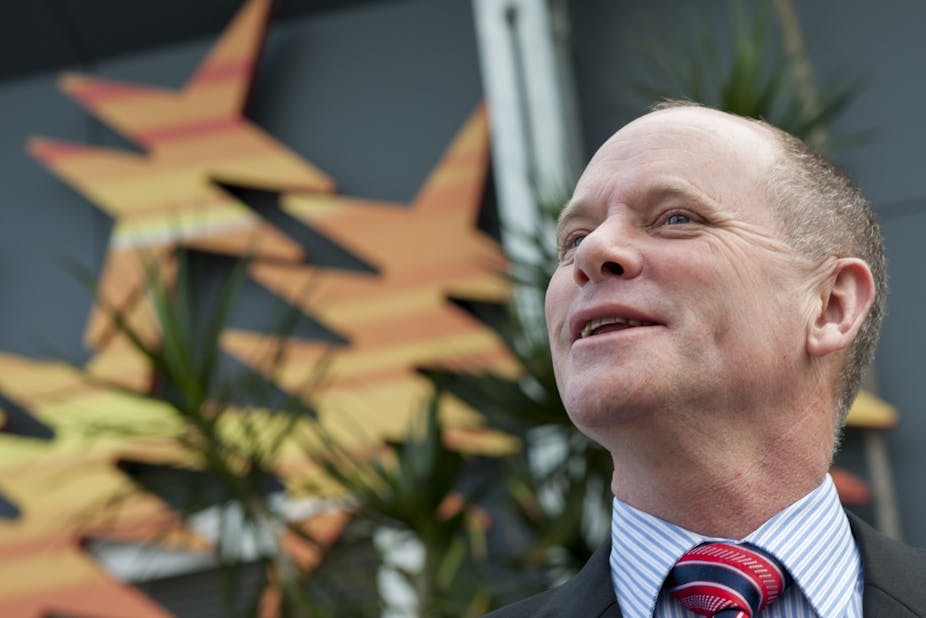
Campbell Newman’s linking of Queensland’s dire financial situation with that of Spain saw quite a backlash, but is there an underlying element of truth? AAP

Comments by Campbell Newman that Queensland was on the way to bankruptcy are, unfortunately, true. His comment that “Queensland does not have the money…” is globally true – but clearly specifically arguable in areas like disability support where, to me, the real question was why the disabled were to actually receive only $300 million of a $1 billion outlay of our taxes.

The comparison with Spain is off the mark but not totally wrong. After all, Queensland’s financial rating by Moody’s of Aa1 is just one notch below the best, while Spain (at Baa3) is just one above the speculative band. However, both do have very significant financial problems. Fortunately for us, Queensland seems to have a better chance of rectifying things if more adequate policies are adopted.

The particular choice of destitute European nation was perhaps more a reflection of the Prado exhibition at South Bank than any sensible thoughts on George Street. No, it’s not a new Toyota, but an unprecedented exhibition of Spanish masterpieces that has just hit Brisbane.

Unfortunately, Queensland’s financial position is also unprecedented. Not since just before Gympie’s gold discoveries saved the colony have things been so grim.

We knew from an earlier article that debt obligations for the “State of Queensland” held through the Queensland Treasury Corporation (QTC) had increased four fold in eight years to over $85 billion (billion!) last December despite $15 billion raised from asset sales in that period. The party was over in March, and the clean-up task was always going to be formidable.

Now the Commission of Audit has reported on that portion of debt held by the general government sector. This excludes a variety of agencies or organisations who have raised funds through QTC but have a separate financial existence to the main operations of government.

Gross “general government” debt is estimated at $64 billion as at the end of June and projected under current settings to reach $92 billion in 2015-16 and $100 billion three years later. That would be around 50% more debt in just four years.

Faltering revenues and expenses growing at over 10% per annum saw “debt in the general government sector increase ten fold in the last five years”.

The ratio of gross debt to revenue at the end of last month was 125% and expected to peak at 155% in 2013-14. The rivers of debt are slowly rising. Potential damage from such forecast inundation of revenues is extensive, dwarfing the floods of 2011.

However, this ratio is not the real problem. As all readers with mortgages know, you can safely borrow two times, three times and sometimes more of your gross revenue to borrow a house. It is in the servicing of the debt that problems arise. This is where today’s real action is.

There is a danger that the problem is currently being oversold. The response looks confused and desperate, needlessly depressing economic activity and investment more broadly. The balance is a delicate one as Queensland recorded negative growth (from high levels) last quarter and anticipated fiscal contractions appear recessionary. Additionally, Brisbane house prices have already fallen for eight quarters.

How might the LNP government re-balance the books? This is the central issue for the Commission of Audit, public agencies, many businesses, the public and the new government. However, current thoughts of employment cuts, tax rises, asset sales and the like will not deliver on a problem of this magnitude. Something else is needed.

Queensland currently has nothing significant from annual revenues left to pay down debt, or even meet interest requirements. $3.5 billion was the interest bill estimate for last year and this is expected to grow to $5.3 billion per annum by 2015-16. Interest only payments around 10% of gross revenues is the future unless a new course is set.

Unaddressed is the question of whether such “interest payments” and the rate itself are economically or historically appropriate. Real interest rates remain historically high, enervating not just Queensland and its government but the efforts of the whole country. We continue ignoring this issue at our great cost.

Interest due annually is a very substantial sum, enough to pay in one year for the whole Airport link road and tunnel project, which also opened this week. (Those flying in for “Prado on Brisbane” can now have a doubly fantastic experience, and the tunnel is free for the next three months!)

What we have is an aspiring world city in a major trading state without the ability to pay for what is seen as needed. When aspirations moved ahead of wallets, unsustainable finance was arranged. The government has overreached its capacities, which brings us back to Europe.

There, all manner of parties also overreached their capacities during an era of easy credit, slack administration and fraud – innocent or otherwise. Treasurer Wayne Swan was correct in highlighting differences with Spain. There, they have banks with inadequate collateral overexposed to property loans that will not be repaid threatening banks in Spain and parts of Europe with insolvency.

Spain, acting as a “helpful” sovereign, did choose to inject some funds but the efficacy of such actions was always doubtful. Spain has neither a currency nor control of monetary policies. The inadequate foundations of the ill-structured euro and incomplete EU cannot cope.

“Life-support” transfers from northern Eurozone countries to the distressed Mediterranean may well cease soon. Finland’s direct appeal for nationally backed “collateral in exchange for its share in any bailout packages” and ministerial comments that there are limits to solidarity reflects concerns also raised in Germany. Spanish and other intra-EU support funds may ultimately be seen as wasted: “good money (and generational savings) needlessly thrown after bad”.

Here in Australia there are several important differences that allow us other options. Queensland and other states do hold significant public debts and assets on their own account, with Queensland perhaps a “canary in the mine” as far as state debt problems go. Australia does have debt problems, but it also has a well-structured and generally capable federation with a respected if volatile currency and very good prospects.

We could go a long way if we could just add better appreciation of our current and potential problems to our public conversations and policy thinking. “All will be well” dreams of the RBA and like-inclined agencies need to replaced with a raft of effective strategies.

There are acceptable, effective ways to constructively manage the debt problems of the states and Commonwealth of Australia. These need to be explored soon, before a transition from credit-inflation to debt-deflation and worsening cost-revenue squeezes gets seriously underway with foundational damage to the prosperity and capabilities of not just Queenslanders but all Australians.

Articles also by This Author

Sign in to Favourite

Want to follow The Conversation?

Sign up to our free newsletter to get the day's top stories in your inbox each morning, with a special wrap on Saturday.

Spinner
Become a friend of The Conversation and donate

Join the conversation

13 Comments sorted by

  1. Mark Gregory

    Senior Lecturer in Electrical and Computer Engineering at RMIT University

    For Australia to have any debt is a travesty and people should long remember the perpetrators of the debt and how they went to extreme lengths to hide what they were doing.

    Australia is not a household and Australia is not Europe. There can be no excuse for Australian governments to not save 0.5% of GDP annually into a sovereign wealth fund. Do this for 30 years and Australia will be insulated against the vagaries of the international markets. Unless of course we forget the name of the political party that in my lifetime is synonymous for debt.

    report
    1. Rob Crowther

      Architectural Draftsman

      In reply to Mark Gregory

      I love it when people discuss economics in this country.

      Living memory only seems to extend to 1983 because before that, a certain liberal party notable was treasurer and by some accounts, did not do a very good job.

      In the forty years I have been old enough to understand, we have had:
      1973 Oil Crisis – Labor in government
      1982-83 World Recession – Liberal government
      1988-1992 World Reccession – Labor government
      1997 Asia financial crisis – Liberal government
      2001 Dot com bubble – Liberal Government
      2008 GFC – Labor Government
      2012 Eurozone – Labor Government

      It would appear to me that if you consider the severity of each of those items, it is the Labor party who has been asked to do the heavy lifting.

      I think reasonable economic comment about debt would have to acknowledge the varying difficulties each party faced in their time and consider each response on its merits.

      report
    2. Mark Gregory

      Senior Lecturer in Electrical and Computer Engineering at RMIT University

      In reply to Rob Crowther

      The timeline of external events influencing Australian finances highlights why there is a need for savings to be accrued at state and federal levels. As it is, a better picture of the situation would have been achieved by indicating what the country owed at the end of each of these external events and a little digging will show a clear bias for resultant debt on one side of politics.

      What would also be useful would be to include state government debt, and this provides a telling history that one…

      Read more
    3. Dale Bloom

      Analyst

      In reply to Mark Gregory

      “Unless I'm mistaken, the country has experienced a mining boom, strong Aussie dollar, yet, the three largest states are close to bankrupt.”

      That is true, and there must be common reasons between these three states.

      I think the common reasons are the promise of jobs from large scale developments that may/may not be profitable or sustainable, trying to base an economy on building houses and office buildings, and large scale population growth that costs enormous amounts in infrastructure costs, when the Australian way of life now has one of the highest ecological footprints in the world.

      It has all caught up with a number of states, but I like the idea of a sovereign wealth fund, as long as it cannot be accessed directly by a state or federal government.

      report
    4. David Arthur

      n/a

      In reply to Mark Gregory

      Instead of funding state government expenditures, the Howard government chose to give people tax cuts.

      In the case of Queensland, this was compounded by the Beattie and Bligh government, which chose to blow $600 million on a project that wasn't even necessary, namely the Traveston Crossing Dam (TCD). Why was it not necessary? Because Brisbane already had infrastructure in place to recycle 40% of SEQ's urban water demand.

      Not only was TCD not necessary, it threatened sufficient environmental devastation as to contravene the Environmental Protection and Biodiversity Conservation Act. Mr Beattie and Ms Bligh knew this, yet insisted on forcing Peter Garrett to make the determination.

      report
    5. Steve Hindle

      logged in via email @bigpond.com

      In reply to David Arthur

      And yet the final cost of the Queensland Health payroll bungle may end up costing taxpayers far more than the Traveston Crossing Dam. The last report I read was suggesting a final cost of 1.2 billion dollars. This is an unbelievably large amount of money to loose, especially at a State level.

      report
    6. Rob Crowther

      Architectural Draftsman

      In reply to Mark Gregory

      Firstly, I appears to me you are assessing all external events as equal. I say that as you have indicated once over, there is an attributed debt. Add all those debts and you end up with total liberal and total labor.

      Luckily for liberal that had a dot com blip and a moderate Asia financial crisis.

      Unluckily for labor that had GFC, eurozone, and 3 year world recession.

      On to debt restriction.

      I am perhaps blinkered due to 20 odd years of small business experience.

      There are two aspects…

      Read more
    7. Mark Gregory

      Senior Lecturer in Electrical and Computer Engineering at RMIT University

      In reply to Rob Crowther

      Have run small businesses since 1990. No debt at any point along the way. Debt is something that works for about 10% of companies and the rest end up in the .....
      Why should what many have described as the richest country in the world have such large debts at state and federal level? Is it as simple as identifying the unjustifiably large immigration levels as the cause?
      It is a reason, but not the only one. I would like to throw multi-nationals into the ring. I was told some time ago of the profit…

      Read more
  2. Dale Bloom

    Analyst

    The population of QLD increased by over 400,000 in about 6 years, greatly adding to infrastructure costs.

    “And for ordinary people of course infrastructure costs are deadly because basically every extra person we bring into the country costs between $200,000 and $400,000 in infrastructure...”

    http://www.abc.net.au/worldtoday/content/2011/s3216101.htm

    Others have estimated the cost as high as $600,000 per person, and people coming into a state from elsewhere may create similar costs to immigrants. Multiply those costs by 400,000 and there are now massive infrastructure costs associated with a sudden increase in population, leading to unsustainable debt.

    report
  3. Garry Baker

    resarcher

    The "Dutch Disease" explains these country management problems in two words.

    report
    1. Ken Williamson

      logged in via Facebook

      In reply to Garry Baker

      Target the disease,Murdoch (News Ltd), Not the symptoms Newman,(L N no P). NO NDIS for Queensland ! !, What else could one expect from a state that supports foreign owned media and mining empires against their own Government and the nations best interests.

      report
  4. Lennert Veerman

    Senior Research Fellow, School of Population Health at University of Queensland

    Interesting as this article is, it does leave me with questions.

    One of those is that Queensland has experienced a mining boom and massive immigration. Both required large investments, and it seems to me that the government (and Brisbane city council) have bent over backwards to accomodate this expansion.

    But the hope was, of course, that these mines were going to pay dividends and that the new citizens were going to pay taxes. This would make things look bad now, and much worse if you ignore the future revenues.

    You don't mention expected future revenues. Were these assumptions wrong?

    report
  5. Peter Redshaw

    Retired

    This article is interesting to the extent that like the recent Queensland State Government report it tends to make large claims about the States debt without providing any substance as to what it is composed of or what the alternative to that debt was. Government outlays after all come in three basic forms. These include general operation expenses that include wages, infrastructure outlays and of course debt outlays. But within those three basic forms there are many sub-categories.

    Even if…

    Read more