
Pregnancy and blame: what it means for mothers of children with disabilities

The media chatter has finally subsided over Chrissie Swan and her naughty cigarette. And in spite of her misdemeanour, Chrissie’s baby will, in all likelihood, turn out just fine. But as pregnancy surveillance intensifies, and with it, mother-blame and retribution, there is one group for whom these…

Dwmcgc33-1361333465
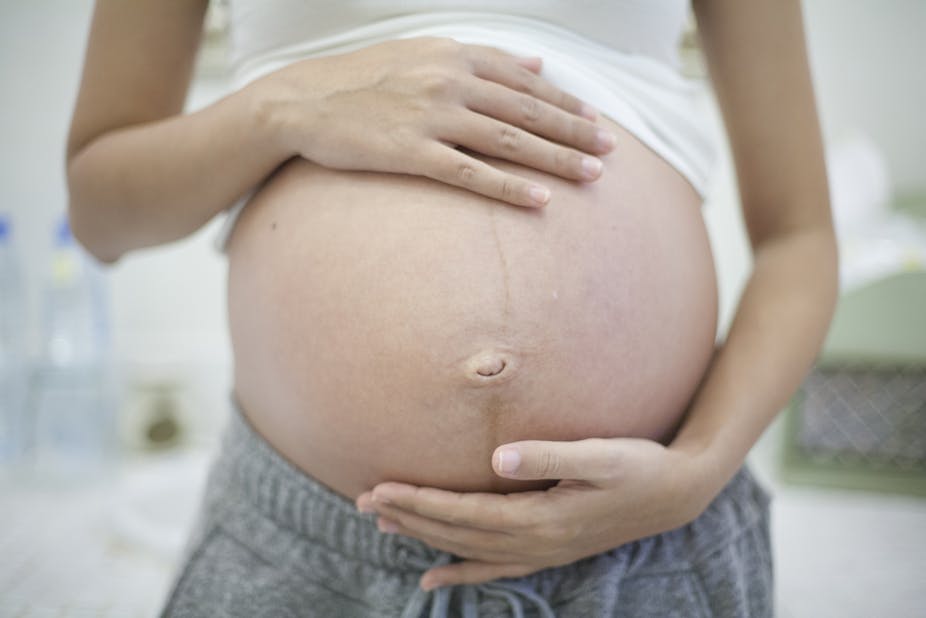
Public health messages reinforce the belief that a child’s disability is the result of their mother’s misconduct. Image from shutterstock.com

The media chatter has finally subsided over Chrissie Swan and her naughty cigarette. And in spite of her misdemeanour, Chrissie’s baby will, in all likelihood, turn out just fine.

But as pregnancy surveillance intensifies, and with it, mother-blame and retribution, there is one group for whom these issues are far more significant than a minor celebrity’s moment in the spotlight. Nowhere is this blame game played out more intensely and persistently as it is for mothers of children with disabilities.

My 22-year-old daughter has a severe disability. I recall with anguish the time when my six-month-old baby’s brain abnormality was identified in a public hospital consultation, and her identity morphed then from miracle to mistake.

Her diagnosis was unclear, aetiology unknown, and it seemed I was guilty until proven otherwise. My interrogation began with: “Did you smoke? Take drugs? How much alcohol did you drink?”, along with a host of other questions about my pregnancy and lifestyle. These were repeated with each new referral to each new medical practitioner, all of whom felt entitled to pursue the same lines of inquiry.

“No,” I would answer, but my resolve seemed to falter with every encounter. After all, science promises perfect babies if mothers do the right thing, so where else can we point the finger of blame?

In her 2009 book, Reconstructing Motherhood and Disability in the Age of “Perfect” Babies, American anthropologist Gail Landsman draws attention to public health messages that reinforce the belief that child disability is the result of mothers’ misconduct. Once, the womb was seen as a safe haven for the developing foetus, but today, Landsman argues, it is seen as “permeable, vulnerable to the dangers delivered by selfish, careless women”.

Landsman refers to the US Centers for Disease Control and Prevention (CDC) website: “What YOU can do to Prevent Birth Defects”, and a poster distributed by March of Dimes (a child and maternal health organisation): “Three Ways to have a Healthy Baby”. These simplistic messages promise a healthy, normal baby for compliant mothers, and for the vast majority, this is a promise that will come true.

But not always. The stark reality is that while some environmental and social factors, in particular poverty, are implicated statistically, the causes of a large proportion of birth defects remain unknown (Landsman cites the figure given on the CDC website as up to 70%).

These public health messages diffuse into the social world. It’s not uncommon for mothers of children with disabilities to be asked questions such as these, by strangers: “Didn’t you have the test?”, “Was it a birth injury?”, or simply, “What went wrong?”

Mothers with disabled children often feel an enormous sense of guilt. J Elliott

One participant in Landsman’s study described the shame she felt when she took her child out in public: “It’s hard … they look at my child thinking that I’ve done something wrong”.

Susan Kamata, editor of Love You to Pieces, a 2008 anthology of creative writing by parents of children with disabilities, comments that “pushing my daughter in her wheelchair to the grocery store sometimes feels like a political act”.

An overwhelming sense of guilt is normal among this group. Most of the 60 mothers in Landsman’s study reported persistent feelings of self-blame, although in none of these cases was the child’s disability found to be associated with maternal misconduct.

These mothers trawled through their memories of pregnancy to identify “bad” behaviours: “I had half a glass of wine on our anniversary, so I thought, oh, gee, that’s what did it”; “I took one Tylenol when I was pregnant. One, and it haunted me”; “I should have quit work earlier”; “I should have taken the elevator instead of the stairs”.

Such obsessive thoughts may seem irrational to an outsider, but for women like me, who have faced these demons, they have painful resonance. For a long time I was caught within this vortex of grief and self-blame, fuelled by the medical, social and cultural messages that devalued my child, and implied my failings. Even now, these fears can resurface from time to time and derail me.

While mother-blame may be on the increase, guilt and its cousin shame are not new for mothers of children with disabilities. In 1950, novelist Pearl Buck, winner of Nobel and Pulitzer Prizes, published The Child Who Never Grew, a memoir about raising her disabled daughter. She was the first prominent person to come out about having a child with intellectual disability. When her daughter Carol was nine, Buck placed her in an institution, the accepted practice at the time, where she would be “amongst her own kind”.

Buck agonised over the causes of her daughter’s disability, in the days when even Down syndrome was attributed to maternal stress or inappropriate behaviour. Finally, ten years after the publication of the book and unfortunately too late to help Carol, the cause of her disability was identified: it was phenylketonuria (PKU).

Today, PKU is routinely tested for at birth, and it is remediated mainly through dietary supplements. PKU is a recessive genetic disorder. While Pearl Buck’s genes may have been involved, her behaviour played no role in her daughter’s condition.

So while science continues to make strides forward in unravelling the mysteries of reproduction, the mother-blame game rushes on with gathering momentum. But it’s a dangerous game, and there are no winners: it generates fear and guilt, and it contributes to the stigmatisation of children with disabilities and their mothers.

Sign in to Favourite

Want to follow The Conversation?

Sign up to our free newsletter to get the day's top stories in your inbox each morning, with a special wrap on Saturday.

Spinner
Become a friend of The Conversation and donate

Join the conversation

25 Comments sorted by

  1. KarenLee Clark

    Consultant Psychologist, National Partnership: More Support for Students with Disabilities

    Thank you for starting this conversation.

    report
  2. Riddley Walker

    .

    Great article, thank you. Given the nature of sexual reproduction, there are many things that might go wrong in environmental terms, but also at the point of DNA and chromosome exchange. Sometimes they just don't get matched in quite the right way.

    report
  3. Sue Ieraci

    Public hospital clinician

    Such an important and complex issue - thank you for the article.

    I see several important issues here.

    First, I think there has always been a degree of mother-blaming in an attempt to explain congenital abnormalities - historically, it was "did you eat too many strawberries?" if the baby emerged with a "strawberry mark" (just a blood vessel thing - nothing at all to do with strawberries). A maternal fright was thought to cause birth defects - pregnant women were to be protected from seeing terrible…

    Read more
    1. Kathryn Knight

      PhD student, Media and Cultural Studies at Macquarie University

      In reply to Sue Ieraci

      Sue -- thanks for these great comments. As you say, there have always been folk beliefs around congenital abnormalities -- Gail Landsman gives an excellent cross-cultural wrap-up of these in her book. She also addresses the attribution of blame to other sources, as you mention, and doctors are often the brunt of these.
      But there is definitely an escalation in regards to the responsibility of mothers, and in many ways science is taking up the role that folk beliefs played in the past.
      In an article…

      Read more
  4. Catherine Simpson

    Senior Lecturer in Science Communication at Macquarie University

    Thanks for such a brave article which speaks to all mothers. And with technology offering us a myriad of genetic tests, surveillance of maternity certainly seems to be on the upswing.

    report
  5. Alexis stergakis

    Human Rights Advisor at LNFOD/ AusAID

    Fantastic article, much appreciate your sharing it. Often I have worked with families that shoulder enormous amounts of grief for the very same reasons you outlined in your article. It is not only important for other parents of children with disabilities to hear these stories, but also the wider community. Thank you.

    report
  6. Kevin Bain

    Teacher

    As you say, these medical, social and cultural messages about inferiority and blame are powerful and cause long lasting grief to many parents. Professional therapy and support from friends and family can help people come to terms with what can be a lifelong struggle, but how to deal with the the "perfect baby" ideal? Any suggestion on how to respond to expectant parents who say "I don't care what it is as long as it's healthy", which we know may not be true? Does it help new parents in this situation…

    Read more
    1. Sue Ieraci

      Public hospital clinician

      In reply to Kevin Bain

      I agree with Kathryn Knight that these messages are poorly expressed - they confuse risk factors with individual causation.

      It's a bit like lean diabetics or cancer sufferers who are told "you must have done SOMETHING wrong".

      March of Dimes is an interesting organisation. Originally as a support group for the interests of premature babies, they may have now strayed into zealotry against anything perceived to be associated with prematurity, including cesareans.

      Their mission statement includes "we help moms have full-term pregnancies" - as if it were so simple.

      report
    2. Kevin Bain

      Teacher

      In reply to Sue Ieraci

      Sue, if you look at the March of Dimes poster Kathryn referred to "“Three Ways to have a Healthy Baby”, you find it says "take folic acid every day; don’t smoke, don’t drink alcohol or take drugs; and see a health care provider as soon as you think you are pregnant." What's wrong with that? For Kathryn to see this as an example of "public health messages that reinforce the belief that child disability is the result of mothers’ misconduct" and "These simplistic messages promise a healthy, normal baby for compliant mothers" is a distortion and most unfair.

      report
    3. Kathryn Knight

      PhD student, Media and Cultural Studies at Macquarie University

      In reply to Kevin Bain

      Kevin -- Interesting and difficult question about the 'I don't care what it is as long as it's healthy' phenomenon (which implies that gender is the only variable). It would be great to get more input to this question. Parents seem to breathe a sigh of relief when they have 'safely' got through the early ultrasounds, and these often promise more than they deliver in terms of identifying potential disability. And of course this raises the very vexed questions around prenatal diagnosis, about which…

      Read more
    4. Kathryn Knight

      PhD student, Media and Cultural Studies at Macquarie University

      In reply to Kevin Bain

      Kevin, while it's important for pregnant women to understand the risk factors and preventative measures (such as folic acid), it's the implication here that you will indeed have a healthy baby if you do these recommended things. Landsman writes the following: 'my research suggests that such messages have been heard and for mothers of disabled children provide a reference point for their sense of guilt and/or feelings of being blamed by others' (p 25). It's how these messages are interpreted and internalised by mothers of children with disabilities that I'm concerned about.

      report
    5. Kevin Bain

      Teacher

      In reply to Kathryn Knight

      Hi Kathryn, thanks for your further comments. If the US organisations you mention have changed their message to make it clearer, that’s good, and they should be credited for doing so. No-one always get it right first time, it’s important that they are responsive.

      I imagine health promotion has a difficult line to walk: getting attention in a crowded media space, and waking people up eg. campaigns around HIV AIDS, alcoholism, smoking, driving. And these will be confronting messages because they…

      Read more
    6. Dianna Arthur

      Dianna Arthur is a Friend of The Conversation.

      Environmentalist

      In reply to Kathryn Knight

      Indeed. We can make all the plans, do-the-right-thing and yet go on to have still-born babies or congenitally malformed babies. All the while some other mothers can do every thing 'wrong' and have healthy bubs.

      All of which makes the blame game pointless and just another example of what is a form of bullying.

      @ Kevin Bain

      I enjoyed reading your comments - getting the message out to people (and potential fathers need to be looking after their health as well) is important to be presented as a welcome aid and not presented in a righteous or paternalistic manner.

      report
    7. Sue Ieraci

      Public hospital clinician

      In reply to Kevin Bain

      Kevin - there appears to be nothing wrong with the one poster you have quoted.

      Take a good look at the overall organisation, though - there is a lot more than that. They have evolved into a sophisticated money-raising lobby group.

      report
  7. Jodi Smith

    logged in via email @gmail.com

    Thank you for this article.There is a belief that everything about the human condition can be fixed (or avoided). This misleading belief is strongly prevalent in the media and influences how many people react when they are confronted with difference. I am childless and when (some) people learn of this, they can't help but ask many questions similar to those stated in the article. I struggle with this, and can only imagine how traumatic it must be for the mothers of children with disabilities when they interact with the general public. This was a much-needed article to raise awareness. Thank you again.

    report
  8. Yolanda Newman

    Learning support coordinator

    Thank you for such a well written article which adds much to the issues. Apart from the sheer injustice of women being blamed for a less than perfect child it is also so very sad. The reality of our human and other living creatures existence is difference of many different types. It is sad that difference is so unacceptable.

    report
  9. Susan Ross

    Director, Birth Right Aust. Pty. Ltd.

    Unfortunately the guilt doesn't go away, no matter how old or how healthy or not one's children are. Supporting pregnant women and new mother's - no matter what - is so important. We are not here to blame or judge. Thank you for this article and reminding everyone about the rich diversity of humanity and what a positive impact this has on our community.

    report
  10. Anne Russell

    Enterprise development

    Spare a thought for the mothers of children with fetal alcohol spectrum disorder. We didnt know or couldnt stop and our children have paid the price.
    Anne Russell

    report
    1. Bill Budd

      Lecturer, Researcher

      In reply to Anne Russell

      Good point Anne, particularly since not only may the damaging effects of alcohol exposure on the fetus occur prior to awareness that a mother is pregnant (i.e < 1 month) but alcohol exposure can also damage the egg prior to ovulation.

      The article also seems to paint a picture of clinicians obsessed with aetiological risk factors when this may serve little or no practical benefit in their primary role: the treatment of the patient in front of them.

      report
    2. Steve Hindle

      logged in via email @bigpond.com

      In reply to Anne Russell

      Here is a particularly disgusting statistic.
      In the township of Halls Creek (WA) with a population of around 1500 people, approx 30% of babies have been born with permanent brain damage from FASD.
      (This was the estimate from the doctors at the local hospital and covered the period before alcohol restrictions were introduced so I am not sure if the situation has changed).

      report
  11. Greg Boyles

    Lanscaper and former medical scientist

    Delaying pregnancy until the 30s-40s is supposed to be the biggest cause of disorders at birth.....due to poorer quality ova and/or sperm.

    It is a difficult dilemma for couples these days with HECS debts, high housing prices and signficant cost of living pressures all requring more career time for them to get 'established' comfortably before embarking on parenthood.

    And the more disabled children that accumulate in our population the less productive it becomes.

    Either parents have to signficantly limit their productive work life in order to care for their disabled children or else the state has to pick up the tab.

    Either way it is not sustainable.

    report