As populations in OECD countries continue rapidly to age, the increasing imbalance between those young enough to work and those old enough to receive the pension is sounding alarm bells. By 2050, the “old age support ratio” is expected to halve; in Australia there will be only 2.3 people of working age to support each person of retirement age.
Understandably, governments facing the fiscal nightmare of increasing pensions and decreasing revenue are trying to keep people in the workforce for longer. Policies that actively discourage early retirement by, for example, raising the pension age are common.
While there is little question that such policies are necessary from the economic standpoint, it is less certain that older people will stand to benefit from working longer, even if they are able to.
A key argument against keeping people in the workforce longer is that certain types of activities – involuntary work, unskilled work, and manual labour – can have an adverse effect on well-being. Raising the retirement age runs the risk of creating a new – “grey” – working class.
On the other hand, when a person’s work aligns with their skills, experience and interests, such “quality” work is likely to benefit their health and social connectedness as well as their income. For older people, working longer could actually improve health and well-being, provided the work is not demeaning, demoralising or physically arduous.
In practice, however, many older people cannot work due to caregiving responsibilities, a lack of up-to-date skills and experience, or poor health. And employers may discriminate against older people — consciously or otherwise — or may not provide the flexible employment arrangements that many older workers need or want.
In this mix of pros, cons, and feasibility issues, certain interconnections are apparent. If working conditions were more conducive to good health and well-being in the first place, there is every likelihood people could continue working into later life quite comfortably and happily. Caregiving responsibilities for unwell partners might diminish too. And if throughout their working lives people were continually upskilling, there would be no outdated skills problem, which in turn would nullify at least one reason for age discrimination.
This promising virtuous circle is encapsulated in the concept and practice of “sustainable employability”.
Broadly, sustainable employability refers to a person’s ability to gain or maintain quality work throughout their working lives, whilst maintaining good health and wellbeing and having the opportunity and the right work context to be able to transfer skills, knowledge and competencies to another job, company or other future roles. Government, employers, employees and society have an important role to play in promoting, debating and developing sustainable employability. Governments, employers and employees must also implement policies and programs to put it into practice. Employees need to become entrepreneurs of their own life and career development.
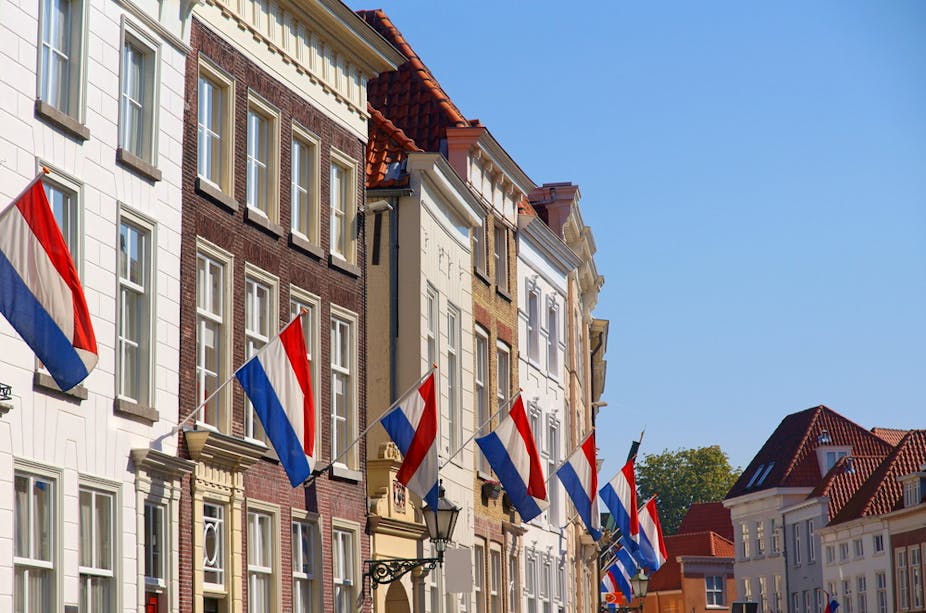
Steps towards sustainable employability are being taken in Australia. For example, “Ageing well, ageing productively” is a national research priority. Funding is also available to help organisations support employees to undertake further qualifications, thereby increasing their skill levels and prospects for future mobility. But we could learn a great deal from the Netherlands, where the sustainable employability mantra is being embraced by a growing number of organisations and businesses, thanks largely to the efforts and foresight of the government.
As the Dutch realised, government must act as a catalyst to overcome potential resistance from employers about implementing sustainable employability practices, and to demonstrate it pays financial dividends.
This is exactly what the Dutch Ministry for Social Affairs and Employment has done. The Ministry brought together from different industries 100 small and large employers – all early adopters of sustainable employability – and asked them what they do, what works well, and what the return on investment is.
The findings, presented to the Dutch Parliament in October 2012 in the report Manifesto of 100 employers and sustainable employability, demonstrate a strong business case for sustainable employability. Some organisations recouped their investment in sustainable employability programs within one or two years. Organisations found that investing in programs to improve staff’s physical and mental health, for example, reduced sick leave, increased productivity, and secured them a reputation as an employer of choice.
The Manifesto also provides a framework for implementing sustainable employability practices, and identifies five key success factors to invest in: staff engagement, organisation of work, health, development (education and mobility), and periodically measuring the sustainable employability of current staff.
Recognising that the best advocates are businesses that have implemented sustainable employability practices themselves, the Dutch government is running a series of activities to help them share their knowledge and experiences in health, education and mobility programs with other businesses. Many of these activities could easily be replicated in Australia.
Monthly employer meetings in collaboration with industry and regional organisations could implement actions that improve sustainable employability. The majority of small and medium enterprises (SMEs) have not been introduced to the concept and importance of sustainable employability because often the day-to-day to running of the business has priority.
SME representatives could promote the benefits of sustainable employability by holding local masterclasses, presenting at regular employer conferences or instituting awards for businesses that excel in sustainable employability.
Innovation centres could assist SMEs and their employees to develop action plans to implement sustainable employability practices by joining learning networks, or through in-depth workshops or individually tailored business advice.
A central funding resource for employers could be established (similar to what the European Social Fund has done) to stimulate investment in sustainable employability.
Australia could develop its own Manifesto of 100 employers and sustainable employability.
Companies that participate in developing such a Manifesto could give one-on-one advice to at least two other employers. Those employers in turn would be obliged to assist two other employers. And so on.
Sustainable employability has the potential to transform an impending crisis into a promising opportunity in which both individual well-being and the national economy stand to benefit. Learning from other countries like the Netherlands, and putting sustainable employability firmly on the map of public debate, can help us develop further initiatives and accelerate the process in Australia.
Jeremy cavanagh
Engineer
I am a little skeptical about the effect of aging on Australian society. For example, this article asserts that by 2050 only 2.3 people will be in the workforce to support every retired person. However, as I understand it and please tell me if I am wrong, the 'aging' bulge is due to a bulge in births from 1945 and that it finished by 1960. If that is correct then by 2050 the people born at the beginning of the bulge will be at least 105 and the people born at the end will be 90. So most of these…
Read moreDale Bloom
Analyst
I think there is a more urgent problem, which is the lunacy of bringing in so many immigrants.
“The Monash study shows that 58,000 new jobs were created in the year to August, but 100,000 migrants arrived and found work during the same period.”
This is currently affecting the young, and “Youth unemployment has soared 80 per cent in the 20 to 24-year age group since the start of the economic downturn, rising from 4.5 per cent in June 2008 to 8.1 per cent in June this year.”
http://www.theaustralian…
Read moreIan Franklin
Biologist, retired
There are two issues that bother me in here. First, as the population stabilises, as it must, the average age will increase. There will be a higher proportion of older individuals, but also less children. Both require attention by those of working age, but surely the effort to look after the needs of the aged will be compensated in part by a lesser need to support the young.
Read moreSecondly, it seems to me that there are tremendous inefficiencies in the kinds of work that our modern economies promote…
STABLE POPULATION PARTY
Written & authorised by William Bourke, Sydney
Good points Jeremy. This 'ageing crisis' myth is parroted and distorted ad infinitum and should be questioned.
The 2.3 assertion counts all those over the age of 65 in 2050 as ‘dependent’. For anyone to so define dependency is absurd. Already many Australians are choosing to work well beyond 65 as they realise the financial and health benefits (in appropriate industires). The retirement age is also legislated to rise to 67 in the 2020s and will likely be at least 70 by 2050. We should also provide…
Read morePaul Collins
Chief Thinker at demografix pty ltd
Just as the 4.1 million boomers wer born (now 5.3million due to immigration) they will all die and our death rates double over the next 25 years. Our natural growth may drop to zero or even negative. Baby boom leads eventually to a death boom.
Michael Lenehan
retired
Now that's a cheerful though Paul! But the assonance - "Baby boom leads eventually to a death boom" - has a very soothing ring to it.
Michael Lenehan
retired
Australian Society has always taught us to "Consume, be silent and die". Most Australians find the first of the these commandments is relatively easy to achieve and although some, like me, find the second a little hard to cope with at times, at least we are all bound to get the last one right eventually.
Lung cancer, skin cancer or mesothelioma, some other terminal big C or simply good old sudden accidental death will probably take care of me an many other baby boomers so I think you'll all be safe.
It's only those disgusting healthy hard-working pre-baby boomer life stylers that seem to be living far too long and hanging around interminably at the moment. All will be well in the fullness of time I suspect.
What I don't get about Death, however, is how compulsory it is. I never was much of a joiner but I don't think I'll be given much choice when it comes to joining that club.
Christine Kent
logged in via LinkedIn
I see vast oversimplification wherever I look in this debate. Nothing short of a massive cultural shift is going to make it possible for older workers to stay in the workforce. There are three main factors.
Read moreThe first is the general level of contempt for older people - except for men with very senior status - by younger people. No matter how competent and skilled we are, we are viewed as either being ditsy (women) or stodgy (men) or if we are strong and competent, of being Brunhilda-eque (women…
Mark O'Connor
Author
William Bourke is right. We need to beware of the tired old Ageing Population Scare, whose false assertions he neatly lists. in fact the bulk of the article is fine. It is a pity, though, that the author began it with a piece of alarmism.
His statement that, "By 2050, the 'old age support ratio' is expected to halve; in Australia there will be only 2.3 people of working age to support each person of retirement age." introduces (in single quotes) a dubious phrase and concept.
The statement could…
Read morePene Dobell-Brown
Project Manager at BDCSA
We must focus our energies on strategies to prevent functional decline to keep people healthier so they will be able to stay productive in the workforce for longer. You are right in saying we will be far better off if we can keep them interested and trained in contemporary practice for their chosen areas and not decelerate their capabilities with mundane tasks. We should be using the people on the dole to “work” for their money doing the mundane and labour intensive tasks. If we are to implement…
Read moreChristine Kent
logged in via LinkedIn
So Pene, if you are aging yourself, why are you talking "them" and "they" and "their" rather than "us"? Let me tell you the young are not going to make decisions for me in my old age. I get to make my own decisions thankyou. Strategy for the aged must be formulated by the aged. We have earned that right. We are still alive. We are mostly still healthy, We are mostly still intelligent. For many of us, that intelligence has become wisdom. We are perfectly able to formulate strategy to look…
Read moreWilliam Hughes-Games
Garden weed puller
The trick is not to have the taxes of people working today paying the pensions of today's pensioners. Pension payments should go toward buying up the means of production so that retired people pretty well own the country and its resources. Then pensions come from dividends from these productive units and even from selling them off to present day workers. Retired people become assets to their community as they use their pensions to support local businesses.
Tim Kingston
escaping
Hi Sabrina,
Thanks for a stimulating article. I am interested to discover from where the momentum for the change in the Netherlands came. I would imagine it was from an active and strong ageing action group; if so then I am more than ready to join one in Australia and will now go in search.
Incidentally, given the focus of your article, should you not have included your age as part of your disclosure!
William Hughes-Games
Garden weed puller
The problem is that we expect the taxes of the working to pay the pensions of the retired. If pension payments had been used to buy up the means of production then pensions would come from dividends and from the sale of the means of production to those working today. Retired people would be a positive asset as they spent their pensions (not much use saving them at that age).
http://mtkass.blogspot.co.nz/2009/02/malthus-pyramid-schemes-starvation.html
Genevieve Carruthers
logged in via LinkedIn
Thanks for the article, Sabrina. I see the conversation on this topic, like most things, as being about sustainability (in this case, sustaining the ability of all people to contribute to the betterment of our society and their own well-being, through providing a valued input). There are many, many threads to sort through in this topic – ageism, sexism, distribution of wealth, recognition of expertise and experience, and getting the right blend of policy, support, practicalities, and personal incentive will be crucial. I also think that recognition of the ‘unpaid’ work that so many older people do will be an essential element in the mix.