The age of solastalgia

The built and natural environments are now changing so rapidly that our language and conceptual frameworks have to work overtime just to keep up. Under the intertwined impacts of global development, rising population and global warming, with their accompanying changes in climate and ecosystems, there…

32pzskp7-1344213505
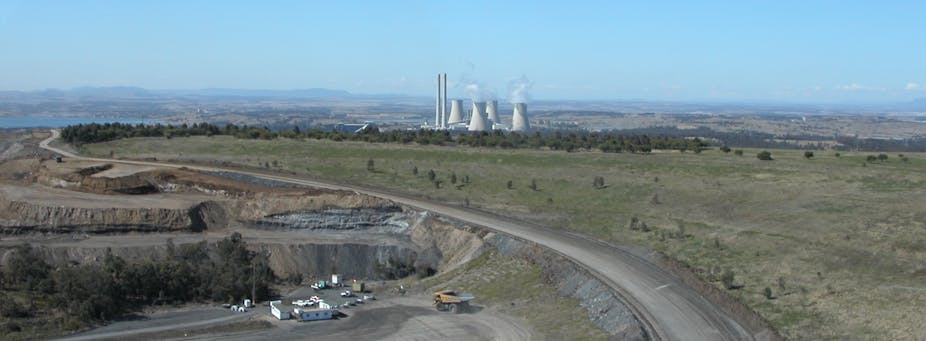
The changes to the landscape in the Upper Hunter region of NSW severely distressed the people who lived there, a feeling not previously captured in the English language. Glenn Albrecht

The built and natural environments are now changing so rapidly that our language and conceptual frameworks have to work overtime just to keep up. Under the intertwined impacts of global development, rising population and global warming, with their accompanying changes in climate and ecosystems, there is now a mismatch between our lived experience of the world, and our ability to conceptualise and comprehend it.

No longer is the “wisdom of the elders” relevant to how we should live in the here and now, and this loss of historically informed knowledge has implications for social cohesion.

I experienced the connections between mental health and changes to a once predictable and loved home-environment when examining the impact of open-cut coal mining in the Upper Hunter region of NSW. My own eco-biography, the seminal influences in my life that have influenced my feelings about the natural environment, had attuned me to the importance of a positive “sense of place” in people’s lives, and to the significance of what the geographer Yi-Fu Tuan called “topophilia”, or the love of place and landscape.

From the 1980s onwards, under the combined impacts of coal mines, power station pollution, and persistent drought, the people of the Upper Hunter were suffering from a form of chronic distress that seemed to me to be the opposite of topophilia. Their relationship to their home environment had turned bad.

By the late 1990s the extent of open-cut coal mining in the Upper Hunter was in excess of 500 square kilometres and had changed the landscape in ways that older traditions of underground mining did not. Moreover, the length and severity of drought in eastern Australia was now arguably tied to climate change, driving natural variability into more extreme regimes.

It was this thought that inspired me in 2003 to create a new concept for the English language, one that captured this feeling of chronic distress caused by negatively perceived changes to a home and its landscape. I realised that there was no concept in the English language that adequately described the distressed state of the Upper Hunter residents. The melancholia of nostalgia (nostos – to return home) was close, but had the obvious disadvantage that these people were still living in the place they called home, so were not “homesick” in the traditional nostalgic sense.

As a result of my own background and the testimony of citizens in the Hunter region, I defined “solastalgia” as an emplaced or existential melancholia experienced with the negative transformation (desolation) of a loved home environment.

Solastalgia has its origins in the concepts of “solace” and “desolation”. Solace has meanings connected to the alleviation of distress or to the provision of comfort or consolation in the face of distressing events. Desolation has meanings connected to abandonment and loneliness. The suffix -algia has connotations of pain or suffering. Hence, solastalgia is a form of “homesickness” like that experienced with traditionally defined nostalgia, except that the victim has not left their home or home environment.

Solastalgia, simply put, is “the homesickness you have when you are still at home”.
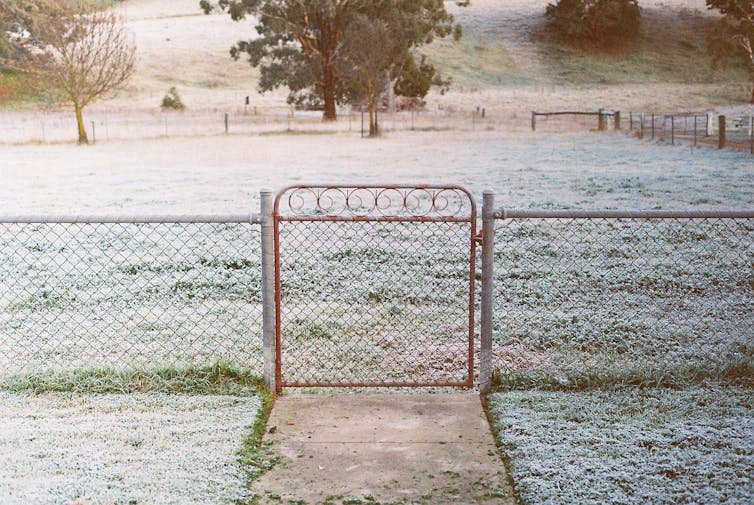
Solastalgia: the homesickness felt when one’s home environment is damaged or degraded. Suzannah Marshall Macbeth
The concept of solastalgia has had considerable international impact since its creation and has helped revive interest in the relationships between humans and place at all scales. An internet search on the term will produce many thousands of results in many languages and a brief scan of those results reveals that, apart from new applications in academic contexts, artists, composers, musicians, poets, playwrights and hundreds of ordinary people in blogs and websites have understood the need for the term and have used it in meaningful ways.

One of the reasons for international interest in the concept of solastalgia is that we are in the middle of a pandemic of earth-related distress that will only get worse. Everything that was once familiar and trusted in our environment will be experienced as the “new abnormal” as development and climate pressures continue to build.

Worldwide, many are beginning to feel this unease. Richard Louv, in his book The Nature Principle, discusses solastalgia as an emergent theme in people’s lives, and the reactions to climate change of female Elders living in the Torres Strait can now be understood as a solastalgic response tied to a loss of their sense of place.

Solastalgia gives expression to those gut feelings by creating a whole new psychoterratic (psyche – earth) typology to describe what sensitive people already feel but could not express in language.

The challenge of recognising and responding to the experience of solastalgia is greater than ever. Unfortunately, small scale, local damage is still happening to loved home environments as globalisation homogenises urban and rural landscapes. Regional solastalgia is produced under the impact of gas fracking, mining, and agribusiness, as they bring unwelcome damage and pollution on a huge scale to ecocultural and bioregional landscapes.

However, as bad as local and regional negative transformation is, it is the big picture, the Whole Earth, which is now a home under assault. A feeling of global dread asserts itself as the planet heats and our climate gets more hostile and unpredictable.

With a new psychoterratic language to describe and “re-place” our emotions and feelings, powerful transformative forces are unleashed. Solastalgia is fixated on the melancholic, but it is also a foundation for action that will negate it. There is a positive side to psychoterratic classifications, one where positive earth emotions and feelings such as biophilia, topophilia, ecophilia, soliphilia and eutierria can be used to counter the negative and destructive.

There is a drama going on in our heads and hearts, where solastalgia can be defeated by the simultaneous restoration and rehabilitation of mental, cultural, and biophysical landscapes.

Now that solastalgia and other psychoterratic terms (both positive and negative) are being established in the research literature and many forms of popular culture, and as recognition of the damage that degraded and desolated environments do to our mental health increases, it is possible that we can respond more effectively to simultaneously restore mental and ecosystem health.

Either we face a pandemic of solastalgia and related negative psychoterratic syndromes as a result of the havoc created by unsustainable development and climate change, or we use our intelligence and creativity to give rise to a world where our positive psychoterratic emotions can thrive.

Comments welcome below.

Sign in to Favourite

Want to follow The Conversation?

Sign up to our free newsletter to get the day's top stories in your inbox each morning, with a special wrap on Saturday.

Spinner
Become a friend of The Conversation and donate

Join the conversation

40 Comments sorted by

  1. Anthony Nolan

    Ruminant

    I hadn't hear of your concept of solastalgia until now. A very sophisticated notion and one that rings true for me. Having fled Sydney I resettled in a beloved landscape East of Barrington but within line of sight. That line is sight is the reason I would oppose wind turbines in their current, ugly form.

    It seems to me that love of country is as good a reason to fight further industrialisation of the Earth's surface as any other. Any development that offends sense of place needs to be for something far more valuable and necessary than plasma televisions and other consumer dross.

    report
    1. Glenn Albrecht

      Murdoch University

      In reply to Anthony Nolan

      Anthony, the line of sight for people affected by open cut coal mines is now many hundreds of square kilometres of eg, the Upper Hunter. Further, as we burn the coal, the line of sight includes changing the climate the world over. The footprint of a wind turbine is small and it produces clean, safe and renewable energy. I respect landscape values in all places but climate change respects no line of sight.

      report
    2. Anthony Nolan

      Ruminant

      In reply to Glenn Albrecht

      Well, I don't disagree but I make a stand where I reside. That leaves plenty of opportunities from CSG wellheads and pipelines to open cut up near Gloucester as well as ongoing forestry operations in old growth forest.

      I rather thought that your idea of solastalgia might provide a working explanation for why there is very strong opposition, even to the point of claiming that they cause illness, to windmill development. To my eye, regardless of the ecological economics of the issues of power generation…

      Read more
    3. Gary Murphy

      Independent Thinker

      In reply to Anthony Nolan

      Would you prefer a nuclear reactor? (And waste storage facility obviously).

      report
    4. Gary Murphy

      Independent Thinker

      In reply to Anthony Nolan

      Yeah - PV is getting close to cost-competitive.
      Seriously though - what is wrong with how wind turbines look? They look clean and neat and they generate clean renewable electricity.
      "They are a reminder of man's ability to generate electricity". It's all in the interpretation.

      report
  2. Fred Pribac

    logged in via email @internode.on.net

    This article triggered my latent hippopotomonstrosesquippedaliophobia!

    report
  3. Colin MacGillivray

    Retired architect

    Solastalgia has always existed in towns and cities, it's called urban sprawl or urban renewal!
    In the rural context desertification needs no neologism though it applies only to the physical effect on the earth not the psychological effect on the residents.
    The prefix sola-suggests sun to me.

    report
  4. el don

    logged in via Twitter

    just the word i needed this afternoon as the ugly garage at the rear of the backyard next door had its roof erected and blotted out a view of the adelaide hills we once had. moreover, they moved in and removed every tree and bush in that once beautiful garden, a place i would peer into occasionally with envy. gone are the chooks up the back, the green glade that was the garden, the glorious peaches that grew from a tree that drooped over our fence. intense solastagia overtook me, and a tear welled up in my little eye...

    report
  5. Bidda Jones

    logged in via Facebook

    I like the term, Glenn, something too many people have experienced. A question - did this article come about because of the term being raised by Scott Bevan in an interview on ABC radio this weekend? Because otherwise it's one of those weird coincidences...

    report
    1. Glenn Albrecht

      Murdoch University

      In reply to Bidda Jones

      Thanks Bidda. I am aware of Scott's book, The Hunter, and I am looking forward to reading it. It is just coincidence that 'solastalgia' appears twice in the one week. Scott and I both have roots in the Hunter Valley so it should come as no surprise that we see the desolation of the Upper Hunter in similar ways. I shared my work and its implications with Scott some time ago. With concepts like solastalgia, we can communicate the emotions and feelings about place using the same language. I believe this helps both diagnosis and the response to what is going on.

      report
  6. gill ainsworth

    PhD student

    Great article Glenn.

    I have been investigating solastalgia in my own studies with people working in threatened species conservation. On the one hand the desire to prevent loss of species and negative environmental change is a core motivating factor for conservationists.

    On the other hand, the perceived hope that conservation success is possible (soliphilia?) appears to be what keeps people going; being part of a group that cares rather than an individual fighting a lone battle.

    It seems to me that some communities are beginning to make a stand alongside NGOs etc against destructive development but this is still a minority.

    Do you have any suggestions for how we can encourage our major decision-makers, ie politicians, to employ 'intelligence and creativity to give rise to a world where our positive psychoterratic emotions can thrive?' expecially given the industrial lobbying power in this country?

    report
    1. Glenn Albrecht

      Murdoch University

      In reply to gill ainsworth

      Gill, no quick fixes but you are on the right track with cooperative efforts to overcome the forces of destruction. I created the concept of soliphilia to give political expression to the positive psychoterratic. Soliphilia is neither left nor right in the political spectrum and enables all to enter the political debate and be activisits. Artists of various kinds are ahead of the pack here. Keep an eye on them.

      report
  7. ian willis

    historian

    I think your concept is very astute. My research on Sydney's rural-urban fringe illustrates that urbanisation has the same affect on community identity and sense of place. For Sydney's fringe communities it about the loss of rurality and their rural heritage. The threatened loss of the area's rural heritage creates anxiety and fear in fringe communities. When local residents witness the destruction of their rural amenity and lifestyle there is a real grieving process taking place. Paradoxically the city folk who move to the rural-urban fringe are seeking the very thing that the local community are losing - a place where the country still looks like the country.

    report
  8. Angela Werner

    PhD Candidate

    Interesting article Glenn. I've been quite interested in the concepts of solastalgia and environmental distress after coming across your work, as well as Nick Higginbotham, Linda Connor and Sonia Freeman's. I will be looking at solastalgia and using the EDS in a different natural resource development context in Queensland, so I'm interested to see what the results will show from that.

    report
  9. Gil Hardwick

    Anthropologist

    I'm inclined to argue rather that the real disorder is not this new solastalgia but the old topophilia.

    The history of this country is replete with disasters arising from some sort of quaint English parochial belief in sedentarism as the road to Arcadia, something like hobbits, but standard height.

    It does need to be kept in mind that these people are not indigenous, have not adapted to the landscape, but are recent immigrants bringing their 'lifestyle' along with their rabbits, foxes, garden plants, roads and fences, in the belief that was the best way to 'acclimatise'.

    But it is they who are the blot. Open coal mining is merely a development of the same process.

    All that's happening here, again like everywhere in Australia, is chickens coming home to roost.

    No sympathy.

    report
  10. John Harland

    bicycle technician

    Solastalgia: I felt it throughout my childhood in the (then) outer suburbs but had no name for it.

    Topophilia has an even stronger resonance. It was what I was trying to describe about my favourite train journey. It is also what brought me to tears as the plane swept low over the open country as it came in to land.

    report
  11. Gerard Dean

    Managing Director

    I wonder.

    I wonder if any of you have been to the English countryside. It's beautiful. Beautiful and almost entirely manmade.Initially forested, Englands oaks were felled for crop land then ship building and finally props for the coal mines. Only tiny remnants remain forested.

    In the 18th century Telford criss crossed the country with canals and caused outrage when he despoiled the countryside with cuttings. The canals age is now over, however the canals are jealously protected and used by…

    Read more
    1. Glenn Albrecht

      Murdoch University

      In reply to Gerard Dean

      Gerald, solastalgia can apply in all contexts where the environment (natural or built) is transformed in ways that the inhabitants find distressing. In addition, many people make changes to their lifestyle so as to have less impact on the environment.

      report
    2. Anthony Nolan

      Ruminant

      In reply to Gerard Dean

      Gerard Dean writes:

      "I was bought up on a Wimmera wheat farm so my solastaligia is watching a big Chamberlain tractor pulling a header, dust flying and streams of wheat dropping into the mobile bin."

      Truly a culturally impoverished childhood. All that wheat and not a tree on the horizon! Still, if that's what satisfies you, or living in the industrial landscape of the Ruhr, go ahead. I grew up in the dockside industrial landscapes of Newcastle and I've had enough. Now I live in the bush, close…

      Read more
    3. Gary Murphy

      Independent Thinker

      In reply to Anthony Nolan

      "...industrial nature, run by corporations in the interests of efficiency and profit, like your Wimmera wheat farm..."
      Yeah - bastards! How dare they use their own land to grow food for thousands of people. If only they weren't so bloody efficient.

      report
    4. Anthony Nolan

      Ruminant

      In reply to Gary Murphy

      Gary Murphy,

      Of course they are efficient but that efficiency comes at the price of ecological complexity on which both local and global production depends. The issue is finding the right balance.

      report
  12. Gerard Dean

    Managing Director

    Who should I cry more for?

    People living in the Hunter valley on their farmlets and vinyards, in their quaint, restored homes with a neat wire gate and fences in the distance.

    Or

    The original aboriginal inhabitants who were fenced off their land.

    Hunter valley nimby's may suffer from Solastalgia - the original aboriginal inhabitants suffered from "Obliterstalgia", the feeling you get when your whole world is obliterated.

    Gerard Dean

    report
    1. Glenn Albrecht

      Murdoch University

      In reply to Gerard Dean

      Gerald, in published work I have carefully examined the impact of environmental change on Indigenous people. In the Upper Hunter, the landscape has not been obliterated, is has been negatively transformed. I am acutely aware that Indigenous people are now experiencing a second wave of colonisation ... they too experience solastalgia at the transformations. One Indigenous interviewee explained that he drives hundreds of unnecessary kilometres to avoid looking at the impacts of mining:

      “It is very…

      Read more
    2. Anthony Nolan

      Ruminant

      In reply to Gerard Dean

      Gerard Dean,

      Some of us living in the Hunter Valley have very good relations with the Wanaruah people. While we experience solastalgia they are rebuilding their culture, very hard hit in early colonial days, with aplomb and intelligence. So save your crocodile tears.

      report
    3. Gerard Dean

      Managing Director

      In reply to Glenn Albrecht

      Professor Albrecht

      I am sorry Professor, but the wordgame using "negagively transformed' in lieu of obliteration doesn't stand up when we remember that the original Aboriginal owners were devastated when fences blocked access to their traditional territory.

      I also note that you are selective in your 'empathy'. You may be distressed to see your 'manmade' environment change in the Hunter valley,I am distressed to see the locked gates on Australian factories that once made useful products. City…

      Read more
    4. Gerard Dean

      Managing Director

      In reply to Anthony Nolan

      Mr Nolan

      You are living on their land. When you give your land back to the Wanaruah people, I will take notice of you.

      Gerard Dean

      report
    5. Anthony Nolan

      Ruminant

      In reply to Gerard Dean

      Thanks for the advice but I've made my personal reconciliation with Aboriginal people. I know I'm welcome here. You might have noticed that Aboriginal people are welcoming, hospitable and gracious hosts. They always were until provoked by the crude behaviour of grasping invaders. That's what the real history shows and that's why nowadays they perform 'welcome to country' ceremonies.

      report
    6. Glenn Albrecht

      Murdoch University

      In reply to Gerard Dean

      Gerald, while you might like to think of me as a neo-Luddite, I value technologies and swoon at the sight of big, yellow, recyclable, repairable tractors. In a recently published book chapter have written:

      "A third phase of the application of the new psychoterratic typology will occur when the practical people who design and build the materials and technologies we use incorporate the possibility of experiencing positive psychoterratic feelings and emotions into their products. I have, in this…

      Read more
    7. Gerard Dean

      Managing Director

      In reply to Glenn Albrecht

      Glenn

      I understand what you are saying, and appreciate your comments on the tractor. You will probably have a lot of work in future with the consumption levels and population growth pushing landscapes and seascapes to the limit.

      Your article captured my attention and make me think about looking back in a different way, so thank you.

      And the name is Gerard, not Gerald, but that doesn't matter, as long as you don't call me late for tea.

      Gerard Dean

      report
    8. Glenn Albrecht

      Murdoch University

      In reply to Gerard Dean

      My apologies Gerard, Glenn or Glen means 'of the valley'. Perhaps you live in one? If my article helps in thinking about place (past, present and future) that is its intention ... I am pleased that it had some impact on your life thoughts. I guess that is one of the main aims of The Conversation.

      Glenn (of the Jarrahdale Valley).

      report
    9. John Harland

      bicycle technician

      In reply to Glenn Albrecht

      I work with othere to help people renovate a bicycle for themselves.

      At a distant level, this helps to reduce the amount that has to be dug from the ground.

      At a more-local level, it reduces the amount we have to put back into the ground, as rubbish.

      It allows people to ride around on a bike that reminds them of aspects they cherish of their past and contributes to rebuilding this (aspect of) reality at q community level.

      Because we are local people, working with locals and not charging much, the project also helps to rebuild community.

      Solastalgia does not lie solely in the state of the ground, but in our relationships with it and on it. The first step is to help people to feel that they can work together to do something.

      report
    10. Glenn Albrecht

      Murdoch University

      In reply to John Harland

      John, solastalgia is a relational thing. It is all about our relationship to place ... our sense of place. Working together is wonderful ... what I call soliphilia. I love cycling around Jarrahdale ... it generates a good feeling ... eutierria!

      report
    11. John Harland

      bicycle technician

      In reply to Glenn Albrecht

      As human beings we relate to our environment through our social constructs to a high degree.

      I am not convinced that solastalgia exists entirely divorced from society.

      report
    12. John Harland

      bicycle technician

      In reply to Glenn Albrecht

      Apologies, I read your response too quickly as refutation but it does seem to miss my primary point.

      We can rebuild that sense of place within the changed context.

      report
  13. Peter Ormonde

    Peter Ormonde is a Friend of The Conversation.

    Farmer

    An interesting notion ... but far from new. Thomas Hardy is full of it - his stories set against the industrialisation of the landscape, read like a eulogy to a pastoral way of life.

    Goes back further - to the Enclosure Acts, to the loss of Common Law rights, all these encroachments on what was by what will be... this "progress".

    This sense of loss - of alienation - is deeply rooted in our inherited cultural development, in our political life and structures. Have a read of E P Thompson's…

    Read more
    1. Glenn Albrecht

      Murdoch University

      In reply to Peter Ormonde

      Peter, I agree. In the first article I published on solastalgia the final lines I wrote were:

      "The full transdisciplinary idea of health involves the healing of solastalgia via cultural responses to degradation of the environment in the form of drama, art, dance and song at all scales of living from the bioregional to the global. The potential to restore unity in life and achieve genuine sustainability is a scientific, ethical, cultural and practical response to this ancient, ubiquitous but newly defined human illness." (Albrecht, G.A. (2005) Solastalgia: A New Concept in Human Health and Identity, in PAN (Philosophy, Activism, Nature) Issue. 3, 41-55).

      Solastalgia is not a medical illness, it is a "dis-ease" of the human spirit, one that can be healed without drugs or surgery.

      report
    2. Gerard Dean

      Managing Director

      In reply to Peter Ormonde

      Gentlemen,

      Such intellectual depth. My english literature teacher had to hold a knife at my throat to get me to read Thomas Hardy's book, "Tess of the Something or other" .If there was a man who could take a 1000 words to say sex, he was the one.

      I have 2 solastalgia 'moments'

      - Ripping down nice old houses and building huge McMansions that have full air conditioning pools and huge carbon footprints. The nature of the street changes. Still, I guess the old houses replaced the original Aboriginal shelters (forgotten their names for the moment)
      - Old towns losing population as farming becomes ever more automated and chemicalised.

      Thank you

      Gerard Dean

      report