
In the midst of genuine economic and political challenges, Tea Party Republicans have been hard at work generating additional problems. From the debt-ceiling showdown that cost the US its AAA credit rating to the fiscal cliff negotiations that led to layoffs and budget cuts despite a last-minute resolution, these artificial crises have had real consequences.
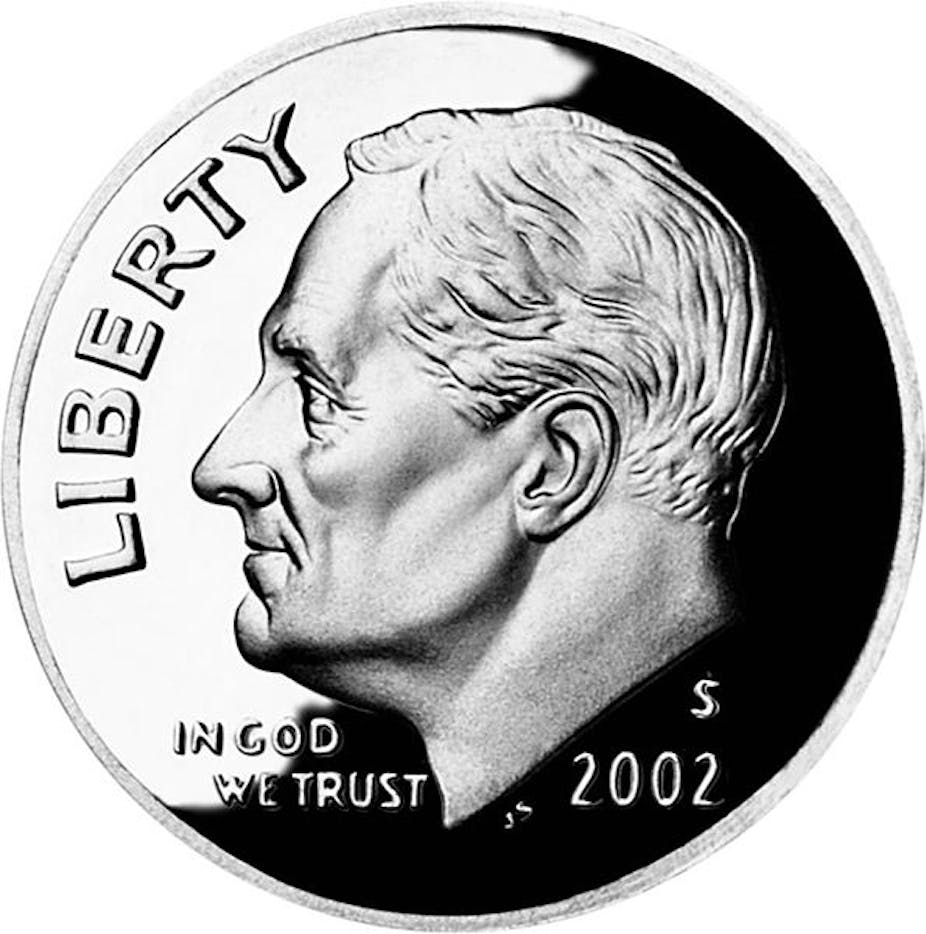
No sooner had the fiscal cliff been averted than Republicans vowed to force another fight over the impending debt-ceiling authorisation. In response, economist Paul Krugman floated a novel resolution: President Obama should order Treasury to mint a trillion-dollar coin, buying the US another year’s worth of credit and sidestepping the whole mess.
A gimmick? Of course. But symbolically, it’s the perfect response: a fabricated solution for a fabricated crisis.
Here’s the deal with the debt ceiling: The United States is one of only two democratic countries to have one. (The other country, Denmark, set its so astronomically high that they’ll likely never reach it.) The debt ceiling caps the borrowing authority of the US government. Congress, having already voted to spend the money, has to separately authorise the borrowing necessary to pay it back, or else default on the nation’s debt.
Given the choice between the inevitable (raising the limit) and the unacceptable (going into default), Congress has traditionally treated the debt-ceiling vote as a formality, with dissenters never mustering enough votes for their opposition to be more than symbolic.
Then Barack Obama won the 2008 election and Republicans suddenly lost their appetite for large deficits. Once Republicans won control of the House in 2010, they had the power to turn the debt-ceiling vote into a hostage negotiation: give us massive spending cuts or we drive the nation into default.
While Republican leaders in the House showed little appetite for this sort of Thelma-and-Louise politics, the new Tea Party caucus made it their signature manoeuvre. The debt-ceiling crisis resolved with the construction of the fiscal cliff. The fiscal cliff was averted the day the US reached the debt-ceiling again. So it will continue, ad infinitum and ad absurdum, until Tea Party Republicans lose influence within the GOP. The question is how badly they will damage their party and the U.S. economy in the process.
Compare all this to the 1990s, when House Republicans and President Clinton reached an impasse over spending cuts and tax rates. Their inability to find common ground led to a real crisis: the federal government shut down for over a month. But when the two sides returned to the bargaining table, they reached a compromise that resulted in the first budget surpluses in decades.
In sharp contrast, the fiscal cliff and debt-ceiling votes have yielded no lasting fiscal solutions. They are instead wholly avoidable and unnecessarily damaging crises. They inject uncertainty and risk into an economy that needs far less of both.
This is not to argue, as Vice-President Dick Cheney once did, that “deficits don’t matter”. In the long-term, America’s growing debt spells economic catastrophe. In the short-term, however, on the heels of an economic collapse and sluggish recovery, deficits are far from the primary fiscal concern. Indeed, given the fragile economy, switching to austerity measures to control spending would only deepen the country’s economic woes.
Because Tea Party Republicans lack the political power and public support to advance their agenda, they have resorted to artificial crises and obstructionism to get their way. Which makes an artificial solution like Krugman’s trillion-dollar coin a perfect match. Sure, the coin won’t solve any of the actual problems facing America. But it would help put an end to the fake ones, giving Americans a chance at a working political system at a moment they desperately need one.
Firozali A.Mulla
PhD
We have yet to go far in employment data. The number of Americans filing new claims for unemployment benefits rose last week, the Labour Department said on Thursday, but details of the report suggested the jobs market continued to grow at a moderate pace. Other data suggested the economy remained on a steady growth path, with sales at wholesalers rising by the most in more than 1-1/2 years in November, keeping inventories balanced. Initial claims for state jobless aid increased 4,000 to a seasonally…
Read moreLincoln Fung
Economist
This is a rather politically biased opinion and ignores the reality fiscal problems facing the US, the world's largest economy.
Neither the Democrats not the Republicans are always or completely correct on all issues.
On the fiscal, government debt and deficits, including both on revenue and expenditure sides, both have their merits but also have their shortcomings.
The US must come up with adequate and appropriate policy measures that include both revenue and expenditure stories.
Michael Lenehan
retired
I can't see any political bias here. The sentence "In the long-term, America’s growing debt spells economic catastrophe" sounds simply like straight talking to me.
The level of America's debt seem to me to be THE political issue of our time.
And will there be enough countries and multi-national banks willing to bail them out seems to me to be one of the biggest financial ones.
The significance of casually 'minting' three trillion dollar coins is also very interesting in itself.
"Quantitative easing" indeed.
Ian Donald Lowe
Seeker of Truth
Hi Nicole, I have a couple of questions.
The $16 trillion of debt is owed to...?
The trillion dollar coin would be minted by...?
The monetary policies of the USA are set by...?
Is the answer to all three questions the federal reserve bank?
One last question. If the USA was to cut it's military spending to just enough to defend it's own borders and protect it's own citizens, how long would it take to pay off the debt with the budget savings?
Luke Freedman
US election analyst at University of Sydney
Hey, I'm not Nicole but hopefully you don't mind if I weigh in on your question.
1. The debt is held by a variety of sources who have bought US instruments of debt (such as bonds) that the Treasury issues. It's bought by individuals, businesses, state governments etc. who want a stable and secure albeit low interest source for their money (US debt is currently viewed as the safest investment in the world). The Social Security trust fund has also been running surpluses for a long time and the government borrows from this fund to pay for other government expenses, so a lot of the debt is owed to the government itself. About a third of the total debt is owed outside the US.
2. The coin would be minted by the Treasury although this option has now been taken off the table.
3. The monetary policies of the US are indeed set by the Fed.
Derek McKinnon
Manager
US Budget (2011)
U.S. Tax revenue: $2,170,000,000,000
Federal budget: $3,820,000,000,000
New debt: $ 1,650,000,000,000
National debt: $14,271,000,000,000
Recent [April] budget cut: $ 38,500,000,000
Let’s remove 8 zeros and pretend it’s a household budget:
Annual family income: $21,700
Money the family spent: $38,200
New debt on the credit card: $16,500
Outstanding balance on the credit card: $142,710
Budget cuts: $385
And you want to attack the people who are pointing out how insane this is and stop it? Quite frankly the Tea Party are starting to look like the only sane people in the USA.
Ted Stead
Consultant
"pretend it’s a household budget" - this is why they're in such strife, by believing they are somehow constrained financially, like a household or business.
Government is not a household. The US (unlike those in the Euro) is creator of the currency, whereas a household is simply a user of it.
The platinum coin idea (which wasn't Krugman's, by the way) just shows how ridiculous all these debates about deficits and debt are. The US is sovereign in its own currency and could choose to spend it any time it wishes. Constraints such as the debt ceiling are not intrinsic, and so if the US did eventually default it would ultimately be a political decision, not a financial one.
Derek McKinnon
Manager
The government is like a household as it does eventually have to pay it's bills (even if it leaves them to the grandkids).
Your suggestion that they simply create more currency (ie. print more money), shows a gross ignorance of basic economic theory as the inflation created would do far more damage to their economy then the government simply spending less.
Ted Stead
Consultant
Nope. Your assumption that "printing money" as you provocatively call it (you know as well as I do that there would be no actual printing involved) *must* cause inflation just shows your ignorance of how modern monetary systems work.
I suggest this as a primer: http://goo.gl/eBzQ6
This will explain why a sovereign government is not like a household.
And then ask: why would any government bring inflation upon itself anyway? And do you really think that the US with over 12 million people (officially... no doubt there are many more) unemployed are pushing their limits of capacity? Really?
Derek McKinnon
Manager
Of course the US can print money at the moment without any risk of inflation right now.
I also agree that the actual debt levels at the moment are manageable in an economic sense.
But the current trajectory is unsustainable and the process to fix that is not via the economy, it is via the political. And as I'm sure you appreciate the political is not about reality, it is about perception.
The changes need to start now so that once their economy starts to grow again, the trajectory can be easily altered. Printing money once their economy is growing would be a disaster.
So for all their faults, at least the Tea Party is helping Americans to realise there is a problem which, in a democracy, is the very first step in starting to fix the problem.
Ted Stead
Consultant
Yes, they can spend now without creating inflation, though like any spending it would have to be targeted properly into areas it would be most beneficial.
Debt levels for a sovereign government are always manageable. If they are not, then it's just that they're not politically manageable, and not any intrinsic limit on fiscal capacity (because there is none).
The current trajectory of entrenched unemployment is indeed unsustainable. It is this lack of work and related opportunities which span generations, not government debt (which can always be repaid by a sovereign government any time it chooses, as long as it's in the currency it creates).
Is this the same Tea Party that had "Keep government out of Medicare" placards? Not the most enlightened bunch, in my opinion. :-)