
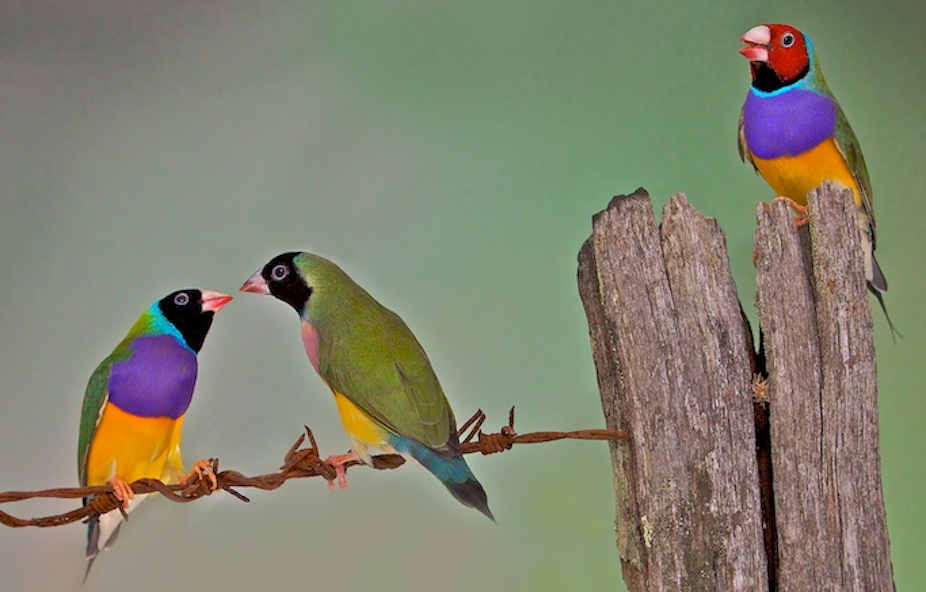
Choosing a mate is one of the most important decisions an individual of any species will make in its life. It is therefore perhaps a surprise that a new study, of which I’m a co-author, has revealed a bird puts only half its mind into the mate-selection process.
Our study – led by Jennifer Templeton of Knox College, USA – is published today in Biology Letters and reveals the preference for attractive or unattractive mates is made in just the left side of the brain.
We were able to demonstrate this using a simple experiment that works because, in birds, visual information to the left-hand side of the brain comes from the right eye.
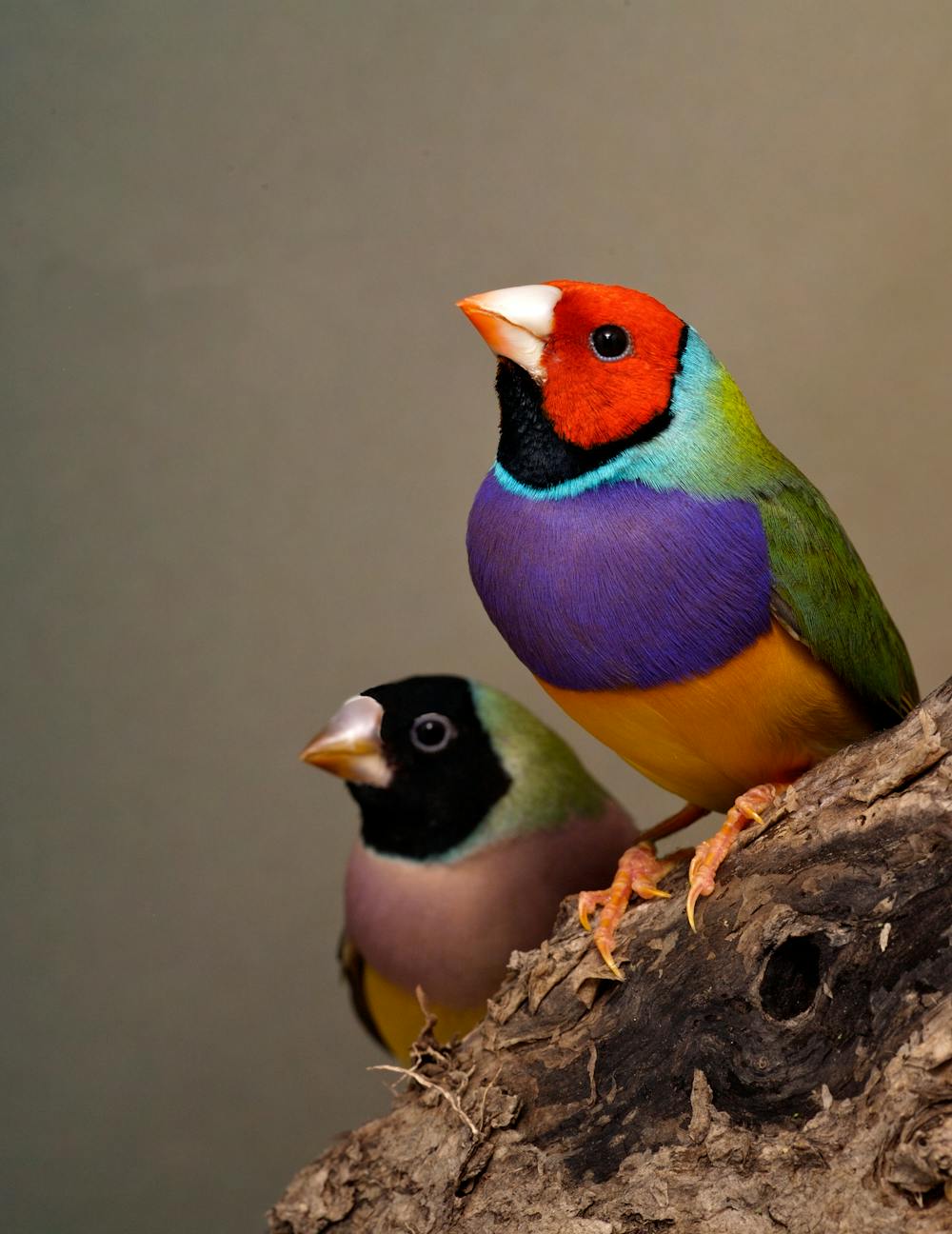
The Gouldian finch (Erythrura gouldiae) comes in two forms, with both males and females having either red or black heads. Typically, males prefer to associate with and partner females that have the same head colour as themselves.
In our study, males were allowed to choose between associating with differently coloured females and also whether they preferred to associate with a female over a male.
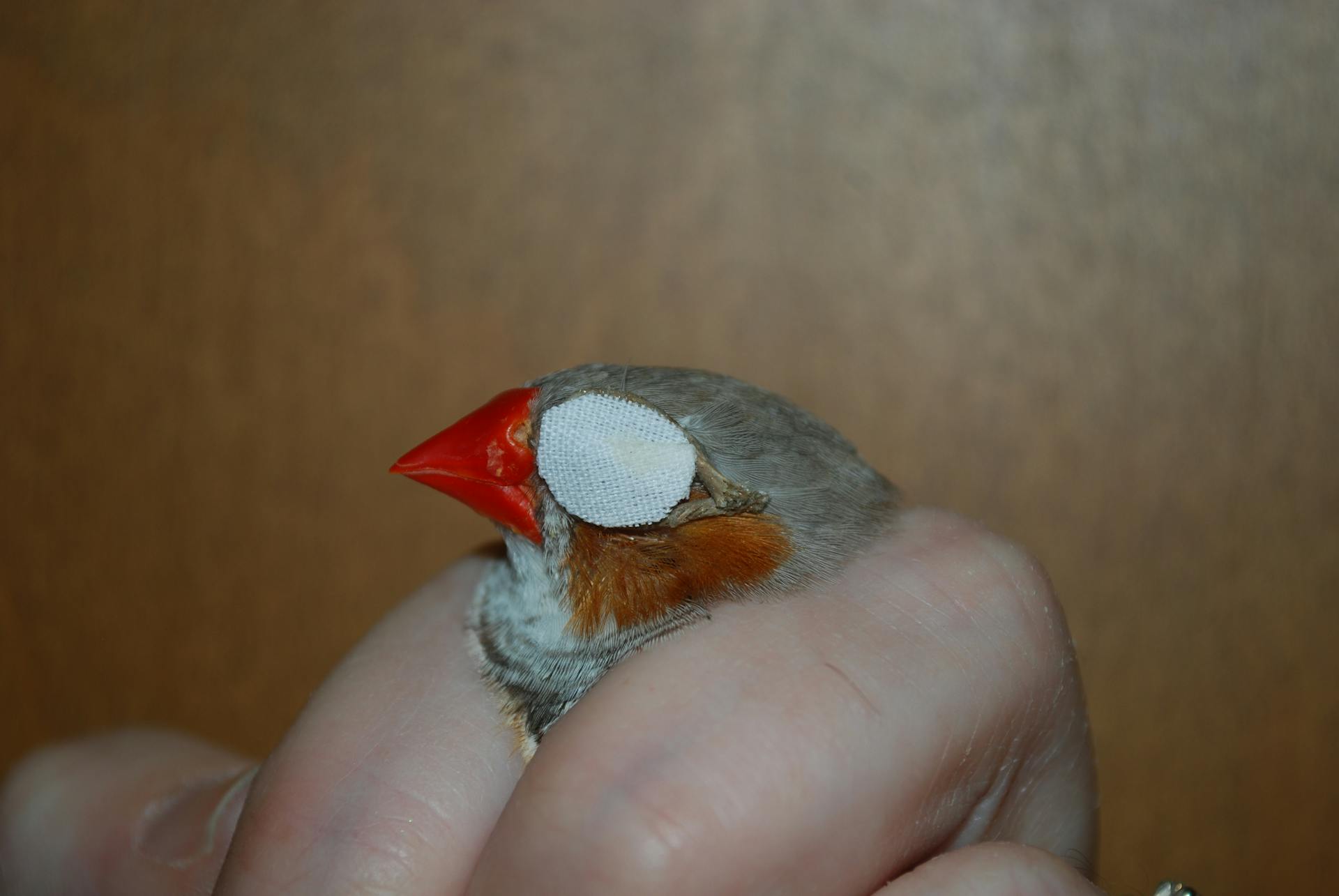
The catch was that in experimental trials the males had a temporary eye patch (which you can see here modelled by a zebra finch) placed over the left eye, the right eye, or neither eye. When males were able to use both eyes, or the right eye alone, they consistently choose to hang out with the female of the same head colour as themselves and also spent more time courting these females by singing to them.
But when males had the eye patch placed over their right eye, and could only use their left eye for viewing potential partners, they were unable to discriminate between the different females, and did not spend as much time courting them with song.
Perhaps even more surprisingly, males that were not able to view subjects with their right eye did not even allocate more time to females than males.
This study will help us uncover the mechanical process underlying what is actually a very complex decision – deciding who will make an attractive partner. The findings demonstrate mate choice is lateralised in the brain – occurring predominantly in one specialised region, in one half of the brain.
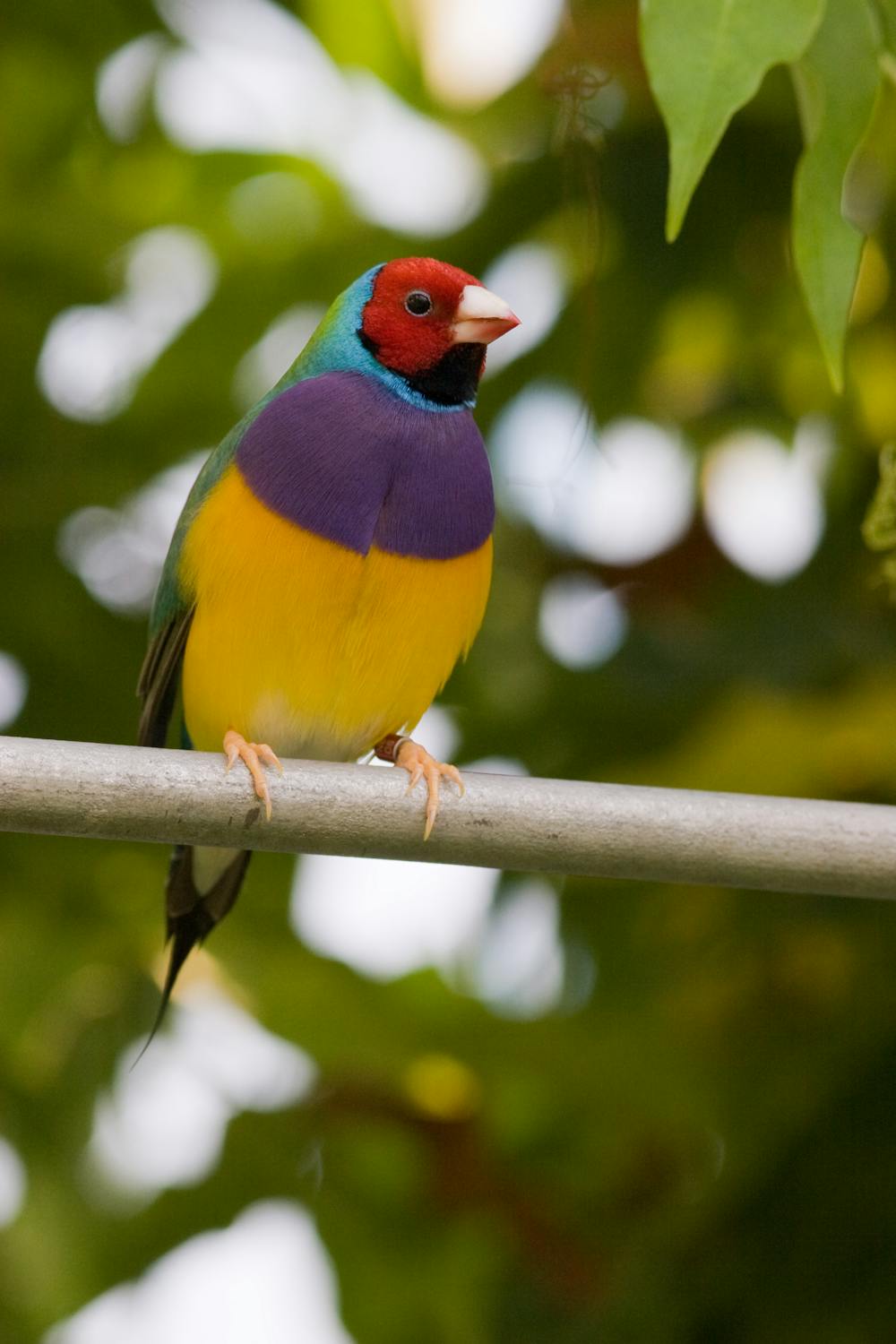
An interesting consequence of this finding is that, because the important left side of the brain receives input on potential mates from just the right eye, it would pay individuals to approach and court individuals predominantly from the right-hand side.
The idea of picking apart the mechanisms at the heart of attractiveness and mate choice in these finches might seem very far removed from our own emotional experience of mate choice and love.
But the findings of brain lateralisation with respect to mate choice in these finches actually tie in very nicely with a 2005 study of humans.
That particular study used functional magnetic resonance imaging (fMRI) on 17 people who were intensely “in love”, and found when the individuals thought about their partner, they activated a few key areas in just the right side of their brains.
There is still much research to be done on the mechanisms that govern mate selection – in finches and in other species – but our study gives valuable insight into where, in the brain, this process occurs.
Dale Bloom
Analyst
"But when males had the eye patch placed over their right eye, and could only use their left eye for viewing potential partners, they were unable to discriminate between the different females, and did not spend as much time courting them with song."
Is this type of experiment approaching animal cruelty?
Dale Bloom
Analyst
Answer: Yes, it is animal cruelty.
1/ Placing a patch over the eye of a bird can injure the eye of the bird.
2/ By placing a patch over the eye of the bird, it loses its normal eyesight, and can fly into something and injure itself.
3/ Placing a patch over the eye of a bird can be very uncomfortable for the bird, and amount to torture for the bird.
4/ In a feminist type society, it may be believed that males are evil and superfluous, and anything can be done to the males of a species. But the male finches should be left to carry out their natural activities.
So much for humanities in science.
http://theconversation.edu.au/science-cant-do-it-alone-the-environment-needs-humanities-too-9286
Simon Griffith
Associate Professor of Avian Behavioural Ecology at Macquarie University
In this, as in all of our work we take animal welfare extremely seriously.
The eye patches were temporary and an individual did not wear an eye patch for more than a few hours at a time. The eye patch was held loosely over the eye and in all cases the eye patches came off easily and caused no damage or discomfort to the bird.
The birds only had the eye patch on when they were in the experimental chamber which was relatively small and the birds did not fly around inside the chamber. Instead…
Read moreDale Bloom
Analyst
Simon Griffith
I would think it impossible for a researcher to have any regard for the welfare of an animal, when that animal has a patch placed over their eye, and then they are placed into an environment where they cannot move around normally, and then the researcher cannot tell if the animal is injured, until after the animal is injured
The experiment with the male finches would be one of the most absurd and feminist pieces of junk science I have ever read about.
But in the future, it would…
Read moreAlison Moore
Senior Lecturer in Modern European History, University of Western Sydney
Dale you are hilarious. So anti-feminist that you paranoically hallucinate that you see feminism everywhere dominating everything! Thanks for the laughter it gives us all.
Murray Webster
Forestry-Ecology Consultant/Contractor
Hi Simon,
interesting article, I have been reading about the evolution of the central nervous system, and this piece reminds me of another study. A pigeon was trained to do a particular trick based on visual cues, with one eye covered. It could do the trick no problem. The eye patch was switched and the same visual cue was given, and the pigeon did not respond at all. (unfortunately I do not have a reference)
I understand that human minds are more integrated than most animals but not totally integrated - It makes me wonder what is going in in my brain....
Kenneth Mazzarol
Kenneth Mazzarol is a Friend of The Conversation.
Retired
I don't believe that males have anything to do with selecting a mate except to preen, promenade and hope for the best. It has always been my belief, based on wide reading, that females of most species look for genetic diversity when choosing a mate. The common saying, "what on Earth does she see in him", is her concern only. It is very time consuming to carry to term, give birth and nurture a baby until can go it alone, so each female strives in the selection process to make it worth while. It must be soul destroying for a girl to be forced into a marriage because of religion or money reasons.
Rob Brooks
Rob Brooks is a Friend of The Conversation.
Professor of Evolutionary Ecology; Director, Evolution & Ecology Research Centre at University of New South Wales
Hi Kenneth,
Mate choice is complex and both males and females choose - on the basis of any number of traits and characteristics. Check out some of Simon's other articles here, which give a glimpse of some of the ways choice manifests. And it isn't always about genes.
I do agree with your point about forced marriages.
Sean Lamb
Science Denier
Isn't the left eye the one used for magno-perception?
Maybe your finches were just have trouble picking out colors or anything, rather than thinking about sex per se
Rob Brooks
Rob Brooks is a Friend of The Conversation.
Professor of Evolutionary Ecology; Director, Evolution & Ecology Research Centre at University of New South Wales
Great article and very very cool experiment, Simon.
I see you already have Dale's endorsement. There can be no higher recommendation that your science is good than Dale expressing incredulity, picking at the details and calling you a feminist. Well done!
Dale Bloom
Analyst
Rob Brooks,
So placing a patch over the eye of a male bird and placing it into a confined area to see if it will tweet at other birds is defined as a “very very cool experiment”.
I would define it as “tormenting the bird”, trying to make the male finches seem foolish and stupid as a part of feminism, and a total waste of taxpayer funding.
Questions could also be asked as to why the birds were captured and transported from their natural habitat for this type of experiment to be carried out…
Read moreAlison Moore
Senior Lecturer in Modern European History, University of Western Sydney
There should be an award for animal studies that promote the greatest sensations of cuteness when one reads about them...
Not to belittle what you are doing, of course! There is clearly still SOOO much we need to learn about animals, as acknowledged a few months ago by bunch of prominent UK neuroscientists:
http://fcmconference.org/img/CambridgeDeclarationOnConsciousness.pdf
Note that they single out birds as one class of chordate consciousnes we have clearly grossly underestimated in its simliarity to ours.
But the thought of those little zebra finches in their little eye-masks not being able to figure out who was a same-head-different-gender....for some reason it makes the skin behind my ears feel all fluffy...
Empathy maybe...?