
PANACEA OR PLACEBO – A weekly series assessing the evidence behind complementary and alternative medicines.
Herbs have been used for therapeutic purposes in most cultures for hundreds and even thousands of years. The father of Western medicine, Hippocrates (460 BC – 377 BC) is known to have used many plants and herbs for medicinal purposes. Hippocrates' use of up to 400 plants are well documented in a collection called the Corpus Hippocraticum.
Western herbal medicines have traditionally been used to help prevent and treat diseases. Many useful pharmaceuticals have been derived from such herbs, including:
salicylic acid to make aspirin from the bark of the white willow tree (Salix alba);
morphine from the poppy plant (Papaver somniferum);
digitalin, digitoxin and digoxin from the plant foxglove (Digitalis purpurea);
atropine from the belladonna plant (Atropa belladonna) and;
quinine from the bark of the quinine tree (Cinchona ledgeriana).

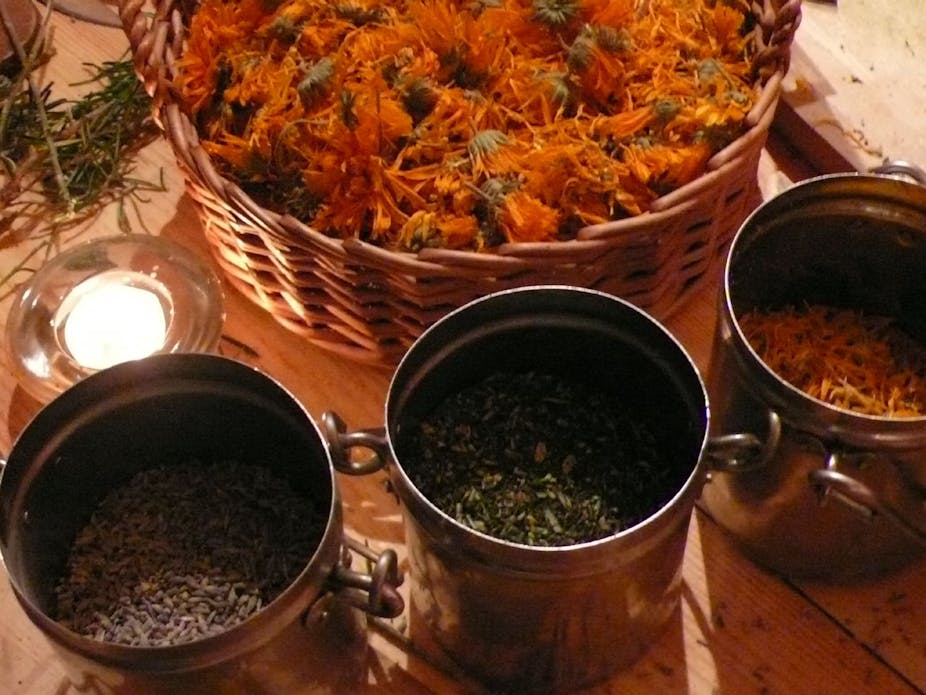
In herbal medicine, the whole plant or parts of the plant (flowers, leaves, bark, fruit, seeds, stems and roots) are used for their potential therapeutic properties.
Herbal medicines differ from pharmaceuticals as they contain complex multi-component substances, and like pharmaceuticals can exert biochemical and physiological effects on the body. There are natural variations of the active components in herbs, which is why there are differences in the profiles of batches of the same herbal ingredient.
This variation creates difficulties for research and analysis of systematic reviews of trials. Standardisation of extracts of herbs has improved over the years but remains an ongoing issue for both research and clinical use.
Safety is also an issue for herbs. As they contain active substances, herbs can cause adverse reactions as a result of interacting with pharmaceutical drugs. A good example is St John’s wort, which is used for treating mild depression. The hyperforin levels found in this plant can result in reduced efficacy for drugs such as digoxin, the oral contraceptive pill and warfarin.
Western herbal medicines used by Hippocrates and still commonly used today include fennel, cinnamon, clove, chaste-berry, anise or licorice, coriander, garlic, St John’s wort, white willow bark, valerian, linseed, peppermint, chamomile, celery, clove (oil), Viscum album, elder-wood, sage and nettle.
The evidence base
Most of the evidence for herbal medicine stems from traditional use accumulated over hundreds of years and is documented in key monographs. Randomised control trials have also been conducted for some herbs but the majority vary in quality, lack methodological rigour, are often of short duration and have small numbers of participants.

Still, there are some Cochrane reviews and research worthy of mention that demonstrate the potential effectiveness of some herbs. Cranberry tablets (not the juice) for the prevention of recurrent urinary tract infections in young women, for instance, or St John’s wort for mild, moderate and major depression, various herbs (STW 5 and STW 5-II) for irritable bowel syndrome, and rosehip and avocado-soybean unsaponifiables for osteoarthritis.
Also, hawthorne berries as an adjunct treatment for chronic heart failure, and garlic for hypertension.
As the trials included in the systematic reviews are quite diverse, it’s difficult in some cases to know the type of extract, dosage or form of herbs that are most active and clinically effective.
Larger rigorous and high-quality trials are needed to help identify which herbs or standardised extracts of herbs are clinically useful. This would also help identify the safety profile of Western herbal medicines, especially with prolonged use.
This is the sixth article in our series Panacea or Placebo. Click on the links below to read the other instalments:
Comments on this article are now closed.
Sue Ieraci
Public hospital clinician
Hi, Vicki - thanks for your article.
Many people would say that extracting the active ingredient from a botanical source, removing impurities and standardising the dose (which effectively makes it a "pharmaceutical") is an advantage, as the effects are more predictable and the dose can be tailored.
Proponents of whole herbs would disagree, saying that the whole herb would confer some therapeutic advantage. Can you outline what those advantages could be? Is there any advantage to having a variable and probably unknown dose of the active ingredient?
Vicki Kotsirilos
Adjunct Senior Lecturer in Epidemiology and Preventative Medicine at Monash University
Thank you very much Sue.
Read moreYes I agree that extracting the active component of a herb and standardising it to create a pharmaceutical has many advantages. There are many examples of drugs still used today created in this way.
There are many reasons why people are choosing to use herbs.
These may include:
1. When they are looking for options to help relieve symptoms when pharmaceuticals (and surgery) may be contraindicated. An example is the patient who presents with osteoarthritis and joint pains…
Sue Ieraci
Public hospital clinician
Well-summarised, Vicki - thanks.
In general, we know that side-effects occur as a result of effects - ie substances can have side effects if they are able to have a therapeutic effect, because they act on our physiology in some way.
This concept that we should use less effective substances because they have less side-effects might be a valid one, but people tend not to use pharmaceuticals in that way.
Should we also encourage the use of effective pharmaceuticals in lower doses to reduce side-effects, even knowing that we will not achieve maximum benefit?
Vicki Kotsirilos
Adjunct Senior Lecturer in Epidemiology and Preventative Medicine at Monash University
Thank you Sue,
there are many situations where we do use lower doses of pharmaceuticals for their continued clinical benefit and to help reduce side-effects eg reducing doses of prednisolone, hormones [testosterone, thyroxine...], and when using medication in the elderly to avoid toxicity eg digoxin.
Thanks again Sue
Kindly, Vicki
Tim Scanlon
Debunker
Just a quick correction: "Most of the evidence for herbal medicine stems from traditional use accumulated over hundreds of years and is documented in key monographs." This should read: "Most of the evidence for herbal medicine is purely anecdotal and should be ignored due to lack of scientific rigour. The real medicines and treatments have been turned into drugs, the rest are still being looked at and people should wait until they have been thoroughly tested and perfected."
Vicki Kotsirilos
Adjunct Senior Lecturer in Epidemiology and Preventative Medicine at Monash University
Thanks Tim
there are some herbs that have shown science and others that show no benefit. There are also others that have not been tested. Hard to ignore these when we still don't know whether they do or don't work. Thanks again, Vicki
Guy Curtis
Senior Lecturer at School of Psychology and Exercise Science, Murdoch University
The comedian Dara O'Briain summed up herbal medicine perfectly: "In the last 100 years we tested it all. What worked became medicine, what didn't became a nice soup and some pot poori".
Vicki Kotsirilos
Adjunct Senior Lecturer in Epidemiology and Preventative Medicine at Monash University
Thanks Guy for raising this, not herbs have been tested in the last 100 years, however, of those that have been, I agree that the ones that have demonstrated lack of efficacy and have high risks and side-effects should be abandoned and should not be available in the market.
There are other herbs I have not included in the article that have shown benefit with low risk and side-effects in research. It is important we are well informed of those herbs that have shown benefit and are generally safe and inform our patients well when we are making decisions about their healthcare, and to also warn them of those that do not demonstrate evidence and particularly have risks.
Thank you again. Kindly, Vicki
Michael Vagg
Clinical Senior Lecturer at Deakin University School of Medicine & Pain Specialist at Barwon Health
Thanks Vicki for this article. I don't think however you have clarified very well the philosophical basis for continuing to choose herbal remedies based on 'traditional uses' derived from anecdotal evidence and frank empiricism over a more selective approach based on biological plausibility and the same rigour that we apply to pharmaceutical therapies.
Since we as a profession abandoned empiricism ('suck it and see') and became more sophisticated in our approach, there has been an avalanche of successful drug treatments. if we stuck to the empiricist approach we would still be occasionally right, but have no idea of the reason why.
In accurately reporting that there is a severe paucity of decent evidence to support their use, one would expect that there was some other reason to rationalise their use apart from an appeal to the days of yore...
Vicki Kotsirilos
Adjunct Senior Lecturer in Epidemiology and Preventative Medicine at Monash University
Thanks Michael for raising this point.
Yes, I agree there are sectors of our community who philosophically prefer medicines to be "natural" and use herbs -many derived from traditional use and anecdotal evidence. It is important that we respect their right as well in making choices for their treatment, ensuring to weigh potential clinical benefits with risks and side-effects to their treatment, and monitor their response to their choice of treatment. This can be quite frustrating for the clinician when we know there may be no scientific evidence for the herb(s) they choose to take, but they continue despite our advice.
Shanna Cowell
logged in via Facebook
Michael said, "one would expect that there was some other reason to rationalise (sic) their use apart from an appeal to the days of yore..."
Read morePerhaps people are searching for more side-effect free treatments when they explore ancient herbal uses. While some are toxic and can be dangerous, the vast majority are mild in action and have low toxicity and a history of safe use in the general public. Many pharmaceuticals cause toxic side effects which create new diseases i.e. jaw bone necrosis and increased…
Tim Scanlon
Debunker
Anecdotes are by their very nature unscientific. They are one person's comments that have not been qualified to take into account all mitigating factors. Even when there are many anecdotes, you are still left with inherent biases and flawed observations.
That isn't to say that anecdotes can't be a good source of new investigations, but that doesn't make them scientific.
Joel Mayes
Bicycle Mechanic
From the article
"Most of the evidence for herbal medicine stems from traditional use accumulated over hundreds of years and is documented in key monographs."
Anecdotes are not evidence, anyone who claims to be a research should know this.
Aristolochia was considered safe and used for hundreds if not thousands of years in Western and Chinese pre-evidence based medicine but is now know to be carcinogenic.
Comfry is another herd long used in pre-evidence based medicine which has high liver toxicity.
Without proper trails you can not say ANY medicine, herbal or otherwise, is safe
Vicki Kotsirilos
Adjunct Senior Lecturer in Epidemiology and Preventative Medicine at Monash University
thanks Joel
Yes these are 2 well known herbs that cause toxicity and any good herbalist are aware of these risks. For these reasons, they are restricted and banned by the TGA in Australia. There are also other examples of herbs causing hepatotoxicity eg ethanolic kava - its not uncommon we have the occasional Australian who comes from an overseas trip eg Fiji... with hepatotoxicity following a binge of kava during ceremonial practices.
Yes I agree with you proper trials are necessary to help identify those that are safe. The examples I gave in my text above, the link will take you to the trials and fortunately the researchers did look at their safety and risk profile. But agree more safety studies are necessary.
Thanks again Joel
Kindly, Vicki
Paul Rogers
logged in via Twitter
And how does one recognise a "good herbalist"?
Shanna Cowell
logged in via Facebook
Here in US a "good herbalist" would be someone who has studied at an accredited school such as a Naturopath or Acupuncturist/Chinese Herbalist. Here both are degreed professionals with over 3000 hours of combined classroom and clinical training. That would be a start at recognizing a "good herbalist". Also, as with any health professional, testimonials and word of mouth usually are fairly predictive of a good clinical experience.
Paul Rogers
logged in via Twitter
And will they promise not to tell me I'm gluten sensitive, allergic to wheat and milk, that polyunsaturated fats are toxic, and that I should eat like a cave man?
Comment removed by moderator.