

Where is Australia headed? Some future projections

Australians want a future of sustainable self-sufficiency and a healthy environment supporting a robust democracy – free of poverty and inequity. That was one of our projections, as part of the Australia 2050 project for the Australian Academy of Science. Equally, Australians fear a future in which…

Zprtppdn-1362360754
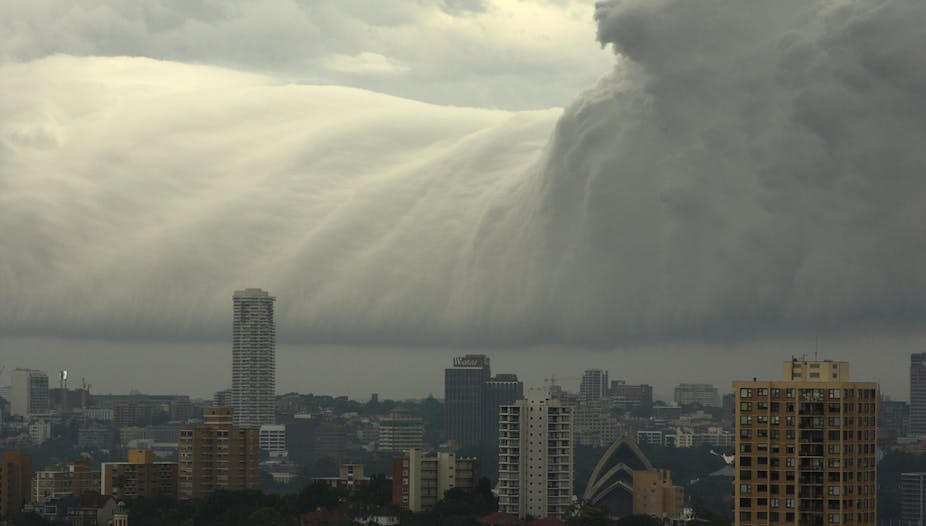
Australia’s future depends on decisions we make today – what’s coming towards us? Johnny Ross

Australians want a future of sustainable self-sufficiency and a healthy environment supporting a robust democracy – free of poverty and inequity. That was one of our projections, as part of the Australia 2050 project for the Australian Academy of Science.

Equally, Australians fear a future in which the stability of day-to-day life has been eroded by a degraded environment, depleted resources, lawlessness or warfare, limited access to health-care and education, extreme (or even increased) economic or political inequity and the fragmentation of social cohesion.

The question “What will Australia in 2050 look like?” will not be answered for sure for another four decades. But that future depends on decisions made today, and that means it is important to get some early insights into what the alternatives really are.

Of course, the future is uncertain and the projections discussed here may change as the different components are finally linked together. But some of them run contrary to current expectation and desires. They require careful thought in any personal, community, regional or national planning exercises.

Population, society and the economy

The human aspects of Australia’s future have received a good deal of attention over the last few years. Australia’s population will increase by 50-100% by 2050. The proportion of the population living in the north and west is projected to increase at the expense of smaller southern states.

Median age will increase from the 36.8 years of 2007 to between 41.9 and 45.2 years. The proportion of the population over 65 is projected to increase by 60%, or more in the southern states.

Economic growth is forecast to continue over 2011-2050 at around 2.5% per year (a little slower than over past decades), and to shift towards services and away from primary and secondary industries (like agriculture and manufacturing).

This is despite an expected 13% increase in trade as Australia’s trade partnerships restructure – with the proportion of Australia’s total exports going to China, India and Indonesia projected to rise from 14% to 40% by 2100.

Even this rate of productivity is dependent on increasing labour force participation, facilitated by education and health programs and increased participation by people aged over 65. Despite this rising participation it is projected that the tax base will nearly halve, meaning the fiscal burden of the ageing population would lead to an accumulating and growing fiscal gap (where spending exceeds revenue) of up to 2.75% of GDP annually, with deficits reaching 20% of GDP by 2050.

Resources and industries

Australia’s resource sector has been one of the defining shapers of economic growth through the late 20th and early 21st century. Major fossil fuels (black coal, natural gas) and minerals (iron ore, bauxite, copper) are forecast to be exhausted in 60-80 years at current rates of extraction, much sooner for other resources (gold, lead, zinc, crude oil). The physical trade balance (including mining, manufacturing and agricultural sectors) is forecast to show continued growth in exports to the mid 21st century, but then to collapse rapidly to around neutral.

While Australia will be food secure, agricultural trade is projected to dropby 10-80% due to a drop in output. In the absence of any climate change adaptation in agricultural practices or mitigation, by 2050 Australian wheat, sugar, beef and sheep production is projected to drop by roughly 14-20%; with production in Queensland and the Northern Territory hardest hit.

Energy consumption will increase. Electricity generation and transport sectors remain the dominant uses. Fossil fuels are likely to continue supplying the bulk of this, despite 3.4-3.5% growth per year in renewables.

The trajectory of emissions is heavily dependent on the specific adaptation behaviour, mitigation policies and technology scenarios.

Climate, the environment and ecosystems

Air temperature will probably rise by less than 4°C by 2050, with the greatest warming in the northwest and away from the coasts. This has adverse consequences for heat stress on agriculture and urban systems, water availability in Southern Australia, the incidence of drought and fire.

Water yield from the Murray-Darling potentially drops by 55%, but the greatest increase in drought months (of 80%) is in the southwest. Substantial increases in the number of extremely hot days (>35°C) Australia wide are associated with increases in extreme fire days and area burnt. Northern settlements are particularly strongly impacted.

The impact of these changes on native terrestrial ecosystems becomes progressively worse as temperature rises. If temperatures increases are small (<1°C by 2050) only mountain and tropical ecosystems should be impacted; habitat for vertebrates in the northern tropics is projected to decrease by 50%.

If temperatures rise by 3°C or more the projected loss of core habitats is much more extensive: 30-70% or more of many habitat types, with the majority of rainforest birds becoming threatened and many species of flora and fauna projected to go extinct. Iconic freshwater wetlands, like Kakadu, are also projected to shrink by 80%. These changes are also associated with extensive compositional change and increased penetration of invading species.

The ocean is projected to change as much as the land, though with much more consistency across emissions scenarios. Most ocean warming is in the tropics and down the east coast. Sea-level will rise, potentially doubling the areal extent of flooding due to storm tides; ocean stratification is likely to strengthen, affecting mixing, nutrient supplies and productivity; hypoxic “dead zones” are likely to spread; and the rising levels of CO2 dissolved in the ocean will continue to cause acidity to increase.

While a range of species will adapt, future ecosystems may have very different composition to today. Differential capacity to adapt will lead to species mixes never before recorded.

Economically and ecologically sustainable marine industries are still possible despite the projected environmental changes. However, this is only possible if regulations, markets and social attitudes allow the industry to shift with the new ecosystem structures.

Beth Fulton was lead author for a group exploring modelling perspectives as part of the Australian Academy of Science project “Australia 2050: Towards an environmentally and economically sustainable and socially equitable ways of living”.

The Australia 2050 project for the Australian Academy of Science has just published Phase 1 Negotiating our future: Living scenarios for Australia to 2050 which emerged from 35 scientists working together to explore social perspectives, resilience, scenarios and modelling as pathways towards environmentally and economically sustainable and socially equitable ways of living. Phase 2 of this project on creating living scenarios for Australia is underway.

Articles also by This Author

Sign in to Favourite

Want to follow The Conversation?

Sign up to our free newsletter to get the day's top stories in your inbox each morning, with a special wrap on Saturday.

Spinner
Become a friend of The Conversation and donate

Join the conversation

80 Comments sorted by

  1. Paul Richards

    strategic foresight

    "We have surveyed existing quantitative projections of the development of major components of the Australian system over the next few decades. In most ways, the outcomes are consistent with the current expectations of most of the Australian policy, business and academic communities...... " In part of the conclusion of "Phase 1 Negotiating our future: Living scenarios for Australia to 2050"
    This is the problem, the scenario suggested are based on exponential growth model. Which is utterly ridiculous to promote the current 'economic model' of using our ecosystems resources. It is flawed and based on unsound evaluation of the planets biodiverse and dynamic systems. K6 K7 arithmetic can easily demonstrate the flaw.
    Dr. Albert Bartlett discusses the implications of unending growth on economies, population, and resources. Presented at UBC on 5/19/2011.
    http://www.youtube.com/watch?v=o0ghHia-M54&feature=share&list=PL3300DB41E04CD5DF

    report
    1. Joseph Bernard

      Director

      In reply to Paul Richards

      re: "This is the problem, the scenario suggested are based on exponential growth model."

      There are many possible scenarios which can play out. And in software design and testing, I like using end point analysis that tests robustness in extreme conditions so that we know where processes will break. So maybe we can use these types of scenario's to find boundary conditions we must avoid.

      I recently attended a seminar where Peter Ellyard spoke on the subject of 2050. Peter happens to have published…

      Read more
    2. Paul Richards

      strategic foresight

      In reply to Joseph Bernard

      Joseph Bernard wrote : " ... If we can agree on a decision tree model" Currently the 'decision model' is based on a set of values that are not going to serve the human race or its ecosystem.
      So what are you going to do?
      Are you going to continue serving up palatable 'scenario' using the current economic model or go deeper into a more evolved set of values?
      As a person who understands strategic foresight, futurism, and applies the principles. Just what value system or level / stage of human development are you basing this set of scenario on? [Referring to Dr.Clare Graves work on stages of human development.]

      report
    3. Joseph Bernard

      Director

      In reply to Paul Richards

      Paul,

      just suggesting that we need to be flexible in our thinking.. I think everyone is prepared for the concept that things have to change and poor spaceship is suffering.

      The problem is that this problem for our future requires us all to pull together in the same direction. Otherwise there will be conflicting efforts and no clear measure of success.

      Plus the reality is that not all of us are able to understand what actions need to be taken. ( including me)

      If we provide our society with a simple decision tree model then it provides us with a model that works for ants and bees. Both these insects have a very basic decision model yet they are able to construct very successful communities that work for them
      ( simple example of decision set: Is this action i am about to take? good for me, good for society, good for the environment)

      sorry and not familiar with Dr Graves work..

      report
    4. Paul Richards

      strategic foresight

      In reply to Joseph Bernard

      Joseph Bernard wrote: ".... provide our society with a simple decision tree model then it provides us with a model that works for ants and bees."
      The heart in your premise is good, your personal motive is clear and honest.
      However, it all comes down to 'values', if we based the set of 'scenarios' on the 'agrian medieval 'stage of development' we both know flaws would be obvious. We have plenty of current models in South America, parts of Africa and so on where the corporate world has used these…

      Read more
    5. Joseph Bernard

      Director

      In reply to Paul Richards

      Re: Values.

      i suspect that my definition of values is a little different to the one you are using. I am familiar with the spiral dynamics model and remember the stages as a number rather than color, but i understand where you are coming from.

      Are you familiar with Ken Wilder and his model of "Nest of Life" or the "Hatching experience of awareness"? .. I find his model and metaphor a little more comprehensive than Spiral Dynamics model that i studied but once again I agree that a person…

      Read more
    6. Stephen John Ralph

      carer

      In reply to Joseph Bernard

      Hi Joseph

      From my pov nothing could be more important than dealing with climate change and its potential to create global calamity.

      You say - "I agree that a person who is in survival mode is basically not going to easily respond to higher world view position."

      and

      " We all share a common sense of survival, i think we need to tap into that sense in selling the message to the planet.."

      Seems a contradiction, or am I being unfair.

      Where you mention healing the human condition, I don't think we have time for that at the moment.

      I think we'd best wait until the planet is in a better condition, and we have healed it.

      We may have a healed world population going down on a sinking ship.

      report
    7. Paul Richards

      strategic foresight

      In reply to Joseph Bernard

      Joseph Bernard wrote: Re: Values. ......than is immediately apparent from the spiral model.." Having grasped the spiral dynamics model with Ken Wilbur's four quadrants and Don Becks work. I know it is a lot more concise than we can discuss here and above all complex, very complex.
      Just delving into the value systems is the 'beginning', a very important one all the same. At least we both have a grasp of the complexity as our human community evolve values.
      Joseph Bernard wrote: "The challenge is…

      Read more
    8. Joseph Bernard

      Director

      In reply to Stephen John Ralph

      re: "Seems a contradiction, or am I being unfair"

      A person in survival mode will act in the same direction as a "World view" person if survival is seen to be via the same path..

      report
    9. Paul Richards

      strategic foresight

      In reply to Stephen John Ralph

      Stephen John Ralph wrote :"Seems a contradiction, or am I being unfair" A person in survival mode will act in the same direction as a "World view" person if survival is seen to be via the same path.. "
      Not unfair, just the level of thought is on another stage, so this scenario is one probable path.
      You are right, a person e.g. some of our 'indigenous', are most unlikely to act 'in the same direction' unless the tribe aproves. However individuals in the group may have evolved levels of thought…

      Read more
    10. Joseph Bernard

      Director

      In reply to Paul Richards

      Paul

      I believe we are very much from the same school of understanding and i believe i have been applying principles as much as i can.

      I agree that change needs to start now and in many way, i believe it already has started, albeit slow at times.

      For my part, change is applied through a online software project and book that will be released soon which are pitched as a "Me-We-It" solution. w w w . ecomomi.com is a simple soft front to a much deeper model :)

      report
    11. greg fullmoon

      being and doing

      In reply to Joseph Bernard

      Civilizational insects cooperate for the good of their civilization, i.e. bees, ants and termites..
      Human beings also cooperate, however their overarching organizational mode of operation is competition, that is competition between states and players. This is evident in the way the world is currently organized, like who controls the real decisions; http://www.ted.com/talks/james_b_glattfelder_who_controls_the_world.html
      It is also noteworthy that the 'core of control' from the above video cooperates…

      Read more
    12. Joseph Bernard

      Director

      In reply to greg fullmoon

      greg,

      re "ridiculous to suggest positive societal change is imminent "

      sorry but i disagree.. This is a limiting belief which if you repeat it enough to yourself will become your reality.

      re: "Human beings also cooperate, however their overarching organizational mode of operation is competition, that is competition between states and players"

      Humans are certainly complex beings. And Humans will co-operate when it is in their self interest to do so. It is usually great leaders that can offer the tribe a vision that create extraordinary results.. Leadership is what we are lacking.. just watch the Gill and Abb show.

      Re: Competing. there is nothing wrong with competition when it is channeled in a positive way.

      So you can remain part of the Nay stayers or your can break free of the chains of old thinking and ask why not.

      report
    13. greg fullmoon

      being and doing

      In reply to Joseph Bernard

      Cheers Joseph, I was responding to this;
      ' just suggesting that we need to be flexible in our thinking.. I think everyone is prepared for the concept that things have to change and poor spaceship is suffering.

      The problem is that this problem for our future requires us all to pull together in the same direction. Otherwise there will be conflicting efforts and no clear measure of success.

      Plus the reality is that not all of us are able to understand what actions need to be taken. ( including…

      Read more
    14. Paul Richards

      strategic foresight

      In reply to Joseph Bernard

      Joseph Bernard wrote : "For my part, change is applied through a online software project and book" Great, if the desire to change is there that could work.
      Appreciate the link and now grok your 'life conditions' a little better. I will watch and wait for outcomes. As hope is still within my holon, naturally.

      report
    15. Joseph Bernard

      Director

      In reply to Paul Richards

      Paul,

      thank you for sharing your thoughts, it offers me more evidence of an awakening that is happening as we speak.. I just love it, we live in an amazing time of history, now with the internet our consciousness has wrapped itself around the planet and each voice (hopefully) adds to a common collective consciousness.

      Our danger lies in the disconnect with our life force. Our leaders have no idea of what keeps us alive and most children will literally starve if the supermarket were to run dry.

      There are many people that are awakening and with each new mind, we come one step closer to the possible 100th monkey holon.

      report
    16. Paul Richards

      strategic foresight

      In reply to Joseph Bernard

      Joseph Bernard wrote : " ....... I just love it, we live in an amazing time of history" Must admit I thrive on the changes and totally agree.
      The most amazing issue is others fail to grasp the 'changes' are fast, profound and excelerating. Most are totally unaware of the issues as we roll toward technological singularity. The corporate position at the apex of our economic pyramid is causing immense damage, automation has pushed people onto part time work, and out of it globally. Full singularity…

      Read more
    17. Felix MacNeill

      Environmental Manager

      In reply to Paul Richards

      Yeah - thanks Paul, Mitra was a delight!

      And, as someone who struggled long and hard to make much sense out of Foucault and Baudrillard, I also enjoyed the bit about sophisticated theology.

      report
  2. Dale Bloom

    Analyst

    Number one implication is population growth. This is the number one issue that will affect everything else, including economics, environment and quality of life.

    There is less and less coastline left to annihilate, and house blocks are already so small there is hardly enough room to hang the washing.

    Aspects not covered in the article include expected increase in casual employment and having to accept lower wages with no job security to get a job, governments having to extract more from the environment to get money to pay for infrastructure, governments having to sell more public assets to pay for burgeoning debt.

    In effect, as the population increases, everything else declines.

    report
    1. Dale Bloom

      Analyst

      In reply to Michael Shand

      Most of our population increase is coming from immigration, and no one knows why.

      QLD is probably where the rest of Australia will end up.

      QLD tried agriculture, mining, tourism, manufacturing and finally ponzi demography and selling real estate.

      It is now totally bankrupt.

      report
    2. Dale Bloom

      Analyst

      In reply to Michael Shand

      Sex education, family planning etc does little to change birth numbers.

      Most couples seem to be electing to have 1 - 2 children only, or no children at all.

      But our government now wants to swamp the country with immigrants, with the public having little say in the matter.

      We are quickly losing our environment, and the future will probably be huge debts to pay for infrastructure for increased population numbers, and then sale of public assets to pay for the debts, or further extraction of natural resources to pay for the debts.

      report
    3. Michael Shand

      Michael Shand is a Friend of The Conversation.

      Software Tester

      In reply to Dale Bloom

      Interesting, so any new immigrants are bad and dirty, ewww

      But when your family immigrated? that was fine?

      I think you are using facts to support your own xenophobia and racism more than actually trying to address any real world issues.

      For example I have asked you twice whether you support measures to control population and both times you change the topic to "Na'ah look over there - its the immigrants that are the problem"

      report
    4. Dale Bloom

      Analyst

      In reply to Michael Shand

      You don’t have to wave the “xenophobia and racism” card in the air.

      I know quite a few immigrants who don’t want this country to increase its population, because they originally came here to escape overpopulation, pollution and devastation of natural environment in their home country.

      We are fast filling up with people.

      About the only areas of any scenic beauty left in this country, are in national parks, and the rest is fast becoming a suburban jungle, with minimal quality of life in that suburban jungle.

      report
    5. Michael Shand

      Michael Shand is a Friend of The Conversation.

      Software Tester

      In reply to Dale Bloom

      We started talking about Climate Change and have ended up with you talking about immigrants as if thats the major problem - you fixation with this group speaks volumes especially as Australia has more free landspace than most other countries

      It is apparent that you dont care about Climate Change or mitigating it, your only interested in slagging off immigrants - as an immigrant myself its insulting

      report
    6. Dale Bloom

      Analyst

      In reply to Michael Shand

      Most of the best land has already been used (or is in the process of being used), and widely available land in Australia is a myth, due to lack of rainfall, soil that is infertile, or simply due to the huge costs in building new towns and cities.

      Estimated long term costs are estimated at $500,000 to simply house one new person.

      A full account of “Options to 2050 for Australia's population, technology, resources and environment” by CSIRO staff can be found here

      http://www.cse.csiro.au/research/futuredilemmas/

      report
    7. greg fullmoon

      being and doing

      In reply to Dale Bloom

      hmm.. 'governments having to extract more from the environment to get money to pay for infrastructure, governments having to sell more public assets to pay for burgeoning debt.'
      This problem is only a problem in the current paradigm or regime where government has waived its right to issue its own currency or money.
      At this very moment billions of dollars are being created from magic by banksters and being loaned to individuals, corporations and governments (who are corporations, Queen Elizabeth…

      Read more
    8. John Kerr

      IT Education

      In reply to Michael Shand

      Michael, what's your fascination with sex ed etc? Does it reduce population? I don't think it does much in that area. What about stopping govt encouragement of increasing birth rates by reducing govt bonuses etc? That might slow it down. We need to concentrate on any groups in Australia with high birth rates - I don't care whether they are immigrants or bogans or what. So don't bring out your racist card to me.

      And also.. when my family immigrated it was a different era, 100 years ago and then it WAS fine to increase the small population of Australia to allow it to proser. Times have changed - more people now = less prosperity in the future.

      Population control is a world wide problem, not just Australia. As living standards go up, population growth decreases. Do you mean sex educ. etc in Australia or world wide? Do you seriously think that sex education in Australia is going to solve anything?

      report
    9. John Kerr

      IT Education

      In reply to Michael Shand

      The "more free landspace" in Australia is a myth. The Sahari desert is free landspace and vast but it, like much of the land in Australia, is unusable because of lack of water. Anyone who has travelled the length and breadth of Australia knows that.

      What is happening is that as the population of Australia is increasing (by whatever means) the good arable land is being covered in houses. If we had an abundant supply of water everywhere we would be able to use much more of the land for people but we appear to be having more and longer droughts overall.

      I don't know about you but I don't particularly want to live in a desert. Do you have any ways of changing desert into a good place to live? Bet you don't don't! Have you actually travelled Australia out of the coastal fringe and seem millions of sq km of desert? Bet you haven't.

      report
    10. Michael Shand

      Michael Shand is a Friend of The Conversation.

      Software Tester

      In reply to John Kerr

      ". Do you have any ways of changing desert into a good place to live? Bet you don't don't" - There are 2 viable techniques that can do this that have shown great success so far.

      The first is a project in Qatar which is known as the "Sahara Desert Project" - look it up its really cool, just finished construction in december 2012. Even if you put climate change and the rest of it aside, its a uber cool project

      The second is a farming technique known as permaculture, Geoff Lawton has made some…

      Read more
    11. Michael Shand

      Michael Shand is a Friend of The Conversation.

      Software Tester

      In reply to John Kerr

      Does Sex-Ed reduce the amount of children that a family will have? Yes, significantly so

      Infact the abolishment of poverty is oft reffered to as the empowerment of women, you give em control over their own bodies, take them off the hamster wheel of reproduction and it has significant effects.

      I wont go into this too much but look it up - sexual education and family planning works, it works in ballarat it works in bangladesh

      report
    12. Stephen John Ralph

      carer

      In reply to Michael Shand

      Hi Michael

      I just love those uber cool projects in the ME. God those golf courses look faaabulous.

      The billions spent on conjuring up those cool islands in the shape of the world......wow, now that's what life is really about.

      NOT.

      Don't know about you but what I think is uncool is the waste of billions of dollars channeled into these hedonistic projects. Sure it's their money and they do what they like with it, but doesn't mean it's not obscene.

      report
    13. Stephen John Ralph

      carer

      In reply to Michael Shand

      Hi Michael

      you're right I was talking shit again.......I apologise.

      I did look up that project, and was impressed.

      Perhaps Qatar could write to the UAE and do a presentation.

      report
    14. Michael Shand

      Michael Shand is a Friend of The Conversation.

      Software Tester

      In reply to Jennifer Norton

      Yeah for sure, Christopher Hitchens gives the best run down on this. Education is whats needed but Sex Ed needs to be apart of that, for the very basic reason that parents usually try to pass on their own ignorance to their children.

      So if your mother tells you that condoms actually increase the chance of STI and pregnancy as is the catholic position...we need to educate women and men that this is not true

      We have to teach kids about their bodies, how they work, how different they all are and how thats okay

      I agree with you, education is important but Sex Ed is also as important as we live in a highly sexualised culture and many parents are not preparing their children to have the skills or knowledge needed to deal with this

      Education is important and Sexual Education is a part of that

      report
    15. Michael Shand

      Michael Shand is a Friend of The Conversation.

      Software Tester

      In reply to Stephen John Ralph

      Sorry mate, I didnt realise I was responding to someone else, I thought I was responding to John Kerr still - hence my frustration when I thought he responded with that comment. So yeah, I apologise as well for the language and lack of manners.

      I could imagine something like this in the NT doing very very well. Its awesome because like the Model T ford, none of the technology they are using is radically new or different, they merely assembled different parts of existing technologies in a way that hasnt been done before

      For the right person with the right motivation and the right access to resources, a small scale system could be setup relatively cheaply in Australia

      report
    16. John Kerr

      IT Education

      In reply to Michael Shand

      Keep it clean, Michael - it's a conversation not a Bogan argument.

      Well, The Sahara Desert project looks good and is a step in the right direction but it is not exactly about making deserts inhabitable. With only a little further research I noted that the cost is expected to be around $500 BILLION for the completed product. Some of the major partners have backed out and there are still very significant problems.

      Forests sure do increase rainfall but the question is, how do you get a forest…

      Read more
    17. Michael Shand

      Michael Shand is a Friend of The Conversation.

      Software Tester

      In reply to John Kerr

      So when you said "Do you have any ways of changing desert into a good place to live? Bet you don't don't" - you were talking shit right?

      As for your population fixation, yes its an issue but its largely a distraction.

      This article was about climate change which is a much larger issue than population - even if we didnt have a population issue we still have a ocean that is acidic and continuing on that path

      Acidic Ocean = mass extinction and possible collaspe of the food chain

      Ocean Acidification…

      Read more
    18. Gary Murphy

      Independent Thinker

      In reply to Michael Shand

      The article was not about climate change - it was about future projections of Australia. Immigration rates are highly relevant. Are you aware that there is currently a massive housing shortage in Australia?

      Your statements about CO2 emissions are incorrect. Australia's per capita emission are higher than the US - we are surpassed only by a couple of gulf nations like the UAE. China's per capita emissions are now higher than Europe's.

      report
    19. Paul Richards

      strategic foresight

      In reply to Jennifer Norton

      J Norton wrote : " ...... can make a huge difference in breaking the cycle of poverty and therefore reducing population growth." So true, the self learning being facilitated by wikipedia and global interconnectivity to information is amazing, girls are wining.
      __________________________
      Link you may appreciate;
      http://goo.gl/sIzkm

      report
    20. Michael Shand

      Michael Shand is a Friend of The Conversation.

      Software Tester

      In reply to Gary Murphy

      Your right about the usage per capita the US overtook Australia in 2008, Taken from http://data.worldbank.org/indicator/EN.ATM.CO2E.PC

      CO2 Per Capita as of 2009

      Australia 18.2
      USA 17.3
      China 5.8

      Although I think this still proves my point, It appears that those countries on the top of the list are not the most populous countries.

      I'm not disputing that population is an issue but it is not the most important issue, CO2 emmissions are.

      Immigration control doesnt address this, we need…

      Read more
    21. Gary Murphy

      Independent Thinker

      In reply to Michael Shand

      Reducing immigration is not impractical - it is very easy to do.

      And I have never suggested it had anything to do with climate change - completely different issue.

      And don't worry - I won't let it distract me from climate change. I am capable of thinking about two issues at the same time.

      You might want to check people's posting history before you start lecturing them.

      report
  3. Stephen John Ralph

    carer

    One point - if there will be a rise in the incidence of floods and cyclones in the north, wouldn't that give rise to the possibility of people migrating south.

    I'm sure some people are already nervous about the weather in Qld & northern NSW.

    And some of the projections, don't allow for a change of government policy, or are these projections a prelude to that possibility.

    The scenarios described are bleak indeed..................I can't imagine anyone getting any joy from all of this.

    In terms of economics, wouldn't a lot of data be influenced by what happens overseas. If it gets as bleak here as overseas, then with much larger populations and greater problems, many countries may be rooted (if you'll pardon the parlance).

    report
  4. John C Smith

    Auditor

    Will we be the backyard pit and the farm for the people of the North above us?

    report
    1. Paul Richards

      strategic foresight

      In reply to John C Smith

      John C Smith wrote: Will we be the backyard pit and the farm for the people of the North above us?"
      Funny that, but while you were away we actually became "backyard pit and the farm for the people of the North above us".
      Can only recommend some critical thinking on our reality, if it was not for the currency value, you would feel it in your pocket.
      This has been the neoliberal agenda since it was first tabled post Fraser. Every politician in power since has bent over backwards to 'reinvent…

      Read more
    2. Joe Gartner

      Tilter

      In reply to Paul Richards

      currently there are 22+ million people in Australia, of which 12, 752, 000 live in our 5 largest cities.
      In the North, or tropical Australia as it's commonly known, there are 4 cities:Townsville has 167k, Cairns 165k, darwin, 130k, mackay 83k, rockhampton has 74k Together the 5 largest tropical cities have a combined population of 620 000 which is just over 2.5 % of the total population of Australia.
      Currently the South is not a sandpit and farm for the North.

      report
    3. Joe Gartner

      Tilter

      In reply to Joe Gartner

      addit: there are more than 5 cities I've only included the top 5 cities' population in both sub-tropical and tropical parts of Australia.

      report
    4. Paul Richards

      strategic foresight

      In reply to Joe Gartner

      Joe Gartner wrote; "Currently the South is not a sandpit and farm for the North." What utter rubbish, the south has the management, logistics systems and the employee pool for the north. There is still mining done below the Tropic of Capricorn. We have the worlds largest deposites of uranium and part of that is 'south' of the Tropic Capricorn also, not to mention the bauxite deposites, coal, iron ore, silver, oil, gas, gold, etc etc.
      Hello...... Where have you been since K4 at primary school? As…

      Read more
    5. Paul Richards

      strategic foresight

      In reply to Joe Gartner

      Joe Gartner wrote; "5 cities I've only included the top 5 cities' population in both sub-tropical and tropical parts of Australia. " Ok I get the population count, but how does this tie in with your comment we are not the 'sandpit and farm of the north'.
      I understand the neoliberal concept of exponential growth and profit. Yes we are meant to feed and supply the 'north' Asia with minerals and food. But what has population got to do with your comment on global economics? Yes the neoliberal what population growth, how else are we going to farm and mine at the rate they demand? [the real question is; 'why should we help them decimate the planet in the quest for exponential growth and profit? ']
      Have you actually read these papers the article comments on? I am lost but willing to learn.

      report
    6. Joe Gartner

      Tilter

      In reply to Paul Richards

      John C Smith wrote:
      'Will we be the backyard pit and the farm for the people of the North above us?'
      inferring that in the event of the scenario described in the article the population of Australia will double leading to a massive increase in population in the norrth, leaving the south as nothing but a life support system for the north, or in John C Smith's words: will we be the ...farm for the North'.
      I took this to mean the only function of the south in the future was to be a life support system…

      Read more
    7. Paul Richards

      strategic foresight

      In reply to Joe Gartner

      Joe Gartner wrote "I took this to mean the only function of the south in the future" Ok South vs North within, ok. Stand corrected.
      https://theconversation.edu.au/community_standards
      "Be aware that you may be misunderstood, so try to be clear about what you are saying ..... " Apologies, and thanks for bothering to comment again.

      report
  5. James Jenkin

    EFL Teacher Trainer

    'Australians want a future of sustainable self-sufficiency .... Australians fear a future in which the stability of day-to-day life has been eroded by a degraded environment ...'

    Would it be possible to have links to this research?

    report
    1. Beth Fulton

      Head of Ecosystem Modelling CSIRO Marine and Atmospheric Research at CSIRO

      In reply to James Jenkin

      We've been running focus groups in state capitals as well as more informal sessions in rural areas asking "every day" volunteers how they see the future play out decade by decade as well as what is their vision of utopia and apocalypse. We haven't formally published the research as yet, but I'm happy to chat about it if you wanted to follow up with me by email - email is in my author profile.

      We brought the information I heavily summarised here together to see what the existing understanding said…

      Read more
    2. Stephen John Ralph

      carer

      In reply to Beth Fulton

      Hi Beth

      you stated in your article that Australia's population will have increased by 50%-100% by 2050.

      (I'll be 100 y.o. by then and happily sedated in a chair listening to Oscar Peterson.)

      But it will mean our popn will be 35 - 45 million. Does your survey/research indicate how people react to that scenario?

      I don't know how we will cope with that level of population given the climate change effect.

      Thats a lot of water for a whole lot more people, plus many other worrying factors of course.

      report
    3. Paul Richards

      strategic foresight

      In reply to Beth Fulton

      Beth Fulton wrote: "....... explore with the models was the "Australian public", so we thought we'd go ask ..." The tools used for strategic foresight are very familiar to me, and unless this is primarily to raise awareness on a large scale, the answer is already known. However your motives are good. It is just this has been done to death by futurist, foresight practitioners etc.etc. over many decades and the baseline here in Australia and globally is set in stone. Can I ask 'why' you all feel the need to cover this ground?

      report
    4. James Jenkin

      EFL Teacher Trainer

      In reply to Beth Fulton

      Hi Beth

      Thanks very much for the response.

      I'll follow your work with great interest.

      I was fascinated by what you're found people want for the future. Other surveys have found only a small percentage put the environment as a key issue (e.g. http://www.norc.org/PDFs/Public_Attitudes_Climate_Change.pdf) so it could be quite interesting to compare the methodologies (survey vs focus groups etc).

      All the best

      James

      report
    5. Beth Fulton

      Head of Ecosystem Modelling CSIRO Marine and Atmospheric Research at CSIRO

      In reply to Stephen John Ralph

      Initially we try not to prime the groups before hand but let them tell us both what they want and fear and how they think the future will play out. We wanted to see what the diversity of ideas were and partly how disconnected the different bits were.

      After that (or when they ask questions) we volunteer what current projections are. Some people know and are quite concerned about it (as you can see from the discussion here), others think there will be technological or societal changes that will mean it will all work out ok in the end. Still others don't know - though once they do they either fall into the "shocked" camp or the "we'll still be ok" camp. Typically the greatest tensions in the rooms are because the two "camps" disagree on how much (if any) change is needed. People seem to want the same basic things, they differ most on details of how to get there and what state we're currently in.

      report
    6. Beth Fulton

      Head of Ecosystem Modelling CSIRO Marine and Atmospheric Research at CSIRO

      In reply to Paul Richards

      For a few reasons

      The first (at the risk of making myself look a fool) is that we did it because we couldn't find those baselines. We found ones on individual topics, by subject matter experts (quite often from narrow backgrounds), ones for very specific locations, or ones on short to medium term time frames.

      What we didn't find were projections that were necessarily internally consistent or ones that drew in great depth on perspectives from a diversity of backgrounds - business ones drew…

      Read more
    7. Paul Richards

      strategic foresight

      In reply to Beth Fulton

      Beth Fulton wrote " People seem to want the same basic things, they differ most on details of how to get there and what state we're currently in." Yes but you of all people know all this.
      Again please, can I ask 'why' you all feel the need to cover this ground? Your paragraph in this article goes some way to your outcome.
      Beth Fulton wrote ; " ....social attitudes allow the industry to shift with the new ecosystem structures."
      We have talked, talked, and talked for over four decades. Book after…

      Read more
    8. Paul Richards

      strategic foresight

      In reply to Beth Fulton

      Beth Fulton wrote: "..... can improve how they cope with complex systems with training (e.g. playing with models), we wanted to see how general that was - as it would better place all of us for the future regardless of what that future looks like." Fantastic, good job 'we are on the same page'.
      The information you seek is available from any good foresight practitioner. The games, exercises in problem solving to demonstrate the viable system model are all good. For small groups, however we have…

      Read more
    9. Beth Fulton

      Head of Ecosystem Modelling CSIRO Marine and Atmospheric Research at CSIRO

      In reply to Paul Richards

      I fully recognise we are facing scales we haven't tackled before. This is an ongoing process and the Academy of Science is calling on expertise from a very broad set of backgrounds in the next steps. I'll make sure I pass on the names you have put forward. Thanks.

      report
  6. Jennifer Norton

    statistician, researcher, entrepreneur

    With both peak oil and climate change looming large, it seems unlikely that we (and most other nations) will have to start producing more and more of our food locally--very locally.

    This will have a huge impact on where (and how many) people will be able to live in our not very fertile land.

    report
    1. Paul Richards

      strategic foresight

      In reply to Jennifer Norton

      J Norton wrote : "With both peak oil and climate change looming large ...." Admittedly peak oil is debatable, but from this perspective it has passed. As for looming climate change, if you read the actual consensus of scientific opinion it is not looming, it is with us here and now.
      http://climatecommission.gov.au/report/the-angry-summer/
      The horrific effects on some people, in some areas of the planet face unspeakable horrors that are most defiantly 'looming'. Most importantly, over the next…

      Read more
    2. Jennifer Norton

      statistician, researcher, entrepreneur

      In reply to Paul Richards

      I think we are in agreement Paul.
      It's the *effects* of peak oil and HCG that are looming large rather than the existence.
      Deniers should support the necessary changes on the basis of efficiency and risk mitigation, if nothing else.

      In my previous comment, please read 'likely' (that we will have to start producing more and more of our food locally) for 'unlikely'

      report
    3. Paul Richards

      strategic foresight

      In reply to Jennifer Norton

      J Norton wrote; "Deniers should support the necessary changes" They could, should is not part of their values. We can only hope in time they evolve. You and I both know their presence here is purely to justify their 'value system' and opposition only serves to solidify it. One commenter noticed I had started using the term 'denier' and he was right. As personally I avoided the 'word' for the above reasons, solidification of their values. However another commenter 'a denier', posted he was offended…

      Read more
  7. Bernie Masters

    environmental consultant at FIA Technology Pty Ltd, B K Masters and Associates

    Beth, you state: "Major fossil fuels (black coal, natural gas) and minerals (iron ore, bauxite, copper) are forecast to be exhausted in 60-80 years at current rates of extraction, much sooner for other resources (gold, lead, zinc, crude oil). The physical trade balance (including mining, manufacturing and agricultural sectors) is forecast to show continued growth in exports to the mid 21st century, but then to collapse rapidly to around neutral."
    As a geologist, I confidently predict that your claims…

    Read more
    1. Jane Rawson

      Editor, Energy & Environment at The Conversation

      In reply to Bernie Masters

      Bernie, if you follow the reference Beth has provided, you'll see the scenario is based on Treasury modelling.

      report
    2. Bernie Masters

      environmental consultant at FIA Technology Pty Ltd, B K Masters and Associates

      In reply to Jane Rawson

      Jane, thanks for pointing out the source of the modelling data. Sadly, you've confirmed for me the political correctness of Beth's basic assumptions. Federal Treasury has been criticised of late for not living in the real world and the claims they've made about resource availability confirms this.
      And I should also make the point that computer modelling suffers from the 'garbage in, garbage out' problem common to many future scenario modelling projects. It's like peak oil which was projected to hit about now but which has been pushed back maybe 20 to 40 years because of the 'discovery' of tight shale oil and gas in many places around the world but especially in the USA.

      report
    3. greg fullmoon

      being and doing

      In reply to Bernie Masters

      Hey Bernie, at what price did oil peak in July 2008? US$145, been up and down since but not there again, or not yet. As soon as the price gets to a level approaching that July 2008 figure the World's Western economies implode and stop buying, the price drops.. but it needs to be US$90+ to allow profitable extraction of the hard to get stuff; i.e. Tar Sands.
      This places the price in a range with a definite top and bottom in the current marketplace. Now what makes anyone think the market dynamics…

      Read more
    4. Bernie Masters

      environmental consultant at FIA Technology Pty Ltd, B K Masters and Associates

      In reply to greg fullmoon

      Greg, Peak oil has never been about peak price but about availability of the stuff so I'm unsure why your focus seems to be on price.
      I note that you are also focused on the artificiality of the current markets in oil and gas and you may be right but, at the end of the day, either the stuff is available for human use or it isn't, so contrived or manipulated markets won't survive if there's no product to control or manipulate.
      And I have to also disagree with your belief that ultimately the market won't be able to pay. Human history shows that either markets pay the going price or someone finds a suitable and economically attractive alternative. Maybe you could let me know what historical examples exist of markets that have failed to pay.

      report
    5. greg fullmoon

      being and doing

      In reply to Bernie Masters

      Hi Bernie I take your point about non affordability and market rectification.. or substitution of one product for another.

      So in the USA there is a glut of low decile housing, but the market place is short on flush enough purchasers as their equity has been expropriated in the price collapse. The move to alternates or substitution is to trailers, teaming up with others and increasing the density in existing stock and of course there's the street.

      This question also concerns all bubbles and…

      Read more
    6. Beth Fulton

      Head of Ecosystem Modelling CSIRO Marine and Atmospheric Research at CSIRO

      In reply to Bernie Masters

      Just to clarify I summarised an awful lot of other people's work above (the full references can be found in the chapter linked to in the article). The assumptions those projections are based on should all be covered in the original work. This work was simply to summarise existing understanding, it drew on the work of many many others which was done on a per discipline basis and so was not necessarily integrated or consistent in a system sense.

      I am working with others on more integrated models that do draw the different components together, but that is early days yet and is not included in the article. The only modelling I'm directly responsible for in the article is the marine ecosystem and fisheries etc stuff. For that work the assumptions were all based on best scientific understanding, so as free of political correctness as possible.

      report
    7. greg fullmoon

      being and doing

      In reply to greg fullmoon

      Just suppose you got rid of all the old law and statute books and were able to draft a new Law;

      what would it say?

      The Vision for the future lies herein, unconstrained by outmoded rules and regulations. It allows the being to free herself to explore her universe. Why else are we here?

      report