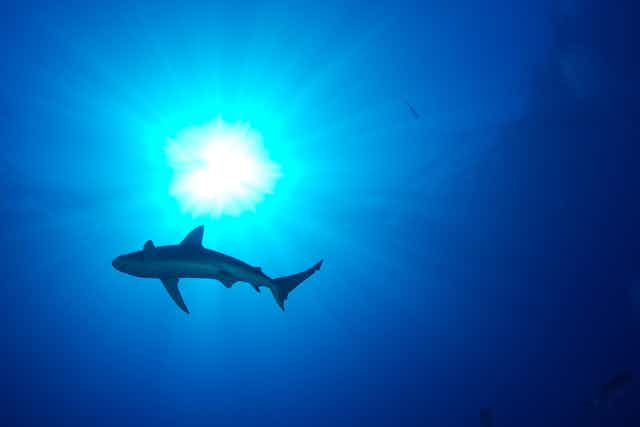

Who’s hunting who? Misguided responses to shark attacks

The most recent fatal encounter between a shark and a surfer off the coast of Western Australia is a tragic loss of human life. It prompted a Western Australian government reaction to “hunt and kill” the individual animal responsible for the attack. But this is a misguided response, and it’s time we…

Txzdg3fx-1345096258
There is no evidence that hunting and killing sharks reduces attacks on humans. US Fish and Wildlife Service

The most recent fatal encounter between a shark and a surfer off the coast of Western Australia is a tragic loss of human life. It prompted a Western Australian government reaction to “hunt and kill” the individual animal responsible for the attack. But this is a misguided response, and it’s time we discussed better solutions.

An apparent increase in “shark attacks” has stirred up debates about appropriate longer-term responses, including the possibility of culling sharks to reduce the likelihood of human fatalities. Shark attacks in the past year have been reported amid claims that white shark populations are increasing. But there is a sharp absence of scientific evidence to support this assertion. Rather, increased reports of sightings may indicate change in shark behaviour.

Circulating around these debates is a highly charged public response to both the loss of human life and plans to kill or cull marine animals as a response. There is however, no clear rationale for killing or culling sharks; on this matter governments and the media have been quiet. The governance process that led to the decision to “hunt and kill” in Western Australia remains elusive.

Re-evaluating human behaviour

The conversation about sharks and humans needs to refocus on responses that do not involve killing or culling. Rather than looking at the behaviour of sharks in relation to attacks on humans, it is time to evaluate human behaviour in relation to sharks, and their natural environment.

We should talk about whether cage diving is affecting shark behaviour. Crystian Cruz

“Chumming” the ocean to lure sharks close to boats for tourism or recreational fishing is one practice that warrants scrutiny. In Australia and South Africa, tourism industries are now well developed around cage diving and white sharks. Some have suggested that filling the water with blood and fish carcasses to attract sharks close to cages and boats helps them associate a potential meal with the presence of humans.

Scientific evidence is inconclusive. However, at the very least it appears that chumming may alter shark behaviour and movement along coastlines. In light of recent attacks these practices should be discussed.

We can also benefit from using the knowledge we have built up about sharks, both scientific and local knowledge. Accounts from marine biologists, surfers, fishermen and regular beach users hold that entering the water near schools of bait fish is a bad idea. Sharks are often seen chasing small fish schooled together near the surface.

Likewise, swimming near open river mouths (especially after heavy rainfalls), where sharks commonly feed is not recommended. According to accounts by many experienced surfers and fishermen, early morning and dusk are times in the day when the chances of encountering sharks are increased.

Technological interventions provide another set of behavioural responses. On the NSW south coast an aerial patrol is used each summer to spot sharks and warn nearby surfers and swimmers when a sighting occurs. Repellent technology that disturbs sharks’ electroreception organs – their “Ampullae of Lorenzini” – is also being developed. Several companies now sell small battery-powered devices that emit a continuous electrical current. When a shark comes within a few metres it experiences severe discomfort – something like a sharp headache. Testing has shown that the technology can be effective. Devices can be worn by surfers, divers or swimmers and deter sharks without causing long-term harm.

Ethics and philosophy of human – shark relations

Encounters between sharks and humans will continue to occur in Australian waters. Most Australians live near the coast and the ocean is a popular recreational space. When attacks do tragically occur we need to consider a set of deeper philosophical questions and alternative responses:

Sharks and humans can co-exist. Sean Dreilinger

  • What right do we have to approve the killing of an animal for inhabiting its natural environment?

  • What might be a better response?

Researchers from numerous disciplines invest enormous effort into such questions. Within our discipline of geography, there is extensive debate about the cultures and politics of human interactions with “nature”. Many scholars are working towards finding new ways of living ethically in the world, ways that are based on co-existence, and that respond to the challenges of rapid environmental change.

Interestingly, these ideas are consistent with a good deal of public discussion in recent months about appropriate responses to shark attacks. Many commentators – including surfers – call for co-existence rather than killing.

Environmental governance

This brings us to the question: why are we killing these sharks? This is inherently a question about governance. How and why is it that the decision-making process leading to a “hunt and kill” strategy is invisible?

Citizens should be in no doubt about the process that leads to such decisions. When the animal in question is a top-predator and protected species, what are our ethical and political obligations, responsibilities and rights? Whose interests should be heard and heeded? We look forward to forthcoming discussions about the protected status of great white sharks, and hope that deliberations are public.

Milton Friedman once said that crises – actual or perceived – are solved by ideas that are “lying around” at the time. Space needs to be created to allow for a public discussion on the politics of nature and environmental management. We must find alternatives that offer humans a sense of security and safety without delivering death and destruction to another species.

Alternative responses to challenging encounters between humans and sharks are “lying around”. We should think less about killing and culling and more about informed scientific, philosophical and political responses that enable co-existence.

Sign in to Favourite

Want to follow The Conversation?

Sign up to our free newsletter to get the day's top stories in your inbox each morning, with a special wrap on Saturday.

Help evidence based journalism become the norm and donate

Join the conversation

47 Comments sorted by

    1. Ahmad Abu-tukit

      Plumber

      In reply to Byron Smith

      Luckily all comment s here are from logical people. If they weren’t your data could have been misconstrued.

      The millions of sharks killed are largely non-lethal to humans and are fished offshore otherwise the extrapolation would have been spun – the low number of fatalities is the result of killing so many sharks… so you need to kill more to get better results.

      report
    2. Byron Smith

      PhD candidate in Christian Ethics at University of Edinburgh

      In reply to Ahmad Abu-tukit

      Yes, my point was not "kill more sharks" but the precise opposite: that the real catastrophe with sharks is what we are doing to a life-form older than the dinosaurs. Human lives lost to shark predation are indeed a tragedy, but the catastrophe unfolding in marine ecosystems is largely invisible and rarely enters the public consciousness. Therefore, I believe it is wise for any ethical deliberation upon shark-human relations under such circumstances to include such facts as reminders of a bigger picture that is too often ignored or simply unknown.

      report
    3. Byron Smith

      PhD candidate in Christian Ethics at University of Edinburgh

      In reply to Byron Smith

      PS I did appreciate this article and think it makes a valuable contribution to a relevant public discussion. The framing that I think is too often missing was hinted at (e.g. "the challenges of rapid environmental change"), but could have been brought out a little more explicitly, since I think that many people still don't appreciate the scale and pace of changes that human activities are bringing to the oceans.

      report
    4. Leah Gibbs

      Lecturer in Human Geography at University of Wollongong

      In reply to Byron Smith

      Thanks for your thoughts Bryon and Ahmad. Yes, there is a lot in that small phrase 'the challenges of rapid environmental change'. I agree entirely that this context is vital. As we said, there is a huge body of work dedicated to exploring the complexity of human relations with the more-than-human world, made ever more complex in the context of rapid environmental change. Many of our colleagues at the Australian Centre for Cultural Environmental Research (AUSCCER), at the University of Wollongong are dedicated to working in this area (http://www.uow.edu.au/science/eesc/ausccer/index.html); and of course we're in good company with scholars around the world.

      report
  1. terry lockwood

    maths teacher

    What right do we have to hunt and kill sharks that have attacked humans? Revenge actually. Apparently. An emotional response. I don't think it is any mystery is it? Rational? No. Perhaps as silly as Basil Fawlty screaming abuse at his mini-minor. Swimmers and surfers know the risks and often oppose the Rambo response. But then the number of sharks lost to revenge is barely a blip compared to that lost to shark fin hunters and so on. And I haven't lost any kith or kin.

    report
  2. Lisa Ann Kelly

    retired

    We must boycott all Japanese and other Asian products, anything from a country where shark-finning is still allowed. Hit 'em in the pocketbook. Poor sharks.

    Peter Benchley wrote a compelling novel, too bad for the sharks that it served to scare the living daylights out of us all. "Jaws" was a terrible set back to shark conservation.

    There will always be humans eager to kill predators. How sad for sharks. I live for the day when it is illegal world-wide to kill a shark. Let's hope it becomes illegal (and is enforced) while there are still sharks in the oceans.

    report
  3. Kylie Cairns

    PhD student

    I completely agree and would also like to point out that many of the comments and observations made in this article should/could be applied to similar scenarios concerning terrestrial top-level carnivore attacks (i.d. dingoes, lions, tigers, wolves). In all cases humans (governments) invariably call for culling/killing following an attack.

    I have to say the following quote was particularly poignant:

    "We should think less about killing and culling and more about informed scientific, philosophical and political responses that enable co-existence."

    There seems to be an overall lack of consultation with scientists and public persons following attacks and in most cases managers/governments scramble to adopt out-dated killing/culling responses out of panic.

    report
    1. Leah Gibbs

      Lecturer in Human Geography at University of Wollongong

      In reply to Kylie Cairns

      I couldn't agree more, Kylie. These issues are pertinent to human relations with many other species. I listened to a terrific interview on ABC Radio National's 'Big Ideas' last night (http://www.abc.net.au/radionational/programs/bigideas/the-importance-of-animals/4209894). Paul Barclay interviewing Anna Krien, author of the Quarterly Essay 'Us and Them: the importance of animals'. In the final section of the interview and her essay she spoke intelligently and articulately about the very issues you raise regarding the importance of top-predators, and the concerns that Byron discussed in his comment here about the functioning (or otherwise) of ecosystems. Inspiring stuff. There are good people around working on these things.

      report
    2. Mike Swinbourne

      logged in via Facebook

      In reply to Kylie Cairns

      What is particularly concerning about this issue is the effects that the reduction or removal of top level predators can have on the ecosystem.

      We have plenty of evidence for the unintended consequences in the terrestrial environment - such as the removal of wolves from Yellowstone NP, or the removal of dingoes from grazing lands. I strongly suspect the reduction of shark numbers would have similar impacts, but I have not seen any research which has attempted to quantify them.

      By the way, I am a diver and have done hundreds of dives in South Australia. I now wear an electronic 'shark shield', but that has been only a relatively recent initiative. There has been some inconclusive research on their effectiveness, but as I am still here I can add my anecdotal support for their usefulness. They probably wouldn't be much use unless you are wearing a wetsuit - you would spend all your time getting 'zapped' and that is not a pleasant experience.

      report
    3. Nick Kermode

      logged in via email @hotmail.com

      In reply to Mike Swinbourne

      Hi Mike as a fellow diver you might be interested in this, if you haven't seen it already...

      http://au.news.yahoo.com/thewest/a/-/breaking/14605262/divers-circled-by-4-5m-shark/

      Not a good ad for the shark shield but completely in line with SARDI's work under DR Huveneer. May as well just wear your lucky underwear ;)

      To Leah Gibbs,

      By far the most rational, sensible article I have read on a topic I have a very keen interest in. Thank you.

      report
    4. Mike Swinbourne

      logged in via Facebook

      In reply to Nick Kermode

      Hi Nick

      Thanks for that article. All the research on the shark shields is pretty inconclusive, although I have never doubted that they would not repel a very hungry shark. It would appear that they can work in some circumstances, but not in others.

      That article and the photo made for interesting reading. Apart from their heart rates and probably being scared half to death, I would have to say those divers were very lucky to see such a magnificent animal up close like that. Just like terrestrial predators, sharks are not just mindless eating machines, and there are (apparently) signs that an experienced person can read to determine whether they are agressive, curious, or just passing through. I even saw a documentary once about a French woman who would dive with large sharks like great whites and tigers and put them into a catatonic state by rubbing their noses.

      report
  4. David Healy

    Retired

    The "hunt and kill" reaction to a shark attack is a placebo, little more than an expression of sympathy for the deceased. I suppose it beats telling the parents that it was bad luck their son was eaten and no, we're not going to do anything about it.

    I've lived in Perth for over 35 years, and I've never heard of a shark being killed as a result of one of these "hunt and kill" reactions. Indeed, everyone I know accepts these incidents with a degree of resignation. They don't want revenge, and…

    Read more
    1. Leah Gibbs

      Lecturer in Human Geography at University of Wollongong

      In reply to David Healy

      Thanks for your comments David. The responses on patrolled beaches close to Perth that you describe sound great. A terrific example of finding ways of humans and other species co-exisiting. I do want to clarify a couple of things though. First, there is an important, but perhaps subtle, difference between the way 'Western Australia' handles shark incidents (as you've described) and the way the 'Western Australian government' has handled this recent incident. Second, we certainly haven't implied that recent reactions are akin to extinction or shark-finning. I agree - these are quite different issues.

      report
  5. Jodie Lia

    Ecologist

    After the latest shark attack occurred, I wrote to the WA Minister for Fisheries Norman Moore about how ridiculous and old-fashioned his agenda that sharks should no longer be protected and that any shark who attacks a human should be killed. Ridiculous. Sharks are not guests in our territory.

    I received a reply to my letter recently from the Director General, Stuart Smith. I'll summarise what their plans are for the $13.65M announced for shark attack mitigation:
    - Shark Response Unit for media…

    Read more
  6. Peter Harley

    Science Operations Officer

    We (humans) always blame the species that harms or interferes with us.
    What we do not realise is that the top predator on this planet is in plague numbers and interferes with all ecosystems on this fragile planet. Yet we do nothing about it. In fact, we go out of our way to allow this destructive species to further proliferate and cause irreversible damage.
    We invade and destroy habitat, forcing indigenous species out, destroying their homes. We are the only species on this planet that does not adapt to its environment, but attempts to adapt the environment to our needs. Then when nature fights back, we blame nature. We expect nature to change to suit our needs, instead of understanding nature and working with it.

    report
    1. Lisa Ann Kelly

      retired

      In reply to Peter Harley

      Peter. You said it all. Whenever anyone starts in about the sanctity of human life and how human life is so much more valuable than that of any other animal----- I always say, "It's not like humans are an endangered species."

      report
  7. Robert Tony Brklje

    retired

    With regard to the number of shark attack victims, the thing to keep in mind is the reality that the count is really of failed shark attack victims. A successful shark attack victim is never heard of and is statistically counted as being missing presumed drowned.
    A priority must always be with humans and part of that is the reinforcement to all other species that humanity is not part of the diet. There are better and worse ways of achieving this but it is still inherently and emphatically a humane human requirement.
    Especially when the total number of people killed and eaten by sharks is well and truly unknown and missing presumed drowned is realistically more unlikely that missing presumed eaten, as in our busy waters it is rare a bloated floating corpse is not recovered.

    report
    1. Dennis Alexander

      logged in via LinkedIn

      In reply to Robert Tony Brklje

      And the number missing presumed drowned in Australia is? I'm hazarding a guess that it is something less than 100 per annum in the oceans. Further, some of those missing presumed drowned may well have been dead before being eaten, so the number goes down again. For the sake of the argument being presented about Australians, we should also exclude refugees lost from boats en route.

      And the assumption that sharks are responsive to reinforcement schedules is based on what evidence?

      Finally, sorry, but there are two arguments on your dietary exclusion notion:
      a) perhaps sharks are trying the same on us; and/or
      b) humans, historically, are part of the diet of top predators including sharks, lions, tigers, wolves and so on.

      report
    2. Jodie Lia

      Ecologist

      In reply to Robert Tony Brklje

      "A priority must always be with humans and part of that is the reinforcement to all other species that humanity is not part of the diet."

      Are you saying that by reinforcing the message to sharks that we are not apart of their diet (presumably by killing them), they will understand humans are off-limits and stop attacking us?

      Sharks do not operate by human law and order. They do not have morals and ethics. Put simply, they do not give a toss about humans, their purpose is to live, reproduce and die. If they are killed prematurely by humans all that does is leave a space for another shark to move in.

      report
    3. Simon Taylor

      logged in via Facebook

      In reply to Jodie Lia

      Half of the oxygen we need for survival is produced via phytoplankton photosynthesis. Photoplankton is responsible for taking in carbon dioxide molecules and turning them into oxygen. Millions of these tiny marine plants drift near the ocean’s surface. Tiny animals called zooplankton eat the photoplankton, as well as clams and other small fish. Jellyfish, some whales and other fish in turn eat the zooplankton. Larger fish eat the animals that feed off of the zooplankton and so forth and so on. Any link in this food chain that is missing will create an imbalance.

      Sharks control the population of species that feed off photoplankton. With a decline in the shark population, there is going to be a steady decline of photoplankton, therefore affecting the oxygen levels of the oceans. Oxygen on Earth is very dependent on the oxygen of the ocean. If we neglect this fact, we are bringing death to Earth.

      Thats why we have legs and not gills, we could never be that efficient.

      report
    4. Nick Kermode

      logged in via email @hotmail.com

      In reply to Jodie Lia

      "their purpose is to live, reproduce and die. If they are killed prematurely by humans all that does is leave a space for another shark to move in"

      This is a very strange comment for an Ecologist.

      report
    5. Jodie Lia

      Ecologist

      In reply to Nick Kermode

      That is very vague comment to make. In what way is my comment strange? Did I not use the right language? Or do you just completely disagree?
      As your background is not next to your name it's hard to ascertain where you're coming from.
      I didnt think it necessary in this instance to justify my point with technical language or a lengthy explanation when I was replying to someone who thinks that sharks need to be "taught a lesson".

      report
  8. Chris Gillham

    Journalist

    Late last year Perth's suburban press published a letter from myself explaining the probable reason why WA fatal shark attacks have become more common, concluding with my advice that readers get used to it.

    At that time there had been three fatalities in a year. Now there are five.

    The reason was explained to me 30 years ago when I interviewed Australia's last whaling skipper in Albany, who told me that as humpback whale numbers recovered in coming years, so too would the number of shark attacks…

    Read more
    1. Leah Gibbs

      Lecturer in Human Geography at University of Wollongong

      In reply to Chris Gillham

      Really interesting post, Chris. An opportunity for some creative thinking about seasons? If shark presence is linked to seasonal whale migration, perhaps we humans can think about our relationships with the ocean as seasonally variable too? Avoiding bits of coast, or keeping an extra keen eye out, during whale migration time.

      report
    2. Nick Kermode

      logged in via email @hotmail.com

      In reply to Chris Gillham

      Hi Chris, an important point to remember when looking at this is to realise shark fatality statistics are kept on a calendar year basis, as pointed out by Carlos Duarte here...

      https://theconversation.edu.au/jaws-in-western-australia-8378

      so in fact there were 3 fatalities last year and 2 so far this year if you want to use them for comparison to the trend. These statistics say that in Australia we have between 0 and 3 per year so these tragedies so close together dont represent any increase…

      Read more
    3. Chris Gillham

      Journalist

      In reply to Nick Kermode

      Nick ... my search of archived newspapers suggests the following chronology of known fatal shark attacks in WA, with blue nurse and even hammerheads being mentioned more often in earlier 1800s reports and a likelihood that many attacks were unreported when there was hardly any communication or transport ...

      two fatals 1895/96
      fatal 1910
      two fatals 1923
      two fatals 1925
      fatal 1948
      fatal 1949
      fatal 1967 white pointer
      fatal Sep 1995 white
      fatal Jan 1997 tiger
      fatal Nov 2000 white
      fatal…

      Read more
    4. Nick Kermode

      logged in via email @hotmail.com

      In reply to Chris Gillham

      G'day Chris thanks for the reply. Your original post said that the whale population was decimated in the twenties and thirties and in this post you mention figure that show there were four deaths in possibly as little as 13 months in the twenties. Combine that with a population ten times smaller and you will understand why what you propose is unlikey. Australias and indeed WA's shark attacks and deaths have been increasing at a rate in line with the rest of the world in recent decades and many areas…

      Read more
    5. Chris Gillham

      Journalist

      In reply to Nick Kermode

      Nick ... maybe better wording would be whale numbers decimated "from" rather than "in" the 20s and 30s, as demonstrated by the drop to around 600 WA adult humpbacks by 1963. i.e. they didn't suddenly drop to 600 in 1930 and stay that way for 40 years. WA's humpback population is now the largest in the world and with a growth rate around 10% pa, it'll be interesting to see what nature does in the coming decade.

      In the 20s and 30s, WA's population was around 450,000. Following the four deaths in…

      Read more
    6. Nick Kermode

      logged in via email @hotmail.com

      In reply to Chris Gillham

      Hi Chris, I must say going back and looking at some figures I can see the trend you talk about. I should also quickly clarify that in my previous post I meant to use the words beach visitations, not goers as obviously there were not 20 million extra people. The link I pasted below explains the reasoning in SLSA's estimates.Sorry if that terminology confused but reading your Participation survey methodology gives me no confidence in those numbers at all. As well as drastic increase in refusals (equates…

      Read more
    7. Chris Gillham

      Journalist

      In reply to Nick Kermode

      Nick ... sorry to have had a potshot about guesswork but your 20 million per year figure threw me. I wondered if you meant beach visits by the same people but it still suggests that each year they decide to hit the surf about a dozen times more frequently than the year before. Doubtful. Australia hasn't become the fattest country in the world by swimming a lot.

      Your tourist swimming argument needs a bit more evidence. Asian tourists in particular aren't renowned as beach lovers. I'm also a bit…

      Read more
    8. Chris Gillham

      Journalist

      In reply to Chris Gillham

      If I may follow up my own comments ... while I was writing the above a 34yo surfer was attacked at Red Bluff, north of Carnarvon. He'll survive some serious injuries and the shark species is unknown. He's lucky and I'm glad he's not fatality #6 within a year.

      Check the humpback migration locations and timetable at http://www.dmp.wa.gov.au/documents/Humpback_activity_col.pdf.

      The first of the southbound humpies heading back to the Antarctic would be just north of Carnarvon about ... now. This…

      Read more
    9. Nick Kermode

      logged in via email @hotmail.com

      In reply to Chris Gillham

      Hi Chris, sorry work has kept me away from replying.

      Many more interesting things you bring up mate I am very glad of this exchange. Not much of your reasoning is counter intuitive and all deserves a deal of consideration. I still stand by my first response to you when I said "certainly sounds plausible" but could no longer say "but the research and stats I have seen say there isn't a correlation as you suggest". I must admit that the Australian graph I linked to earlier is the only one that…

      Read more
    10. Chris Gillham

      Journalist

      In reply to Nick Kermode

      Hi Nick ... this is an enjoyable debate and I'm happy to maintain it if only to create a source of information about what may be causing the increase in WA shark attacks. It's mostly pointless looking in the mainstream media.

      However, in today's Sunday Times there was a story headlined "Be prepared to die", which resembles my closing comment in Perth's suburban press last November ... "Get used to it".

      From the story I quote big-wave surfing "legend" Geoff Goulden, the man who rescued last…

      Read more
  9. Angie Bucu

    logged in via Facebook

    Researchers do invest significantly in studying and understanding shark behaviors. Common sense would suggest that this work should and could be used by politician, media and community/special interest groups when responding to and debating this issue. But no, the sensationalist approach is taken, to obviously sell more papers/readers online, to get more kudo's with ignorant voters, and to scaremonger....the selective use of informaiton and at times dubious opinions that further inflame the debate…

    Read more
    1. Leah Gibbs

      Lecturer in Human Geography at University of Wollongong

      In reply to Angie Bucu

      Thanks for your thoughtful response, Angie. You've raised an issue that several others have also raised here - the ecological implications of removing apex predators from environments. As Mike said above, there is research out there on the implications of removing terrestrial top predators - through culling or habitat destruction. Time for more work on the marine environment, perhaps? And the political question is ripe for further research, in my view.

      Good luck in your search for a topic and institution for your doctoral studies. I'd love to hear more as you develop your ideas. Happy to chat some more!

      report
  10. Sean Lamb

    Science Denier

    In the case of fatal attacks the shark culprit is probably hunted down and killed because there is a fear that this might be learned behaviour.

    This may not be a belief that is scientifically based and I for one would be highly supportive of some controlled studies - provided we use British backpackers as bait.

    I appreciate deeper philosophical questions as much as the next person, but if fatal shark attacks keep rising, there is a reasonable chance that culling will make a difference, and surfers - the principal dishes on the menu - support it, then cull. I don't feel empowered to offer up other people as tasty treats in order to satisfy my deeper philosophical beliefs.

    report
    1. Nick Kermode

      logged in via email @hotmail.com

      In reply to Sean Lamb

      Sean.." I don't feel empowered to offer up other people as tasty treats in order to satisfy my deeper philosophical beliefs"... Well indeed you are not empowered. Nor are you empowered to "offer up" sharks either mate.

      report
  11. Deborah Bird Rose

    Profossor, Social inclusion, Macquarie University

    Great article! In a recent review of 'Demon Fish' by Juliet Eilperin, Theo Tait writes that sharks display a notable 'failure to behave in sympathetic, anthropomorphically pleasing fashion'. Ancient, threatened, in some places worshipped, eaten by almost anyone who eats fish and chips, sharks are a top predator in ocean ecosystems. They help keep oceans healthy. Can we humans not respect others, even when they are not cute and cuddly, even when they may pose a danger to us at times? Would life be worth living if everything that might (just might) threaten us were eradicated?
    (see London Review of Books, 2 Aug, 2012)

    report
  12. Neil Gibbs

    Senior Engineer

    My heart goes out to the family of this surfer and to the man himself: I can’t imagine what the last moments of his life were like. This is indeed a tragedy, and could easily become a double tragedy if we allow ourselves to hunt down and kill either the particular shark itself or, failing that, just settle for killing others of his (her) kind. Every life form, be it human, shark, mushroom or amoeba, is an amazing story of survival and adaptation, and deserves respect. It is a sobering thought…

    Read more