


UPDATE: Commonwealth leaders have now agreed that laws will be changed to allow sons and daughters of any future British monarch to have equal right to the throne. The ban on the head of state marrying a Roman Catholic will also be lifted.
CHOGM: Ahead of meeting Commonwealth leaders in Perth, the British Prime Minister wrote to them suggesting changes to the royal line of succession. Professor Michael Bennett of the School of History and Classics at the University of Tasmania examines the background to the current laws.
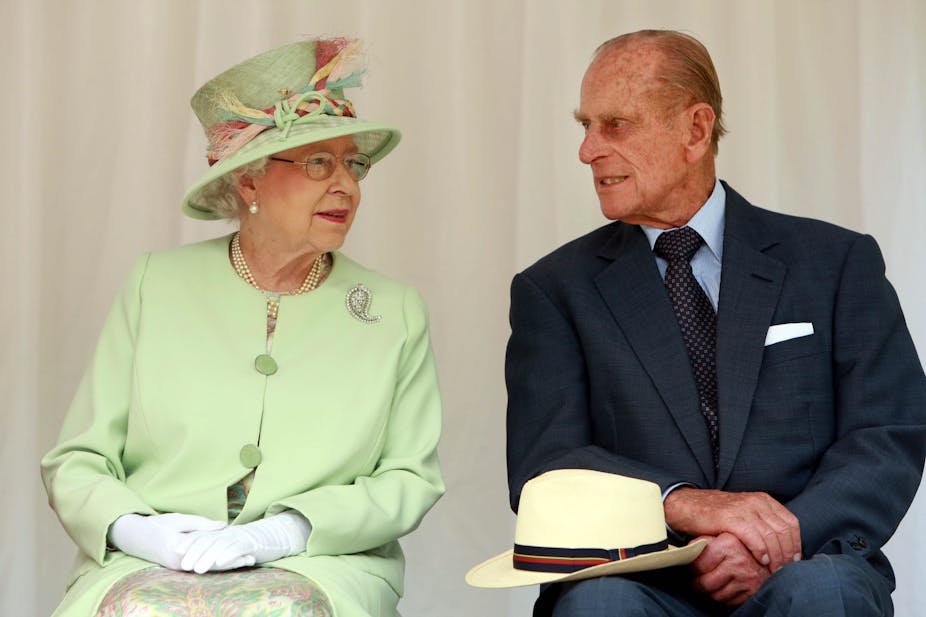
When the Queen landed in Canberra ahead of the Commonwealth Heads of Government meeting, women were very much in charge. At the airport she formed a powerful female trio with the Prime Minister, and the Governor General. But at the heart of the system which determines Australia’s head of state lies an archaic and discrimnatory arrangement: men accede to the throne ahead of women, and the monarch is forbidden from marrying a catholic.
Julia Gillard has given her support to a plan from the British Prime Minister David Cameron to radically change the future of the royal family.
He has written to Commonwealth leaders proposing that a daughter of the Duke and Duchess of Cambridge would take the throne ahead of her younger brother. Monarchs would still have to be of Anglican faith, but they would allow to marry a Catholic, and bring their children up in that faith.
Women at the helm

Australia’s experience of royal rule has actually been more of queens than kings. Since the arrival of the First Fleet in 1788 there have been six kings and two queens. While the six kings barely reached a collective hundred, the two queens delivered majestic innings, a combined total of 123 years not out.
Over the centuries females have been an important part of Britain’s royal history. In Anglo-Saxon times queen consorts were dignified by coronation and were often women of influence.
England did not follow most European monarchies in excluding females. In 1376 Edward III won no support for his proposal to entail the crown in the male line. The assumption remained that if a king lacked sons the eldest daughter would succeed.
Britain’s first two queens might have been the last. Mary Queen of Scots and Mary Tudor, who burnt Protestants at the stake, prompted John Knox’s tirade against “the monstrous regiment [rule] of women.”
Elizabeth I (1558-1603), however, turned out to one of England’s greatest rulers. Her reputation only grew under the Stuarts whose policies provoked opposition in parliament, civil war and the abolition of the monarchy.
After the restoration
After a decade of republican experiment and military rule, Britain welcomed the restoration of the monarchy in 1660.
Charles II had bastards but no legitimate heir. The heir presumptive was his brother James, but he was a Catholic.
A move to exclude him led to hotly contested elections and stormy parliaments from which emerged the two highly organised political parties, the Whigs and the Tories. The wily Charles outmanoeuvred the Whigs and secured his brother’s succession.
Role of religion

James II was highhanded in the face of opposition to his advancement of Catholicism.
The only consolation for the Protestant nation was that his daughters — Mary and Anne — were staunchly Protestant.
In 1688, however, James’ second wife was delivered a son. A canard was put about that the baby was smuggled into the chamber in a bedpan.
After Mary II died without issue in 1694, and Anne lost her last child in 1700, there was an urgent need to secure a Protestant succession by legislation.
The Act of Settlement of 1701 has governed the succession to this day.
It enshrined primogeniture, that is the succession of the eldest son, with males having priority over females.
It laid down that monarchs must be in communion with the Church of England and that Catholics and those married to Catholics were specifically excluded.
On Queen Anne’s death in 1714, George I, who spoke little English but wisely embraced Anglicanism, became the first of the Hanoverian line.
Stability with discrimination
For two hundred years the act has provided a degree of stability. The requirement that the monarch had to be in communion with the Church of England has presented some problems.
It underlay, for example, the crisis in 1936 that led to the abdication of Edward VIII, who was determined to embark on a marriage with a divorcee that the church could not countenance.
Changes to succession
The most important of the proposed changes to the royal succession is to eliminate the gender bias.
Since Prince Charles is older than Princess Anne, and Prince William has no sisters, it has little immediate consequence.
Historically, too, it would have made surprisingly little difference: no king since George III has had an elder sister.
Why now?

In proposing the change the British government is seeking to do so prior to the birth of children in the next generation.
The second of the changes relates more explicitly to the Act of Settlement. It strikes out the specific exclusion of Catholics. More positively it strikes out marriage to a Catholic as an impediment.
It still requires the monarch, however, to be in communion with the Church of England. This is a little messy, but it can be argued that part of the job description requires being an Anglican.
Overall the proposed changes, including some modification of the Royal Marriages Act of 1772, are sensible and timely.
The problem is the British monarchy derives most of its strength and appeal from its mystique and tradition. There is the danger that tinkering can lead to an unravelling of the whole system.
After all, the main anomaly of the British monarchy is not its poor record of gender equity — it has done better in putting women in the top job than other institutions — but the whole idea of office as inheritance.
Change by committee
A major challenge in amending the laws of succession arise from the fact that Britain shares its monarchy with other sovereign states.
Such problems are not entirely new.
The accession of Queen Victoria in 1837 ended the connection between Britain and Hanover, which excluded women from the succession.
In 1936 the resolution of the abdication crisis required frenetic discussion and agreement among the prime ministers of Britain, Canada, Australia and other dominions that retained the British sovereign as head of state.
Even if the Commonwealth Heads are supportive this week, they may not find it easy to deliver the necessary legislative measures.
The federal constitutions of Canada and Australia add layers of complexity. Canada has a long record of agitation about the bar on Catholics but may not be entirely appeased by the modest changes.
In the present political climate in Australia Prime Minister Gillard must expect contrariness.
Read more:
Our complex relationship with India
That sinking feeling: will the Pacific be heard at CHOGM 2011?
Can CHOGM take the reins in the face of NCD disaster?
Why the Commonwealth must take action against Sri Lankan war crimes