
The halt in the Alpha Coal Project approval process shows the Commonwealth is taking very seriously UNESCO’s recent report threatening downgrading the status of the Great Barrier Reef World Heritage Area (GBRWHA). UNESCO says unless the Commonwealth improves its process of assessment and approvals for coastal developments, the reef’s status will be in danger.
The Commonwealth is likely to do everything in its power to prevent UNESCO applying an “in danger” tag to the iconic Reef, a change UNESCO could make at its meeting at the end of the month. Such a downgrade would have enormous economic and political ramifications in Australia. Moreover it would be catastrophic for Australia’s reputation as a reliable guardian – for the benefit and enjoyment of humanity and generations to come – of one of the world’s greatest natural wonders. It would cast in doubt our guardianship of all of the World Heritage sites we manage.
The Queensland Co-ordinator General’s environmental impact assessment processes and approval of the development of Gladstone Harbour and coal seam gas fields were subject to valid criticism, despite the process reportedly costing some $45 million dollars, and amounting to some 10,500 pages. The Commonwealth made a bad move in subsequently approving three LNG plants on Curtis Island, within the World Heritage Area, without informing UNESCO. Another bad move was its approval of dumping 12 million cubic metres of dredge spoil from the inner harbour into the World Heritage area in the outer harbour, next to the Great Barrier Reef Marine Park and close to substantial seagrass beds.
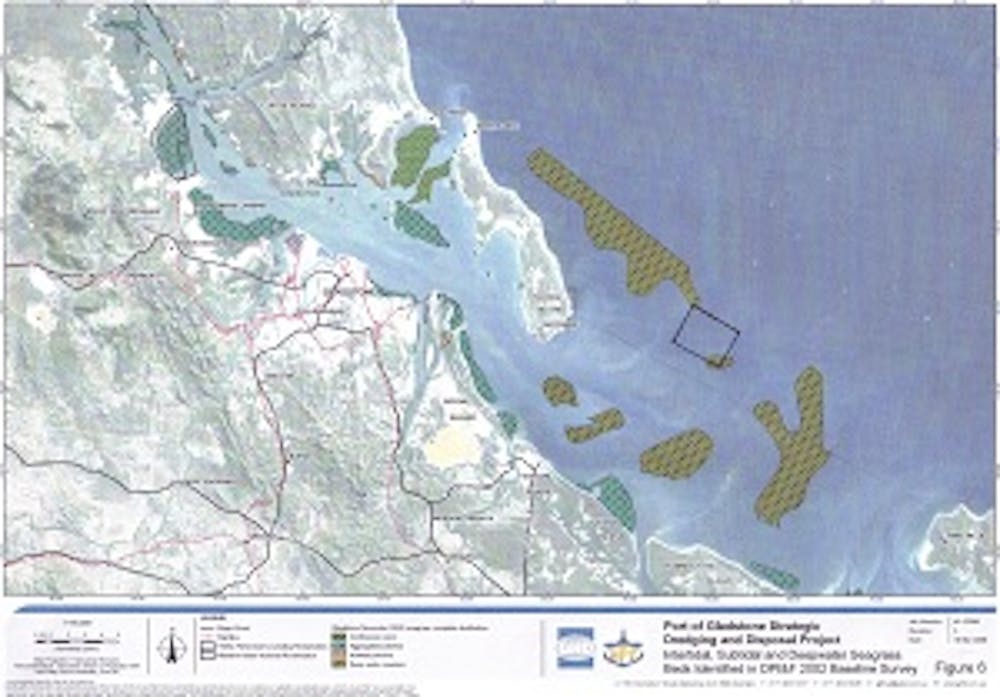
Queensland has jurisdiction over its lands and inshore waters. Nevertheless, in this case the Commonwealth has the final word on development because under the Australian Constitution it has jurisdiction over areas subject to international agreements such as World Heritage sites. Much of the GBRWHA boundary on the Queensland coast is at low water mark, where this is the case all development on the seaward side related to ports is under Commonwealth jurisdiction
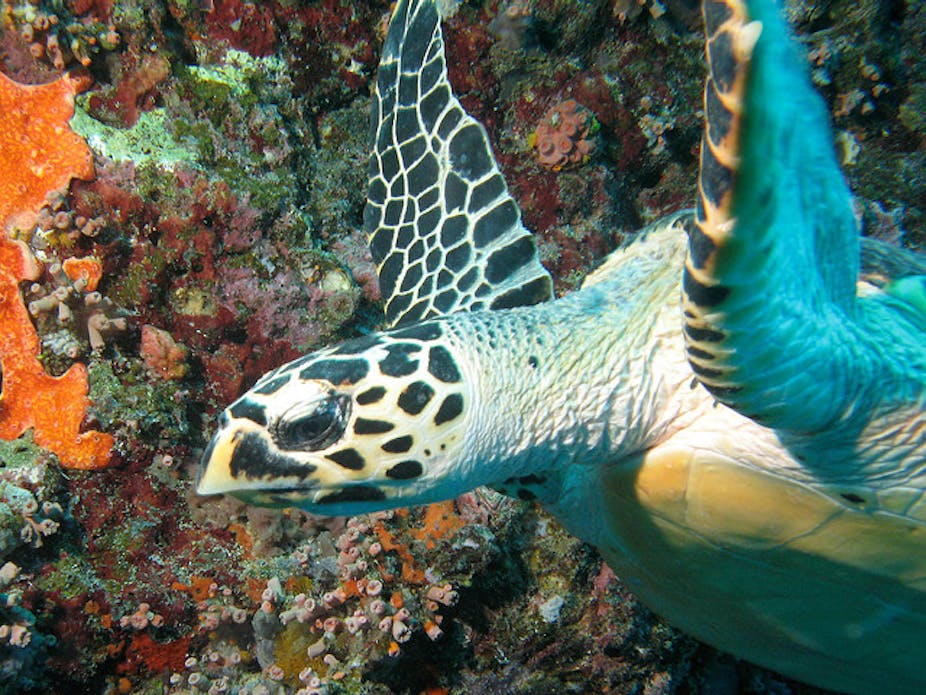
Another way in which the Commonwealth can override the state on development proposals is where its EPBC (Environmental Protection and Biodiversity Conservation) Act of 1999, applying to threatened species, is invoked. On the ABC’s World Today of June 5, Federal Minster Burke said that – contrary to the Queensland Coordinator General’s assessment – there were threatened species in the waters near the site of the coal loading facility to be developed at Abbot Point for the Alpha coal project. Moreover, there are turtle nesting sites at the Abbot Point site itself. Five species of turtle on the endangered list (under the EPBC Act) could potentially be found in this area. There could also be a further two turtles on the vulnerable list.
It is not surprising that the Coordinator General’s approvals are subject to error and bias. The proponents of the developments themselves are responsible for undertaking the environmental impact assessments. Moreover, the Queensland Co-ordinator General is not an independent arbiter of these assessments. The position is an arm of the Queensland Government which is bent on maximising royalties from the extraction of CSG and coal.
The Commonwealth has no choice but to tread extremely carefully with port developments. The Queensland Government in contrast can afford to be gung ho: it was recently elected with a large majority. It has nothing to lose by unashamedly playing the development card.
It will be instructive to see whether the Commonwealth ditches completely the state’s involvement in project environmental assessment and takes over the role as a one-stop shop for the companies involved. This would ensure that port approvals meet with UNESCO committee approval. It would also avoid the continual stoushes that seem likely between Queensland and the Commonwealth over the many coastal developments proposed in the near future.
John Newlands
tree changer
I wonder if there is another agenda behind the Feds stonewalling. The carbon tax will be hard to sell if coal exports are seen to boom while we have to practise carbon restraint. It seems rather silly to be turning off light switches while massive coal ships bash their way through the coral to places like India and China with no carbon restraints.
Recalling Rudd's 'greatest moral challenge of our time' speech the best thing for Galilee Basin coal would be to stay underground for another quarter of a billion years. People are muttering about hypocrisy before the carbon tax has even started. A year from now they will be shouting. Foreign interests are not only threatening the Reef and polluting the global atmosphere but taking advantage of the carbon restraint of others.
Ivo UQ
logged in via Facebook
Some good observations there.
Except according to Chris McGrath,
https://theconversation.edu.au/federal-green-tape-myth-for-alpha-mine-7499 ,
the Feds aren't stonewalling.
While we're speculating about agendas, Newman government is either incompetent or he's washing his hands of some assurances he may have given certain vested interests on his way to being elected: "It's not me, it's that horrible Federal Labour government."
Yuri Pannikin
Director
Yes, although I agree that the Newman government is incompetent (see recent comments from environment minister Powell re anthropogenic warming), Newman knows what he's doing in this case, and it's all about bashing the federal government. He's reading the Joh Bjelke-Petersen guidebook.
Although Queenslanders might be a conservative bunch, they can react strongly to threats to cherished environmental icons. Recall Wayne Goss and the koalas, which cost him government. And 'The Reef' is the big daddy of all of them.
Queenslanders are just getting to know the 'real' Newman, and from people I speak to, they are getting quite a surprise at his gross lack of environmental perspective.
And no, the feds are not stonewalling, only asking for reasonable environmental data from a project as huge as this one.
Ellie Price
Consultant
I'm glad I'm not the only one who sees similarities between Newman and Bjelke-Petersen... it's kind of spooky. I keep hearing my grandad's voice warning me "those who don't learn from history are doomed to repeat it".
Ivo UQ
logged in via Facebook
"The proponents of the developments themselves are responsible for undertaking the environmental impact assessments."
The problem, right there.
Sometime I feel like we're suffering some sort of mining-fever induced delirium.
On the one hand we have ecologists telling us we have to choose which species to let die so we can focus meagre conservation funds on the chosen few ( https://theconversation.edu.au/the-public-should-help-decide-which-species-to-save-and-which-to-let-go-7331 ), and on the other hand we have multi-billion industrial developments ploughing through world heritage sites.
Bernie Masters
environmental consultant at FIA Technology Pty Ltd, B K Masters and Associates
Can someone please explain what are the real-world consequences of UNESCO downgrading the status of the GBR to 'in danger'? Australia is a sovereign nation and UNESCO has not legal or other stick to beat us with, so where's the problem if the downgrade occurs?
Yuri Pannikin
Director
So you're not worried about the Reef? Turn it into a coastal cesspit? Bugger UNESCO? We'll be all right, Jack . . . as we slide into some sort of mongrel state, a resource plaything for the Chinese?
Ken Swanson
Geologist
Alarmist comments like this to a reasonable question is why no one is listening!
Yuri Pannikin
Director
Oh, they're listening, Ken, they're listening . . . but my response was constructed to match the overt absurdity of the poster's.
I'm not going to waste time on an obvious reasoned response, considering that anyone with two neurons to fire together can see why a UNESCO downgrading would be a disaster for Australia.
David Arthur
n/a
The UNESCO downgrade is one thing, Bernie, but what really matters is that UNESCO's assessment might just reflect what is happening in the real world.
In the real world, the GBR is being fouled up.
Ivo UQ
logged in via Facebook
Leaving aside the fact the article does sketch out some 'real-world consequences' to UNESCO's downgrade, this is an important question because it has the capacity to mobilise all sorts of narrow nationalistic sentiments in defence of 'sovereignty' at the expense of actual potential material impacts on the reef.
Do we view the Great Barrier Reef as an obstacle to be overcome by legalistic and managerial means, or do we view it as one of the few environments left in which the sanctity of natural…
Read moreBernie Masters
environmental consultant at FIA Technology Pty Ltd, B K Masters and Associates
Ken, I'm not sure how my question can be interpreted as alarmist. I'm still uncertain what a UNESCO downgrading would actually mean. To the Queensland Tourism Board, they may be able to promote the line "Come See the Reef Before Its Gone" or similar and get more tourists to visit. To the coal exporters, it may be an opportunity for them to big note themselves by offering to donate some of their profits to a reef management body. But what will a UNESCO downgrading actually mean in terms of what the federal and/or state governments should do to make sure the reef isn't in danger?
Ellie Price
Consultant
Bernie, while Australia is a soverign nation able to make it's own decisions about managing it's own soverign territory, UNESCO is tasked with responsibility for enforcing an international treaty. Australia, as a soverign nation, has willingly a signed an international treaty to protect world heritage listed areas, including the reef. More so, our own government even nominated the reef as an area to be world heritage listed, so they can't even argue with that.
Read moreBy signing an international treaty…
Mat Ram
Disenfranchised Foreigner
It's refreshingly cathartic to see faculty from The University of Queensland be so forthright and insightful about this contentious, multifaceted high-stakes issue; that being said, it would also be very enlightening to hear Colin Hunt and Chris McGrath's take on their institution's intimate involvement with the Coal Seam Gas industry and State Government in Queensland.
UQ has recently established an industry-funded Centre for Coal Seam Gas, which is part of the 'Sustainable' Minerals Institute…
Read moreYuri Pannikin
Director
Mat, I'm sure your overall sentiment is profound, but it's a bit tough on the poster, and UQ in general. It's a big place, and unis always have conflicting interests among departments and staff.
Mat Ram
Disenfranchised Foreigner
In my experience, constructive criticism is not taken very well at all around here -- especially when it is earnest truths with a view to the greater good/big picture. I'm not trying to be tough on the posters per se, but given the direct link to the University and far-reaching implications of this contentious issue, he/they should certainly be open to discussing his views of the organisational behaviours of the institution.
And therein lies the problem, for no one really has the audacity to…
Read moreDavid Arthur
n/a
Thanks for this comment Mat.
You suggest that "...it would also be very enlightening to hear Colin Hunt and Chris McGrath's take on their institution's intimate involvement with the Coal Seam Gas industry and State Government in Queensland", and then describe the university as the State Government's "wingman".
Perhaps we can take the views of Drs McGrath and Hunt on this issue as already read.
I might add that the severity of global warming will be broadly understood by the end of this decade, and that markets for fossil fuels will collapse. One can only hope that the various protagonists in this discussion do not have their superannuation invested in the fossil fuel supply chain.
Colin Hunt
Honorary Fellow in Economics at University of Queensland
Thanks for your comment Mat.
Tolerance of the publication of a diversity of views, some of which may be highly politically incorrect, is the sign of a mature university, comfortable with its place in the world. Whoever heard of Cambridge, Harvard, or our own ANU, censoring acedemics because of their outspoken views?
It is a worry if a university loses its diversity across the arts and sciences, and some departments or faculties become inordinately powerful. This can happen with large industry endowments that reflect the growth areas in the local economy in which the University has a central role. .
Hopefully, The University of Queensland will resist such unbalanced development, and thereby maintain its open-mindedness.
Susan J. Rock
Writer
Surely the Commonwealth's sudden flexing of muscle is for appearances only...? After all, Tony Burke approved the related Curtis Island development within the World Heritage-listed GBR Marine Park without so much as a courtesy phone call to UNESCO... as beautifully reported by the ABC's 4 Corners team ("Great Barrier Grief") earlier this year. (http://www.abc.net.au/4corners/stories/2011/11/03/3355047.htm)
Not the way for a government to behave if it was truly interested in honouring its duty to the Reef, its marine inhabitants and the world citizens who treasure it. No, the government is much more interested in rolling over for the likes of Clive and Gina.
The whole scenario -- massive port developments up and down Queensland's coast to deliver coal and CSG to China, via 10,000 ships a year, thru one of the natural wonders of the world -- is a bloody disgraceful and embarrassing blight on our country. We're supposed to be the Reef's steward.