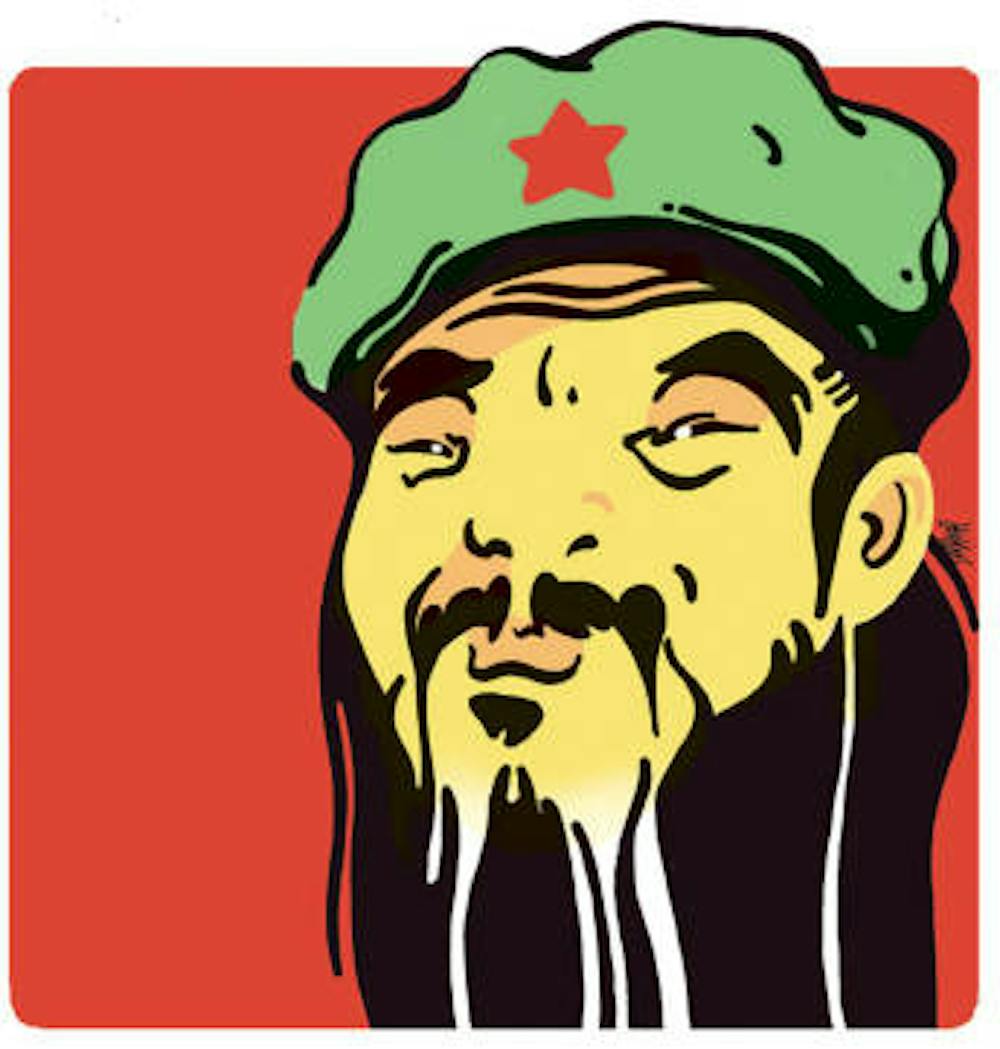
A popular recent joke in China tells of two Communist Party members enjoying drinks in a fancy bar in downtown Shanghai. One says to the other: ‘I think I’ve lost touch with my comrades.’ The second asks: ‘Are you sure?’ Replies the first: ‘Ya, every time I type into Baidu the word “comrade” I get nobody.’ The joke’s pedestrian, but its popularity is another reminder that the language of twentieth-century Chinese communism has found its destiny, in the dustbin of local wit.
Presuming the CCP apparatus retains its grip on power, and supposing its governing machinery requires the oil of public legitimacy, what will replace Marxism-Leninism-Maoism as the dominant language of state power? Are there plausible substitutes for the old ruling ideology?
Such questions occupy the heart of a recent New York Times op-ed piece by Jiang Qing (founder of the Yangming Confucian Academy in Guiyang) and Daniel A. Bell (a prominent Canadian scholar of Chinese politics). They call for a new moral foundation for political rule and everyday life in China. To the surprise of most China watchers, they say, ‘Western liberal democracy’ has no future in China. Their swipe against Francis Fukuyama and the American foreign policy establishment is backed by a strong preference for Confucian notions of Humane Authority.
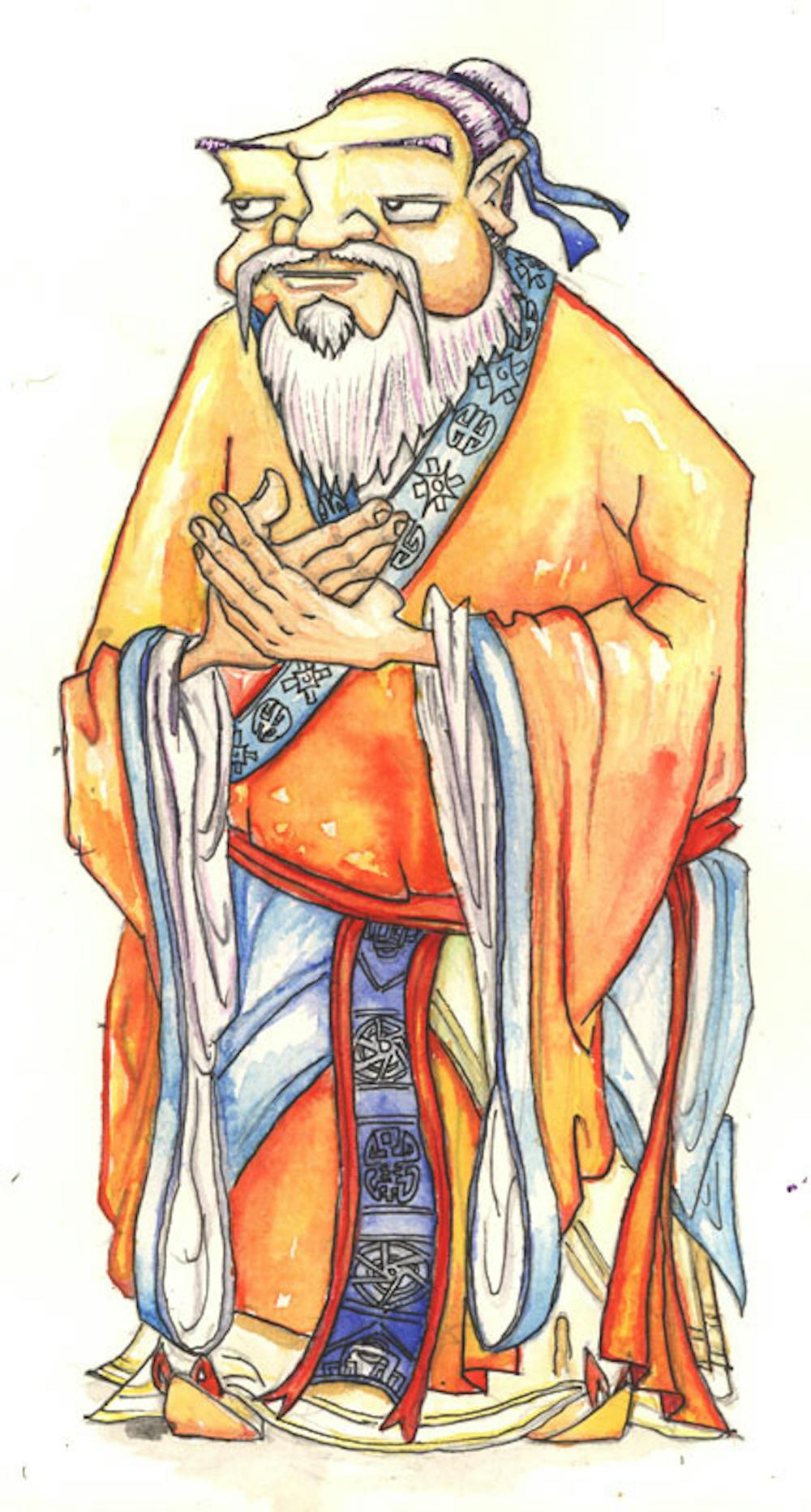
Playing the role of court intellectuals, they yearn for a ‘progressive’ politics of Confucianism. Central to their vision is a strategy for building a new governing institution to replace the leading role of the Party. The sketch includes plans for a tri-cameral legislature. It would comprise a House of Exemplary Persons guided by mandates from heaven; a House of the Nation, whose representatives are imbued with ‘wisdom from history and culture’; and an appointed or elected House of the People.
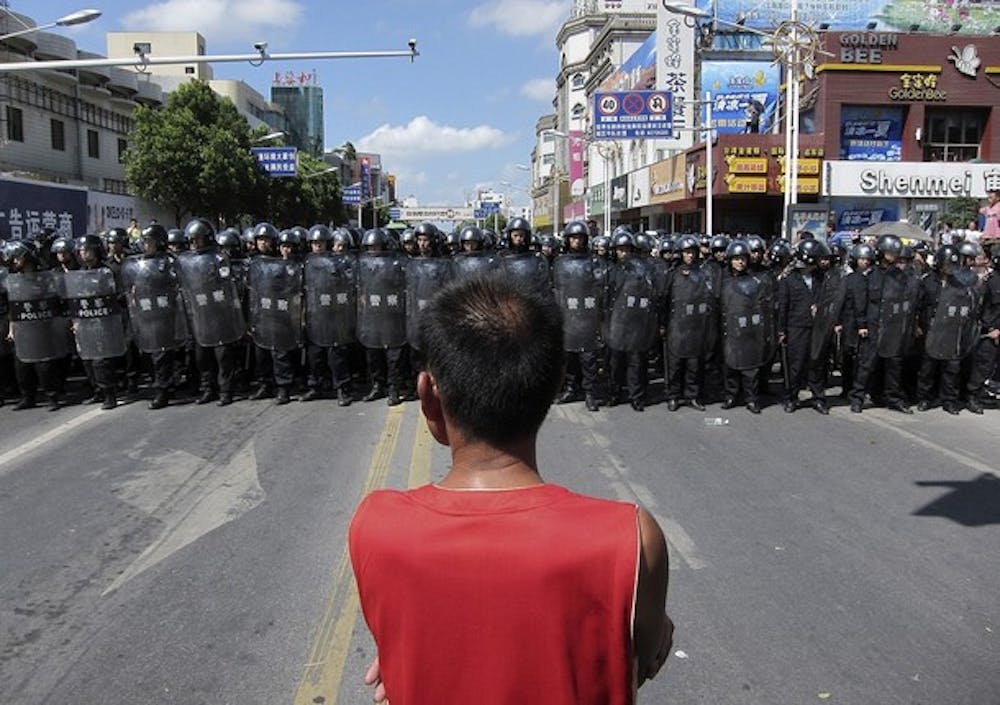
The blueprint seems quixotic. Never mind the clutch of difficulties that would confront legislators when trying, in the much-changed circumstances of the early twenty-first century, to sort out the philosophical and political tangles within key texts such as the Analects. What does it mean to say that authorities should be ‘beneficent without great expenditure’ or ‘majestic without being fierce’ (Book 20)? Or that those who govern by means of ‘virtue’ can be ‘compared to the north polar star, which keeps its place and all the stars turn towards it’ (Book 2)? Of what relevance are these words in resolving bitter conflicts such as last week’s events in the Jiangsu city of Quidong, where at least 50,000 citizens defied riot police, stripped shirtless the local mayor, who quickly changed his tune by announcing the shut-down of a pulp mill pipeline which locals feared would pollute the nearby coastline?
Problems of interpretation would be compounded by the political impracticality of the Way of Humane Authority. Qing and Bell’s scheme bears more than a passing resemblance to the tale told by Jonathan Swift of the efforts of intellectuals at the Academy of Lagado to extract sunbeams from cucumbers, erect buildings from the roof down, plough farmland with pigs and transform marbles into soft pillows and pincushions. There are (it’s true) members of the Politburo Standing Committee in Beijing now pushing for the revival of Confucianism. These ideologues may dream of dressing up their old wolfish habits in the new sheep’s clothing of Confucianism, yet what Qing and Bell’s proposal in effect does is to confront them with a high-risk strategic dilemma. It puts the Party in a pickle.
The CCP could toughen its move away from communism by means of a frontal top-down propaganda campaign in favour of Confucianism. The media fervour and political bossing required would contradict the Confucian spirit of ‘humane authority’. It would also produce public resistance from many groups. Tibetan Buddhists, Falun Gong and other qigong activists, Catholics and Protestants, middle class cynics, Uighur Muslims and others who have little or no interest in such propaganda would understandably condemn it as a new form of sacralisation of state power.
An alternative, bottom-up pathway to Confucianism would prove just as rocky. A twenty-first century version of the Maoist ‘Smash the Four Olds’ (culture, customs, ideas, habits) campaign, launched at the outset of the Cultural Revolution, would surely stir up great public resistance to the CCP and its manipulative propaganda from below. Its fantasy of ‘social harmony’ would be exposed; state Confucianism from below would breed social confusion and resistance to power above.
There’s another difficulty lurking inside Qing and Bell’s proposal. The Confucian polity they envisage is designed to function as a non-violent peace formula, yet the ‘humane’ openness and tolerance it promises would be contradicted by the compulsory public forgetting required to make it stick. The trouble with the whole idea of a Confucian state is not just that it privileges one set of ethics at the expense of others, that it runs counter to a society whose citizens make sense of their lives drawing on resources as varied as ancestor worship (the annual Qingming Festival is an example), ancient metaphysics and state-of-the-art social media. Talk of a Confucian state is wilfully forgetful. It is a recipe for historical injustice.
State Confucianism would practically demand the extinction of memories of pain and suffering of many ethical communities who still today feel deeply aggrieved by their ongoing history of maltreatment. Ongoing demonstrations by Tibetans and Uighur Muslims in the western province of Xinjiang are living proof of unfinished historical business. So, too, are the Vatican’s diplomatic recognition of Taiwan and the phenomenal resurgence of official and underground Protestantism – the single greatest revival Christianity has ever known.
Along with Christianity and Islam, the most popular forms of religion in China, Buddhism and Taoism, are also enjoying an extraordinary rebirth. The age when god was red is over. The country now resembles a giant spiritual laboratory. Many different religious experiments are competing for the attention of Chinese citizens, and that is no bad thing.
With the exception of Marxism-Leninism-Maoism, no single faith or creed ever enjoyed an exclusive grip on Chinese citizens. The current return to normality cannot be stopped, which is why a post-communist version of the old Qing dynasty practice of attempting to use the state to impose religious orthodoxy is doomed. A clear alternative to State Confucianism is the Taiwan and Hong Kong model of a secular democratic state and a plural and tolerant religious society. What’s so wrong with that alternative? Why could it not work in practice for millions of Chinese citizens? Qing and Bell don’t say.

Denis Goodwin
Retired
If Keane or the Conversation bothered to search for Baidu they would realize they have been tricked into a publicity stunt. Or maybe we the readers are the ones who have been duped.
Christopher Chen
Christopher Chen is a Friend of The Conversation.
Software Engineer
A publicity stunt? How so? Brand names find their way into the public consciousness all the time, with or without their owners' approval -- jokes about budget airlines, the ubiquity of words like 'Google' and 'Facebook' as incidentals, and so on.
Wei Ling Chua
Freelance Journalist (night passion) at Self-Employed: Picture Framing/Wholesales
Prof. Keane knowledge of Confucianism is terribly shallow (sorry to say that). Confucius promote social order with a hierarchical of relationship together with a code of ethic clearly spell out at each level of the hierarchy.
It is unlike the current western system where politicians are surrounded by lobbyists funded by big corporations. Western politicians served only their own selfish interest in most cases. This article provides a series of evidence based analysis on the selfishness of the…
Read moreWei Ling Chua
Freelance Journalist (night passion) at Self-Employed: Picture Framing/Wholesales
I forgotten to add this. Evidence speak for itself. Simply by comparing the way Australia, USA and China handling of natural disaster: http://outcastjournalist.com/index_files/democracy_need_reform_australia_china_n_usa_a_tale_of_3_natural_disaster.htm , it is not hard to tell that China do have a more caring leadership.
Democracy do need reform. A recent survey about social inclusiveness found that many Latin America countries are ahead of the democratic America: http://www.csmonitor.com/World/Americas/Latin-America-Monitor/2012/0412/How-socially-inclusive-is-Latin-America-New-indicator-ranks-countries
How come no one in the CONVERSATION bother to talk about the brutal crack down in America on wall street protesters? Click on every links in this article to view the video footage largely ignored by the western media: http://outcastjournalist.com/index_files/why_wall_st_protestor_will_admire_china_protestor.htm
Joseph Bernard
Director
Mr Chua,
agree about our western processes need a review..
1/ wall street crack down in america and here seemed to be heavy handed..
2/ and have you watched the documentory "the inside job" which exposes some of the behaviour that created the GFC and which is now effectly business are usual.. LIBOR happen post GFC..
http://en.wikipedia.org/wiki/Inside_Job_(film)
Inside Job is a 2010 documentary film about the late-2000s financial crisis directed by Charles H. Ferguson…
Read moreWei Ling Chua
Freelance Journalist (night passion) at Self-Employed: Picture Framing/Wholesales
Joseph, Australia need more people like you to become better and stronger. You can be reasoned with facts. Unfortunately, not everybody has the wisdom to accept reality.
This is an article by Dr. Thorsten Pattberg that may interest you: http://globalresearch.ca/index.php?context=va&aid=29653
It took the west a century to accept that the Sun is the center of the solar system not the earth. Therefore, I believe that it will take a long time before people accept the fact that Democracy in the current form is a formula for disaster in the 21st century.
Kenneth Mazzarol
Kenneth Mazzarol is a Friend of The Conversation.
Retired
There has been a lot of negativity regarding the silent majority but their silent pressure causes most things to be cyclic. The radicals may win temporarily but as history will testify the steady pressure of the silent majority eventually brings things back to "normal'. Confucianism has generally been regarded by the SM with interest and some humour but never seriously by those outside the religion.
Joseph Bernard
Director
From my exposure with Chinese nationals the best response i have had so far on this subject is "Chinese believe in everything and believe in nothing"..
take note that they are very pragmatic about most beliefs.
except for mr chua who has a conspiracy story for almost everything. :)
Peter Ormonde
Peter Ormonde is a Friend of The Conversation.
Farmer
Excellent piece once again Prof Keane.
What a truly strange place this is that houses 20% of the world's people... seems totally opaque from here.
But this growth of protest over environmental despoilation has my hopes rising. Brave people.
Wei Ling Chua
Freelance Journalist (night passion) at Self-Employed: Picture Framing/Wholesales
Peter, China is a huge country with 20% of humanity and 600,000 villages. There is nothing unusual to have incidents here and there.
The government is responsive to protest. If they think the protester has a point, even as few as 20 farmers, it is enough for them to reconsider their decision: http://www.theaustralian.com.au/business/breaking-news/sino-gold-suspends-work-at-chinese-mine-due-to-protests/story-e6frg90f-1225760109212
Corruption is everywhere, the problem with western writer is that:
there is a common lack of detail studied and understanding of policy development on the respective issues in China. journalists and writers alike simply hop in and begin all kind of negativity against the Central government in Beijing as and when an incident took place within some corners of the society.
This article explain the issue: http://outcastjournalist.com/index_files/wukan_protest_corruption_another_side_of_the_story.htm
Peter Ormonde
Peter Ormonde is a Friend of The Conversation.
Farmer
Yes of course you are correct ... and I am not predicting the immediate demise of the Central Committee. Rather I am pointing to some recent issues - contradictions, if you like - arising from China's economic transformation.
Now even the Chinese Party's few remaining marxist scholars would be concerned that changes in the economic structure of a society are organically linked to changes in the political distribution of power and the institutions of the state.
The degree to which the Communist Party responds to such tensions and structural changes will determine its fate and its longevity. Let's hope they are listening.
To be honest I don't know anyone in their right mind would even attempt to govern China... incomprehensible scale.
Ron Chinchen
Retired (ex Probation and Parole Officer)
Most World religions pick up a flavour of the local beliefs and traditions and implement them to form a new expression of those beliefs. South America adapted well to Catholicism for example because of its mother-child traditions.
I suspect the recent rapid rise of Protestantism in China, especially amongst the middle class, may incorporate the principles of Confucianism and especially its stance on respect for authority, work ethic, respect for parents etc. I further suspect the government does not interfere because this composite belief is not likely to threaten too greatly the state control of the country, but rather give it breathing space as it becomes increasingly market based. I suspect they identify the traditional and staid form of Protestantism with stability and growth.
Eric Huttlestone
Public
It is apparent western academia and business acumen fails to appreciate both the extraordinary potential of the Chinese collective, or the intellect.
With consideration of global mismanagement and corruption, it's really quite arrogant to challenge the will of the Chinese by western standards - they seem to be doing alright!
The vast collective is as diverse as any, and this provides us with an real opportunity to learn how the human race will survive!
I believe we should adopt an attitude of keen observation (learning) and not simply be cleverly critical or blinded by other issues with China.
We need to keep our eye on the ball, not from where it started!
Timothy Nicholas Laurie
Lecturer in Gender & Cultural Studies
I very much enjoyed Prof. Keane's article, but there's a peculiar assumption here that Marxism-Leninism-Maoism was somehow antithetical to Confucianism, or that the "official line" on customs and traditions ("let's get rid of them") during the Cultural Revolution period accurately reflected the quotidian practices of either the general public or the Maoist state. Most contemporary historical research into Chinese youth movements and protest movements during the 20th century - from May 4 to the early…
Read moreJohn Harland
bicycle technician
"Reform" implies the adoption and adaption of those aspects of an older belief system that suit our present needs.
It is not synonymous with reversion to an earlier condition.
The belief appears to be widespread in China that the Chinese are the only people with the experience of governing a country the size of China.
They may have something there.
Another notion that seemed common in Hong Kong at least is that most people value stability more than they value the chance to direct their government. They judge government by outcomes, not by inputs.
Neither democracy nor communism has any realiity at the level of the nation state. They are aspects of local communities, not of massive institutions.
Nation states are, largely speaking, bureaucracies. Confucianism has more to say about the proper conduct of burecracies than has any other political philosphy of which I am aware.
There are many paths to fair governance.
Peter Ormonde
Peter Ormonde is a Friend of The Conversation.
Farmer
Very thoughtful contribution John.
I suspect that very often what we look at - a mob of party apparatchiks acting like emperors in suits, voting unanimously on all occasions - is not how things appear from the bottom up. And you are spot on about the deeply rooted attachment to stability that exists in China and many Asian countries.
But this is changing I think - in a very uneven and in some way precarious manner.
I have enough Max Weber and even Marx left in me to suspect that an essentially…
Read moreWei Ling Chua
Freelance Journalist (night passion) at Self-Employed: Picture Framing/Wholesales
John, Democracy or not, if people are unemployed, unable to put food on the table. The system will lost its legitimacy. American is preparing themselves for a civil war:
1) http://www.globalresearch.ca/index.php?context=va&aid=14665
2) http://www.infowars.com/army-prepares-tanks-for-war-on-america/
3) http://rt.com/usa/news/us-army-riot-gear-431/
Dalit Prawasi
Auditor, Accountant, Trade Teacher
When I type "voter" I get "dollar"
That is multiparty democraccy.
Gil Hardwick
Anthropologist
Why this issue remains current continues to mystify me.
Quite a few years ago now I argued that Modern Europe roughly equates with the Chinese Warring States Period of about 2,600 years ago, when the core philophies of what became the Middle Kingdom were being negotiated, in this sense ranging from Kong Fu-tse through Lao-tse (Li er) and back again to Meng-tse, mediated in the interim by Buddhism.
The only reason the West became obsessed with Mao's idea of Marxist-Leninist-Mao Zedong Thought…
Read moreWei Ling Chua
Freelance Journalist (night passion) at Self-Employed: Picture Framing/Wholesales
Gil, can you provide us or me a link or detail of your research few years ago? My e-mail is: wchua62@gmail.com
Thank you.