Doha is worthwhile, but real decisions are elsewhere

The irony of the world’s climate change negotiators meeting in Doha this week cannot be lost on anyone taking an interest in climate change. Qatar is hardly a model of the low carbon economy. With annual per capita carbon emissions of more than 50 tonnes, it has the highest footprint of any nation…

Yz7dv2qm-1353889512
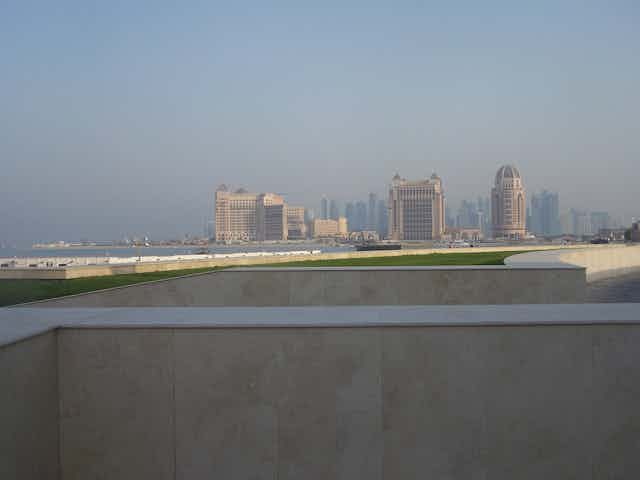
All eyes are on Doha, but most of the action is taking place in Asia. almasudi/Flickr

The irony of the world’s climate change negotiators meeting in Doha this week cannot be lost on anyone taking an interest in climate change.

Qatar is hardly a model of the low carbon economy. With annual per capita carbon emissions of more than 50 tonnes, it has the highest footprint of any nation. The country’s exponential economic growth has been driven by the export of oil, natural gas and other petrochemicals. Its winning bid to host the 2022 World Cup includes plans to fully air condition every new stadium, insulating the players and the crowds from the 40°C+ heat.

But even if it were held in the lowest-emitting of countries, this Conference of the Parties is unlikely to achieve anything meaningful.

Climate change is all about energy: the way we generate and use it for electricity, transport and food production. Energy is the foundation of the global economy. And negotiators working for environment ministers just don’t have the authority to contribute to decisions that affect these dynamics.

If you transform the energy system, you fundamentally transform the global economic system. All the ships crossing the ocean full of sheep and textiles and cars and all the other things on our supermarket shelves or our lounge rooms are moved by fossil fuel. All those planes transporting people around the globe are too. Not all, but most of the lights seen from space are illuminated by electricity from combusted fossil fuel.
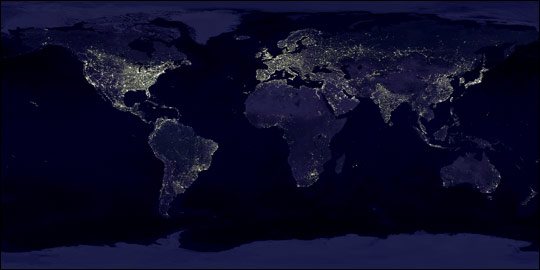
It is not hyperbole to conclude that changing the inputs that create this amenity will require the most far-reaching transformation of the energy system since the industrial revolution. And as with the industrial revolution starting in Britain, Belgium and other northern European countries, so the energy transformation will be led by the current major global economic actors.

Understanding the global response to climate change is thus a matter of following political and policy developments in the United States, Japan, Germany and China as much as it is about following the formal UN processes.

Let’s take a closer look at China. It is now home to four of the top five solar photovoltaic manufacturers in the world. Two of the top five wind turbine manufacturers are also Chinese. Ten years ago none of these companies were even in the top ten. Some didn’t even exist.

This change has been rapid, and just as with any other product or commodity, once volumes increase, so prices fall. Just two weeks ago Suntech, the world’s biggest solar PV company, announced that its cost of manufacture will fall 30 per cent in 2012. That is on top of a 75 per cent fall since 2009. For certain consumers, in certain places, and at certain times, solar is rapidly becoming the cheapest way to generate electricity.

And China’s current Five Year Plan has earmarked $1.6 trillion of investment in low carbon infrastructure and technology. The “China 2030” report, released earlier this year by China’s State Council and the World Bank, concludes that China’s national interest is in building a low carbon economy and getting ahead of the competition. The recent energy policy has a series of ambitious renewable energy targets.

Japan is often forgotten in discussion of low carbon development. Yet the world’s third largest economy has long been a leader in energy efficiency. With few primary resources and massive global companies like Canon, Toyota and Sony, it built its post-war economic strength on the basis of technological innovation.

Following the 2011 Tōhoku earthquake and tsunami and the break down of the Fukushima nuclear plant, Japan is shifting its energy system away from nuclear and towards renewables, energy efficiency, and modern power grids able to manage demand.

Driven by policies such as these, the changes in the energy and electricity business have the potential to be as rapid as the changes in information and communications technology. Large-scale electricity generation distributed to our homes, businesses and factories via a lengthy distribution network ending with a plug in the wall might be the equivalent of the old black dial phone owned by the government. Now we can choose our make of mobile phone; choose our plan and the level of service it provides.

As with our phones, we will soon be able to use electricity in different ways, at different times, to manage cost. Businesses with roof space, or the ability to invest in their own electricity generation through technologies such as co-generation, can get into the business of selling their own power back to the grid.

And with Japan and Germany leading this charge, with China on the rise, the economics of electricity will move even faster.

According to Bloomberg, last year was the first when new investment in clean energy overtook coal and gas. In 2004 only $US34 billion was invested in clean energy globally. In 2011 the figure was $280 billion. That is a more than 800% increase.

This is all happening a good deal faster than most predictions. Rhetorical commitments to green growth are fine, but tangible examples of where investment in new local carbon infrastructure has achieved clear environmental and commercial returns is more powerful.

It is easy to be sceptical about Doha. But one shouldn’t allow oneself to therefore become cynical about the UN process. It is far from what it has to become but remains a critical part of the complex three-dimensional jigsaw that is our emerging response to climate change. The agreement reached last year at Durban has maintained the hope that by 2015 we will have a legally binding framework focused on keeping climate change within 2°C.

Climate change is not a problem that can be “solved” by any one meeting at any single point in time. Reducing emissions will be driven by public and political will and a combination of international diplomacy, technological innovation, scaled investment and policy at national, state, and local level. The indications are that this will, driven largely by economic and national interest is growing. Deliberations in Doha this week can only contribute a small amount to strengthening it.

Join the conversation

18 Comments sorted by

  1. John Newlands

    tree changer

    The Doha climate conference is a circus. I see the Qataris are just as breathtakingly hypocritical about fossil fuel exports as Australia. We say export coal is not our problem they go further saying export gas is a blessing
    http://www.heraldsun.com.au/news/breaking-news/turn-to-gas-to-fight-climate-change-qatar/story-e6frf7k6-1226524595806

    Some project that Australia could overtake Qatar as a gas exporter. Note that Japan is now buying a third of world LNG with a Norwegian gas tanker currently…

    Read more
  2. Gerard Dean

    Managing Director

    Mr Rowley,

    Your comment, 'The “China 2030” report, released earlier this year by China’s State Council and the World Bank, concludes that China’s national interest is in building a low carbon economy and getting ahead of the competition.' is breathtaking in its naivete.

    You are correct in saying that the Chinese are trying to '...get ahead of the competition..', however that doesn't mean are embracing a low carbon economy. In fact, the opposite is occurring.

    The reality is that China is…

    Read more
  3. Dale Bloom

    Analyst

    "Qatar is hardly a model of the low carbon economy. With annual per capita carbon emissions of more than 50 tonnes, it has the highest footprint of any nation."

    Yes, it would have been better to have the conference in an environment that shows the world what can be done to reduce resource depletion.

    However, the situation is similar in Australia which has one of the highest ecological footprints in the world.

    There is no emphasis on reducing that footprint, by reducing our appetite for consumption.

    Instead, we want to bring more people into this country, and continuously increase our GDP. That way our ecological footprint will never decline.

    report
    1. Dale Bloom

      Analyst

      In reply to Dale Bloom

      Bruce Tabor
      CO2 emissions from Australia might be minimal compared to the rest of the world, but Australia has the seventh highest ecological footprint per capita in the world.

      Qatar has the highest, but our ecological footprint and the ellinination of wildlife is directly tied to consumption and population.

      This is not an issue for our main political parties it seems, who all seem to want to increase both.

      report
  4. David Collett

    IT Application Developer at Web Generation

    Thank you for this article.

    The forces you describe - such as the fall in cost of solar panels due to increasing sophistication, the growth of China's renewable industries, the growth in investment in clean energy across the world - are the reason I went from despondency about the world's ability to prevent catastrophic climate change, to one where I am hopeful.

    It's good to see what were my hopes reflected in your article with evidence - as opposed to my anecdotal feelings!

    Although it feels kind of dirty - like I'm a neo-liberal capitalist - to say market forces will address the environment needs, but market forces are addressing the need (at least in part) by driving down the costs and opening up opportunities.

    report
  5. Robert Merkel

    Lecturer in Software Engineering at Monash University

    It's hard not to turn articles like these into a bunfight on nuclear power...but...

    Whether you think nuclear power is a good idea or not, the fact is that its lifecycle carbon emissions are extremely low, and comparable to most renewable energy.

    At best, a switch away from nuclear and towards renewables is neutral for the global climate. If such a switch is accompanied by extra use of natural gas and coal to manage variability, it means additional net emissions.

    report
  6. Peter Lang

    Retired geologist and engineer

    Nick Rowley sais:

    “Climate change is all about energy: the way we generate and use it for electricity, transport and food production. Energy is the foundation of the global economy. And negotiators working for environment ministers just don’t have the authority to contribute to decisions that affect these dynamics.

    If you transform the energy system, you fundamentally transform the global economic system.”

    This is true. But then the article goes on to advocate renewable energy. Why the…

    Read more
  7. Marion Brook

    BA, Grad Dip Ed (student)

    This is such a depressing piece.

    Q1.How many wind turbines does it take to replace a 1000 MW fossil fuel plant?
    A1. No-one really knows, it's never been done.

    Q2. How many nuclear power plants does it take?
    A2. One. That's right, dirty power out, clean power in (see France). Done!

    If the movers and shakers of the climate action community are still flogging the "renewables only" horse then we are all stuffed. Your horse is dead mate - find another ride, before you kill us all.

    report
    1. Nick Rowley

      Research Fellow, Institute for Democracy and Human Rights at University of Sydney

      In reply to Marion Brook

      Marion -

      Thank you for this comment.

      I have a pragmatic view with regard to how we can (and must) achieve the emissions reductions required to avert the worst effects of global warming and climate destabilisation. When I worked at Number 10 I was part of initiating an Energy White paper which concluded that that only way to make up the loss of nuclear capacity in the UK was to allow for the development of new nuclear capacity.

      But I cannot see how the amount of nuclear generation required…

      Read more
    2. Peter Lang

      Retired geologist and engineer

      In reply to Marion Brook

      Nick Rowley,

      Your reply to Marion Brook contains a scatter the usual anti nuclear talking points:

      1. a mix of technologies is required
      2. can’t build nuclear fast enough
      3. NIMBY - what politicians would support it in their electorate?
      4. Who'll insure nuclear.

      The answers to these are widely available.

      1. A mix of technologies is an excuse to continue to subsidise and mandate high cost renewable energy, while doing everything possible to talk down and block the development of nuclear…

      Read more
    3. Peter Lang

      Retired geologist and engineer

      In reply to Marion Brook

      Nick Rowley,

      I'd like to add some more, but I understand it is discouraged. I'll post a structure below and you or anyone else who is interested can see more detail below the structure and follow the discussion here:
      http://judithcurry.com/2012/12/01/open-thread-weekend-4/#comment-273000

      1 High-cost GHG mitigation polices are not justified - there is a better way

      1.1 Man-made catastrophic climate change is very unlikely
      Because:
      1.1.1 Earth has been much warmer in the past, and life…

      Read more
    4. Marion Brook

      BA, Grad Dip Ed (student)

      In reply to Marion Brook

      Look, I admit this comment was little more than a show of angry frustration, but it was born out of real exasperation. You can't imagine how disappointing it is to read the opinions of professed "climate action experts" who appear to be more afraid of one of our proven low carbon solutions (in this case nuclear power) than they are of climate change. Here, you actually seem to embrace the idea that a country could (should?) abandon, wholesale, their most effective zero-carbon electricity generators…

      Read more
  8. Marion Brook

    BA, Grad Dip Ed (student)

    Nick Rowley, please look at the graph in the 2011 IEA link below. Compare the CO2 emissions, in grams per kWh from electricity and heat generation, for the nations who are pinning their zero-carbon hopes on wind and solar (see Denmark and Germany below), to the nations for whom nuclear power and base load renewables are the major contributors (France is 76% nuclear power, Sweden and Switzerland are about 50/50 nuclear/hydro). It's quite obvious who is doing the better job.

    http://www.iea.org

    Read more
  9. John Bennetts

    Engineer

    This morning I read that India is proud to be approaching a huge number of solar PV panels. The number and capacity don't matter, because once output is averaged across the population, it amounts to a goal of achieving 2 to 3 watts continuously per person.

    2 to 3 watts. A single LED.

    Boiling a litre of water to make a pot of tea will consume a week's personal entitlement.

    This is before transport, industry, commercial and communal energy consumption is accounted for.

    I strongly recommend…

    Read more
  10. Peter Lang

    Retired geologist and engineer

    Doha climate talks end with a wimper.
    http://www.theage.com.au/environment/climate-change/doha-climate-talks-end-with-a-whimper-20121209-2b34i.html

    It’s the economics, stupid!

    For 20 years the UN process has been trying to get international agreement to targets, timetables, carbon pricing, UN taxation powers, and UN control.

    It’s failed!

    20 years of delay so far – and counting (slow death preferred to removal of life support, sudden death and admission of failure)

    The wise heads have…

    Read more