


Foreign investment, like any other policy, is a complex juggling act. A balance between welcoming foreign investment – without which Australia cannot survive – and protecting Australian interests in not “selling off the farm” cannot be struck without damaging some very delicate sensibilities.
Australian nationalism is a curious thing: hardly overt like America’s, neither is it docile. It is instead subcutaneous: just below the skin, out of sight but not so deeply buried as to be impervious to attack.
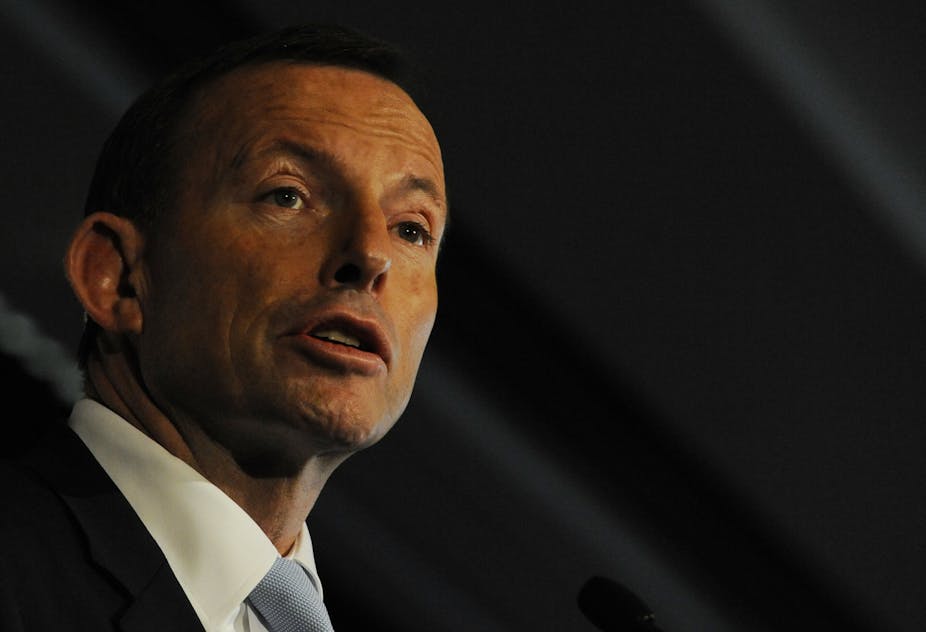
The really interesting development from Opposition leader Tony Abbott’s recent Beijing address calling for tougher Australian foreign investment rules is the claim that Mr Abbott’s “new protectionism” has created a wedge among, and within, the non-Labor parties. To suggest this is a new development is nonsense: those divisions are as old as the party system itself.
Abbott’s views are a mere echo of a much older debate between protectionists and free traders stretching back to before Federation. Indeed, who can become a stakeholder in this country – whether through immigration of investment – comprises the oldest and longest-running Australian public issue.
More than a century ago the protagonists for Protectionism were our first and second prime ministers Edmund Barton and Alfred Deakin, while later Prime Ministers George Reid and Joseph Cook fired up for the Free Traders.
The tariff question was, of course, settled soon after Federation, with trade protection, in Paul Kelly’s description, emerging as one of the key five pillars of the “Australian Settlement”. Yet that general bipartisanship failed to heal old schisms, and interpretations of – and variants among – strains of Australian liberalism (including inside a Labor party that was never truly socialist) continue to this day.

It’s a debate that cleaves not only along ideological but also geographical divides. A conservative wing of the Nationals in regions still pining for the old Country Party and the politics of pioneerism happily aligned with a Liberal faction – most often but not always outside New South Wales – in its support of tariffs, subsidies and other regulation.
Conversely, a Liberal party cell, most usually associated with Sydney, lobbied for free trade long before the Hawke-Keating-Howard revolutions that removed the remaining “Australian Establishment” pillars.
Almost counter-intuitively, from the 1960s, freer – if not free – trade slowly accrued support from not only sections of the Labor Party (Gough Whitlam, of course, slashed tariffs in 1973 by 25%) but, later still, from National Party moderates who undoubtedly saw the writing on the globalisation wall.
Whether driven by genuine ideological commitment, or populist opportunism in the hunt for xenophobic votes, or mere expediency in keeping Coalition partners onside, this relationship shaped Australian industry policy for most of the 20th century.
Despite his liberal rhetoric, Robert Menzies, for example, felt no need to take on the powerful protectionist and Country Party leader Jack McEwen, or the ominous Australian Tariff Board (a precursor to today’s Productivity Commission). Tariffs, quotas and subsidies on agricultural and, more curiously, manufacturing products therefore remained on the Australian policy table long after the post-war world began talking free trade.
The unabashedly nationalist John Gorton was even more strident in his protectionism and warnings against “selling off the farm”. As a newly installed Liberal Prime Minister in 1968, for example, Gorton blocked a British bid to take over Australia’s MLC Insurance (even after Treasury approval) and, later with McEwen’s blessing, created an oil-pricing policy to keep Bass Strait oil under tight Australian control.

The creation of an Australian shipping line and the Australian Industry Development Corporation – ideas that even Menzies had spurned – rounded out our new economic nationalism.
As above, the wheels really fell off protectionism in the 1980s. Yet, even today, no leader can ignore the populist air wafting up from Australian nationalism. Pauline Hanson’s One Nation infamously tapped into it in the late 1990s, and Liberal Treasurer Peter Costello – perhaps in a response to Hanson – created waves in 2001 when he blocked Shell’s $10 billion takeover of the Australian-owned Woodside Petroleum.
A clear message was then sent to world markets and the Australian dollar plummeted, but domestic political tensions were assuaged: for that and other reasons, the Coalition easily won the 2001 federal election.
History repeated itself in 2011 when Treasurer Wayne Swan opposed a comparable $8 billion take-over bid for ASX Limited by Singapore Exchange. Interestingly, Treasurers exercise such vetoes even when the august Australian Foreign Investment Board independently approves take-overs.
Abbott’s nationalist revival may have upset Establishment Liberals from Peter Reith to Bill Heffernan, but the Opposition leader sees a bigger picture.
He knows that, despite speaking from Beijing, constituencies outside the well-heeled Sydney suburbs were the ones really listening.
With the populist Katter Australia Party poised to soak up marginalised non-Labor votes (and not just in Queensland), the old cleavages between conservative and progressive Australian liberalism have merely been re-opened.
It seems some Australian pillars are very hard to shake.