
The PM’s electricity plan: it’s a Band-Aid not a cure

A few days ago, the Prime Minister Julia Gillard foreshadowed a “plan to make sure that families pay $250 less per year for electricity” to be discussed at this Friday’s meeting of the Council of Australian Governments (COAG). It is not surprising that this “plan” draws from the conclusions and recommendations…

Cnwgcgr3-1354749899
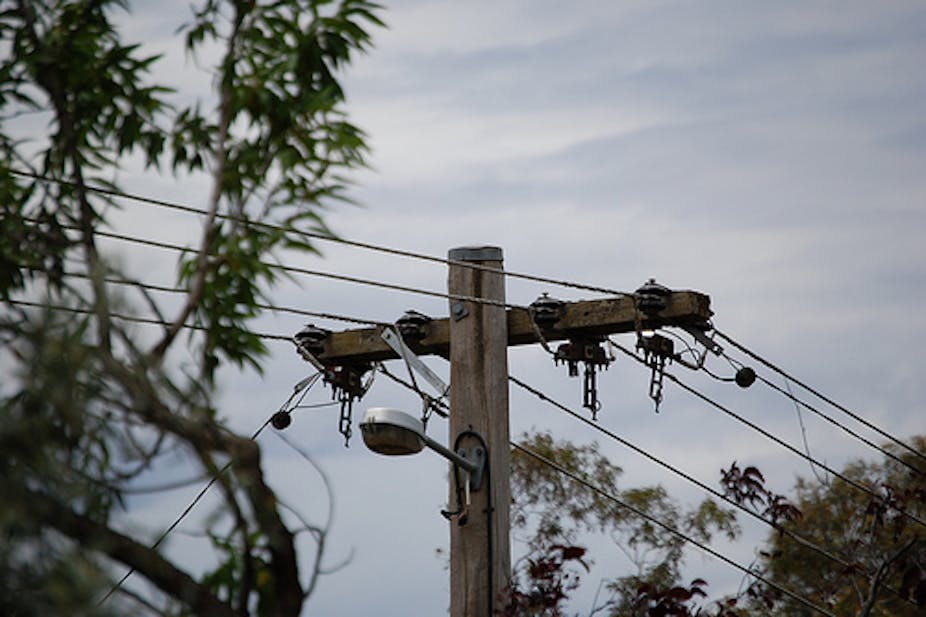
Electricity prices have been rising rapidly during the past decade. Sir Bennikins/Flickr

A few days ago, the Prime Minister Julia Gillard foreshadowed a “plan to make sure that families pay $250 less per year for electricity” to be discussed at this Friday’s meeting of the Council of Australian Governments (COAG).

It is not surprising that this “plan” draws from the conclusions and recommendations of four recent government reports – the Productivity Commission’s Electricity Network Regulatory Frameworks,the Australian Energy Market Commission’s (AEMC) report, Power of Choice, the report of the Senate Select Committee on Electricity Prices, and the 2012 Energy White Paper.

So the Prime Minister claims that the plan will deliver savings for families. How? What will be the impact on electricity prices if the plan is agreed (and that’s a big IF) by all State and Territory governments?

From the limited details released so far, the PM’s plan rests on four broad measures.

First, changes are proposed to the regulation which the Australian Energy Regulator (AER) uses to set the charges for the transmission and distribution of electricity; for the “poles and wires”. (Electricity prices comprise generation, transmission, distribution and retail charges. Distribution charges are the prime culprits of the recent price increases.)

The regulator sets these charges in accordance with the National Electricity Rules. But these Rules have some critical weaknesses, like limiting the ability of the regulator to scrutinise the efficiency of proposed investments by the distribution and transmission (network) companies.

The Rules require the regulator to accept the expenditure (investment) proposals of the network companies if satisfied that they “reasonably reflect efficient, prudent and realistic expenditure”. Now there may be more than one expenditure forecast that meets these criteria but the Rules currently preclude the regulator making an objective assessment of the efficiency, or the necessity, of the proposed expenditure and setting a lower level. This means that network businesses are effectively permitted under the Rules to “gold plate”; to provide the highest possible forecast of needed expenditure and investment.

So, there are a number of proposed regulatory changes which enhance the capacity of the regulator to push back on the proposed expenditure of electricity network companies.

But these regulatory changes, proposed by the Australian Energy Market Commission, will not reduce electricity prices. They might reduce the size of the increase due to transmission and distribution charges compared to recent years. But not until after 2014. So between then and now, expect further price increases of 30-40%.

These have already been approved by the regulator.

However, there are other significant regulatory issues – which impact on network investment and subsequent charges – about which the PM’s plan is silent.

As I stated to the Senate Inquiry, as did the recent Grattan Institute report, there is a need for:

  • national – not state-by-state – safety and reliability standards, because this is one of the core drivers of network investment and subsequent, network charges, and

  • an on-going review of electricity demand forecasts on which investment decisions, over a five-year regulatory period, are based.

A further measure in the PM’s plan is the deregulation of retail prices. COAG agreed to this in 2006 subject to effective competition being evident. Victoria is the only state to implement deregulation so far. Victoria’s electricity prices have increased by less than the other states in recent years. But this is not due to deregulation. It is due to lower transmission and distribution charges because Victorians rely less on electricity than the rest of Australia. Less need for investment in new network capacity leads to less of an increase in network charges.

Victoria did privatise its electricity companies in the mid-1990s but ownership, as the PM noted a few days ago, is not the issue. The issue is the Rules as noted above.

The third policy measure in the PM’s plan focuses on shifting and reducing peak demand for electricity use, and hence the need for investment in network capacity for only about 40 hours each year. This is where smart meters and time-of-use (ToU) pricing (also called cost-reflective charging) come in.

Different electricity prices at different times, time-of-use pricing, are proposed to discourage electricity use at peak times (the most costly). This is already occurring for large industrial and commercial users.

But you need smart meters for households to have information about their electricity use at different times. These are costly, as Victorian households have found out ($700 a pop) and households need the capacity to change their electricity use at peak times, which is not as easy as the Federal Minister for Resources and Energy Martin Ferguson suggests. How many households can shift 20% of their electricity demand out of the 2-8pm time period?

Smart meters will not reduce electricity prices. Nor will time-of-use pricing. Smart meters and time-of-use pricing will give households more information to make choices about when to use electricity and thus, more control over the decisions that they make about how much is spent on electricity.

Finally, a new Consumer Challenge Panel is proposed. This sounds like a “pinch” from the UK where such a group has existed since 2008.

The UK Group comprises experts – not consumers as such – who question the validity and legitimacy of the argument for price increases (by, you guessed it, the transmission and distribution companies) from a consumer perspective.

It is an advisory panel and the UK Regulator is not required to “act” on the recommendations of the group.

It is highly likely the same will apply here.

So, the bottom line is this: the PM’s plan will not cut electricity prices or stop increases. The PM’s plan is a Band-Aid; a temporary cover to stem the political blood loss.

Household electricity prices have been rising rapidly since 2007, the year the Federal Labor Government was elected. But it has taken five years for the political antennae to figure out there is a problem for the vast majority of Australian households (who also vote).

The AEMC Chairman stated earlier this week that the opportunity for “reform” only happens every 10 years or so. If this Band-Aid is the extent of reform that we can expect, swallow hard everyone because there is not much relief in sight for your electricity bills.

Join the conversation

16 Comments sorted by

  1. Neil Gibson

    Retired Electronics Design Engineer

    Good article. There is no real connection between a consumer reducing his peak load and the electricity cost going down because there is no mechanism to do that in the current system. Traditionally the problem with supplying peak power is in generation capacity not distribution capacity and somehow we are being told it is now a poles and wires problem . Australia always had a policy of having enough generation to supply the annual peak and designed for it whereas the UK for instance designed for peak lopping for a few hours each year . No one to my knowledge has given a specific example of "gold-plating" of a network showing how money could be saved. The problem seems to be political not technical and this new initiative will do nothing to lower electricity costs.

    report
  2. Philip Harrington

    Principal Consultant - Climate Change

    Agreed - a very good article...but I wonder if you go far enough? What other business gets a guaranteed rate of return on investment on every bit of capital they put in? And whilesoever they do, can we really be surprised that they 'gold plate'? Network businesses, like other businesses, must face the risk of commercial failure, or at least loss, and therefore have an incentive to spend wisely and to minimise cost. At the moment, the only disciipline on these businesses is the fear that the regulator might not include some expenditure with the regulated asset base of the business. With the best will in the world, the AER is at the mercy of the regulated businesses to determine what is fair and reasonable. Genuine commercial pressure is clearly needed to supplement this regulatory approach.

    report
  3. Peter Ormonde

    Peter Ormonde is a Friend of The Conversation.

    Farmer

    Good piece Lynne.

    But there is a problem. The idea of sending a price signal into the electricity market is the fundamental principle behind an ETS in any shape or form. It relies on increasing the price and enabling consumers to switch and manipulate their power demand to minimise the increases. Increased prices will be a feature of the emerging system.

    The government has compensated low and fixed income groups for the first stage of these increases. But the fundamental truism is that…

    Read more
    1. Garry Baker

      resarcher

      In reply to Peter Ormonde

      "" It's about time that power authorities started to explain exactly what they are doing with our money. ""

      Well given that our power utilities have been sold off to foreign interests, it's not surprising that their own shareholders back in the mother country come first and foremost. Say GDF Suez, the French giant, along with Tru Energy, a wholly owned entity of China Light and Power(CLP) - well they own a huge chunk of Victoria's power mix, yet there is no compulsion make life easier for…

      Read more
    2. Dianna Arthur

      Dianna Arthur is a Friend of The Conversation.

      Environmentalist

      In reply to Peter Ormonde

      Mr O

      You speak with much wisdom - of course that means you are shouting into a tornado, an extreme weather event we had better get used to.

      "It's not difficult to build in metering systems that would encourage communities to create their own cheap power, sell the surplus into the grid and draw down power from the grid when necessary. "

      But that spells the doom of big corpa!

      "I wonder how many times these poles and wires have paid for themselves. And we still don't have a cable to Tasmania. Where is this "boom" in network construction?"

      They have been paid so many times over that a progressive power organisation could install underground wires and cables, throughout Australia and even Tassie.

      report
  4. Askgerbil Now

    logged in via Twitter

    The conclusion: "So, the bottom line is this: the PM’s plan will not cut electricity prices or stop increases" is based on a set of narrow assumptions.

    Electricity prices can fall if consumers move peak load to off peak periods. For example, off-peak air-conditioner technology can be retrofitted by customers who wish to explore this cost-saving measure.

    The expansion of "DemandSMART" where large consumers are paid to cut back power use in extreme peak periods can avert further investment to meet just those few occasions a year when demand hits record highs.

    The implementation of new electricity uses that adds to off peak demand - for example, a growing fleet of plug-in electric vehicles that recharge in low demand periods only - will reduce network charges per kWh. Any extra off-peak demand will raise the level of capital utilisation, cutting the unit cost for all consumers.

    report
    1. Gary Murphy

      Independent Thinker

      In reply to Askgerbil Now

      You could also get people to reduce their peak demand to reduce the capacity requirements of the network. By turning off other appliances (esp. fridges) when they run their air conditioners.
      The incentive for this could come from charging people connection fees based on their peak demand.

      report
  5. Peter X

    (None)

    Will the new need for "reasonably reflect efficient, prudent and realistic expenditure" make renewable energy investment - often requiring new infrastructure - that much harder?

    There's also benefits of building/improving inter-state connectors: e.g. accessing cheap SA wind or remote solar farms.

    To date, the largesse has been on "network reliability" for air-conditioners during peak demand. It's time we refocus the spending on renewable energy corridors.

    report
    1. Gerard Dean

      Managing Director

      In reply to Peter X

      Mr X

      Is that a typo? ' accessing cheap SA wind or remote solar farms.'

      Shouldn't that be 'accessing expensive, subsidised SA wind farms and remote solar farms when and if they are ever built'

      Sorry I am such a stickler for accuracy.

      Gerard Dean

      report
  6. Edward Henner

    Consulting Electrical Engineer

    Lynne,
    You made two points to the Senate Inquiry which puzzle me because they don't match what I know about the processes which have been in operation since the start of the National Electricity Market in the 1990's. The safety and reliability standards of supply are not state-by state, but are in fact national as set out in the National Electricity Rules - see this link: http://www.aemc.gov.au/Electricity/National-Electricity-Rules/Current-Rules.html
    The second point is also a puzzle because…

    Read more
  7. Comment removed by moderator.

  8. Murray Webster

    Forestry-Ecology Consultant/Contractor

    It seems to me that this whole exercise is about votes. Vote buying in particular. Bob Carr must be in the PMs ear. He bought votes with cheques going to families at the start of the school year and with a rebate of motorway tolls users, successfully targeting only in a few electorates in Sydney's south west. The latter has cost the NSW tax payer billions which could have been spent on infrastructure. "I can win you a few more votes for you Julia - look at my record..."

    report
  9. Comment removed by moderator.

  10. Rory McGuire

    Science commentator

    Despite the rhetoric about "poles and wires" and gold-plating I think the real reason electricity prices have climbed is that power utilities like money. Why else would they buy up monopolies? Except that these monopolies are beginning to be de-monopolised, if you will excuse the language.
    The power utilities give every indication of hating this coming loss of monopoly and of doing all in their power to fight it. This is where federal and state governments must decide whether they act for the people…

    Read more
  11. Philip Harrington

    Principal Consultant - Climate Change

    Just re Dianna's point, the Basslink cable connecting Tassie to the mainland was commissioned in early 2008, from memory. Generally, however, I think we need to move towards a self-sufficiency model, where individual houses, businesses, regions, states, are more or less self-sufficient, with the grid playing the key role of stabiilty, wheeling power in response to variations in demand and supply. This kind of dynamic, 2-way flow management is hardly what our current network was designed for, however, and it will cost money to turn it from a dumb grid into something with at least modest intelligence.

    report