In the past, when courts considered disputes over what to do with no-longer-wanted embryos, they typically considered them property. The Alabama ruling challenges this legal precedent.
IVF is a decades-old procedure that has allowed increasing numbers of prospective parents to have children. Evolving legislation may put it under threat.
A recent ruling from the Supreme Court of Alabama implies frozen embryos are legally equivalent to living children. This creates risks for IVF providers, and therefore problems for patients.
Corporate medicine is hijacking feminist narratives around empowerment and women’s rights to market technologies, tests and treatments that aren’t backed by evidence.
In general, an ageing population puts added pressure on the working-age population to be more productive – just to maintain total output – amid growing fiscal constraints.
Exercising with your partner can help build healthy lifestyle habits for the future.
PeopleImages.com - Yuri A/ Shutterstock
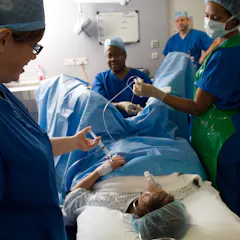
As part of my research, I interviewed egg donors and doctors and also observed women in fertility clinics to get a better sense of what the process was actually like.
Najin, one of two northern white rhinos left in the world, grazes in a paddock in Kenya.
Tony Karumba/AFP via Getty Images
South Korea’s fertility rate fell below the level needed to sustain a population in the mid-1980s – and it never recovered. It is now below one child per woman during her reproductive years.
Anthropologue et démographe, professeur émérite au Muséum national d’histoire naturelle et conseiller de la direction de l'INED, Muséum national d’histoire naturelle (MNHN)
Director Nurture Fertility, The Fertility Parnership and Reader/Associate Professor in Reproductive Medicine and Surgery, University of Nottingham, University of Nottingham