
Understanding the recent listeria-linked cheese recall

Soft cheeses made by Jindi were recently recalled in Victoria, after they were linked to the deaths of three adults, a miscarriage, and a score of other cases of “listeriosis”. The case is a reminder of the need for public health authorities to be vigilant about educating at-risk people about this disease…

Gjcb65hg-1361333017
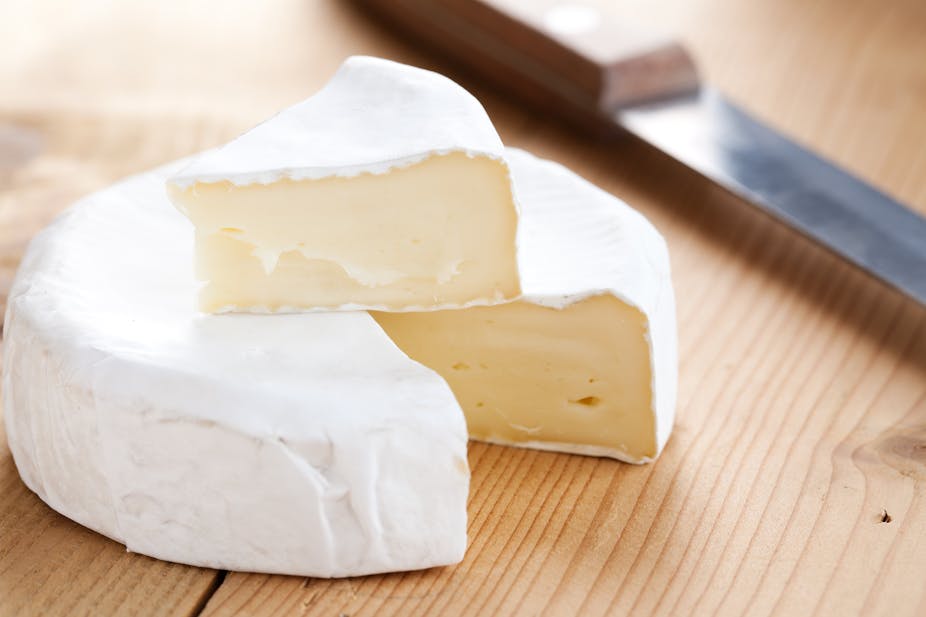
Soft, surface-ripened cheeses, such as Brie and Camembert, are most likely to transmit listeriosis. Shutterstock/Jiri Hera

Soft cheeses made by Jindi were recently recalled in Victoria, after they were linked to the deaths of three adults, a miscarriage, and a score of other cases of “listeriosis”. The case is a reminder of the need for public health authorities to be vigilant about educating at-risk people about this disease and for the food industry to minimise the risk from contaminated food.

Deadly disease

Listeriosis is almost always acquired by eating contaminated foods. While listeria monocytogenes are quite common in the environment (and at low levels in many fresh foods), the disease itself is rare. There are about 60 reported cases a year in Australia, and that rate is similar to other developed nations, although it’s possible that as many cases again go undetected.

If detected early enough, infections can be treated successfully with antibiotics. Despite being uncommon, listeriosis is very serious and will be fatal for 20% to 30% of infected people. This statistic is repeated in the current outbreak, which has seen four deaths out of about 20 cases.

Listeria monocytogenes is harmless to most people, even when ingested at high levels. Many of us will have the bacteria in our guts at some time and they usually pass through without harming us. People at high risk are those with reduced immune function, such as those on drugs to stop rejection of an organ transplant, or to control an autoimmune disease, such as lupus, those receiving anti-cancer treatments, the aged, those with diabetes, liver or kidney disease, and the unborn or very young babies.

Indeed, a person with liver cancer is nearly 1000 times more likely to get listeriosis than a healthy young adult, while pregnant women and their foetuses are at about 100 times greater risk. Virtually every person who gets listeriosis has some underlying condition that predisposes them to infection.

If people susceptible to listeriosis ingest a large amount of listeria, some may cross from the intestine into the cells of the body, where they can “hide” from the immune system. They then increase in number, moving from cell to cell, and spreading to susceptible sites in the body, where they cause damage to host cells. This results in disease symptoms. The most common sites of overt infection and damage are the central nervous system and the uterus of pregnant women and foetuses.

Mitigating risk

Health authorities have produced information pamphlets for pregnant women to alert them to the risk from eating certain foods, while also giving advice about alternative foods to meet nutritional needs. Such advice is equally relevant to people with reduced immunity.

Since listeriosis was first recognised in the 1980s as a food-borne disease capable of causing outbreaks with deadly consequences, research has shown how best to reduce the risk. Listeria is common in nature, preferring moist habitats where there’s decaying organic matter, such as rotting vegetation. Unusually among bacteria that can cause human infection, it can grow at refrigeration temperatures and tolerates quite salty conditions. As such, it can grow in foods that have traditionally relied on added salt and chilling to extend shelf life.

Some of these foods allow listeria to grow to dangerous levels, albeit slowly. Foods most at risk of transmitting listeriosis are those that have a long shelf life but that still require refrigeration, such as “ready-to-eat” processed meats (for example ham, cold meats and paté), cheeses (particularly soft, surface-ripened cheeses, such as Brie, or Camembert), smoked fish and other lightly preserved seafood, and some types of pre-prepared salads.

Listeria’s lifestyle means it likes to set up house in food factories, because they often have nooks and crannies that are cool, remain wet and have traces of food to sustain populations of the bacteria. For the food industry, understanding that lifestyle has led to increased vigilance and steps to prevent listeria from becoming established factories, to detect it if it has, and to prevent if from contaminating foods.

This increased vigilance has also meant that potential problems are more reliably detected before contaminated foods are released or people become ill. Foods are also sometimes recalled to minimise risk to consumers.

Sign in to Favourite

Want to follow The Conversation?

Sign up to our free newsletter to get the day's top stories in your inbox each morning, with a special wrap on Saturday.

Spinner
Help us have better conversations — donate

Join the conversation

28 Comments sorted by

  1. Gavin Moodie

    logged in via LinkedIn

    Thanx for this informative article.

    report
  2. Michael Croft

    logged in via LinkedIn

    Mitigating risk? The other issue neglected and/or ignored by authorities is that of the scale of industrial food systems. The larger the system, the more people and procedures involved, the less individual responsibility (corporate responsibility is probably and oxymoron) and the greater the possibility(probability) that someone or something will fail. When this happens, and it does regularly, the consequences affect vast numbers of people downstream.

    Excessive scale in food systems is no…

    Read more
    1. John Newton

      Author Journalist

      In reply to Michael Croft

      Michael - as you probably know, you coud hardly call Jindi an industrial size facility - pretty well hand made.

      But the other interesting aspect of this is that Jindi, like all Australian cheese, is made from pasteurised milk. And the authorities keep us away from unpasteurised milk because of the higher risk of - listeria.

      That's what I don't quite get here.

      And on a side note, a French cheesemaker who moved to Australia having learnt to make cheese in France (like the cheese maker at Jindi but not him who I don't know) once told me he prefers to work with raw cheese because it is easier to detect a tainted batch.

      report
    2. daniela ruegg

      retired/homemaker

      In reply to John Newton

      John, pasteurisation of milk kills the live enzymes that fight the bad bacteria.Raw milk has good and bad bacteria bu the live enzymes keeps refrigerated milk for a long time. When I lived in Switzerland we always bought raw milk and raw milk cheeses often from local artisans and never once we got sick our children were always very healthy and enjoyed raw cheese.Here in Australia we buy raw milk and raw cheese from a farm we own a cow herd share. The raw milk in the fridge lasts for 17-18 days and when it starts to be a bit off I use it to make cakes or bread where the dough rises beautifully. We never get sick! Pasteurised milk from the shops however even in the fridge goes off in 3-4 days . Cheers

      report
    3. Sue Ieraci

      Public hospital clinician

      In reply to daniela ruegg

      According to a paper in the Journal of Dairy Science 2006 ("Influence of raw milk quality on fluid milk shelf life."), it is the microbial count and somatic cell count in raw milk that determines the level of heat-stable enzymes (proteases and lipases - which break down protein and fat respectively).

      Once the milk is pasterurised and refrigerated, the bacterial counts are low, and the proteases and lipases that are heat stable survive pasteurisation and contribute to the spoiling of the milk…

      Read more
    4. daniela ruegg

      retired/homemaker

      In reply to Sue Ieraci

      Don't know about the science, but it seems to me that pasteurisation doesn't eliminate bacteria and technology only good up to a point.

      report
    5. Sue Ieraci

      Public hospital clinician

      In reply to daniela ruegg

      Ms Ruegg - it's the enzymes in milk (proteases and lipases) that break down the protein and fat, contributing to "spoiling" (it's not just about the bacterial count).

      report
    6. Michael Croft

      logged in via LinkedIn

      In reply to John Newton

      G'day John - you illustrate my point by talking of Jindi. Jindi has over a hundred employees and today we consider this a micro business and talk of the company as an "artisan cheese maker".

      We have become so accustomed to the massive industrial scale of food and agriculture that a business of 100+ employees is now considered micro and artisan. It used to be that a "cheese maker" was an individual person and not a corporation of 100 or 1,000+ employees.

      report
  3. Stephen Pritchard

    Researcher, cognitive science

    Would be nice to see some attempt to put the risk in better context. For example, you say that pregnant women are at 100x greater risk.

    But how high is the risk normally for a healthy person? Is a healthy pregnant women eating ham really at a worrying risk of listeria infection?

    report
    1. Sue Ieraci

      Public hospital clinician

      In reply to Stephen Pritchard

      According to a 2008 paper in the journal Reviews in Obstetrics and Gynaecology " Listeriosis in Pregnancy: Diagnosis, Treatment, and Prevention", some US statistics:

      "Listeriosis is a rare infection, but is about 20 times more common in pregnant women than in the general population. Pregnant women account for 27% of all listerial infections, which can cause mild illness in mothers, but can be devastating to the fetus, in some cases leading to severe disease or fetal death."

      According to the…

      Read more
    2. Rotha Jago

      concerned citizen

      In reply to Sue Ieraci

      What evidence is there that unpasteurised milk is a Listeria risk?
      High bacteria count would surely be a better indicator of risk.
      Lister proved that clean raw milk in sterile containers could last six months (on a shelf in his library), and be still sweet and drinkable. The vilification of raw milk is impossible to justify using any scientific data. Only politics and law uphold the fairytale dangers of raw milk and raw milk cheeses.

      report
    3. Sue Ieraci

      Public hospital clinician

      In reply to Rotha Jago

      "What evidence is there that unpasteurised milk is a Listeria risk?"

      Assuming that this is not a rhetorical question, and that you are unable to look up the evidence, here is a reference:
      "Listeria monocytogenes, a Food-Borne Pathogen" Farber and Peterkin, Microbiolgocial Reviews, Sept 1991.

      An extract:
      - Listeria has been found in "silage, sewage, slaughterhouse waste, milk of normal and mastitic cows, and human and animal feces (278). L. monocytogenes has been isolated from cattle,
      sheep, goats, and poultry..." (that's how it gets into milk).

      Fresh raw milk could not possibly remain "sweet and drinkable" for six months, even bacteria-free, because the protease and lipase enzymes break down the milk proteins and fats.

      report
    4. Rotha Jago

      concerned citizen

      In reply to Sue Ieraci

      Sue, so Listeria is found in many places and from this you assume that clean raw milk from healthy cows, placed in a sterile container could not remain sweet for six months.
      That is a faulty assumption. Joseph Lister died in 1912. So his experiment was done more than a hundred years ago. But that should not render it invalid. If an experiment is invalid just because of the passage of time, then the whole of science is invalid. Isn't science about building up a body knowledge through observation…

      Read more
    5. Sue Ieraci

      Public hospital clinician

      In reply to Rotha Jago

      Rotha - you're going off on a tangent.

      Let me repeat:

      "Fresh raw milk could not possibly remain "sweet and drinkable" for six months, even bacteria-free, because the protease and lipase enzymes break down the milk proteins and fats."

      Nothing to do with conspiracies about politics - it's the enzymes that are excreted by the cow into her milk.

      report
  4. wilma western

    logged in via email @bigpond.com

    the price received by a dairy farmer depends on achieving consistently low cell counts in milk sampled from their bulk vats. I'm not a dairy farmer -retired from breeding of meat animals . However the general understanding about pasteurisation isn't just that it reduces certain "bad bacteria" but also kills organisms carrying certain diseases such as leptospirosis. TB ,brucellosis etc . While most cattle herds in Australia would now be free of these diseases , there remain questions about imported non-pasteurised products and sometimes about other dairy animals .

    report
    1. Rotha Jago

      concerned citizen

      In reply to wilma western

      Sue,
      Then how do you explain Joseph Lister's well documented experiment? You are making an assumption based on what you know. But what you know is information produced to support an industry, the milk processing industry.The only difference I can see is that Lister made his experiment with the milk of one cow, not mixed milk from a herd.
      Milk from healthy cows does not have an improved shelf-life if it is pasteurised. It is not improved nutritionally either. That was proved in 1944 when experiments were conducted on calves. They were fed pasteurised milk and became so ill that the experiment was stopped. To really go off target. Why doesn't the blood bank pasteurise blood? Because it would be useless.
      So is pasteurised milk.

      report
    2. Rotha Jago

      concerned citizen

      In reply to wilma western

      Wilma,
      The general understanding is based on information supplied by the milk processing industry. While we support it, and the laws which support it, we damn dairy farmers to servitude and poverty.
      If the Dairy Industry was truly de-regulated, that is if we were allowed to choose to buy raw or pasteurised milk or homogenised milk, yoghurt, cream and cheeses we would have a complex and localised industry. Farmers, if they chose could value add on farm. Health inspections for dairies and dairy cattle? of course.
      Until the late 1940's raw milk from TB tested cows was consumed
      all over Brisbane. I know because I was there.
      Milk bottling and processing happened by law, not choice.

      report
    3. Sue Ieraci

      Public hospital clinician

      In reply to Rotha Jago

      Rotha Jago - I don't have any contact at all with the milk processing industry.

      Lister experiment showed that "bacterium lactis" caused spoiling in milk. He did not have the technology to isolate the protease and lipase enzymes that cause protein and fat breakdown.

      "Why doesn't the blood bank pasteurise blood? " Very amusing, Ms Jago. Let's guess - because coagulated blood doesn't flow very well?

      Pasteurised milk is useless? Tell that to all the latte lovers.!

      report
    4. Rotha Jago

      concerned citizen

      In reply to Sue Ieraci

      Sue Ieraci
      I thought we were talking about public health, and the fact that healthy milk and blood if uncontaminated are safe. Lister's detractors thought that infection came from something in the blood and that spoilage came from something in the milk. His experiments showed conclusively that introduced elements were to blame. The cheese which killed people recently was made from pasteurised milk. Nothing in clean healthy raw milk or cheese made from it presents a threat to public health. I have recently read "Bad Pharma"by Ben Goldstein. It caused me to check the sources of 'information', no matter how expert and modern it seems.

      report
    5. Sue Ieraci

      Public hospital clinician

      In reply to Rotha Jago

      ROtha Jago - you seem to have a couple of things confused there.

      Collected and transfused blood generally has no bacteria at all as it is collected and transfused in a sterile manner. (It can contain viruses, however). During storage, it is mixed with citrate and kept refrigerated under tight temperature control.

      Cows' milk is not collected in a sterile chain - bacteria are already in the milk at the time of collection from the udder.

      It's not enough to check the sources of information…

      Read more
    6. Rotha Jago

      concerned citizen

      In reply to Sue Ieraci

      Do You have evidence that raw milk is dangerous to health?
      It is certainly financially damaging because sellers can be prosecuted and fined. But is it dangerous to human health?
      Milk from sick cows is not going to nourish healthy humans. If processing increases the possibility that treated milk from sick cows is rendered acceptable-is that in the consumer's interest?
      Women withTB do not feed their children on medical advice
      because TB is carried in milk. A healthy tested cow, if it's udder…

      Read more
    7. Sue Ieraci

      Public hospital clinician

      In reply to Rotha Jago

      Why do you keep asking questions, Rotha Jago, if you are impervious to the answers?

      Pasteurisation doesn't "mask" contamination - it kills micro-organisms that cause contamination. The treatments that killed bovine TB and Q fever were developed in the 1950's (essentially, the temperature and duration of heating).

      You say " That milk will last well if it is not contaminated." And how would you ensure that it was not contaminated? Give all the cows antibiotics? No - I think most of us prefer heat treatment.
      Milk is a commercial product, sold to an enormous mass market. It is consumed by children and the elderly. That;s why it is regulated.

      report
    8. Rotha Jago

      concerned citizen

      In reply to Sue Ieraci

      It is because we are talking about 2 slightly different things.
      Firstly I remember that my parents (both medical professionals)
      consciously chose to buy raw chilled milk, delivered by the farmer.
      He had a notice outside his farm which advertised that his cows were TB tested. Universal TB testing for dairy herds in Queensland became available in 1944-45. There is no need to treat milk to kill TB
      if the cows are clear. I know that temperature treatment kills various unwanted pathogens and bacteria…

      Read more
    9. Rotha Jago

      concerned citizen

      In reply to Rotha Jago

      Sue I would like to thank you and all the other participants of this conversation. A huge question has been answered for me.
      In 1964-5 in Brisbane I was pregnant.
      The pasteurised milk delivered to the family sometimes waited on the front step for too long, but it remained sweet.
      I became slightly ill and consulted the doctor. He prescribed antibiotics
      and I always thought that they were responsible for the severely handicapped son I later gave birth to. Now I see that this was probably my own (and my refrigerator's) inability to cope adequately with the family's huge intake of pasteurised milk.
      I will also look much more carefully in future at the origins of the cheese I purchase. No wonder so many therapists tell their patients not to consume dairy dairy products.

      report