What Lance Armstrong’s interview with Oprah means for Livestrong

How Lance Armstrong handles his soon-to-be aired interview with Oprah will impact on the fate of Livestrong, which he founded in happier days. That’s because organisations, including non-profits such as Livestrong, live and die based on how those in the market assess their brand. Organisations with…

T4mkvzj6-1358229189
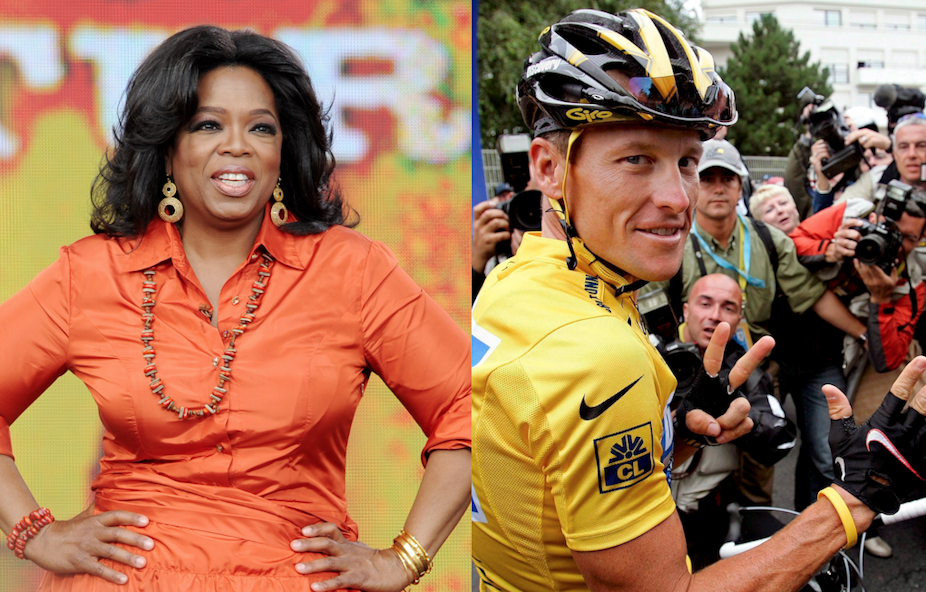
Oprah Winfrey in Sydney in 2010 and Lance Armstrong on his way to win his seventh Tour de France title in 2005. AAP/Tracey Nearmy & EPA/Gero Breloer

How Lance Armstrong handles his soon-to-be aired interview with Oprah will impact on the fate of Livestrong, which he founded in happier days. That’s because organisations, including non-profits such as Livestrong, live and die based on how those in the market assess their brand.

Organisations with positive brand images are seen to effectively deliver higher value. In the case of non-profits, this results in increased donations from the community, as well as being in demand as a partner by other non-profits, governments and businesses.

Indeed, protecting their brand may even be more important for non-profits than other brands because their brand encompasses all their activities, including charitable works. And brands that are formed around individuals, as well those that extensively link themselves with spokespersons or celebrities, are potentially at risk when the celebrity or founder falls from grace and their personal brand becomes tarnished.

The value of having celebrity spokespersons is that the organisation gains market credibility because the celebrity has expertise, trustworthiness, or they’re attractive. In this way, the celebrity becomes the voice of experience that stakeholders (donors, those being helped and partner organisations) can relate to.

Having a sports hero as a spokesperson is beneficial because sportspeople exude confidence, technical proficiency and expertise in their chosen area. These characteristics are then transferred to the brands that they’re representing.

It’s not surprising that there are many examples of firms cutting their ties with celebrities who have fallen from grace as the result of inappropriate individual behaviour. In these cases, the celebrity brand loses its shine and organisations become concerned that the celebrities’ negative image will be transferred to them. The firms that Tiger Woods was sponsored by lost substantial share value after the Tiger Woods scandal, at least in the short term.

So it wasn’t surprising when Lance Armstrong resigned from the board of Livestrong after the US Anti-Doping Agency (USADA) implicated him in doping. This was clearly his attempt to distance himself from organisation and protect Livestrong’s brand. But given the close link between Livestrong and Armstrong, it’s unclear whether donors and organisations working with the non-profit will make any distinction between them.

The problem is that, for years, and despite rumours elsewhere in the sport, Armstrong vehemently argued that his performance was a testament to his dedication and effort – and that it was unaided by performance-enhancing drugs. He lambasted “drug cheats” claiming that they tarnished the cycling profession. And he used his “drug-free performance” to position his life and Livestrong, promoting the idea that people could overcome cancer and succeed in life’s challenges.

So, not only was he the spokesperson for Livestrong, Armstrong was the “poster boy” for all the positive values that it represented. He was a shining example to all cancer sufferers that there was life after cancer and showed that they too could be highly successful if they put in hard work and dedication.

Armstrong’s fall from grace was significant. His silence on the US report into drug abuse in cycling was unfortunately seen as a sign of his guilt, especially when he refused to dispute its claims or fight to stop the stripping of his seven Tour de France titles.

Armstrong’s recent “no-holds barred” interview with Oprah Winfrey (to be aired at 4:30pm AEST on oprah.com) is supposed to clear the air and is thought to feature his admission that he took performance-enhancing drugs. On the same day the interview was taped, he met with Livestrong staff and apologised for “any stress that they’ve suffered over the course of the last few years as a result of the media attention.”

But how this controversy and Armstrong’s apology impact Livestrong partly depends on what he says in his interview and how it is received. If he gives an apology that comes across as insincere or incomplete (not a full and frank admission of events), then it’s highly likely that people will have a negative reaction and potentially transfer this negative credibility onto Livestrong.

On the other hand, if the interview seems credible, heartfelt and sincere, there may be a positive impact on Livestrong. That is, people may feel sympathetic toward Armstrong and want to show their support through the Livestrong cause.

The fate of Livestrong is, at least in the short term, clearly linked to Armstrong and how he handles the interview is critical. It’s possible that the only way he can minimise any negative backlash to Livestrong is to apologise and seek forgiveness humbly and with contrition.

Doing this frankly would support the values that made Armstrong such an iconic celebrity. It would show him, once again, standing up for what is right and showing that surviving cancer, like surviving life, is difficult, but something we can all succeed at.

Articles also by This Author

Sign in to Favourite

Want to follow The Conversation?

Sign up to our free newsletter to get the day's top stories in your inbox each morning, with a special wrap on Saturday.

Spinner
Help us have better conversations — donate

Join the conversation

30 Comments sorted by

  1. Martin Hardie

    Lecturer in Law at Deakin University

    But the problem here is that you assume livesyrong is a non profit organisation raising funds for cancer research. The evidence points the other way. It is a profit making venture for armsyrong and his cronies that has not raised any money. Livestrong is as dodgy as the Armstrong cycling myth was.

    report
  2. Jack Arnold

    Director

    The numerous armchair cyclists conveniently forget that the Tour de France (TDF) is supported by corporations that have a "win at any price" corporate ethos.

    I believe that Armstrong has been made the scapegoat because he successfully & repeatedly beat the anti-doping strategies put into place at snail's pace once the International Cycling Union was (unwillingly) unable to ignore the evidence that doping was occurring.

    Regardless, it appears that the TDF corporate sponsors were prepared to tolerate, even demand, doping for any cyclist wishing to be part of the TDF, the peak of cycling excellence.

    The USADA is posturing & grandstanding after the event to cover up their previous lack of investigative & technical ability to discover the common knowledge that doping was common practice among many/most international standard cyclists of the 80s & 90s.

    report
    1. Joe Gartner

      Tilter

      In reply to Jack Arnold

      You cannot divert the personal,responsibility of every cyclist and every team. To try and blame the sponsors for the decisions made by those who consented to being injected and those teams that promoted it is disengenuous.

      The sponsors have always demanded results but are the first to drop sponsorship at the whiff of doping:

      http://en.wikipedia.org/wiki/Festina_affair

      http://www.cyclingnews.com/news/rabobank-to-end-its-sponsorship-of-professional-cycling-teams

      Anyone else you'd care to blame for the personal decisions of the athletes and the egregious conduct of their team management?

      report
    2. Joe Gartner

      Tilter

      In reply to Martin Hardie

      I read the first 7pages and skipped through the rest, can you point me to where the sponsors are substantively implicated in pressuring riders to dope or are organising and administrating dope to riders?

      report
    3. Joe Gartner

      Tilter

      In reply to Martin Hardie

      Well to be honest you wrote the chapter and you state:
      ' The Provincial Court finding suggests in fact that these very same sponsors and administrators have been all too well aware of the practices within their respective teams for too long – and thus are not in a position to have either their name sullied or to have been defrauded.'
      Suggests? There is nothing in what I read that indicates that the sponsors are substantively involved in the running of doping practices within the team or in the…

      Read more
    4. Martin Hardie

      Lecturer in Law at Deakin University

      In reply to Joe Gartner

      Yes i was making a different point. But if any sponsor is involved directly from what i have been told they begin with N and end in E. They do more than collaborate with the Indo military to supress workers. Their in house program is said to be quite extensive and sophisticated. So they explout the third world poor to manufacture stuff which is then marketed by athletes they assist to become winners.

      report
    5. Joe Gartner

      Tilter

      In reply to Martin Hardie

      Being a lawyer I'm sure that you're familiar with the principle of hearsay.

      Show me the money.

      report
    6. Joe Gartner

      Tilter

      In reply to Martin Hardie

      If you heard it, it's hearsay, if you have an auditable trail it's evidence. I don't have any reason to doubt you but I won't believe you until I see the money trail.
      And one swallow doesn't make a summer... Are all sponsors similarly deeply invested in doping program's via their teams?
      I'm not so naive to think that sponsors have been ignorant, but in the post festina, post rabobank, post Pharmstrong era what sponsor would be willing to be associated with Doping? Especially when a decent forensic accountant can follow the money and emails?

      report
    7. Joe Gartner

      Tilter

      In reply to Joe Gartner

      I refer you back to your comment:
      'You should read what the appeal court said about the sponsors and doping in their operacion Puerto decision. Not quite how you put it'
      You have done nothing to refute my comment in reply to Jack Arnold except to supply 'suggestions' and hearsay evidence.
      In the absence of any evidence to the contrary I reiterate my statement against Jack Arnold's claim that there is any substantive evidence that sponsors of cycling teams, in particular Motorola, UPS and discovery…

      Read more
  3. Joe Gartner

    Tilter

    So Pharmstrong has finally outed himself, of course the UCI, Motorola, US postal, etc are to blame for his personal conduct.

    Happy to accept mitigating circumstances in this tawdry decades long period of cycling, not happy to shift responsibility. What sticks in my craw is the bullying of those who would not buy into the lie is. Betty Andrieu, David Walsh et al. The complicity of the UCI does not absolve those responsible.

    report
  4. Chris Booker

    Research scientist

    In many ways I think it's going to be a non-issue, but I'm sure the media and op-ed pieces will trumpet it up.

    Sure, Livestrong was founded by Lance, but it's now taken on a life of it's own. And at the end of the day, Lance still had testicular cancer (stage III, no less) and lived through it. As a testicular cancer survivor myself I can tell you that in the cancer community there's been a lot of debate about the Lance Armstrong doping affair, given he's practically the patron saint of testicular…

    Read more
    1. Sue Ieraci

      Public hospital clinician

      In reply to Chris Booker

      So Lance had stage III testicular cancer "and lived through it." Did he do this spontaneously, or through the use of sophisticated medicine (surgery and chemotherapy)?

      Quite likely EPO helped his recovery. But this is not just a story about personal will - it is about improved survival of a terrible disease through advanced medical techniques.

      The illusion of "I did it all myself" is misapplied to the cancer just as much as to the cycling.

      report
    2. Chris Booker

      Research scientist

      In reply to Sue Ieraci

      Whoa, back up.. trust me, I'm on your side here Sue! Maybe it's just a euphemistic use of words in 'lived through it' that's at the heart of this.

      Of course he survived because of medicine - the introduction of platinum-based chemotherapy in the 70's drastically changed the survival prospects of testicular cancer. Off the top of my head Lance had the obligatory orchiectomy, 4 x BEP, surgery to remove residual teratoma in his brain, and probably also some second-line chemo like VIP - not exactly surviving on his own will.

      But the 'human story' as it's applied to cancer, especially fund-raising activities, is always focused on the n of 1 and 'people battling cancer' and 'survivorship'. I don't necessarily like it, but it's the way the charity system seems to sell itself.

      The point I was trying to make that doping to win a cycling race doesn't somehow erase his cancer history and therefore make null and void the cancer charity he was involved in founding.

      report
    3. Sue Ieraci

      Public hospital clinician

      In reply to Chris Booker

      Sorry, Chris - I wasn't meaning to attack what you said - it's just that the phrase you used triggered another thought for me, so I posted my comment under yours.

      I saw a parallel between the claim to be a super-biker (when this was assisted by therapy) and the claim to be a super-cancer-survivor (also assisted by therapy).

      In both cases, he clearly had motivation, ability and fitness, but relied on much more than that.

      report
    4. Chris Booker

      Research scientist

      In reply to Sue Ieraci

      Thanks for the reply Sue. Yes you certainly have a point - there is definitely a parallel in terms of who gets the glory for these accomplishments.

      report
  5. Jack Arnold

    Director

    Thank you all for your contribution to this discussion. I cannot see where my original position has been defeated, except on the point that doping in cycling has been going on for longer than the '80s & 90s' & includes up to 2005 as a speculative 'final' date.

    The published evidence that I have seen on public television has vilified Armstrong because he successfully 'beat the anti-doping monitoring system' by using strategic timing & dose rates before individual races over a long career. Such…

    Read more
    1. Joe Gartner

      Tilter

      In reply to Jack Arnold

      You stated in three paragraphs in your original post that corporate sponsors were implicated in the doping of riders. There is no evidence of this apart from hearsay. Whether you perceive this as a 'non-defeat' or not does not change that your comment is almost wholly unsubstantiated.

      report
    2. Joe Gartner

      Tilter

      In reply to Martin Hardie

      In my world I get my facts straight before generally accusing a number of commercial entities with corruption or aiding and abetting criminal activity.

      report
    3. Martin Hardie

      Lecturer in Law at Deakin University

      In reply to Joe Gartner

      People told me that in 2010 when i bought Floyd to Australia ... There was no evidence ... It was hearsay .... That i had the facts wrong. Joe ... I know what the evidence is ... and i dont really care much what you think about it. Have a nice weekend. End of the conversation.

      report
    4. Martin Hardie

      Lecturer in Law at Deakin University

      In reply to Joe Gartner

      When they carry on point scoring unable to move past their own desire for a black and white world, when thet trot out the same old lines that have kept the sporting mafia in control, yes. I guess two years ago you said dont criticise armstrong or the uci as there was not evidence, only hearsay ..... We have different ideas about what being implicated is. Your comments remind me of lance on oprah ...he didnt force anyone to dope .... the problem is if they didnt deliver they didnt have a job .... Things and people are implicated in many more subtle ways than you want to accept.
      Hence i dont see any point in continuing conversing when you want to continue with your blind support of the holy corporate world.

      report
    5. Joe Gartner

      Tilter

      In reply to Martin Hardie

      No worries-you may note, should you care to look, that at no time have I supported corporations (holy or otherwise). All I have insisted on is for Jack Arnold to substantiate his claim that sponsors (generally, without specification) have aided and abetted doping in cycling.
      You weighed in but have offered no evidence either, apart from veiled comments that you are privy to information that you cannot reveal. Special privilege does not make a convincing argument, although (as I have previously stated…

      Read more
  6. David Briggs

    logged in via Facebook

    Martin is correct. LiveStrong has done little to fund cancer research. In more recent years it withdrew From funding research entirely.. In my view LiveStrong activities where entirely self centred focusing on building the brand and a buttress against an eventual attack on Lance for his misdeeds. If LiveStrong wants to restore its image my advice is keep Lance at arms length or more and direct funds to research rather than fun runs, picnics and bike rides.

    report