
Should an athlete advocacy organisation be established to help athletes navigate the minefield of banned and permitted substances in sport? We believe it should be.
Last week’s report by the Australian Crime Commission (ACC) on the impact of doping in professional sport coincided with the introduction of the Australian Sports Anti-Doping Authority Amendment Bill 2013, that would potentially give the Australian Sports Anti-Doping Authority (ASADA) unprecedented power and control over investigations into anti-doping rule violations.
Even without the proposed prosecution powers, ASADA may already not be perceived by athletes as a preferred source for information into supplement use. In research conducted by one of this article’s authors as part of his (yet-to-be-published) thesis, elite and pre-elite athletes were given a list of individuals and organisations and asked who they had previously contacted with regards to clarifying the rules of doping for their sport prior to taking a new medication/supplement.
The three top answers were: athletes' club coaches (87.85%), general practitioner doctors (86.52%), and the internet (83.23%). ASADA was one of the least common sources for that information, at just 23.34%.

As the lead national authority on what is legal or illegal in sport, ASADA is the ultimate source in Australia to confirm whether a substance is banned. But if ASADA is also the prosecutor of athletes for anti-doping violations – as per the proposals in the new bill – that will make it difficult (and even less appealing) for athletes to approach the organisation to clarify the status of supplements. An analogy would be a person asking the police how much cannabis he or she is allowed to legally grow/possess.
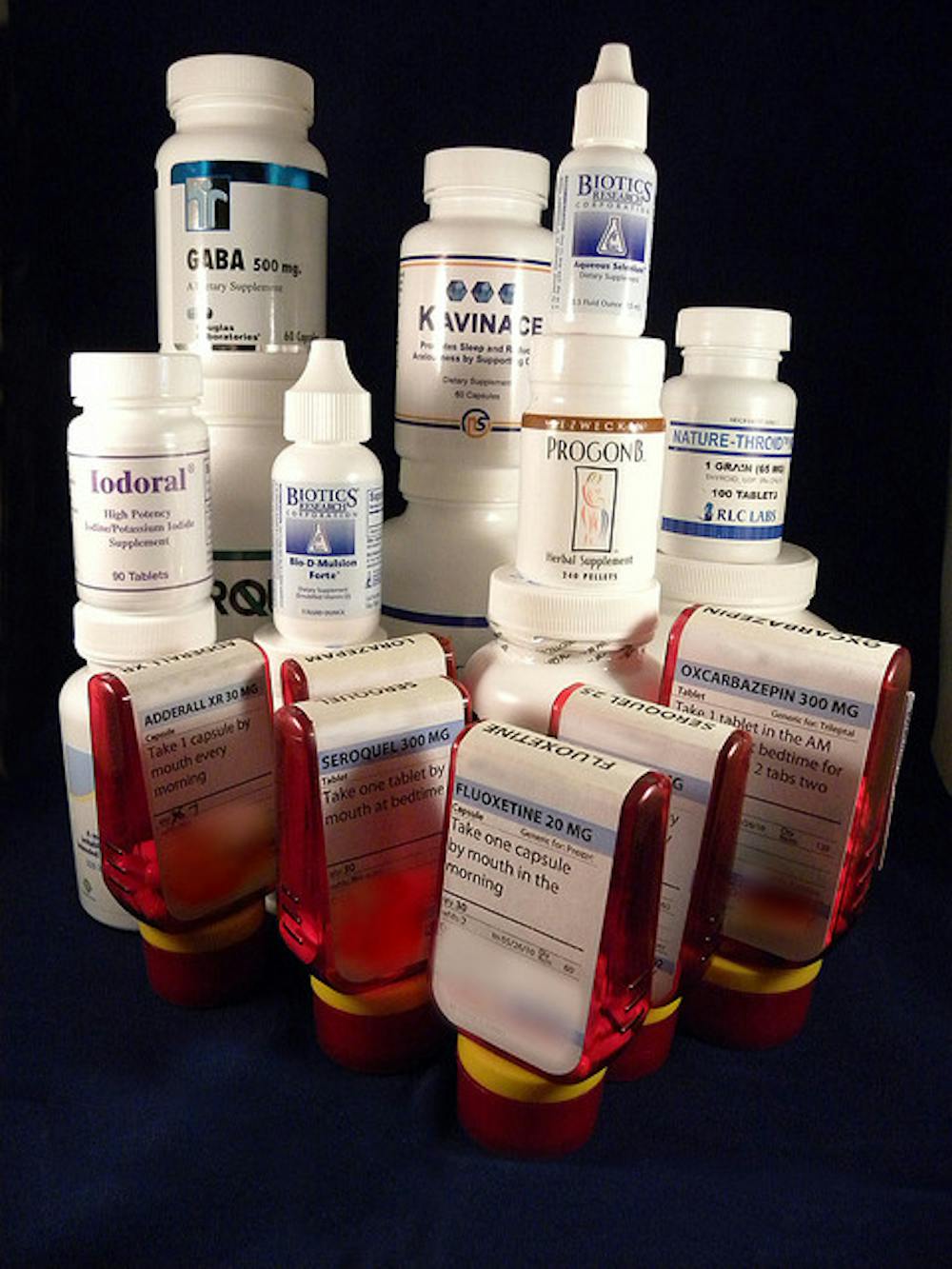
Supplements
Many modern-day elite athletes use dietary supplements to help cope with the pressures of being an elite athlete – a practice that also extends to non-elite level athletes.
Supplements include vitamins, minerals, herbal remedies, traditional Asian remedies, amino acids and various other “ergogenic” (performance enhancing) substances.
Such substances may often also be used independently of expert (physicians and dieticians) advice, and many athletes may not know if the supplements used are banned in sports.
Even if athletes have the relevant scientific knowledge and are aware of the legalities of the active ingredients, not all supplements are regulated, and traces of substances that may be banned in sport may be present but not listed on the supplement bottle.
One of the first comprehensive studies to evaluate the doping risk posed by dietary supplements showed about 15% of a total of 634 supplements purchased in various countries in 2000 and 2001 contained varying levels of cross-contamination with prohibited anabolic androgenic steroids (AAS). Studies since 2002 have found further supplement products contaminated with high amounts of undeclared AAS.
Because the manufacturers of these contaminated products also manufacture other nutritional supplements on the same production line, the risk of cross-contamination with such AAS is very high.
Athletes’ ombudsman
An independent athlete advocacy organisation that looks out for the athletes with regards to performance-enhancing substances and methods (PESM) is important, and we believe it should have the following characteristics:
It should comprise professionals who are knowledgeable in the area of PESM and can tell athletes what are legal or illegal PESM, acting as an “ethics” body to make sure athletes have an informed choice and a neutral second opinion.
It should not be tasked with also policing the athletes/clubs. After all, it’s not hard to imagine there could be a perceived conflict of interest where an organisation has a duality of policing and advising functions.
It must be independent from the clubs'/sports' codes. Each club’s sports science staff will continue to do what is necessary to improve athletic performance, but ultimately they work for the interest of the clubs that pay them.
- It should be funded through players' lobby groups that currently help negotiate on behalf of athletes’ matters pertaining to welfare, salaries, insurance, and so forth.
An advocate agency is important especially in the context of inadvertent doping. Research by one of this article’s authors has shown that amateur elite athletes may not know all anti-doping rules and this puts the athletes at risk of inadvertent doping under the strict liability standard.
An informed consent requires that athletes understand both the risks and benefits of any potential treatment or substance they are receiving. The use of waiver/consent forms does not relinquish the responsibility for individuals/organisations providing the potential PESM.
As a protection for athletes, the information for all new treatments would be screened by the athlete’s organisation, acting as a guardian ad litem.
Illegal secretagogues
Let us take the recent ACC report as an example. In that report, one of the alleged violations that are deemed to have been committed is the use of peptides. The report states:
Peptides are classified as a Schedule 2 (S2) prohibited substance on the WADA Prohibited List and are therefore prohibited for use by professional athletes both in and out of competition. Peptides have been a WADA prohibited substance since at least 2008 …
The report then cites the misuse of the following peptides:
• CJC-1295
• GhRP-6
• hexarelin
It is unknown what information was provided to athletes under investigation for doping practices before they were allegedly injected with the peptides. An unscrupulous therapist could have informed the athletes that they were being injected with small proteins. This would be technically correct. So what’s wrong with being treated with proteins?
There are certainly enough protein powders available in health food stores. There are also numerous top athletes promoting the virtues of protein supplements in advertisements.
The issue at hand is that the alleged peptides may act as secretagogues: a substance that, when introduced into the human body, causes another substance to be secreted.
In this case, the substance being secreted by the body is the human growth hormone (HGH).
The peptides do not in themselves cause the effects of HGH. It needs to act through the body’s own gland (pituitary gland) to produce this hormone. The peptides simply maximises the body’s own HGH production.
The WADA Prohibited List states for specific substances under section S2:
S2. PEPTIDE HORMONES, GROWTH FACTORS AND RELATED SUBSTANCES
The following specific substances and their releasing factors are prohibited:
Growth Hormone (GH), Insulin-like Growth Factor-1 (IGF-1), Fibroblast Growth Factors (FGFs), Hepatocyte Growth Factor (HGF), Mechano Growth Factors (MGFs), Platelet-Derived Growth Factor (PDGF), Vascular-Endothelial Growth Factor (VEGF) …
But it also has a “catchall” clause in the section that states:
… as well as any other growth factor affecting muscle ,tendon or ligament protein synthesis/degradation ,vascularisation, energy utilisation, regenerative capacity or fibre type switching and other substances with similar chemical structure or similar biological effect(s) …
An athlete who is diligent and wants to check if, for example, CJC-1295 is listed in the banned list, will not be able to find it, unless he or she knows how the substance acts – its “similar biological effect(s)”.
But – because of the inconsistency of applying the section S2 rule – the issue is also not straightforward for those familiar with the pharmacodynamics of substances and body physiology.
If, as per the rule, “growth factor affecting muscle, tendon or ligament protein synthesis/degradation, vascularisation, energy utilisation, regenerative capacity or fibre type switching and other substances with similar chemical structure or similar biological effect(s)” are to be prohibited, then it would be inconsistent to accept the substance of Actovegin and Platelet-Rich plasma. Neither substance is currently banned in sport.
There are also some amino acids that are legal in sport that may act as secretagogues. Amino acids such as arginine, ornithine, glycine and glutamine are readily available over-the-counter.
These amino acids have the potential to act as growth hormone secretagogues but are not banned under the WADA prohibited list.
As can be seen, even when confined to the matter of specific substances and section S2 of the prohibited list, the issue is not straightforward. Navigating through the problem of supplementation would require some knowledge of the science and the law.
We do not advocate the use of any substance that has not been approved for human use. Nor are we condoning the abuse of illicit substances that put athletes’ health at risk.
We do, however, believe that athletes’ have a right to an informed choice. Something a zero-tolerance policing approach does not provide.


Sean Lamb
Science Denier
"There are certainly enough protein powders available in health food stores. There are also numerous top athletes promoting the virtues of protein supplements in advertisements."
It is pretty easy to avoid inadvertent exposure to banned peptides - don't inject yourself with anything. Any protein powders can be chock a bloc with hGH or IGF-1 - they are unlikely to survive the digestion process.
Michael Bradley
Prof Medicine
That is not realistic. You might as well say not have abortion clinics/facilities. if women do not have sex they will not inadvertently get pregnant!
You comment on oral HGH secretagogue is also factually inaccurate:
http://www.ncbi.nlm.nih.gov/pubmed/10404019
http://www.ncbi.nlm.nih.gov/pubmed/19174493
These are just two of many examples.
Sean Lamb
Science Denier
"You comment on oral HGH secretagogue is also factually inaccurate:"
I didn't make a comment on oral secretagogues. I made a comment on commercial protein powders - not on drugs that have been developed to induce GH secretion.
Michael Bradley
Prof Medicine
But that is the point of recent debate and recent crime investigations from what I've read in the press. The issue of "peptides" (secretagogues) that induce HGH secretion.
Sean Lamb
Science Denier
I think we could talk at cross purposes for a long time here. So while one of the secretagogues you linked to, Capromorelin, does appear to have a single O=C-N-H bond and hence technically a peptide, albeit a highly unusual one, it is highly unlikely to turn up in substance like commercial protein powders that you could take inadvertently. Even if it did, my uneducated guess is that it wouldn't cause enough secretion to fail a test for hGH, although if there was a test for capromorelin, you might fail that.
Using the term "peptide" without any further qualification by the Commission is probably a mistake and going to lead to a lot of confusion.
Michael Bradley
Prof Medicine
There are many other types of secretagogues that are sold online and here in the US that are available either by itself or mixed in with "protein" powders . Since I do not support the "recreational" use of these supplements, I will not provide the hyperlinks to these commercially available products. The previous links to the reference is to provide academic/scientific references to show that some secretagogues in oral preparations can be pharmacologically active. Also orally ingested amino acids has also been shown to be growth hormone secretagogues.
Yes I agree that the use of "peptide" by the Commission (and many media authors thereafter) is going to cause a lot of confusion and angst. For people that actually understand what amino acids, peptides, proteins, hormones and secretagogues are, the amount of misinformation in the public domain is frustrating to say the least.
Stephen Moston
Associate Professor in Psychology at University of Canberra
Hi there,
Interesting article. Small point of clarification. You write:
'An analogy would be a person asking the police how much cannabis he or she is allowed to legally grow/possess.'
Wouldn't a better analogy be:
'.... a person asking the police whether or not they are allowed to legally grow/possess?'
Also, I'm not sure that the rationale for two anti-doping bodies holds. Couldn't the same arguments be used to justify increased funding for ASADA?
Stephen
Benjamin Koh
Doctoral Researcher, Complementary and Alternate Medicine at University of Technology, Sydney
Hi Stephen,
Thank you for your comments.
With regards to the analogy:
We feel that the analogy was appropriate. It is based on the context of cultural/social/legislative norm. Since many athletes are already using various supplements and is the cultural norm, the question therefore is not IF supplements are allowed but WHAT is allowed.
We used cannabis as an example because in some jurisdictions (cultural/social/legislative norm) that legally allow possession of cannabis, the question…
Read moreMartin Hardie
Lecturer in Law at Deakin University
Hi Stephen
I am with Ben on this of course. One of the biggest problems I have come across in Sport are the all pervasive conflicts of interest. Unless powers are separated, trust built and athletes brought into the system things will never improve.
Jason Mazanov
Senior Lecturer, School of Business, UNSW-Canberra at University of New South Wales
Ben & Martin:
Thank you for raising the issue of athlete welfare in the middle of all this. This all goes back to whether we try to make anti-doping work by investing lots in it, or we try something else.
The theme of athlete welfare is one that needs to be pushed. The exact form of creating protections for athlete welfare needs to be expanded. Whether an Ombudsman, stronger player unions, or parallel anti-doping bodies, the issue needs to be explored more thoroughly. Certainly UniSport Global Pro is trying!
Best wishes,
Jason
Craig Fry
NHMRC Career Development Fellow at Victoria University
Hi Ben and Martin,
A good article, and nice idea – an independent athlete advocacy organisation to have a role around these issues. The Australian Athletes Alliance might step up a little more on this (http://www.athletesalliance.org.au/). Their Feb 7 media release suggests we will hear more from them.
Craig Fry
Martin Hardie
Lecturer in Law at Deakin University
Chris,
Thanks. I've spoken to cyclists about the need for a decent advocacy organisation for years. The problem has been no one has been willing to stick their head up ... as you probably know athletes walk a fairly tight line and in the end are highly disposable commodities. In respect of cycling I've said for a while that it was important for herders to get organised before the recent crisis arose. It didn't happen and now the cycling anti doping power struggle has become not about athletes labour conditions and careers but who will be come the new owners. Having said that maybe with more powerful sports being affected things might change.
Martin
Steve Moller
IT Manager
Thank you for bring a balanced and sensible view to this debate. I have been troubled for some time that the testing agency are failing badly and emotion and misinformation is now being used by these agencies and carried by popular media to cover up for this inadequacy. The paper below provides a very good insight into the success or otherwise of European drug testing which is unlikely to be different in our country.
Perhaps WADA and ASADA should just come out with a statement " Anything other than an ice bath is considered performance enhancing".
http://www.ebay.com.au/itm/271151075307?ssPageName=STRK:MESELX:IT&_trksid=p3984.m1555.l2649#ht_500wt_922
Benjamin Koh
Doctoral Researcher, Complementary and Alternate Medicine at University of Technology, Sydney
Addendum:
For the interested reader, ASADA has a website for athletes to check for substances-
https://checksubstances.asada.gov.au/search.aspx
It is good resource but not perfect: "...If you cannot find your search term below, it may not return a result because it is an overseas product, it is a supplement, or it is a new product..."
I tried the GH-secretagogue ("peptide") Ghrelin (not a new substance; about 13 years old):
http://europepmc.org/abstract/MED/11306336/reload=0;jsessionid=vUJNqGB2VtmWzSHAN3aD.6
http://www.ncbi.nlm.nih.gov/pubmed/22632856
http://diabetes.diabetesjournals.org/content/50/2/227.short
http://onlinelibrary.wiley.com/doi/10.1111/j.1749-6632.2010.05516.x/abstract?deniedAccessCustomisedMessage=&userIsAuthenticated=false
and returned "...Your search for Ghrelin was not found..."
Joe Gartner
Tilter
Interesting article in pro cycling by Christopher basson, ex pro-cyclist now working in anti-doping for France.
http://www.cyclingnews.com/features/christophe-bassons-where-the-war-on-drugs-is-going-wrong
Martin Hardie
Lecturer in Law at Deakin University
Hey Joe, thanks. Basson's echoes some things going on in my head at the moment. Stay tuned. We need to think about what di we want sport to be. Also there are lots of performance enhancing drugs that are not banned. Part of the problem with the war on... is that the libe between legal and illegal peds is a zone of indistinction
Joe Gartner
Tilter
I think his emphasis on the cultural pressures defining sport and the causative effect on the actions of sportspersons (and by extension teams etc) is really interesting. I Haven't seen a sportsperson articulate this well before. The swipe at the media in the article is also timely, I believe.
He's an interesting character, A vocal opponent of doping allegedly hounded out of the peloton by the patrons of the sport, or so I am led to believe. I don't know if his opinions are widely embraced, whether he has a particular agenda, but his focus on the ethics and nature of sport are curiously at odds with the superficial commentary prevalent in e media.
Joe Gartner
Tilter
A separate advocate might also be useful if they can successfully articulate to athletes some of the real dangers of doping:
http://www.cyclingnews.com/news/operacion-puerto-transfusions-could-have-led-to-deaths-says-expert