
Catherine Colonna’s report has been angrily rejected by the Israeli government.


UCL was established in 1826 to open up education in England for the first time to students of any race, class or religion. Its founding principles of academic excellence and research aimed at addressing real-world problems, inform the university’s ethos to this day.
More than 6,000 academic and research staff are dedicated to research and teaching of the highest standards. Nobel Prizes have been awarded to 29 former academics and graduates and UCL ranks consistently amongst the most-cited universities in the world.
Read more about UCL
As London’s Global University, UCL has the opportunity and the obligation to use the breadth of its intellectual expertise to help resolve some of the world’s major problems. We are seizing this opportunity to develop an innovative cross-disciplinary research agenda, which will enable us to understand and address significant issues in their full complexity. Our vision extends beyond the common understanding of what a university is; we aim not just to generate knowledge, but to deliver a culture of wisdom – that is, an academic environment committed to the judicious application of knowledge for the good of humanity.
Find out about UCL’s Grand Challenges programme








Chair of Academic Clinical Orthopaedics, UCL

Lecturer in Law, UCL

Lecturer in Interdisciplinary Race, Gender and Postcolonial Studies, UCL

Emeritus Professor, Institute of Education, UCL
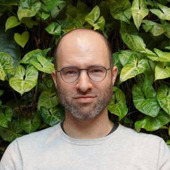
Head of Digital Economy Research, UCL
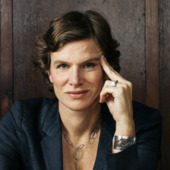
Professor in the Economics of Innovation and Public Value and Founding Director of the UCL IIPP, UCL
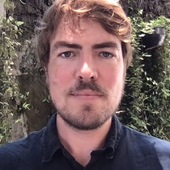
Honourary Lecturer, Department of History, UCL

Associate Professor in Social Science, UCL
Associate Professor (Reader) in Finance and Accounting, UCL

Researcher, Institute for Innovation and Public Purpose, UCL

Senior Research Fellow in the Centre for Teachers and Teaching Research, UCL

Professor of Public Policy, UCL

Senior Clinical Psychologist, UCL

Associate Professor and Director of the Centre on US Politics, UCL

Visiting Professor of Practice at the UCL Institute for Innovation and Public Purpose, UCL