The Popocatepetl volcano in Mexico is throwing out plumes of smoke and ash, an eruption that threatens the one million inhabitants of the towns and villages nearby. Mexico City, the world’s third largest…
“There remains no consensus at the present time on the climatic or ecological impacts of Toba.”
Victor Hazeldine/EPA
No-one alive today has witnessed a volcanic eruption remotely as big as the Toba “super” eruption. But our ancestors may have done, tens of thousands of years ago, when northern Sumatra exploded, creating…
The theory of plate tectonics is the foundation for understanding geodynamics.
rgordon
By Tomas Næraa, Geological Survey of Denmark and Greenland
Exactly 100 years ago, German geophysicist Alfred Wegener presented his theory of continental drift – the idea that the continents of Earth are gradually drifting apart. And now we have some compelling…
It’s time to let go of our old identity.
Matthew McVickar
WHAT IS AUSTRALIA FOR? Australia is no longer small, remote or isolated. It’s time to ask What Is Australia For?, and to acknowledge the wealth of resources we have beyond mining. Currently The Conversation…
The East African Rift holds evidence of a continent under strain.
dearanxiety/Flickr
Modern-day Africa was the keystone of Gondwana, the aggregated mass of southern continents that co-existed for nearly 400m years.
That supercontinent has since split apart, creating the land masses we…
It’s time we got to the core of our planet’s early history.
Derringdos
As of today, the world might have changed forever.
A fundamental assumption underpinning much of modern geochemistry is that the earth has the same composition as a class of meteorites called chondrites…
We know how much damage tsunamis can cause, we need to know more about when and where they come from.
AAP
A year ago yesterday the Tōhoku-Oki earthquake and resultant tsunami hit the Japanese coastline, triggering the Fukushima nuclear reactor disaster.
A year on, many questions are being asked about how…
It’s been a long and lonely road for scientists in the quasicrystal camp.
lovine
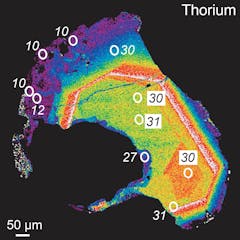
Earlier this year, an international team of scientists reported that a sample of natural “quasicrystal” found in a Russian mountain range had formed 4.5 billion years ago and arrived on Earth as a meteorite…
The Apollo missions yielded more than just great views of our home planet.
NASA
By the time the Apollo Program ended in 1972 it had cost NASA roughly US$170 billion dollars (in today’s terms). It was seen as a waste of money by some, but almost 40 years since the launch of Apollo…
We don’t know exactly how the Earth formed, but we know it was messy.
adametrnal
We know a lot about how humans evolved. But when it comes to our planet, we’re on shakier ground.
Inert (nonreactive) gases, such as helium, neon and argon, trapped inside the mantle (Earth’s thickest…
We now know the exact age of a species that confounds scientists.
Lee Berger/University of the Witwaterstrand
Since its discovery in August 2008, the site of Malapa in Johannesburg has yielded more than 220 bones of early hominins representing at least six individuals, including the remains of babies, juveniles…
Fossils from the Pilbara could shine a light on the search for life on Mars.
tysonA
A study published in Nature Geoscience yesterday reports the discovery of 3.4 billion-year-old microbial cells in ancient sandstones in Western Australia’s Pilbara region.
Some headlines have suggested…
Bob Carter sees the world a little differently to the rest of the scientific community.
AAP
CLEARING UP THE CLIMATE DEBATE: Professor David Karoly goes down the rabbit hole of Bob Carter’s climate theories.
In his book Climate: The Counter-consensus, Bob Carter describes three different realities…
Humans contribute energy to the global system at the rate of 15 Hiroshima-sized atomic bombs a minute.
CLEARING UP THE CLIMATE DEBATE: Director of the Melbourne Energy Institute and Professor of Geology Mike Sandiford explores the staggering ways we influence the shape of the globe.
Aren’t we too puny…
The fish-eating dinosaur discovered in Victoria is a member of Spinosauridae, a group of fish-eating theropod dinosaurs found in Asia and Europe.
Flickr
Paleontologists think it had the snout of a crocodile, the claws of a bear and a taste for seafood.
But what’s most interesting about the discovery of Australia’s first fish-eating dinosaur is its similarities…
Do hotter-than-average lake temperatures at Mt Ruaphehu suggest an imminent volcanic eruption?
Jess Robertson
A prolonged period of hotter-than-average temperatures in the crater lake of New Zealand’s Mt Ruapehu has seen the country’s media questioning whether another eruption is on the cards.
Mt Ruapehu (Māori…
Is earthquake prediction even possible?
Soe Than WIN/AFP
Why have so many lives been lost in Japan and New Zealand recently? And why have so many survivors – the so-called “lucky ones” – had their livelihoods and homes destroyed?
As a seismologist, I ask myself…